




From the First Latch
How Mill Brae Ranch uses new EPDs to create teats and udders that work as intended.
March 11, 2026
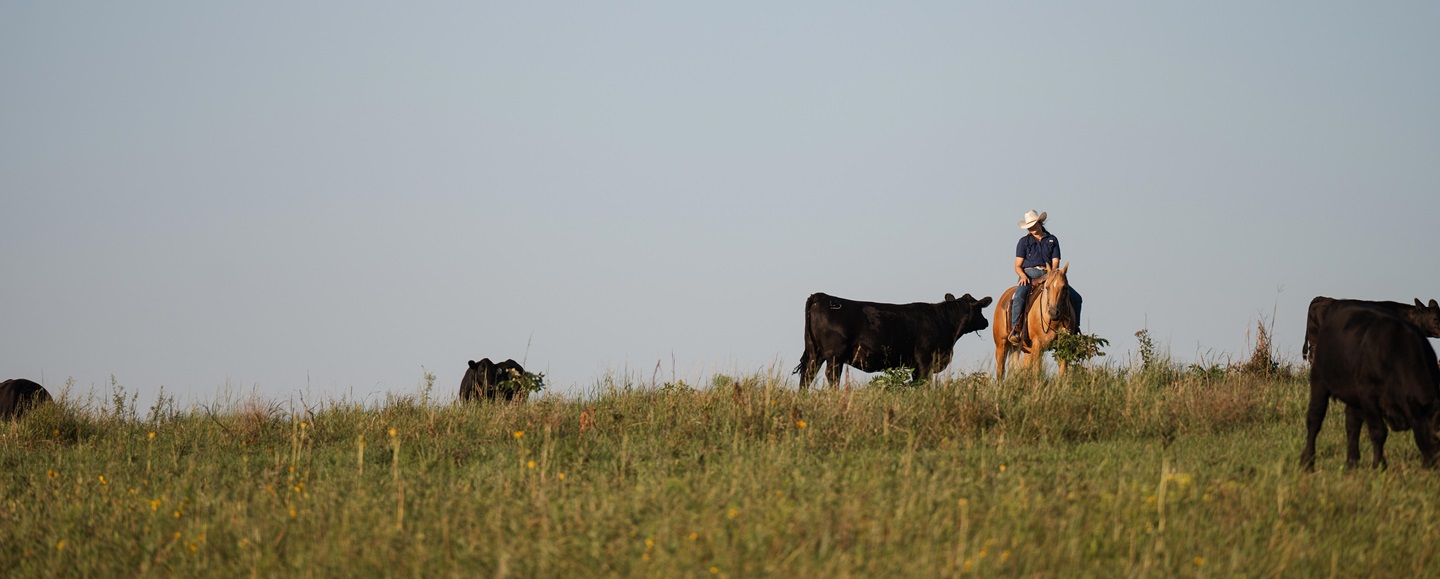

Before anyone cares how an animal finished out, its marbling score or even how much it weighed at weaning, another trait reigns supreme: whether or not the calf got off to a good start.
“That needs to happen naturally,” says Janice Nikkel, of Mill Brae Ranch near Maple Hill, Kan. “That cow needs to get the calf up, the calf needs to nurse and get that first colostrum and be on its way and go through the rest of the food chain — whether it’s sold as a weaning yearling or goes on to the feedyard or wherever it’s going to go.”
The success or failure of the very first part of that process may be hard to control, but breeding mama cows with good teats and udders gives them a better chance. That’s why Nikkel and her husband, Mark, have used a scoring system since the early 1990s, helping them identify problems and weed out sire lines.
“Bad udders do not stay here, because we’ve run into bulls over the years where we were pretty disappointed with the daughters once they started calving because we were getting blown-out udders,” Nikkel recalls. “We felt like it was fairly significantly heritable, and we could see that in the daughters.”
When the American Angus Association debuted a two-score method on teats and udders, the Nikkels switched and have recorded it that way ever since. Both scores are on a scale from 1 to 9, where a score of 1 represents a very large and misshapen teat, or a very pendulous udder; while a 9 indicates a very small teat size or a very tight udder.
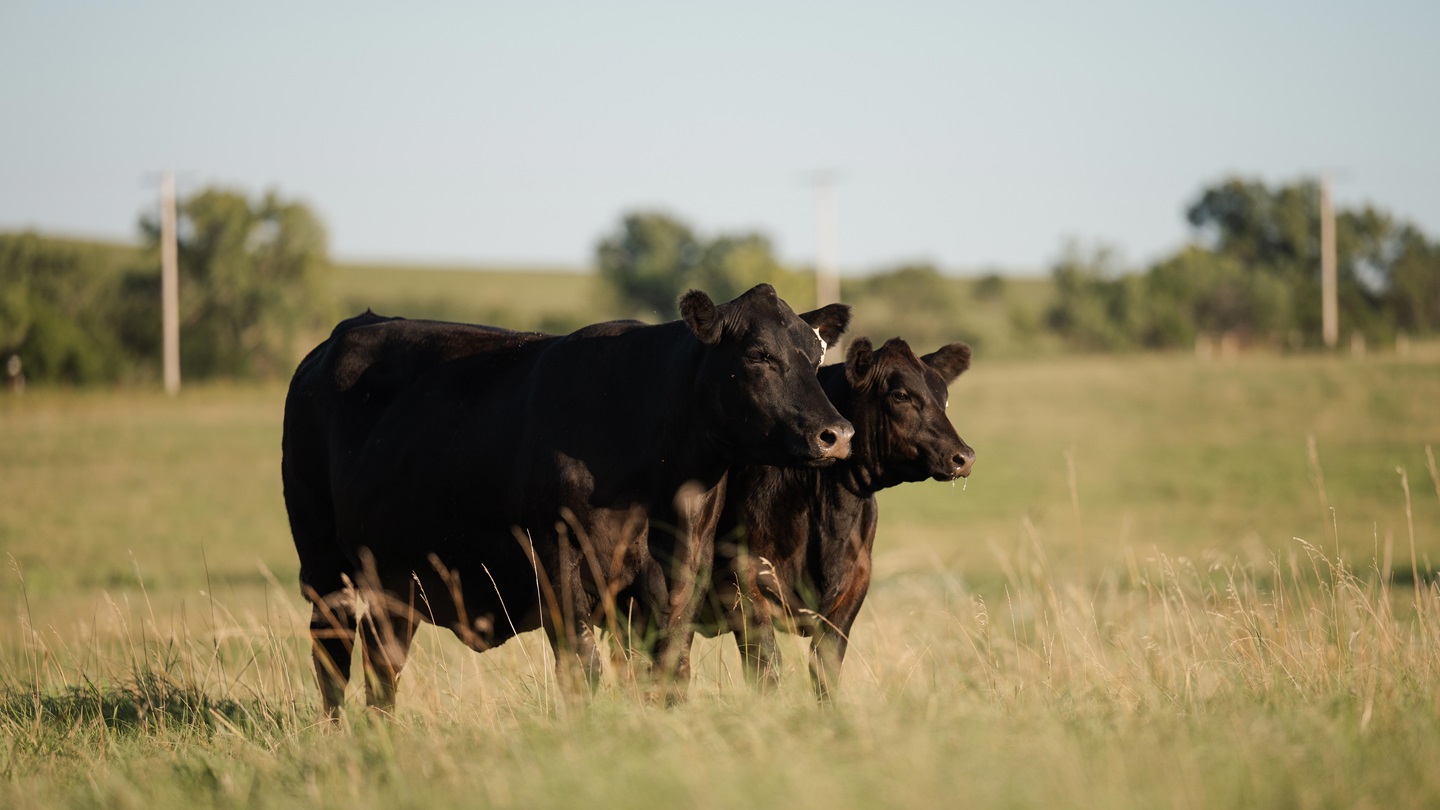

“Mark scores them immediately when he goes out to tag the calf right after they’ve been born,” Nikkel says. “It’s just part of the data that’s collected.”
They established the routine long before the Association announced the TEAT and UDDR research expected progeny differences (EPDs) in 2024, so that made it easy to become part of the trial group.
As a MaternalPlus® participant turning in data to feed the calculations, they saw the first EPDs and made decisions from that. They’ve worked hard to improve their udder quality over the years and don’t want to go below average on any of their matings.
We are looking to give them a product that they can rely on to be consistent in that maternal reproductive efficiency area.” — Janice Nikkel
“It makes me nervous to go below average because I feel like that could affect our udder quality, and that’s something that we want to protect,” Nikkel says.
The traits went into full production in the weekly EPD update in May of 2025.


Improvement, not perfection
An ideal teat may not exist, but they’ll continue to try for it. They want teats small enough to promote a good latch; not too long; and udder suspension that’s stable, full and even — a box shape overall, she says. They’ll cull those who don’t meet their standards and will “think really hard” about whether or not to keep daughters from cows who don’t measure up.
The traits are moderately heritable, 0.32 for teat size and 0.28 for udder suspension; so they expect they’ll continue making progress over time.
At Mill Brae, it’s not about chasing an extreme number, so much as it is weeding out problems and giving their customers something dependable.
“We are looking to give them a product that they can rely on to be consistent in that maternal reproductive efficiency area,” Nikkel says. “They’ve got to have a calf that thrives, and they’ve got to have a cow that is going to live for a good amount of time.”
As they flip through sale books and sire directories, Nikkel says it’s easier than ever before to learn as much about the cows they’ll create.
“I feel pretty confident because we have been taking teat and udder scores, and our cattle score well unless we get into a bull that we were unaware of,” she says. “Before we had an EPD, we were talking to people and [using] word of mouth, whether the sire catalogs told us about it or somebody had seen daughters.”
Having the published EPDs gives the Nikkels more confidence when looking at young sires or trying a new line.
“Our customers are commercial cattlemen, and they’re not going out there and necessarily individually recording the teat and udder scores of their females. But it’s an important trait for their success, since they’re calving out there on the range,” Nikkel says. “We want to produce a consistent product that they can rely on to do what they expect it to do.”
Editor’s note: For more TEAT and UDDR information, visit www.angus.org/ahir/data-initiatives/teat-udder.
Topics: AGI Research , Association News , EPDs , Genetics , Member Center Featured News , Reproduction , Selection
Publication: Angus Journal
Related Publications


Current Angus Journal
Keep up on the latest stories of the people and programs in the breed.

Latest Podcast Episode
Don’t miss conversations with breeders and industry experts.