



What a Selection Index Is and What it Isn’t
Crowley, Spangler discuss tools on The Angus Conversation.
September 22, 2026
The effectiveness of a tool depends on if you’re using it for the right purpose. That’s the story of selection indexes, according to geneticists John Crowley, AbacusBio, and Matt Spangler, University of Nebraska–Lincoln.
The two recently joined The Angus Conversation to take a hard look at economic indexes, how they’re created and best use practices.
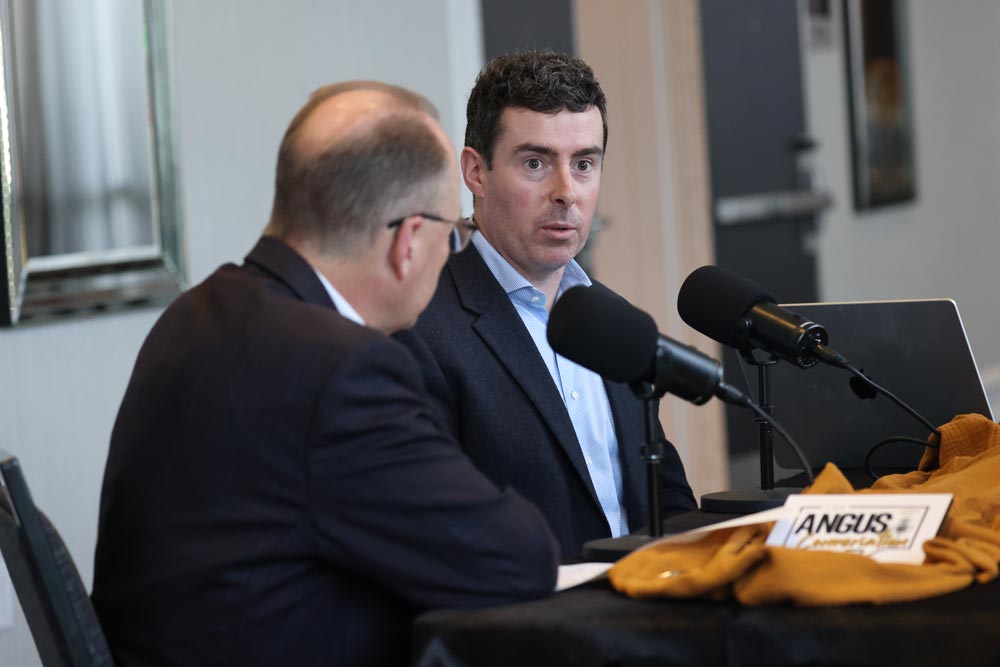
John Crowley
AbacusBio

“When you weight a trait for economic importance, you start with, ‘Well, what does a one-unit change in this trait mean to my overall system profitability?’” Crowley explained. Using rolling averages over a period of time helps level out variation.
“I think it’s tempting for people to think about what the value is today, the value of a pound of weaning weight or the Choice-Select spread. But the reality is there’s at least two years if you think about carcass traits between the sire selection decision and when those calves are going to experience the market,” Spangler noted. “So, using today’s economic value only runs the risk of selling cattle in a completely different economic environment. Using historic averages provides some robustness against that.”
A key to making the intended changes is to understand the breeding objective of the index — or what it was created to do — and then matching that to your own goals, Crowley said.
Spangler suggested commercial producers start by considering the basics: “When do I market my calves? Do I keep my own replacement females? What’s labor availability?”
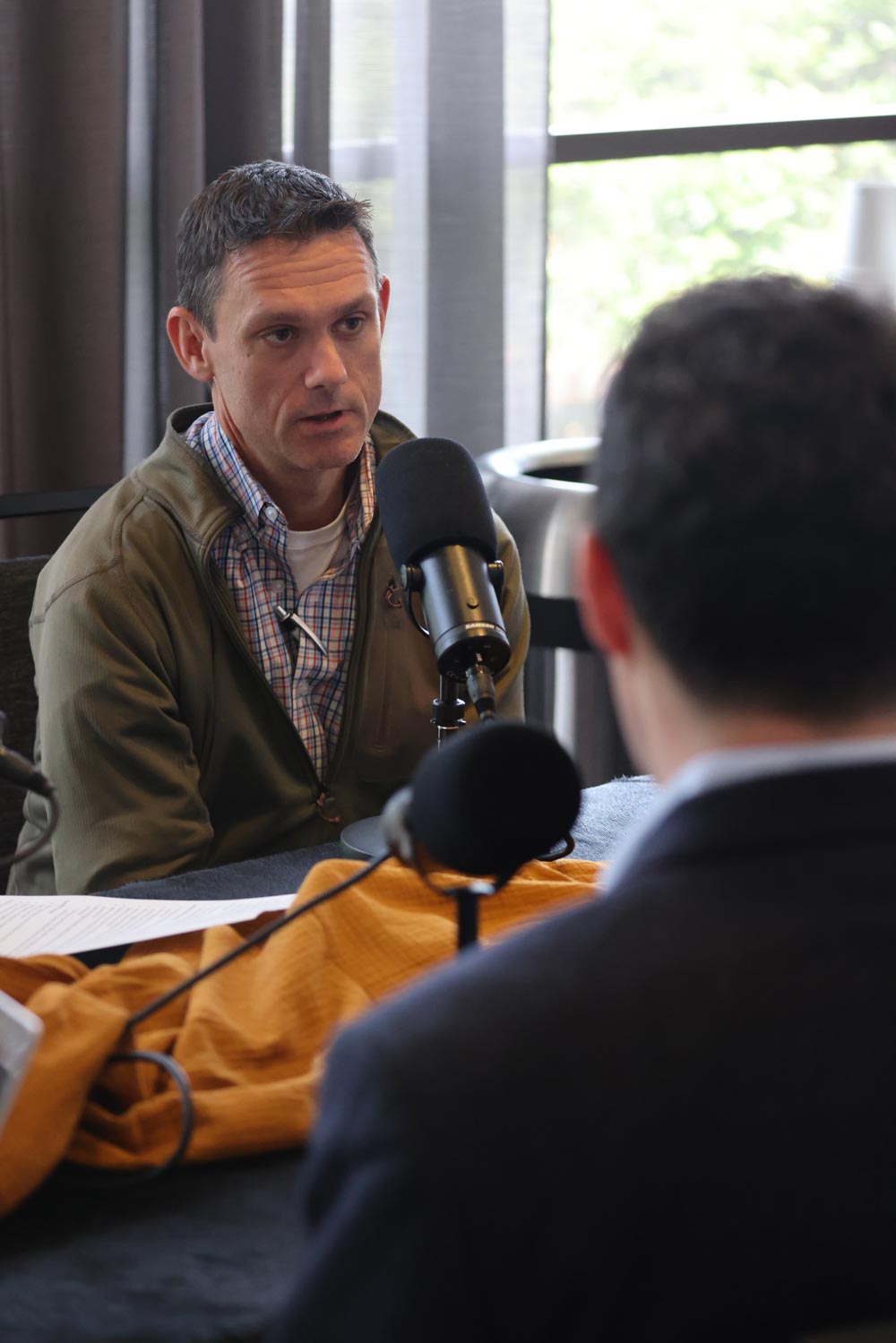
Matt Spangler
University of Nebraska–Lincoln

The pair dispelled commonly held myths around indexes, such as using the tools will slow genetic improvement.
“As you add more things to the index in general, you make less progress in any one of the individual things,” Spangler said. “If the goal is to improve profitability and I do a better job of describing profit by adding more traits, then I think it’s a win.”
The scientists participated in the Angus Genetics, Inc. (AGI) Imagine Beef Genetics Forum in Kansas City in August. To hear the full interview, find The Angus Conversation anywhere you get your podcasts.
EPISODE NAME: What a Selection Index Is and What It Isn’t with Crowley and Spangler
The effectiveness of any tool depends on whether you’re using it for the right purpose. That’s the story of selection indexes. In this episode, geneticists John Crowley of AbacusBio and Matt Spangler of the University of Nebraska–Lincoln take a hard look at economic indexes, how they’re created and how they’re best used. They tackle criticism and common misconceptions, while exploring how these tools help seedstock and commercial producers make more profitable breeding decisions.
HOSTS: Miranda Reiman and Mark McCully
GUESTS:
John Crowley is a managing partner with AbacusBio, an international agri-science and technology firm specializing in breeding and genetics. John focuses on genetics and data analytics while leading operations and client services in North America. Originally from Ireland where he grew up on a dairy and beef operation, he earned his doctoral degree at University College Dublin and moved across to the University of Alberta in 2011. John joined AbacusBio in 2018 and his current work, across animals and plants, focuses on delivering analytics, breeding program development and evaluation, technology evaluation, and decision tool development.
Matt Spangler grew up on a diversified crop and livestock farm in Kansas. He received a bachelor’s degree from Kansas State University, a master’s at Iowa State University , and earned a doctorate at the University of Georgia. Spangler is currently a professor of animal genetics and Extension beef genetics specialist at the University of Nebraska–Lincoln. His research work focuses on quantitative genetics and genomics in livestock. As part of this effort, he works closely with livestock industries, in particular beef, to implement improved genetic selection tools and methods.
RELATED LINKS:
American Angus Association Value Indexes
Accuracy and Possible Change Table
SPONSOR:
CERES TAG livestock monitoring systems equip producers with herd phenotype intelligence to make smarter decisions and boost profitability. Learn more about their CERES GEN6 tag — the industry’s first solar-powered, smart sensor ear tag with a direct-to-satellite connection — at CeresTag.com, or find their team at the Angus Convention this fall.
Miranda Reiman (00:02):
Welcome to the Angus Conversation. I'm your host, Miranda Reiman, with my co-host CEO of the American Angus Association, Mark McCully. And we just got done recording a podcast right here at the close of the AGI Imagine Forum. Yeah,
Mark McCully (00:16):
It's been a great couple days, over a hundred attendees here from all segments of the beef industry, and obviously very focused on genetic change and maximizing the profitability for the genetic progress that we can make. And how do we unlock that and finding gaps in where we're missing some opportunities.
Miranda Reiman (00:38):
One thing that's kind of nice as I'm planning out podcasts is sometimes we can just take what's a great discussion on stage and then just come and expand it a little bit more, which is what we did today in talking a little bit about economic indexes.
Mark McCully (00:51):
Yeah. I think indexes are relatively new. We kind of get into that, kind of the history of indexes, relatively new in the registered Angus business, depending on what your perspective is, but always a lot of interest and questions maybe of how they're built and how they're weighted and what traits go into them and how to use them. And I think that was really, set down with two experts that have probably thought as much about indexes as anybody I know and to kind of get into their head and tap into their knowledge around selection indexes.
Miranda Reiman (01:23):
We think this will also be good timing on the topic as when this podcast airs, we'll be headed into some of those fall bull sales and maybe folks want a little refresher on how to use those tools.
Mark McCully (01:35):
Yeah. Yeah, I think so. And we all know that we always kind of joke, I think we joke about it in our conversation here today about we continue to put a lot more information out in front of our commercial bull buyers. And I think that was a theme that we picked up on too as we bring everybody together as some of these things have gotten more sophisticated. We've got to make sure we keep them simple to use and that they're tools that people understand and making sure that we're communicating in a way that makes sense to commercial producers and don't overcomplicate it. Keep it as simple as we can, even though these things are getting a little more sophisticated.
Miranda Reiman (02:11):
Absolutely. So if you're wondering how we could spend almost an hour talking about indexes, I think you're going to enjoy the conversation because it kind of covers everything from how they're built and developed to ways to use them. And we do a little forward thinking as well.
Mark McCully (02:26):
A little vision casting.
Miranda Reiman (02:30):
We've been saying for the last day that we've had so many smart people gathered all in one room. And today on the podcast we have two examples of that. So right across from me here, I have Dr. John Crowley. He's a managing partner at AbacusBio based up there in Alberta. Thanks for joining us today.
John Crowley (02:46):
Thank you. Thanks for having me.
Mark McCully (02:47):
But that's not a Canadian accent.
John Crowley (02:49):
That's not a Canadian accent. It's an Irish accent that I try and keep as authentic as possible.
Miranda Reiman (02:55):
And you grew up in Ireland on a.
John Crowley (02:58):
A dairy and beef farm in the south of Ireland. Yep.
Miranda Reiman (03:01):
Okay. Very good. And did your initial schooling there before coming over to Canada?
John Crowley (03:05):
Yeah. Did animal science in college and then did a PhD after that. And part of that PhD, about six months of that was in Fort Collins at CSU. So I liked the North America way of doing things and came back after I finished up school. Excellent.
Mark McCully (03:19):
And maybe AbacusBio, that may be a name that's familiar to many and known the work that we've done together with index development, but maybe for those that don't know about Abacus Bio?
John Crowley (03:30):
Yeah, so we're consultants. Our contract research organization is kind of the buckets we fall into. We're quite good at the economics of agricultural science and the favorite science we like to work on is genetics, breeding and genetics. So we do a lot of consultancy across animals and plants in different parts of the world. We had the great luck to work with Angus and AGI and the dollar indexes a couple years ago. Yeah.
Miranda Reiman (03:58):
Excellent. And you've been there at AbacusBio for eight years?
John Crowley (04:02):
Yeah, about eight years. Yep. Started over in the UK and then had an opportunity to open a. That was the first satellite office of AbacusBio, it's a New Zealand company originally. And then I had the opportunity to open up in an area where I had spent a bit of postdoc and industry time in Alberta and started that about three years ago. So Abacus for eight years, the Canadian office for three years.
Miranda Reiman (04:23):
Excellent. Well, Dr. Crowley spoke here at the AGI Imagine Forum, so looking forward to digging into some of that. But you said that your favorite part was digging into genetics, and I would say that the gentleman here on my left probably also fits in that camp. We've got Dr. Matt Spangler. Your title is really long. I feel like I have to read it. The Ronnie D. Green Professor of Animal Science at the University of Nebraska Lincoln.
Matt Spangler (04:45):
Yeah, that's right. And it is a long title mix for a long signature line, I suppose, in the email as well.
Mark McCully (04:54):
Kansas native.
Matt Spangler (04:55):
Kansas native. Grew up about 45 minutes south of Salina on a beef cattle and cropping farm there. Still make it back periodically to do a little bit of fishing, a little bit of hunting, those kinds of things.
Miranda Reiman (05:07):
And you've been a Cornhusker since 2008?
Matt Spangler (05:10):
That's right. I've been in Lincoln since 2008. Really enjoyed my time there. Certainly no plans of leaving anytime soon.
Mark McCully (05:17):
Almost blood type Nebraskan here pretty soon.
Matt Spangler (05:20):
Yeah. Well, I'd rather not get into college athletic discussion at the risk of offending a great many people. Yeah.
Mark McCully (05:28):
Good deal.
Miranda Reiman (05:28):
That's the same year that I would've moved to Nebraska as well from Kansas. And now I just sent my first kiddo off to UNL this week.
Matt Spangler (05:37):
Oh, excellent. Well, thank you for that. We look forward to seeing another half dozen or so in the future.
Miranda Reiman (05:44):
That's right. Good deal. So you're a beef genetics extension specialist, so talk about what work you do in that.
Matt Spangler (05:49):
Yeah, so I actually have what we call a three-way appointment. So part of my appointment's extension, part is research, and then the smallest fraction is teaching, do some teaching as well. So the extension and research in my mind are paired together. So doing research on problems that we think are either current in the industry as it relates to genetics or things that maybe aren't a burning fire right now, but we think that the industry needs awareness on going forward. And then the extension bit just takes that research discovery out to organizations, beef breed associations, breeding companies, and of course the producers on the ground that have to make the decision. So I have all three land grant missions in my job, but to me they've always paired well together. Very nice.
Miranda Reiman (06:34):
Excellent.
(06:40):
Hello listeners. For our first ever industry spotlight, I'm here with Shane White of Ceres Tag, the first solar powered smart sensored ear tag with a direct to satellite connection. Shane, let's get right to the questions. I know the Ceres Gen6 device can detect estrus in beef cattle and when a cow is calving, and why is measuring those beneficial for ranchers?
Shane White (07:01):
Both of those behaviors are simple management decisions. How do I make sure to get the right calf tied to the right cow for a registration purpose? How do I get the right cow synchronized at the right time to produce the calf I want? But ultimately what really comes with those two is the gap in between that's always been a guess. How do we look at fertility as a direct selection index and being able to automate return to cyclicity allows you to truly dig into that fertility as a selection piece to make sure that our indexes are helping us select for more fertile cattle.
Miranda Reiman (07:34):
Switching to another hard-to-measure trait. We know that Ceres Tag can help producers get at pasture feed intake data. How can that really help evaluate the profitability of a cow?
Shane White (07:45):
Being able to automate a 95% accurate dry matter intake on a grazing cow is a new opportunity that we've never had. It's great to be efficient on high concentrate feed. That's exactly what we need for our animals to go into the supply chain. But if we're breeding for only high-concentrate feed efficiency, we may very well be leaving money on the table for the commercial producer who's using our genetics to make better cows, to have longer stayability, better fertility, all the things that we need to be breeding for simultaneously. It's the devil in the details of this whole concept of trying to breed for better cattle on the rail is can we select for both?
Miranda Reiman (08:22):
You've given two great examples of bigger picture, longer term data collection, but how can a producer benefit from Ceres Tag on a day-to-day basis?
Shane White (08:32):
Absolutely. So they're going to be able to use the estrous notifications to know what portion of the animals to simply not synchronize. There's 10% of our animals every time we synchronize to lock up the follicular waves and force an ovulation to be able to time AI. We've always known there's 10 to 20% of animals that are simply not going to react. But when the data exists, we just won't synchronize them. That's 80 to $90 an animal. We're simply not wasting on 20% of our cows. That'll pay for every cow in your system to carry a tag and all the other data that comes from it is cream that you're allowing your operation to get better with.
Miranda Reiman (09:09):
With that, I want to thank you, Shane, for giving us so much to think about today, and I want to direct listeners to our show notes to learn more about Ceres Tag.
Mark McCully (09:22):
We're going to get into indexes today, and I think you guys have really two thought leaders in selection indexes. I think for some of our listeners to be quite familiar with our bioeconomic indexes. If we're being honest, some love them, some have some concerns with them, some don't look at them at all. So really want to just kind of unpack indexes today, what their purpose is, how they're built, some philosophies, maybe where they're going in the future, and maybe help everybody understand them maybe just a little bit better. So maybe Matt, if you would maybe help us with just what is the purpose of a selection index?
Matt Spangler (09:58):
Well, they're really an objective means of selecting for multiple traits simultaneously. So I think about it simply at a commercial cattle production level, there's more than one trait that impacts profitability. So inherently they have to select for multiple traits. A common way of doing that would be what I'd call setting up these thresholds, so kind of independent cooling levels. That's what a lot of people do when they go through a bull sale catalog. They say, "I'd need a bull that has certain amount of calving ease, certain amount of marbling," and then they start starring them and the ones that have the most stars they select, but that doesn't take into account the economics of each of those traits. And that's what selection indexes do. They weight them based on their economic importance to commercial cattle production so that you're really selecting for improved net profit through genetics.
(10:48):
And to me, it's a way of making the whole sire selection process so much simpler.
Mark McCully (10:55):
Are all indexes, are they all built the same? We start talking about weighting traits based on economics, a pound of a calf at weaning, that's easy to put a dollar figure to. A 1% improvement in calving ease is maybe a little harder to put. John, how do you approach these things in terms of assigning. Because we hear sometimes from breeders that, "Well, I don't like the weighting that you've put on such and such trait." Well, we really didn't. We allowed the economics ultimately to weight those traits. So how do you go at some of that?
John Crowley (11:27):
So essentially when you weight a trait for economic importance, you start with, "Well, what does a one unit change in this trait mean to my overall system profitability?" And so that's where you start and you build those models up and you're right. Some traits are easy to do. Weaning weight might be one. You're going to get an increase in sale price because of an increased pound in weight. Taking into account, of course, it might take a little bit extra feed to get that. So costs and revenues are taken into account. And then other traits can get a little bit more complicated. I guess calving ease you mentioned there actually is one that can get complicated because if you think about the scale of calving ease, well, there's a very drastic end to that scale, even though it's a one, two, three, four, possibly five, depending on what industry you are.
(12:16):
So then you have to think about, well, I'm okay with a little bit of calving ease, but then it falls off a cliff pretty quick. And that's what we call a nonlinear weighting on those traits where one end of the scale is way more drastic than the start of the scale. Weaning weight wouldn't really be that way. It's more continuous. So that's probably a core element of how we go about it.
Miranda Reiman (12:38):
And I think it's important for our producers to think about that these aren't just static economics that you're applying to them. Also, talk a little bit about the data that goes into that and how you take into account current market situations.
John Crowley (12:50):
Yeah. Usually what we will do is focus on current or recent past markets. So usually five year average moving windows on costs and revenues with regards. We're talking about beef production systems here in the US, so we would take data that's available and also consult with producers and associations on what the cost and revenues are for beef production at the time. So that's how we would start building up those models, feed costs, vet costs, cost of labor, cost of land. Then you get to the carcass end of things, what's happening at the packer, what's the return coming, what are yield grades getting the different grids, get those pricing grades, and that feeds into the economic weights or economic values of those EPDs, the carcass EPDs. The one last element of this is what we call. There's different expressions for this or different names for it, but discounted genetic expressions because different genes get expressed at different moments in an animal's lifetime.
(13:52):
A terminal trait is by definition terminal. It's expressed once at the end of an animal's life. But if you think about calving ease, well, a dam is going to exhibit calving ease multiple times across their life. So you kind of take that into account also.
Miranda Reiman (14:06):
Sure. So a lot into that equation.
John Crowley (14:09):
Yeah.
Matt Spangler (14:09):
Joan hit on something that I think is really important that five years or 10 years, whatever it is, the averages, I think it's tempting for people to think about what the value is today, the value of a pound of weaning weight or the Choice-Select spread. But the reality is there's at least two years if you think about carcass traits between the sire selection decision and when those calves are going to experience the market. So using today's economic value only runs the risk of selling cattle in a completely different economic environment. So using historic averages provides some robustness against that.
John Crowley (14:48):
You bet.
Mark McCully (14:49):
I guess to that point, and sometimes people wonder, it's like, well, why are you using historic if we're making genetic mating decisions based on what we anticipate the industry to be in five to 10 years? The challenge is who has the crystal ball to develop what those economics are going to look like, but maybe speak to that. Is there anybody that's trying to maybe forecast the economics and plug those in, forward-looking economics as opposed to historical? Does it matter if it's on replace... If you think about females, maybe historic makes more sense, but for a terminal mating where the calf crop is going to be marketed in the next year, maybe speak to that. Is there a different way of thinking in terms of forward looking versus historical or a blend of the two?
Matt Spangler (15:34):
I'll answer first maybe, and then John can chime in. So the cattle industry we generally think of as being cyclical. And so it's the relationships between those costs and returns over a cycle that become more important than the actual cost or the actual return. So using historical averages captures those relationships. That said though, I have a former colleague, I guess, that spent a lot of time in the swine industry that calls it future-proofing when you investigate, what are the consequences if feed costs dramatically goes up or if all of a sudden the Choice-Select spread drastically narrows or drastically widens. So looking at those kinds of situational examples to then say, "Well, how wrong would my index be now if those things happen?" And maybe you find out that in reality, if some of those shocks occur, we're still going to end up selecting the same bulls regardless.
(16:35):
So the spread between them might change, but the actual selection decisions don't. So those kinds of exercises I think can be helpful.
John Crowley (16:42):
Yeah, I wouldn't add anything extra than that. The magnitude of the differences might change, but the ranking might stay the same. Stress testing those indexes is another way we think about looking at those future prices. If the pricing grade in beef is teed up to change, then you run an exercise. Well, what does that look like for my sire selection at the moment if that does change and you put in some assumptions and a lot of the time it wouldn't change a huge amount. Cost and revenues probably won't diverge enough that it would re-rank your animals.
Miranda Reiman (17:18):
That's interesting. What do you think are some of the biggest misconceptions about indexes today?
Mark McCully (17:24):
Matt, we're looking at you with your extension role.
Miranda Reiman (17:27):
I bet you hear them.
Matt Spangler (17:29):
Well, maybe a couple come to mind immediately. One, from a breed organization perspective, I think there's the temptation to think that those tools are a means to chart direction for a breed as opposed to enabling commercial producers to select bulls based on their profitability. And those are different types of tools, charting breed direction versus enabling a tool for commercial producers to select from.
Mark McCully (18:00):
So when you say chart breed direction, meaning weight traits the way, for example, if we wanted to improve red meat yield in Angus cattle, we would weight that in a way that would take the breed there, but maybe not reflective of commercial signals today?
Matt Spangler (18:16):
That's exactly right. A means of breed differentiation, maybe it's based on real or perceived changes in market share for the breed. And so weighting traits based on what's good for the organization versus what's good for the commercial producers. So I think sometimes there's confusion and wanting to conflate those two objectives. The other is maybe both seedstock and commercial producers wanting to believe, whether it's true or not, that their situation is so unique that the economics would merit a different weighting for them. And certainly there's cases where there can be unique circumstances where the weightings would differ, but to the earlier discussion, would the rank differ? Would I actually choose different animals? Which becomes the important question. And oftentimes it wouldn't lead to different decisions. Those are the two things that I highlight that are often misconceptions or misunderstandings.
Mark McCully (19:18):
Are selection indexes for commercial producers? Are they for registered breeders or both?
John Crowley (19:24):
Well, registered breeders are probably serving the commercial customer. So they're based on commercial economics usually. So you've got your seedstock guy that's generating bulls to serve the commercial rancher. So they go across both. Profitability in the seedstock sector is a lot at the time driven by the bulls they sell mostly.
Matt Spangler (19:48):
Yeah. That gets to when I think the fundamental problems of our industry is this notion that we're segmented and what happens in one segment has no bearing on another segment, which of course is false. The whole purpose of having seedstock cattle is to drive change in commercial cattle with the idea that that change leads to improved profitability. So to John's point, they're coupled. You'd hope seedstock producers would improve the index over time because that means they're helping their customers be more profitable.
Mark McCully (20:21):
And maybe because I get into this discussion from time to time of how much should, I'll call them the component traits, the traits under the index. Should a registered breeder be paying more attention to those than the commercial producer? Should the commercial producer be paying equally amount of attention? I mean, I think a lot of times the purpose of an index is to try to hopefully simplify the selection process. We always joke, we never take any information away. We put the indexes out and we put all the component traits and we put the phenotypic measures. So I guess just philosophy as you're talking maybe, Matt, to commercial producers, do you coach them more to pay attention, maybe set some culling levels and then watch the indexes?
Matt Spangler (21:05):
I encourage them to go to the indexes first. And the only reason I would encourage somebody to look at the components is if an example, let's say that they're already grading, they retain ownership, they're already grading a very high percentage Prime maybe. Well, then all of a sudden marbling maybe doesn't mean as much to them as would maybe hot carcass weight or feed efficiency. And so as a consequence, how the animal got to a high index value may matter, but those are fine tuning. The indexes in my mind become a primary sort of who's more profitable and who's not.
John Crowley (21:45):
Yeah. I think the only piece I would add to that is selection indexes as a real primary piece of information. I think producers are always going to qualify their decisions at the end of the day with what I know maybe about this bull in the past. Maybe they've had daughters and they just haven't worked out for them. That does materialize on some producers sometimes. And also just the animals have to be fit and walking and in good condition as well. So it's not a one data point to make a decision, but it should be a macro data point. Sure.
Miranda Reiman (22:21):
Don't people sometimes run the risk if they look at an index and then they also start selecting on single traits out of that, that they place double the selection pressure in something they don't intend to?
Matt Spangler (22:32):
Certainly. If they want to choose the animal that's high on the index and let's say calving ease is a primary driver on the index, so then they also select on calving ease, they're in a way, as you said, double counting. You could make the same argument for the people that rank bulls based on both calving ease and birth weight, that they're doing the exact same thing. But to your point, Mark, we never take EPDs away. We just add them. Yep.
Mark McCully (22:59):
Sure. On the double counting topic, and we had a speaker this morning that showed kind of the evolution of the dairy indexes from where they had two traits included to all the way to. I couldn't even count how many traits were in that one index. And we have this question sometimes as we've added traits and we'll use a trait like functional longevity, like how long a cow stays. Well, that's probably related to, well, whether she got bred, but it could have been related she was just bad disposition or it could be. How do you avoid putting double counting for some of those kind of correlated traits, related traits, however you guys think about them?
John Crowley (23:41):
Yeah. I think you've asked that question with a very difficult example. If you want to use an easier example, go for it. Why not? Why not? Because of course, functional longevity is a trait that's a product of a lot of other little things that goes on in that female's life that's already probably existing in the index. So when we were looking at that one, we had to make sure that we weren't double counting for any other things that would have been selected on or would have affected that. So I could go on for a long while on how you avoid double counting, but it is a calculation task that you need to do your due diligence and see that the same signals are not getting picked up in your bioeconomic model. So it is a little bit piecewise, especially when you're adding a new trait into an already existing index.
(24:27):
Another one would be feed intake or feed efficiency where you actually take cognizance of a lot of feed costs in different traits, but if you wanted to add the feed intake in, then you probably have to do a residual or as a residual daily gain type of one because feed costs are already spattered through the index as a whole. So yeah, no, double counting, it's one you just have to take your time at. Yeah,
Mark McCully (24:53):
Makes sense.
Matt Spangler (24:55):
Yeah, I agree. And part of what empowers this is having good estimates of the relationships among all of those traits. And so that's why a good underpinning of genetic valuation where you know those relationships is key to be able to account for those things.
Miranda Reiman (25:13):
One thing that we spent a lot of time talking about here, I guess over the last day or so was the differences in regions, I guess, and how genetics perform in different regions and all of those kind of things. When the bioeconomic models are based on nationwide economics, how do you adjust based on maybe some things that might be regionally different for you?
Mark McCully (25:35):
And you've worked in customizable indexes, Matt.
Matt Spangler (25:38):
It makes sense to think about, in my mind at least, national pricing signals, because if I think about an AI bull, in all likelihood, he's going to have offspring that go across a wide variety of environments. And so I want to make sure that I'm ranking him in a robust way to be used across a wide number of environments. The environment thing, I usually think of that more as economics. So if the rainfall is such at my place that there's not as much forage, really that's an economic issue because I can always buy more forage. And people would say, "Well, but that's cost prohibitive." Exactly. That's the point. So there's an economic consequence for the environment being the way it is. So if anything, it changes usually the costing side of the economic modeling. The output side, the revenue I think is a lot more robust across those things.
John Crowley (26:41):
Yeah. We usually try and rank bulls to the average environment, and it's a very fair observation to say that not all environments or production systems or my farm or your farm operates the same way. But as Matt said, usually there wouldn't be a huge amount of difference. The one thing I suppose those customizable indexes can do is create buy-in to an index or buy-in to a way of doing things if it is customizable. But a lot of the time it doesn't change a whole pile. And it kind of speaks to maybe a question from five minutes ago. The rankings might still stay the same.
Matt Spangler (27:17):
So the question is where's their sensitivity? I've not found a lot of sensitivity on the economic assumptions. It's more sensitivity in how the herd performs now. So to my earlier example, if my carcass quality is such that there's not as much economic incentive for me to improve it, that then would necessitate a change in the waiting for that trait because I don't have the same incentive to improve it as others.
Miranda Reiman (27:47):
Like if yours was really good.
Matt Spangler (27:48):
If mine was really good or if it was really poor, maybe I have more incentive to change it than the next person. Most of the sensitivity I've seen is based on current herd performance as opposed to any other factor.
Miranda Reiman (28:02):
Like individual producer, not region.
Matt Spangler (28:04):
Not region. Maybe my pregnancy rates are a lot better or a lot worse than what's assumed as average. And so that could mean I should put more or less emphasis on fertility than the next person. The reality is though, to take advantage of something that's customizable, I have to know that. I actually have to have the data to say I am different than the average. Here's exactly how I'm different by how much to even begin to suggest that an index should be a little bit different for me.
Mark McCully (28:37):
You hear these things from time to time. I'm repeating a lot of questions I hear at times from breeders of, well, fertility, surely it's weighted heavier because if that cow doesn't get bred, nothing else matters. She doesn't have a live calf, nothing else matters. But it goes back to your point of, well, if I'm getting 95% of my females bred, my opportunity for genetic gain or for progress is quite small. If I'm getting 70% of my cows bred. How should even registered breeders be thinking about that? Is that just more around conversations they need to be having with their bull customers?
John Crowley (29:12):
Yeah, I think conversations with the bull customers, definitely. I think when we think about leaving the EPDs there, you create more EPDs and the EPDs are still there, that's where some of those can be dug into a little bit more. Okay, you don't maybe need to top bull on an all merit index because maybe your fertility is suffering. Yeah, so that's the decision you need to make.
Matt Spangler (29:35):
I think about what's the marginal economic value of going from 90% pregnant to 91? It's pretty small, particularly given, at least in this market, an open heifer has considerable cull value and those things need to be thought of as well.
Miranda Reiman (29:57):
Something you just said a minute ago, I think reminded me from the stage, I can't remember who said that you need to have data, not emotion, or I think it was Dr. Herring maybe.
Mark McCully (30:09):
Decisions being made off economics, not emotion.
Miranda Reiman (30:11):
Yeah, not emotion. And I think to your point of, you've got to know that though. Everybody kind of thinks they're special, right? Oh, well.
Matt Spangler (30:19):
Our moms always told us that.
Mark McCully (30:21):
We were told that.
Miranda Reiman (30:22):
That's right. But I guess you got to actually know that's true. Otherwise, again, you could be going down a road just based on a gut feeling.
Matt Spangler (30:31):
Yeah. Data or information is power and helps us make better decisions. Without it, it's all guesswork.
John Crowley (30:39):
And maybe just an extra comment on Matt's example there about cull cow value. Actually that does, if you take maybe if cull-cow prices are very high at the moment, so going back to sliding window, five-year averages and looking at future prices are now, if you took today's prices of cull cows to influence, that's in the calculation for economic value of fertility. You would run the risk of actually decreasing the amount of value you put in fertility because the outcome of that is you do get some revenue from a cull cow and it would shrink the amount of importance on fertility. So that's just two points getting connected there about the averages that we do take, because otherwise you risk of scuttling the whole thing altogether.
Matt Spangler (31:24):
The other thing that I, sitting here thinking about it more deeply, that people don't always understand is I can put a very large economic weight on a trait in an index, but if that trait doesn't vary across the population, so if there's not a lot of variation in the EPD, then it's still not going to change the index values much. So the reality is I think of something like functional longevity, it's slowly heritable, it's relatively new. There's not a lot of spread amongst bulls for that trait. So you can put a very large weighting on it, but it's still not going to really drive the difference that people see in index values.
Mark McCully (32:05):
Great point.
Miranda Reiman (32:06):
Also to that same point, what about traits that maybe don't have a high accuracy value? How does that figure in?
Matt Spangler (32:14):
So accuracy doesn't directly play into the weighting of a trait in an index, but what it does do indirectly is it shrinks the spread in the EPDs. So it kind of gets back to the fact that there's not much spread in the EPDs. And so no matter how heavily you weight it, you're not going to see big differences among bulls and index values.
John Crowley (32:38):
Yeah. And if you do a response to selection exercise on that data, you actually see something that has a high weight mightn't end up with a lot of response just because of low accuracy and low spread in those EPDs.
Mark McCully (32:50):
Is there a way, and this is a discussion we've had a lot in board rooms and I've had with breeders, and you think about an index on a non-parent animal, even if they're genomically tested and they've got a 0.35, 0.4 accuracy, when you still go to, and sometimes we forget about accuracy and forget about the potential change that exists, which is what that's trying to measure. If you looked at the potential change across all the traits that are in an index and the potential. I mean, it could move an index in a pretty big way. Is there a way to think about accuracy in an index looking at accuracy of the component traits? Is there anything that...
Miranda Reiman (33:36):
Could you put an accuracy on an index? Is that what you're asking?
Mark McCully (33:39):
Yeah. I guess ultimately that's what I'm asking, but I know it's because it's multiple traits, some traits with differing levels of accuracy, it's going to be really hard, but is there something out there we need to be thinking about?
John Crowley (33:51):
Well, the math is known on how to do an accuracy of an index. I suppose you could say then do you start, especially in a scenario where there's multiple indexes available, do you start adding too much information back to where you want to try and get to distilling information? But short answer is there are industries, I'm from Ireland, the beef and dairy indexes there have an accuracy value assigned to them. The math gets a bit tricky. It's not exactly a weighted average of the accuracies, but the math is there.
Matt Spangler (34:23):
It's a function of how the traits are weighted in the index too, but yeah, it's a very doable thing. I think right now, absent that, the advice to producers, which is what you're getting at, if the components that go into the index are lowly accurate, then you can expect there can be considerable change in the index value.
Miranda Reiman (34:46):
Which it doesn't mean that you shouldn't use the tool. It just means to know what to expect or not to be upset at the tool if it does change maybe.
Mark McCully (34:54):
Or expect the change.
(34:58):
Come back to accuracy and we go back to that potential change table that we probably underutilize a little bit. It's sometimes a reminder that these things, there are ranges around them, which therefore translate to ranges in indexes.
John Crowley (35:11):
Yeah. And of course that's where genomics has done a lot for us in the last 10, 15 years. And also when you think about the commercial guy, he's usually buying a number of bulls or a team of bulls. So you're spreading the risk across a team of bulls. So you're spreading your bits essentially, and that average is definitely going to move forward. You may be right and wrong a little bit on some of them, but as an average team, you've probably done the right thing.
Matt Spangler (35:38):
That's a really good point. If somebody's buying a large group of bulls, it's the accuracy of the average index which matters and that will always be very high.
Mark McCully (35:50):
Yeah. Makes sense.
Miranda Reiman (35:51):
So over time, what have been some of the, I guess, biggest improvements that we've had in selection indexes?
John Crowley (35:58):
Over the last -
Miranda Reiman (36:00):
Since the inception of them.
John Crowley (36:02):
Oh, improvement. I mean, the amount of traits now that can be handled inside an index, that's nearly a function of the amount of traits of phenotypes that have been collected, EPDs generated or breeding values generated. So now you have quite a complete set of traits going into economic indexes at the moment. You could say there's loads more to be added and that's true also. We had a good presentation from the dairy side of things today with a big menu of traits and all seem to still push the animals in the right direction for profitability. It may slow down individual trait progress, and I'm sure it does, of course it would, but overall profitability isn't going in the right direction. So you would say they're getting more accurate, they're pushing things in the right direction with more certainty. So I think that's maybe the elements that have improved over time.
Miranda Reiman (36:56):
Sure.
Matt Spangler (36:57):
Yeah, I agree. The adding of additional traits that we know are economically relevant, I think is a big, big improvement. The other thing to give historical perspective on it, the theory on selection indexes was published in the 1940s in an animal sense. You could go to the 1920s or 30s in an agronomy sense, and they've been published by beef breed associations in the U.S. over the past two decades, ballpark. So the massive improvement from our industry's perspective is the fact that we have them.
Mark McCully (37:31):
We use them.
Matt Spangler (37:32):
And we're talking about them and they're being used to inform bull purchase and sale decisions. I mean, that's huge.
Miranda Reiman (37:39):
What do you think took so long? I guess that's the question. What took so long?
Matt Spangler (37:44):
Well, that's a good question. I don't know the answer to that because it's, glad we have them now, glad they're used now. Big missed opportunity early on because our competitors in protein, swine, poultry, would've been using them decades before as the primary selection tool.
Mark McCully (38:05):
How do indexes, maybe traditional thinking would be if you focus on everything, you focus on nothing. And so by putting economics to the traits, it allows us, I think sometimes I've heard that a little bit of a feedback or pushback of, well, you're adding more traits, so we're not going to be able to make genetic progress because you're diluting this thing too much. So what's your counter to that?
John Crowley (38:32):
If progress is measured in dollars per progeny -
Mark McCully (38:35):
Profit, right. Yeah.
John Crowley (38:38):
I would think you are making that same amount of progress, if not more. If you want to distill it down to looking at progress per trait, some are going to go faster and some are going to go slower.
Matt Spangler (38:48):
Yeah, I agree. As you add more things to the index in general, you make less progress in any one of the individual things. But I completely agree with John. If the goal is to improve profitability and I do a better job of describing profit by adding more traits, then I think it's a win.
Miranda Reiman (39:09):
Do you think the definition of profitability has changed over time?
Matt Spangler (39:13):
No. And I say that quickly while I think about why I say no, but because it's always revenue minus cost. What's changed is our ability to describe the components that go into revenue and particularly cost. I think we've done a good job historically on describing revenue because it's easier to actually measure those traits. Cost is a lot more challenging. So it's in our ability to really dissect those things that's changed.
Miranda Reiman (39:46):
Sure.
John Crowley (39:49):
I don't think the definition of profitability has changed. I think maybe sometimes how we model it has changed a little bit. I don't have a North American example of this, but we've done indexes for many industries across the world. And sometimes just as the years tick on, you realize that, oh, we overcook that trait a little bit and we'll dial it back because it's actually not affecting profitability as much as we thought. And the main way we've started to discover that is through some participatory approaches from farmers, ranchers, producers. And they're like, "Yeah, it's quite big in the index, but actually on farm level, it's not really my main driver." And the more you hear that message, it makes you just look at the economic model and like, "Oh, are we picking up the right price signal here?" And the converse is also that you may think a trait is not usually important to profitability and it's got a low weight inside in the whole thing, but some feedback or some survey feedback actually highlights it as like, "Nope, that's way more important than what you're modeling in an Excel sheet is telling you."
Mark McCully (40:55):
And we talked quite a bit about that the last couple days. How do we as a beef industry do a better job of getting some feedback in commercial settings? I think Matt, you made that point in the panel that sometimes the genetic gains we see in the seedstock world aren't or can't be expressed in the commercial world, therefore they don't come through as we would expect them to come through in an index.
Matt Spangler (41:18):
Right. And the only way to solve that problem, if it exists, and there's an open question of if it does exist, how big is such an issue? The only way to resolve that is to actually get commercial data and ask the question, what is the relationship with seedstock traits? And by no means do I think that that means we're not making progress. We clearly are. It's just, is the amount of progress we're making what we expect it to be and as fast as we expect it to be.
Miranda Reiman (41:49):
Probably when you talk about the commercial data, that probably gets into another question of is there an index you would like to have today that you don't have enough data for?
John Crowley (42:01):
Maybe Matt might do a better job at this, but I could ask the leading question to Matt. What about carcass indexes? Is the right thing there at the moment?
Matt Spangler (42:13):
Well, so we have carcass traits in indexes currently.
(42:18):
The issue becomes a relative dearth of actual carcass data to inform them. That becomes the larger issue. And with presumable changes in the way carcasses may be valued going forward, that would necessitate changes in the carcass traits that go into an index. But I'm not sure that there's additional indexes we need, rather it may be additional traits that we may need in the current indexes that could be the issue. I think to go back to where we started, indexes are meant to simplify the decision making process. So publishing more indexes gets away from that kind of philosophy. Yeah.
John Crowley (43:05):
If the number of EPDs equals the number of indexes, no.
Miranda Reiman (43:09):
Then we've done it wrong.
Mark McCully (43:11):
So we looked at the dairy examples earlier today in more of their fitness and they're working some more health traits in, do you see the beef industry ... are we going to head down that path as well? Do you think we're going to be able to characterize those traits like the dairy industry has done?
Matt Spangler (43:30):
I'd like to think -
Mark McCully (43:30):
Should we aspire to?
Matt Spangler (43:32):
We should certainly aspire to. There are clearly gaps in our evaluations now. The benefit dairy has, well, several benefits actually. They've got a history of getting commercial data. That commercial data is the product of AI sires. In beef, the majority of commercial data we get is going to be the product of walking bulls. We don't have a real big interest in getting an updated genetic evaluation on the walking bull. We want his sire or we want his paternal half sibs. That becomes the real challenge is in our industry, the way it is right now, there's a big time lag and a generational distance between the commercial data and the animals we really want to evaluate. And I'm not saying that to suggest we shouldn't get that commercial data because we're not going to capture what we want from seed stock herds, but to set realistic expectations on how much change it could actually make, we're at a bit of a disadvantage compared to an example, the way dairy is structured.
Miranda Reiman (44:40):
They also have data points that they're collecting every day because they're touching those animals every day.
Matt Spangler (44:46):
You're right. And I think a big potential flaw in getting commercial data would be to say, now commercial producers, here are the age windows when you have to report weaning weights and here's what you have to report if you're going to report carcass data. We need a weaning weight on them as well. They're commercial producers. We take the data that they capture through their general management trait practices and we make it work in a genetic evaluation because if we force them to do it the way seedstock producers do, we either don't get it or we've actually made their management the same as seed stock management. And so we're not picking up the differences that actually exist.
Mark McCully (45:27):
Yeah.
John Crowley (45:28):
And also probably needs to think about the connectedness of that data to the seedstock side of things as well. So if you've got multi-sire pastures going, there's a parentage gap there that needs to be thought about if we are feeding that commercial data back in. I mean the solution is there just from a logistic standpoint, you need to think about that too.
Matt Spangler (45:46):
There's all kinds of nuances and a lot of it's not going to be individual animal data either. We don't get individual feed intake on fed cattle. We get pen level intake. And so are we prepared to accommodate those kinds of things?
Mark McCully (46:04):
One thing that's fundamental to an index, and probably should have asked this question 30 minutes ago, but the breeding objective of the index. I think in my conversations with producers that tends to sometimes, they know what the number is, but they maybe don't know what the breeding objective is and whether that breeding objective aligns with their breeding objective. So maybe speak to how do you develop the breeding objective? Maybe how do we better communicate and educate around the breeding objectives? Should those be more customizable? I guess I throw all of those things out on the table.
Miranda Reiman (46:38):
That was a lot of questions, Mark.
Mark McCully (46:39):
I know. I'm very good at asking nine questions in one.
Matt Spangler (46:46):
Particularly groups like John's would go through a very detailed exercise of what does a breeding objective look like. I think for a lot of commercial producers, it can be simplified to start with and asking the question of, well, when do I market my calves? Do I keep my own replacement females? What's labor availability? Because that may get to the economic consequences of calving difficulty. Describing what my herd looks like now in terms of breed composition, cow age distribution, how calves perform, which gives some insight into where you go from there. And then do I want to look at profitability in two to five years, 10 to 20 years? I call it planning horizon. It's kind of like investment. I'm going to make an investment. When do I want to look at the ROI of that investment? So I think at least to me at a high level, those things begin to describe what their breeding objective is.
(47:44):
And in my mind, commercial ranches should have that, if not written down, they should have at least verbalized it because I don't know how you select animals if you haven't thought about what you're trying to change.
Miranda Reiman (47:57):
It's just like a lottery or chance.
John Crowley (48:02):
And mostly we go about it that we're assuming the changes that we're modeling will affect, again, profitability, commercial profitability. And that's probably a very quick tagline on the description of the objective.
Mark McCully (48:15):
That's good. That's good. And I think that's just something I think I appreciate your insight into that. And I think I know it's something that's been given a lot of though as the breeding objectives were developed on the Angus bioeconomic dollar values, but it's always probably something I think we always need to make sure we're coming back to because I do tend to, again, get into some discussions where somebody doesn't necessarily love an index, but maybe their awareness or understanding of what the breeding objective that was established to build that index, there may be some disconnect there. So I think that was just a good reminder for
Matt Spangler (48:46):
All of us. Well, I think an example that comes to mind about that is $B, right? So unfairly, I think dollar beef has been criticized in the industry because if I use dollar beef and I keep back replacement females, those females may get bigger over time and more expensive to feed, which is reasonably true. I think that's what we'd expect from the correlated response. But nowhere in the assumptions of dollar beef does it say, "And you'll keep back replacement females." It is meant to be terminal. So indexes, like any other tool, are very useful if used appropriately, and dangerous otherwise. Yeah.
Miranda Reiman (49:30):
So the second part of Mark's multilayer question there was how do we do a better job of maybe helping people know what you just said I think is super important and I guess podcast is one way, but what could we be doing to help people use the tools more effectively?
Matt Spangler (49:48):
It's always easy to say, "Well, we need more education."
Miranda Reiman (49:51):
Job security for you, right?
John Crowley (49:54):
...Extension specialist over here.
Matt Spangler (49:56):
But these things, and I mean, in fairness to the group here, Angus has done a good job of education. I mean, you've got a massive staff and I don't think these things are hidden. So you can educate, but assume you put on a conference based solely on this discussion, the people that are largely going to show up probably know these things. And so education's a two-way street.
Mark McCully (50:26):
Yeah. Well put.
Miranda Reiman (50:27):
No other brilliant ideas for us? Come on. You came all the way from Canada. We need an idea.
John Crowley (50:34):
I think there's been a good lot of extension around the indexes. There's a decent amount on the website, just available information on the websites. I can't recall off the top of my head what's there. Is there some extra pieces that could be it? If there's a question that comes at you like that, would it be answerable through clicking on something on the website? Is that frequently asked question piece there? So I don't even know if that's there, but.
Miranda Reiman (51:02):
Sure. I'm thinking we have largely Angus breeders, our audience here, are there things that they could be doing to perhaps help at their sale, maybe things that they have out or in their one-on-one conversations with commercial producers. Maybe it's just an awareness of this that like, hey, we're getting these questions. They're the first people.
Mark McCully (51:24):
I don't even think about our sale book inserts. Now I've asked the question. I would probably want to go back and look at them. We've got a great sale book insert that describes each of the EPDs and it describes the indexes and the traits that are in the indexes, but I'm not sure it describes the breeding objective of that index.
Miranda Reiman (51:39):
We're going to go review it right after this podcast.
Mark McCully (51:42):
I think being aware.
Miranda Reiman (51:44):
Absolutely.
(51:45):
Well, this has been a super, super discussion on this. Is there anything that we have left out or that you want to make sure that you had a chance to say on the podcast before we jump to the random question of the week, which is how we end?
John Crowley (51:59):
You didn't tell us about the random...
Miranda Reiman (52:00):
That's what makes it random.
Matt Spangler (52:04):
I think maybe more than anything is to expect change as new traits are developed or the economics of beef production somehow change. Again, the prospect of red meat yield is out there, but there's other things that the tools are going to evolve with it. And sometimes I get disappointed that producers don't like to see change in evaluations or indexes. To me, that means we've gotten better, and so that change is a good thing.
John Crowley (52:36):
Yeah. I think following on from that, just experiment with that change. See what the sensitivities are to that change. Do we need to move now? Is it going to be as drastic as we think or will it not make a whole pile of difference? So yeah, expect a change and test out to see what it means in the future.
Miranda Reiman (52:54):
I like that.
Mark McCully (52:55):
And we're not planting seeds for some. We're not trying to forecast something. We're not planning to change. But I think your point is excellent as we get better. I'm one that keeps thinking, how do we better measure the cost side of things? I just think, man, there's got to be room to get better there. And as today, we make some general assumptions around based on cow size and what that cow cost us to keep, but we know there's differences, right? So where can we get better and fine tune these things, which will ultimately someday hopefully just make these tools even better. Yeah.
Miranda Reiman (53:28):
Great.
Mark McCully (53:29):
Random away.
Miranda Reiman (53:29):
Random question. That's right. I hope this one is applicable because as I thought of it, I don't even know if you're going to have a frame of reference for this. So if you're on the TV show, Who Wants to Be a Millionaire and you've got to phone a friend, do you even know what I'm talking about, John?
John Crowley (53:45):
I do.
Miranda Reiman (53:45):
OK, good. This is helpful. I want to know who you call, or who do you call if you've got a problem you can't figure out.
Mark McCully (53:50):
Well, what's the question?
(53:54):
The question is the determinant and I go, well, if it's a history question, I'm calling this friend if it's a math question...
Miranda Reiman (53:58):
Oh, this is terrible. I wasn't expecting you to get so precise about it. I'm sorry.
Mark McCully (54:02):
They probably have great answers.
Miranda Reiman (54:04):
I have somebody that I would call that I'm like, he knows every question I ask. So I want to know who's your person that you call when you.
Matt Spangler (54:12):
For any question
Miranda Reiman (54:14):
Under
Mark McCully (54:16):
General trivia. How about general trivia?
Miranda Reiman (54:17):
Who is most likely to be your phone a friend? I've stumped you.
John Crowley (54:23):
I have a friend that lives in Calgary. His name is, not a joke, answer. I would probably call my friend Scott Greer in Calgary. He's very knowledgeable across the board. Yeah.
Miranda Reiman (54:33):
OK. You've got one.
Matt Spangler (54:35):
Well, I'm still thinking of a friend. Two people I call a lot for questions, so I'll provide two maybe, and thinking of them because I saw them both here. Larry Kuehn, of course, from the US Meat Animal Research Center, and then Bob Weaber, who particularly if I had a mechanical issue, Bob Weaber would be chief on my list to call.
Miranda Reiman (55:00):
Very good. Yeah. I hadn't thought about yet. They'd probably be good ones to add to anybody's list really. Yeah. Very good. Do you want to answer it, Mark? Have you though about it?
Mark McCully (55:10):
If it's trivia, I'd probably call my brother. My brother, Mike, is an incredibly smart guy who's got an incredible memory. And I know he'd pick up my call. Well, I think he'd pick up my call, so if it was...
Miranda Reiman (55:20):
Would a close second be your son, Austin?
Mark McCully (55:23):
Oh yeah, but it depends on the topic.
Miranda Reiman (55:24):
Yeah, that's true. He doesn't have as many decades of experience.
Mark McCully (55:27):
And he probably wouldn't pick up my call.
Miranda Reiman (55:29):
There you go. Very good. Well, thank you guys so much for taking the time to visit with us today and for coming and sharing your knowledge the past day and a half here too as well in Kansas City.
Mark McCully (55:39):
Absolutely. Thank you guys.
John Crowley (55:41):
Thanks for having us and congrats on Imagine, it's a brilliant, brilliant event.
Mark McCully (55:45):
It was fun.
Miranda Reiman (55:46):
What a treat to have all that expertise in person. If you're ever looking for more on our research projects or data initiatives, be sure to subscribe to the Angus Journal and specifically check out the "By the Numbers" column or the "Data Dive" column. Not a subscriber? Visit angusjournal.net to learn more. This has been The Angus Conversation, an Angus Journal podcast.
Publication: Angus Journal
Related Publications


Current Angus Journal
Keep up on the latest stories of the people and programs in the breed.

Latest Podcast Episode
Don’t miss conversations with breeders and industry experts.