




Real-World Feedback
Herring and Allan on Data Informing Tools of Today, Tomorrow
September 9, 2026
If it seems the world of beef genetics keeps changing at a faster and faster pace, you’re right.
That can be attributed in part to advancements in genomic technology and in part to the adoption rate of that technology by Angus breeders, said William Herring, vice president of research and development at Cobb-Vantress, one of the world’s leading poultry genetics companies.
Herring and Mark Allan, a beef and dairy genetic consultant, joined The Angus Conversation to discuss everything from genomic testing and artificial intelligence to commercial data and the importance of phenotypes.
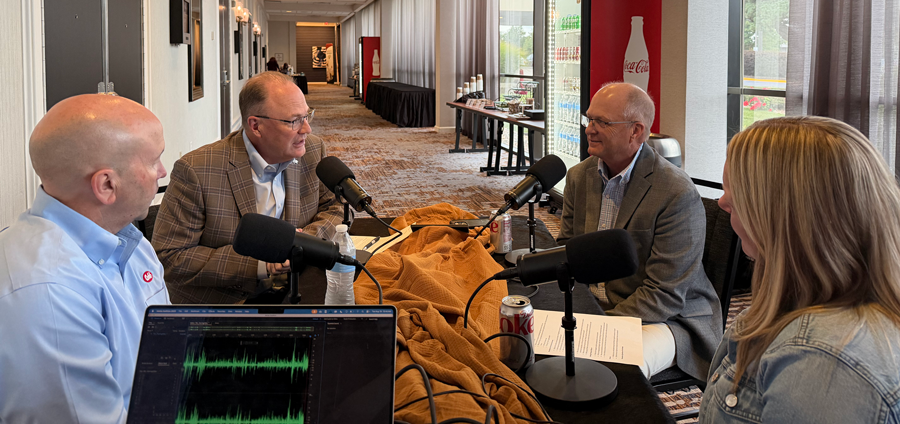

With decades of experience across multiple species, they shared their view of changes in the genetic landscape — past, present and future.
High-density chips were game changers a little over a decade ago.
“What you saw with that was the ability to run faster became incredibly empowering,” Herring said. “It helps for discovery of additional traits, but the most powerful thing is really the rapid acceleration of genetic progress.”
Of course, going quicker also means, “you can run faster in the wrong direction,” Herring cautioned.
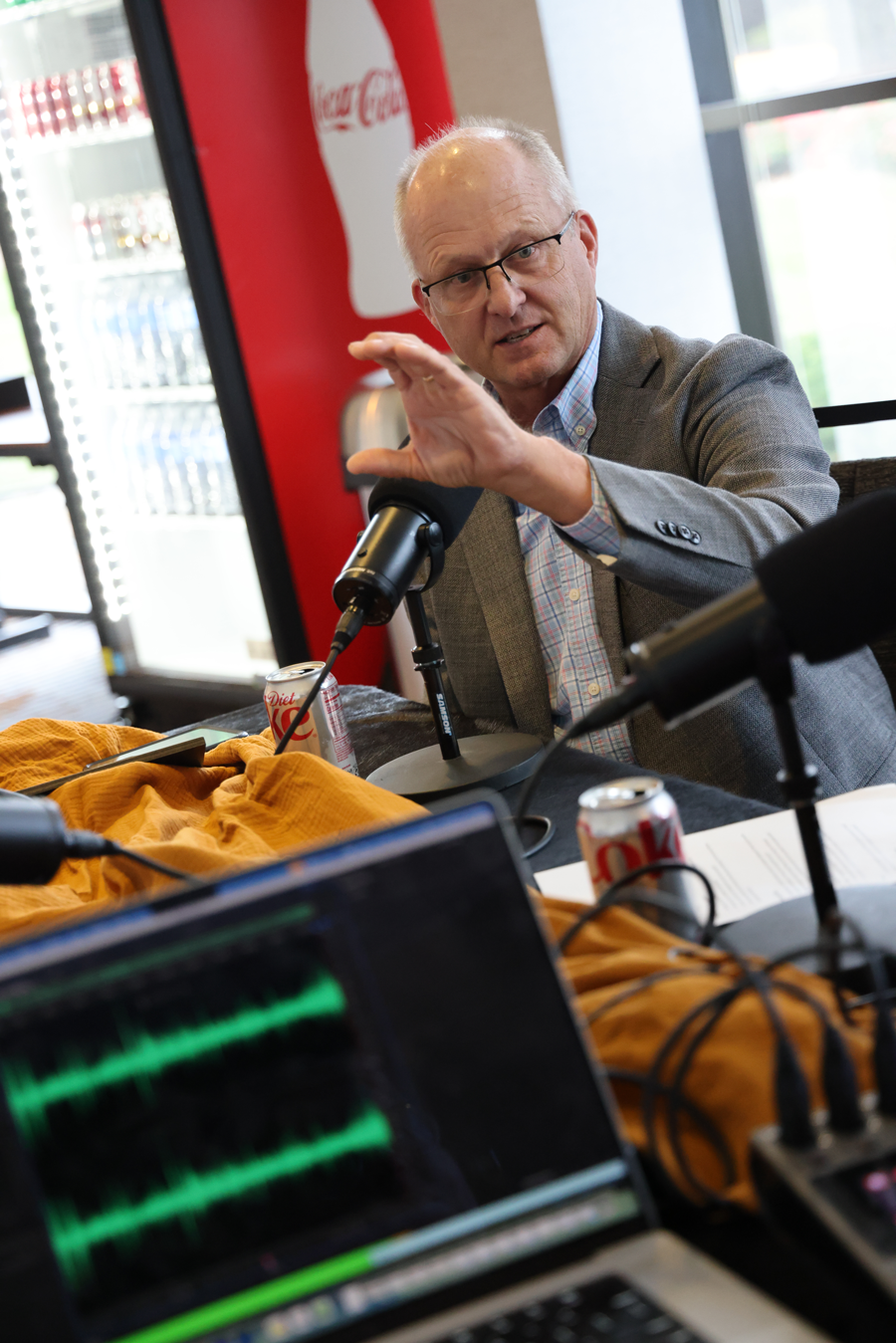
Mark Allan

Allan noted parentage verification was the very first area where genomics made huge improvements in the herd right away.
“What that did with heritability of traits and accuracy of pedigree on the impact of the genetic evaluations alone for any species was huge,” he said.
That accuracy, in turn, helped the commercial users of those genetics.
“A genomic-enhanced EPD takes out more risk in those mating decisions,” Allan said. “It’s not perfect by any means — genetic selection never has been — but it’s taking some risk out.”
Looking to the future, artificial intelligence is already helping identify patterns and sort through huge volumes of data quicker, Herring said. But both men predict another big opportunity for the beef business is in closing the feedback loop by getting more data back from the users of Angus genetics.
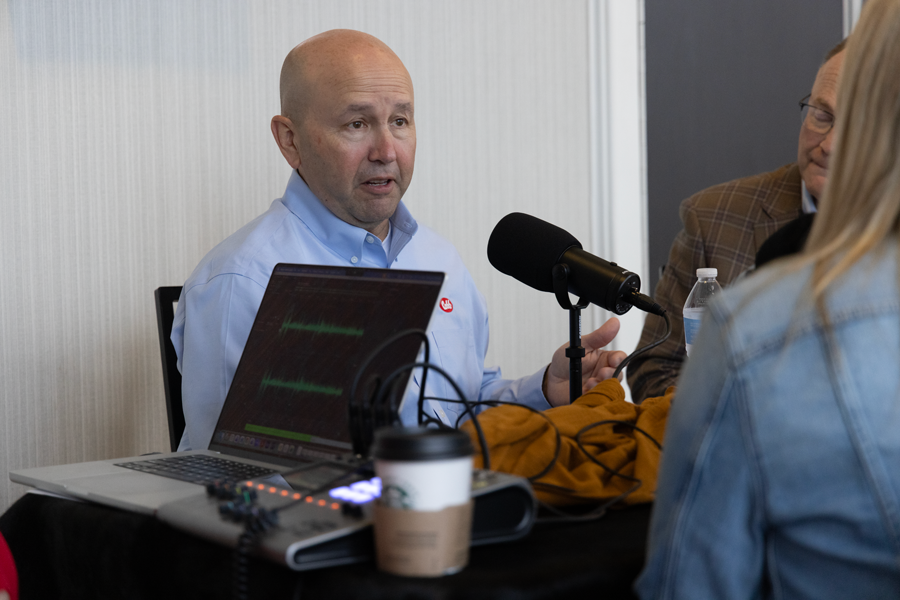
William Herring

“You just simply can’t outrun the truth — you've got to know where you are to know where you’re going,” Herring said, emphasizing the importance of seeing the genetics out in production scenarios.
Every single chick in their system is informative. Blood is taken shortly after hatching and the information is added to the database. The company gets data back from different farms and then evaluates the performance of those genetics in various environments.
Allan says the beef industry would benefit from more commercial data in many ways, but especially as they try to make the best fit for multiple regions or management strategies.
“Everybody can find the highest for whatever the index is or the biggest growth bull or whatever the Number 1 or top 1% is. But that’s maybe not the animals that you should be using in your management scheme to make you the most money,” he offered.
Herring spoke as part of the Angus Genetics Inc. (AGI) Imagine Beef Genetics Forum in Kansas City in August. Scientists and producers alike gathered there to trade ideas on needs in the field and possible research and development that could solve those challenges.
EPISODE NAME: Herring and Allan on Real-World Feedback Informing Tools of Today, Tomorrow
Whether you’re excited about the possibility of change or are cautious about the pace, this episode will give you a lot of perspective on the way the genetic landscape is shifting in the beef industry. Bringing together two great minds with decades of experience across beef, dairy, swine and poultry, the discussion covers everything from genomic testing and artificial intelligence to commercial data and the importance of phenotypes. The discussion gives a lot of insight into ways the Angus breed can remain competitive now and in the future.
HOSTS: Miranda Reiman and Mark McCully
GUESTS:
William Herring is the vice president of research and development at Cobb-Vantress, a leading global poultry genetics company. He leads the discovery efforts to accelerate genetic progress and introduce it at ascale in more than 100 countries. He leads a team of scientists, engineers and innovators with more than 30 years of experience and leadership in livestock and poultry genetic improvement. He obtained a bachelor's degree in animal science from Auburn University and a master's degree and doctorate in genetics from the University of Georgia. In his spare time, Herring enjoys helping with the genetic improvement program at this family's beef operation.
Mark Allan is an independent consultant in beef and dairy cattle genetics, genomics and reproductive technologies. Raised in the Nebraska beef industry, Allan combines practical cattle production experience with advanced training in animal genetics. His career has included roles with purebred farms, the U.S. Meat Animal Research Center, Pfizer Animal Genetics and Trans Ova Genetics. Today, he works with seedstock and commercial producers, breed organizations and allied industry partners to apply data-driven genetic solutions that improve profitability and long-term herd performance. Allan also serves as an industry representative on the Angus Genetics Inc. (AGI) Board of Directors. He and his wife, Alise, live in Iowa, where they raised their two kids.
RELATED LINKS: Exploring Next-Generation Phenotyping that Drives Commercial Profitability White Paper
SPONSOR:
Custom Cattle Tags: Looking for a hassle-free way to order your livestock ID supplies? Whether you need TSUs or tags with unique numbers, personalized texts, or even your logo, Custom Cattle Tags has got you covered. Visit customcattletags.com to place an order.
Angus Media: Emails you actually want — add yourself to the Angus Media e-blast list. We’ll make finding your next herd bull simple by sending the latest Angus genetics straight to your inbox. Subscribe at: www.angusmedia.org/subscribe
Miranda Reiman (00:00:03):
Welcome to the Angus Conversation. I'm your host, Miranda Reiman, with my co-host, CEO of the American Angus Association, Mark McCully. And Mark, you and I are just here at the start of the Angus Genetics Incorporated Imagine event. It looks to be a good event here in Kansas City.
Mark McCully (00:00:20):
Yeah, it's the second one that we started this for the first time two years ago. And so this is the second Imagine Beef Genetics Forum. And it's really designed, AGI leading a conversation across the industry around genetic selection. The first one really focused on what I'll call non-traditional data and phenotypes, things think about data that is captured downstream. So whether that's health data or some environmental data that you could pick up. And this is really kind of picking up where that conversation left off and continuing the discussion, candidly looking across species and looking across the bigger genetics landscape to see what's going on in other parts of the protein production world and what are the things we can ultimately distill down and bring back for Angus breeders.
Miranda Reiman (00:01:15):
And as you check into this conference, you're given a sticker that you can put on that shows whether you're allied industry, academia, or whether you're a producer. And so that's one unique aspect of it is that we're bringing together smart minds from all across the industry.
Mark McCully (00:01:31):
Great point. It's really designed to have all segments in the room as best we can and literally do some breakout sessions. As Kelli would famously say, this isn't a conference where we come, Angus staff and present. It's more around facilitating discussion, asking questions. And then there'll be small groups, breakout tables that will go try to tackle some of these and report back to the bigger groups. So it's really a workshop as much as it is formal presentations.
Miranda Reiman (00:02:00):
Absolutely. And I guess as you watch for coverage of this event, one thing that will come out of it, we'll be kind of bundling up all of these ideas and putting it in a neat package that those of you who aren't here to hear firsthand will be able to kind of see the summary of what is about to go on in the next day and a half.
Mark McCully (00:02:17):
Yeah. And for those interested in the first one, they could go back and go onto angus.org and find the white paper that was developed from the first one. I think would give you a really kind of in-depth look at the great conversations that took place there and be watching for the one that'll come out of this forum.
Miranda Reiman (00:02:33):
We'll link that one that Mark just mentioned in the show notes so that it is easy for all of you guys to find. So with that in mind, with this kind of as the backdrop, we decided to grab some people while we were together in person here and get a little bit of maybe a taste of some of the discussions that'll happen here. Mark, would you say?
Mark McCully (00:02:50):
Yeah. And candidly, this discussion that you're getting ready to listen to will stretch you a bit. Stretches me to think about. We have two really experts in genetic selection and two guys that have seen genomics from the very beginning.
Miranda Reiman (00:03:06):
And across all of the proteins too, we have beef, dairy, swine, chicken, and I think everything but sheep is represented in the expertise that we had at this table.
Mark McCully (00:03:16):
Exactly. And I know for some that you start looking at some of the integrated species and it gets uncomfortable. I've always felt it's smart to look across, I always say look across the barnyard, look at what our competing proteins are out there doing and what can we learn from where they've made progress and candidly, where can we learn from where they've made some mistakes? I think some of the discussion that we got into and that we're going to get into here the next couple days is candidly looking at some of those areas where because they've had these commercial, what I'll call commercial data feedback loops in place, they've been able to identify some shortcomings or some areas that they need to get better. And that kind of tends to be a little bit of a focal point of how can we do that in the beef cattle space while at the same time maintaining breeder independence, which is something that we're quite passionate about.
Miranda Reiman (00:04:08):
Absolutely. With most of my good conversations with smart people, I end up leaving with almost more questions than I have answers, but I think that I've come to terms that what this podcast is for is really to spark more questions and more dialogue. So we hope that as you listen along, if you've got questions, you'll ask them and hopefully it'll spark some more conversations out there in the country. Today on the podcast we have Dr. William Herring. He's the vice president of research and development at Cobb-Vantress, an animal genetics company with more than three decades of experience in both industry, academia, been in multiple different species. I guess we'll let you kind of give us your elevator talk as to who's sitting across from me.
William Herring (00:04:53):
Sure. Tell you a little bit about who I am. I grew up on a farm in Southwest Georgia, went through all of the graduate training around, really it was beef genetics, trained with Larry Benyshek and Keith Bertrand and went there because at the time, and this has been a minute ago, that's where the bulk of the national cattle evaluations for all the breeders, including Angus, were serviced at that point. Models changed. So went through the program there and then my first real job, if you will, would have been at the University of Missouri as a beef cattle geneticist. And so spent time there, short time at the University of Florida, then moved over to pork genetics, swine genetics with Smithfield Foods. They had an internal genetics division to power their live hog production and then really spent about after that a decade at PIC, which today would have a dominant share in the swine genetics space across the globe.
(00:05:49):
And then for the last four years been leading the R&D and genetic improvement program at Cobb Vantress.
Miranda Reiman (00:05:55):
And tell us a little bit more about Cobb Vantress.
William Herring (00:05:57):
Sure. So poultry genetics, and I'm going to say broiler genetics specifically, a little different than the other species I've worked with. There's a quicker turnaround in terms of genetic progress and genetic interval. And when you look at the customer base across the globe, unlike beef and pork, there's no restrictions due to ethnic preference, any of those things. So chicken is widely consumed. So it's a bit of a different space. Now with all of that said, the principles of great genetic improvement are the same, whether we move across those spaces or crops or whatever the case may be. So it is a bit of a different space. The industry is, I'm going to say, changing a bit with respect to beef, pork and chicken dynamics in the marketplace. And chicken's going to continue to be consumed at an ever growing rate. So it's really a cool role to be in and a wonderful business.
Mark McCully (00:06:58):
And you also have some Angus cows though, correct?
William Herring (00:07:01):
We do. So yeah.
Miranda Reiman (00:07:04):
I'm going to let you redeem yourself after saying chicken...
William Herring (00:07:07):
Back at the farm in Southwest Georgia, my brother and I have an Angus purebred Angus operation and he works off the farm as well. He's an engineer. He does a lot of the heavy lifting and lets me coordinate the breeding decisions and some of the marketing sorts of things. So have fun with that. So it's a little bit, that's why I enjoy doing this. Can share some of the experiences, if you will, in my day job and bring them back to Angus. So it's fun. I've been really blessed.
Mark McCully (00:07:40):
Well, you've got a very, very unique perspective with those different species and we'll definitely want to unpack that here a little bit more. But across from me is Dr. Mark Allan. I'll introduce Mark because I've known him a long time. I actually went to graduate school with your brother and I've got to. I always say one of the things that's very unique about you, you're a show jock turned gene jock.That's how I always kind of. But you have a very unique background, Mark, and that growing up in the purebred business and now today play a consulting capacity for several different organizations, including sit on the AGI board of directors as our industry representative. But maybe give us a little bit of background of your elevator speech, Mark.
Mark Allan (00:08:22):
Yeah. So lucky to grow up in the beef business in Nebraska and did an undergraduate degree at Nebraska, but then went out in the industry and worked as a herdsman in the Sandhills in Nebraska and then got to build a purebred operation in Dunlap, Iowa, that most everybody's probably fairly familiar with. Was talked into going back to graduate school, loved genetics opportunities and happened to get to work for the right guy at the right time. He started GeneSeek with his partner about a year into my master's program, did my master's and PhD with Dr. Daniel Pomp, was on staff then as a scientist overseeing the genomics of reproduction and feed efficiency at Clay Center and was fortunate enough to be part of the team at Clay Center with Beltsville, USDA and the University of Missouri and building the first high density 50K chip. Right place, right time.
(00:09:14):
When an industry came calling, talked me into leaving and helping build the original products and being part of the tech service team at Pfizer Animal Genetics. Did that for a number of years, overlapped and William and I had quite a bit of interaction there for about six months to eight months. Then left that and was working at Transova in the reproductive field, but developing also new products. As the explosion of genomic enhanced EPDs in dairy and subsequently the beef industry, got to spend a lot of time working with those clients, those genetic companies, all of those pieces of that and started my own consulting business working both in the beef and dairy sides of the industry on production, but primarily on the genetic side of the business and have spent quite a bit of time working in the dairy beef sector for those dairymen that connecting the beef and dairy dots and building products for them and pipelines.
Mark McCully (00:10:06):
Awesome.
Miranda Reiman (00:10:06):
All kinds of experiences.
Mark McCully (00:10:08):
Two really smart guys with a lot of experience. Yeah. I guess maybe talk about the early days. I mean today maybe we just accept genomics as commonplace, right? We've maybe gotten pretty comfortable with you. You guys have seen genomics from the very beginning. So William, maybe give us your perspective on the advancement in genetic selection tool using genomics, maybe some of the big monumental things that we've seen or landmark things that we've seen and kind of where it brings us to where we are today.
William Herring (00:10:38):
Sure. I mean, you really go back to what, 2013, previous to that, depending upon how you want to define it. We had an introduction of really a high density BeadChip. Really at the start of that, the cost price point on that was, for most people, was not a doable deal to use on a routine basis. We really got two things kind of came together that made it a usable technology, and I would say in Angus, computing power and the right models to do that. I think Angus is in a very good spot in terms of how that's approached today. Then again, really the cost and price point on the chip. Interesting enough, so that really kind of all came together around 2013 - ish, give or take a year. I could be off just a little bit. And it was utilized across pork, poultry to some degree, even though it's got full utilization today.
(00:11:34):
And what you saw with that is that the ability to run faster became incredibly empowering and we saw that across the species that were using that, which the ability to run faster means you can run faster in the wrong direction.
Mark McCully (00:11:51):
Doesn't always mean.
William Herring (00:11:53):
Yeah, 100%. So you really have to have as good of an understanding as possible of the trait profiles you're selecting on, being sure you're doing things the right way from a very common sense data-driven approach. And as a breeder, today there's honestly really no way, at least in the world of Angus, to not be heavily engaged on genotyping everything. It does other things beside that too. It cleans up your pedigrees on common mistakes that do happen, and they're going to always happen. It helps for discovery of additional traits, but the most powerful thing is really the rapid acceleration of genetic progress. Interestingly enough, probably one of the most common questions I get asked by our ownership board members is has AI, and I'm not talking about artificial insemination, has artificial intelligence changed your perspective of what we know and how we can move faster? Interestingly enough, the approach that's used at AGI, the approach we use at Cobb and others, single step
Mark McCully (00:13:02):
Single step.
William Herring (00:13:03):
With getting those genotypes in as many as early as possible is still provides today the best prediction accuracy. I may have a different answer on that six months or a year, but today that is still the case. So it's been a wonderful technology. The implications for moving faster are real. You can look at your own genetic trends. It shows that at the point of inflection of when genomics was implemented. You see it in dairy, you see it in every species that's utilized it.
Mark Allan (00:13:36):
On that point, the cleaning up of pedigrees and what that did with heritability of traits and accuracy of pedigree on the impact of the genetic evaluations alone for any species was huge. And especially in dairy and beef where the number of parentage errors that humans and cows make, I've been doing DNA work, sorting out parentage stuff since I was in graduate school in the early days and we were using micro satellites in the early days of microsatellites and that. It always intrigues me that I think I've seen every scenario you can think of and a new one pops up on something and you get it figured out with DNA and just that in itself is huge in solidifying what breed associations have historically always done. It was that piece of paper with those generations of pedigree. Now it's an accurate piece and American Angus producers need to be patted on the back with the percentage of them that utilize genomics because parentage is the first piece that happens before that genomic enhanced evaluation and getting that cleaned up.
(00:14:39):
It's phenomenal. When you look at the percentage of your producers that are utilizing the technology, it's incredible. The neat bridge thing, and then I love to talk and we'll talk more about it I think because it's really cool is it's giving the commercial cattleman
(00:14:55):
A tool to help a genomic enhanced EPD takes out more risk in those making decisions. It's not perfect by any means. Genetic selection never has been, but it's taking some risk out and especially for traits like birth weight, calving ease and things where our genomic accuracies are that much higher, you make a better decision taking some risk out. But now we're talking about tools too that are allowing them to access genetic tools in their commercial heifer replacements that didn't exist pre-genomics and really is just something that's growing over the last five years of the technology of being able to utilize that information.
Miranda Reiman (00:15:40):
And you talk about that price point is so much different again when. I mean I was sat at conferences at the early start of my career where people said, "Oh, someday we'll be able to do this." And everybody said, "No way. We can never afford that." Now they're using it on a much larger level. And that's a good place to put a pin in it while we hear from today's podcast sponsor.
Speaker 1 (00:16:03):
Are you looking for a hassle-free way to order your livestock ID supplies? Ordering your custom cattle tags should be quick and simple. And at customcattletags.com, it is. Whether you need TSUs or tags with unique numbers, personalized text, or even your logo, we've got you covered. Visit customcattletags.com today to get started or call the American Angus Association to place your order. Custom Cattle Tags, where tags are available your way.
Miranda Reiman (00:16:33):
Are you guys surprised at all by the pace at which things have changed? Either surprised that it hasn't gone faster or surprised at how fast that change has come about?
William Herring (00:16:45):
Clarify for me. When you say what's changed.
Miranda Reiman (00:16:48):
Well, I just mean the adoption in the industry, the way we've been able to use the tools and maybe even change we've been able to make in traits.
Mark McCully (00:16:56):
Maybe the advancement of the tool themselves. Early on we were talking about single SNPs and now we're high density
Miranda Reiman (00:17:02):
To a high density to all of that. Yeah.
William Herring (00:17:05):
I guess probably not. And I'm coming from working in different protein segments. So today there are basically two broiler genetics companies in the world. That's it. So the group I'm responsible for, and there's one more, every bit of chicken in the world, I'm going to say 99% of it comes from those two organizations. So if I'm confident that anything I want to implement, I can sit around a table like this and that decision is made fairly quickly. So that's an entirely different thought process than a member organization such as American Angus that has a board of directors and various breeders and not everybody has the same opinion. And that's all OK, that's all good. But today, since we were talking about genomics, our model today is every single chick that is informative at Hatch, which is all of them across all of our nucleus-level elite farms, every chick, we take a drop of blood, quick turnaround time.
(00:18:07):
It's in our indexes and in our, we call them EBVs, but they're practically EPDs. It's immediate. And so because the value proposition on that is we're going to improve selection accuracy in general by about a third. So we're going to move faster. We're continually collecting all the phenotypes and some of those phenotypes are hard to come by. And so genomics adds another added value to that. Our investment in genotyping is a very large number as a business, but we are confident and we have validated and continue to validate. It provides a return for our customers. There's no doubt about that. That's just backed by data and it provides a return for us because we can grow our market share, our price point, volume, et cetera, in doing so. So to not do it would be irresponsible.
Mark McCully (00:19:02):
As you guys think about the genomic technology we talked about from the inception to where we are today, I guess as you guys look at, where are we on the spectrum? Are we at halftime? Have we reached somewhat the maximum potential of the technology, maybe short of computing technology and artificial intelligence or machine learning? Are we just starting? How do you guys see it?
Mark Allan (00:19:29):
I think about it as like when you look at the evolution of genetic evaluation in beef cattle, which goes back to about 85, 86 in the early years and the lack of size of database for phenotypes in that and the roller coaster ride that we have. So for traits that we have lots and lots of data, the gain in accuracy, the gain in prediction at a young age, all of that is much, much higher. However, for traits that are not as heritable or traits that we don't have huge databases on and for future traits, we're in that continually growing, changing. It gets better and better over time. It's still though, the basics of genetic evaluation is still accurate pedigree, phenotypic data collection. Now because of genomics, we can find those true relationships amongst animals that are closely related and not close related, but actually are more related than we think, even though they're way different in segments of the pedigree that allows us to predict then what happened from our parents.
(00:20:30):
How much of those percentages of each grandparent did they inherit? Because it's not at 25, 25, 25 across the board, it's all over. And that's why closely related animals, full sibs and that can be very different. Anybody with kids knows that. Yeah, with kids, but my brother's six two. I'm a whopping five eight, five nine. We look about identical other than I'm the fat one of the team. But it's the ability to start sorting that out and start realizing that that animal has the genetic potential, this prediction in this direction and make those decisions. When we get to population genetics and do it in scale and moving whole populations like what William gets to do, it is even more fascinating because you're getting more of those animals that ranked at that top end for say these particular indexes that you're utilizing and moving that whole population faster.
(00:21:24):
The rate at which we do it is much faster. Now we can goof it up really fast too, but we could goof it up before because we just didn't have information and we get two, three generations down the road before we figure it out.
Mark McCully (00:21:38):
Do you see changes in. It seemed like early on we were looking at a couple markers, a couple SNPs, and then we got up to higher density and then we started getting to where, well, we'll do a whole sequence, whole genome sequence. As you think about the technology as itself, have we landed in probably a bit of a sweet spot where we are today? I mean, I think I remember some of the early discussions like, well, there'll be a day we'll just. And I was looking at it with the CAB lens at the time where we'll just pull a real quick tissue sample off a carcass and we'll be able to plug it in and we'll have a read of exactly what that animal is and breed composition, all those sorts of things. I guess what I'm trying to feel out is, is there another gear to the genomic technology itself or are we probably settled into a pretty good.
William Herring (00:22:25):
I think for the ongoing genetic improvement on the trait profiles that you have today and for the bulk of Angus breeders, I could be wrong. I may have a different answer again in a few months, but I would say that's in a good spot.
(00:22:41):
I don't know that there's really anything on the forefront, there's going to be big changes in that arena, probably on either cost or the platform used for the predictions. I do think there's an entirely other different area that across livestock and poultry that is on the radar. I know it's on the radar with Cobb and it's more than on the radar. The chip that we use today for ongoing improvement is great. But as we look at ongoing discovery in areas where we're not very good at today, and probably the biggest area that comes to mind is around disease. So I would say across livestock and poultry, we just really haven't been able to do a good job in changing the host genetic material in such a way through, I'm going to call it classical breeding to make a, in my case, a bird more tolerant or resistant to whatever.
(00:23:38):
Pick your disease. There's a full list. There is for cattle too. And you have to have an entirely different level of genomic information to do that. And that really gets to be around sequence. And again, this is not for everyday implementation in commercial breeding herds or purebred Angus breeding herds, but the power of where we are today, even compared to a year ago, and let me set this up, I want to unpack this right, is incredibly different from understanding that whole complex of is there anything we can do to change the host? I'm going to give you an example, historical example, even though it's almost a commercialization day, and I'm going to give you an example of how we operate today. So if we move over to pork, okay? So PIC, the market leader in swine genetics globally is at differing phases based on their publicly traded, based on what they share in their quarterly earnings calls and based on what they share in public.
(00:24:47):
They went through discovery of the diseases PRRS, it's abortion storm type and has other negative impacts on production. It's a bad deal and really is pretty much everywhere in the world. There's not a great vaccine for it. No pigs are naturally resistant or there's some claims around tolerance, but I think that's probably a lot of marketing. Several, several years ago, Randy Prather and Kevin Wells at University of Missouri had a working model of what they thought they could target to understand this whole area of this specific disease PRRS. So they went through that based on what they knew and they're really smart people and went through their bench science models. It all worked, did proof of concept, multiyear process, great science. Then there's the whole regulatory commercial market acceptance, which is where they're at in that journey, PIC is today. So that's the model of old.
(00:25:47):
Today, entirely different. I can go and ask, and we are using AI models to do this on the front side. I can go and ask of all the sequence data that I have internally, and I'm talking about genomic sequence, all of the published sequence data on whatever species is out there in the world and there is publicly available information and based on, it could be thousands of papers, peer reviewed papers, go hone those data. I don't know anybody humanly smart enough or has the bandwidth to go do that themselves. Or enough time. Or enough time. Honestly, in about 24 hours, I can get a pretty good candidate list. And it could be in this case, since I'm here on behalf of the broiler industry, it could be chicken genetics and I could have a list of a handful of variants, genetic sequences that the model says, "Hey, these are targets you should look at based on all the data that's been done all across the world that are priority probability-type targets that have some impact on tolerance or resistance." That's a quick thing today and that takes, not with that, multiple people, many years, et cetera.
(00:27:04):
I can go ask that question and then I can use my sequence information to interrogate my populations and say, "Do those variants exist?" Are they even in the natural populations at all? They are great. I can go and genotype the candidates. I can set up a challenge study. I can verify if it's right or wrong. Perfect.
(00:27:29):
If the variants don't exist, then I can use the tools such as gene editing to alter the genetic material. A portion of the audience will be familiar with gene editing and others may not be, but you're not introducing foreign genetic material. And then I can go and make those same variants in the bird, do the same challenge studies, and then I'm at a decision point. If the challenge studies are right and the models are right, and I've done this in a very compressed time period, what is probably 10 to 15 years in the old model. Now I've compressed that down minus commercial market acceptance and regulatory.That's an entirely different thing to talk about. Can't project that timeline.
Miranda Reiman (00:28:10):
Nobody can predict that.
William Herring (00:28:12):
I mean, that could be a three-year process to get proof of concept in place. And then sure at a decision point, is the value proposition still the right one? Or did I learn enough through that process I can sit down with pharma and say, "Hey, we have enough knowledge here today that now all of a sudden we can create a manufacturer vaccine that's usable for the process." So don't get really scared when we talk about editing because most people do, but it's a wonderful tool for us to learn what we need to know to battle pretty much any disease and some of them we won't be able to solve for sure.
Mark McCully (00:28:55):
Sure.
William Herring (00:28:55):
Does that help?
Mark McCully (00:28:56):
Very much so. And I think that stretches our thinking, right? We're here at the Imagine AGI conference and largely that's what this conference is set up to do is to, one, get smart people together in a room and share thoughts and ideas and visions of where things are going in the future and then help us bring that back of what should we be doing today, which maybe brings us to one of the, I think, and I remember some of the early, and still today I hear from time to time what genomics is almost been viewed as, well, once we can just take a drop of blood, we don't have to collect any more of this data. So Mark, talk about the importance of phenotypic data collection in this era of genomic technology.
Miranda Reiman (00:29:43):
He was laughing as you asked that question.
Mark Allan (00:29:44):
Yeah, because this is one of my soap boxes that I like to get on, but phenotypes are king in purebred breeding, commercial, everything, however you want to look at it, phenotypes are king. Everything with genetic evaluation relates to a pedigree, connectivity across herds, all these things that we need to calculate. Phenotypes are the exact same. They create connectivity, they create everything as you think of contemporary groups and defining traits with phenotypes. The more the merrier, the better the data collection, recording, generations, current and historical, but more current is even the most important. We cannot rely on the genomics itself to define, because over time we will have drift. And you have to keep redefining it, so to say. It would be a good way to think about it, right? Calibrating it. Retraining on the data. Retraining on the data. And that's what every weekly evaluation does at American Angus.
(00:30:39):
In essence, it's taking all the new phenotypic data, all the animals that have been genotyped that are being added to it and reruns it. So if there's a better set in defining or covering other areas of the pedigree, it gets better. And it keeps getting better. That never stops. In fact, the more we advance our genetic evaluation programs, the more important phenotyping becomes. You have to have it where you cannot not have it. There are places where producers in the commercial sector and stuff can benefit utilizing genomics to have access to the tools when they're connected to programs that are utilized in evaluation. The GeneMax Angus product is a great heifer selection tool when they're connected to those products and producers utilizing that at a commercial level. But you still, phenotypes still drive the evaluation, drive what we know about genetic prediction, and it's huge.
(00:31:38):
And there's always going to be more. It's not going to be less. And we always know that if we add another phenotype, the best 10 bulls in the breed, some of them are not going to look very good for it. You measure enough things, you're eventually not going to be good at everything. That's kind of how life works on the genetic side of it. But we never cannot phenotype. I mean, it's just end story.
Mark McCully (00:32:03):
What happens if we stop?
Mark Allan (00:32:05):
The predictions over time lose the statistical calculations of accuracy. So what that is telling us those animals that may have been really high, Mendelian sampling, some of those that look like they're high aren't proving out to be high. And so you're not that recalibrating happen. If you look at the top 20 bulls in a young yearling genomic enhanced EPDs and come back seven years later and look, okay -
Miranda Reiman (00:32:31):
Not the same.
Mark Allan (00:32:31):
There's going to be some re-ranking. There may be one or two that fell way out of that top 10 and maybe aren't even in the top 50. But as a whole, it's getting things, these are high growth bulls or these are high marbling bulls. It's getting most of it right to a point of their prediction, their genetic prediction is in that zone of higher, but it's not perfect. The accuracies are still not 0.9.
William Herring (00:32:58):
Yeah. I think Mark nailed it. Now, I'm going to tell you, I wish it wasn't the case. I wish we could stop spending the money on it, run the evaluations and get the same level of accuracy. I might think of it like this, and I know we're doing this just via audio, but think of with genomics, you have a graph, you got a straight line of maximum prediction accuracy over time and your horizontal X axises could be year. What happens when you stop collecting the data that we'll call it a decay curve, it just starts sliding. And initially it's just a little, but then it just drops straight off the table so that you're really kind of back to where you started without genomics fairly quick. So I wish it wasn't the case, but it is.
Miranda Reiman (00:33:50):
There's probably plenty of our breeders out there saying the same thing. It'd be sure nice to not have to measure all that stuff out there. What about the traits that are hard to measure? What about the traits that we're not collecting data on today? How do you get those tied to the genomic evaluation if you find the right thing in the genomics to help move one of those traits? I mean, talking specifically your example you used earlier with the health
Mark McCully (00:34:16):
William, you work in integrated models today, right? You have that ability to go all the way through the supply chain and collect data. Contrast that to obviously where we're at in the beef cow side.
William Herring (00:34:27):
That's a good point, Mark. I was going to bring that up because it's a point of differentiation. Beef's a, hey, it is what it is. It's a very segmented industry compared to the world that I work and live in most every day. The thing that we do at Cobb, because you just simply can't outrun the truth, you've got to know where you are to know where you're going. And so one of the things that we do, and in addition to our single step genomic evaluation powered by the right indexes that are reflective of our customers and integrated systems is not every customer will do this, but we have some customers that give us all of their commercial data over time on our products that they're utilizing. We have some that don't, and we have some that are in between.
(00:35:21):
And so what we do with that information is, is that I can tell you today, based on the genetic progress that was made from last week to the week before at the very top end of the pyramid, it takes about three to four years to push all that down to our customers. So I can tell you based on the time lag as those genetics move down through the pyramid, that this year compared to a year ago, our customers that have been on products during those periods of time, I can tell you they should have had X more for this trait, Y more for this trait, Z, et cetera. I can do that for the big ones they're interested in that power their closeouts. And thankfully our modeling approach says everything is doing what it should today, but I think you have to have those types of information to know that the things that you're practicing from a genetic selection and improvement perspective are doing what you think they're going to do.
(00:36:27):
I got an easy job. I mean it's very, very simplified compared to the world of beef because a lot of the data that's going to be generated and goes to AGI, it's going to be a result of IVF and ET and AI. And honestly, some of the traits that are incredibly important to the commercial industry are never going to get the opportunity to be expressed in the data that's in a large part not collected by the membership. That is what it is. So if you can tighten those gaps, there's a whole world of I think other opportunities in terms of creating the next right better product, if you would, for ultimately the commercial industry and those that process the product.
Miranda Reiman (00:37:19):
And with that, we're going to take a quick timeout for this word from Angus Media.
Speaker 2 (00:37:24):
Emails you actually want. Add yourself to the Angus Media e-blast list. We'll make finding your next herd bull simple by sending the latest Angus genetics straight into your inbox. Go to angusmedia.org/subscribe to make sure you don't miss out on finding an Angus bull that will take your herd to the next level.
Mark McCully (00:37:45):
How do you think about that, Mark, maybe from that feedback loop? Because it's a bit of the focal point of the Imagine Conference here this year is that how do we get to more of a, what I'll say real world commercial data feedback loop for our existing suite of traits, not to mention traits of the future, novel traits that we want to get discovered.
Mark Allan (00:38:07):
And one of the things that is like you're constantly validating what your genetic selection program is doing. And in the case like William said, they're doing it all the time and they have the ability because of the way the data flow is in that. And like the beef industry with its fragmentation and everything, but yet when you look at, and one of the programs I know that is done with high and low $B, the bulls getting used at the University of University of Illinois, Illinois validation, that's a great starting point to remind breeders that these technologies work and see that in a setting like that. And that some data that I've been really fortunate in groups to be able to work with is lots, thousands, tens of thousands of carcass records by Angus-sired bulls across the industry that have great connectivity in the way these cattle are done because they're used across multiple dairies in one or two different states, but they're all congregated at a calf ranch, backgrounded together and then sorted based on age and size and go to the feedlots.
(00:39:11):
So the connectivity of sires across and within lots and everything is just unreal over the course of like 12 months or a year. You can take all of those sires and look at, and a great example is sort them by their marbling EPDs. And then you can take their marbling scores on their carcasses. Incredible how that will sort that commercial data and show you that these bulls that are at this end are raising all the upper two-thirds Choice and Primes and the bulls at the other end are not hitting the marks anywhere close. They're not doing horrible, but it shows you that the genetics and genetic selection is working and it's proving through that commercial data and where it needs to go. And it's really fascinating. Those are data sets that can be utilized in genetic evaluation adding accuracy, but it takes some things in the pristineness of the data, understanding the different environments and all those kind of pieces that you have to constantly be thinking through as you implement a program like that.
(00:40:22):
But it is very doable and I see it as being a big part of the future. As we go to more and more programs where the added value is coming from hitting a point of these are where you have to be, we have to be able to know where these animals were born, that's how we get premiums. We all saw it when we talked about grids 30 some years ago, but the slow adaption of that, look at where we are today as we look at the different grids and how all that system works. These programs will continue. So the evolution of being connected to a program like that and getting those premiums, green tags used to be in vaccinated calves, weaned calves, you got a premium. Now it's just that you have to if you're going to hit what the market is. I think about all of this the same way, this commercial data and being able to contribute to that so you really understand where those animals are.
(00:41:19):
And as we get to the point of the genetic environment interactions, finding those animals that work in particular environment and management practices, this commercial data in these evaluations and modeled in different simulations of things will be a way we can, everybody can find the highest for whatever the index is or the biggest growth bull or whatever the number one or number top 1% is. But that's maybe not the animals that you should be using in your management scheme to make you the most money. And that'll be it. To me, that's the horizon of genetics where all this commercial data is going to help assist us in getting to that next level of genetic selection and management and really fitting it to making me the most profitable if I'm a producer.
Miranda Reiman (00:42:10):
This is maybe a stupid question and maybe too invasive into your business model, but how are you incentivizing those producers? You said the ones that will send it in. Is there an incentive for them to send it in or is it the data that they get back? I mean, I heard you say it helps them inform their closeouts or are you forcing them to, I guess?
William Herring (00:42:29):
Yeah, it's a fair question and it has actually some different answers.
Miranda Reiman (00:42:34):
Is that you saying you can't answer that question?
William Herring (00:42:37):
No, I can give you an idea. There's nothing. So FYI, Cobb is owned by Tyson Foods. So Tyson Foods powers 100% of the genetics that go into group poultry for Tyson. There's clearly a source of information there that is incredibly helpful to us because there are -
Miranda Reiman (00:42:56):
You have access to all the carcass data you want.
William Herring (00:42:58):
Yeah, live production and so forth. It's good for us, it's good for them, it's good for everybody else across the world as well. If you've got a hundred customers, it's like a hundred different personalities of the business. Some are going to be very forthcoming with that, particularly those that we have in a great spot in relationship of trust. When we move over into poultry and some other species to some extent, there's been a lot of antitrust litigation over the years up through now, lots of settlements associated with that. So that industry is very sensitive to sharing information. So you have to have a strong level of trust in doing so. Clearly for us, we don't share information as a point of trust between one customer and another. That would be the wrong thing to do. So we don't do that. So we treat it with incredible amount of care.
(00:43:51):
So it's a mix in terms of those that provide back. And I'm just talking about North America. I mean we have the same kinds of data that come from South America, Middle East, Asia to help us be sure we know where we are and where we're headed.
Miranda Reiman (00:44:06):
I mean, I think about that a lot in the cattle business. That's a hard thing to get data from commercial producers and I think you said pristineness of the data in a usable form because everybody's independent and collecting it in so many different ways. So do you guys have ideas on ways that we could be either incentivizing and/or make it easier for commercial cattlemen to help inform these genetic predictions that then will in turn help them? Any ideas?
William Herring (00:44:36):
Yeah. I mean, let's just be real. It's more difficult in beef.
Mark McCully (00:44:43):
And we kind of like it that way.
Miranda Reiman (00:44:44):
We can do hard things though,
William Herring (00:44:46):
Yeah, for sure. And I think, hey, there's somebody on the program here at Imagine from Dairy, and that's probably a decently nice example of using commercial data since the lion's share of commercial dairy cows are Holstein for ongoing Holstein genetic improvement and there's a value proposition there. I'm going to tell you, doing all of this, this is a different topic, but I do not believe that there's the right value assigned to genetics by those that purchase it. And this is across. We'll take crops off because crops has done a nice job with this. I'll actually share some math around this. We're not getting paid for what we do. And that's not being greedy, but I'm telling you in our business, and we tell our customers this, my R&D budget that includes those farms at the top of the pyramid is around a quarter of a billion dollars a year.
(00:45:42):
So for me to continue to funnel the ongoing genetic improvement and being sure I'm headed in the right direction, I need that help to do that. And as you look at the cost to those that buy the genetics, as you can think of it as draw a pie chart, the value of genetics in whatever the value of a pound of meat is, it's an incredibly small number. You can do it on a cost basis in terms of cost of production for the species. You can do layers, you can do broilers, you can do beef,
(00:46:18):
And it is not what it needs to be. You have to have margin as a creator of those genetics to power the ongoing genetic improvement, otherwise it's a dead business. So with all of that, I think it is a challenging value proposition in beef because kind of the first thing human nature is, "Well, I'm going to give you this. You need to pay me something for it." Well, hey, let's have Angus bulls average 25 or $30,000 next year, and then we can kind of start talking about some of those things. I'm trying to draw a point here for you that the math just doesn't work in that scenario.
Mark McCully (00:47:01):
As you guys look, and this topic about getting more commercial data into a genetic evaluation, not a new one. I always kind of joke, commercial producers, if they liked recordkeeping and data collection, they'd be registered breeders and they typically don't. I mean, I've had a last few weeks of traveling, I've been out in Nevada, I've been out in Wyoming and thinking about data collection out there in some of those enormous places, right?
Miranda Reiman (00:47:29):
Sometimes it's not that they don't want to, it's just physically impossible to do in the environments they run in
Mark McCully (00:47:35):
The environments, the way we run, the segmentation of our business. Do you have hope for, this is a leading question, I guess, but for new technologies, wearables, collars, ear tags, will that help crack this nut to some degree to where we can, again, get some passive data collection? Is that an element? Is there going to be a technology solution to some of this that might be able to inform our genetic predictions in the future?
Mark Allan (00:48:03):
I'm extremely intrigued where collars and digital fencing, so to say, or geo-fencing and ear tags and those technologies and some of the traits they're starting to generate, the algorithms that they're building. I've seen some really neat stuff in dairies that is with health data that is absolutely incredible. What they see a cow starting to do relative to her behaviors with intakes, drinking and movement and immediately and what it's done to the retention of those females and turning them quicker because they're ahead of it. They're actually before they're really physically seeing it, diagnosing it. So there's along that whole line of traits, I think a lot of it comes down to is, and William very much alluded to it, is if I'm a commercial producer and I am in the beef industry retaining ownership, I absolutely would want my carcass data. Am I buying bulls that are hitting the mark, that I'm getting the premiums and the stuff other than just seeing I average this much this year coming through whatever it was.
(00:49:07):
When they start doing just that is even the first step of if they're eIDing and IDing and they're getting that data back on those individual animals, boom, you've now created a source. It has ties.
(00:49:23):
Then you start looking at where genomics can add to the commercial industry. If cost we feel is comfortable enough and down and you can start tying that to sires, then you suddenly have a whole method of bringing in data. Those areas, but there has to be a financial incentive and reason that they feel that justifiable in pricing out the cost of their genetics, why they would generate that data. And that's really what it really comes down to.
Mark McCully (00:49:49):
Sure.
Mark Allan (00:49:49):
Yeah. Something will be a forcing function at some point is what I would just. But
(00:49:56):
Look at where AI is in the beef industry. Due to how we manage cows, we're not at 98%, 99% like dairy. It increases slightly. Some of these new technologies will even make that AI go up even more. But to think from the 70s when we were kids and using ampules and striking the glass and breeding cows when we were little kids or watching people breed cows when we were. I'm not that old, right? I remember those days, to the amount we are today, I would've thought 30, 40 more percent of the cows would be AI than what they are today. And it's due to management and everything else, cost.
Miranda Reiman (00:50:34):
Right.
(00:50:35):
What do you guys think will be the most different in genetic evaluations in the next 10 years?
William Herring (00:50:41):
Give me a minute to think.
Mark McCully (00:50:43):
They're pointing at each other. We'll refine it to beef cattle.
Mark Allan (00:50:48):
So if we say in beef cattle, I think we're going to see more and more of what we've seen in the dairy industry with commercial producers being to access this information and products like Clarified and that where the commercial dairyman has access to that genetic information with full pedigree information and making heifer selection replacement selection like GeneMax, giving those, it creates a level of the early adaption of that in the commercial sector. That's going to drive data because if producers are using a product like GeneMax, they have the ability to get parentage on sires. You do this on enough generations of your females, you suddenly have full pedigree information. So any traits that they start gathering become really critical. I think it would be really intriguing if the commercial sector and the purebred sector put scales underneath their chutes when they preg-check and we could really understand what we have in our mature growth curves and stuff and where we really are in the industry.
(00:51:52):
But I really feel that a wave of what is hitting us and will hit us and it's slow, but look at the pace at which it's gone on in the dairy industry. It took a lot of years from when that first dairy commercial female product hit the market to today where there's probably two million, three million commercial dairy cows, heifer calves genotyped at birth in commercial dairies. I work with a lot of dairy beef data where the cows are genotyped and had been selected in that, which brings another whole interesting realm of can we bring in dairy pedigrees into our genetic evaluations? It's going to be differences in carcasses relative to just like it is in beef, the variation in these traits.
William Herring (00:52:38):
I don't know that based on what we know today, and again, if we had this conversation a year from now, we may give entirely different answers. Based on what we know today, I don't know that the baseline technologies are really going to change. We're going to assume that Angus membership and breeders continue to run at the same pace they do. You could draw up a scenario if that's the case, that questions that'll become of concern will be, have I created a bottleneck in the genetic diversity of the base of my germ plasm? That's going to be an issue for me to have enough variation to supply the commercial industry to. And so I think there's some natural things of how do I work with our country partners that have probably a somewhat different base level of germ plasm to understand where that is. I don't know that those are going to happen.
(00:53:32):
I'm just saying those are questions that I think are pretty logical to assume will because the rate of the genetic pace has really escalated and it is going to continue to escalate. What you could consider elite genetic material today, whether you've got a great young bull that is pushing all levels of $C and pick your trait profile, that bull is going to depreciate enormously over the next 12 months. And so what we view as high value today is not high value a year from now. So I think some of those types of questions become interesting ones that I would at least proactively try and take a look at and see is that going to be something that you want to equip your breeders with better opportunities to make the right decision on moving germ plasm.
Mark McCully (00:54:24):
Excellent. I guess as you think, maybe to that very point, because I'm guessing we have some breeders listening to this that would say, "Well, that's a problem, right?" If we're turning generations that fast, and I hear it already today of folks saying, and they would probably point to genomics to say they've devalued some, what I would consider my top genetics, my 8, 10 year old cows that have done the job every time that fit my environment. How do you wrangle with that friction, that tension that exists in what we know as genetic progress by the book, if you will?
William Herring (00:55:03):
So thankfully, Mark, that's probably one you get to deal with, not me. Not me. Hey, being objective and letting the data tell us what that is. That train has left the station. Hey, there'll be people listening that'll be offensive to. It's absolutely not meant to be, but that thing's not backing up and changing. If you want to compete with poultry, if you want to compete with pork as a species in the marketplace, as a significant contributor to the food that gets consumed across the globe, the train's left the station and it's just simply not going to change. And that's in absence because we haven't talked about any of these. I mean, practically genotyping embryos and doing. You can run a couple of cycles of fairly fast selection. I know we're not going there today, but those technologies are not, I'm going to say, publicly available in the marketplace to any great degree.
(00:56:03):
So we haven't even factored in some of those things. And it's a competitive landscape. It is what it is.
Mark McCully (00:56:11):
Great perspective. Mark, you want to
Mark Allan (00:56:13):
Along those lines, the dairy industry has gone extremely fast down that road to the point we were. Back in my trans ova days, we were laparoscopic collection of ovum out of 60 day old heifers and she was having calves registered before she was even old enough to get pregnant herself. So turning those generations, genetic turn is really fast. All the technology is there. Doing it with embryos where we can turn embryos into a cell line so we have enough DNA to genotype and then selecting the cell line using cloning technology to then make that calf that never existed that's the highest of whatever based on all the indexes and information you have. Those technologies exist and they're being used in other sectors and other species, but in the dairy industry have for a number of years. But phenotyping is still what it comes back to, making sure that it's kind of like the constant check and then being able to make sure that your program is doing what it needs to.
(00:57:13):
These things and bottlenecks and getting yourself into a corner has to be looked at, dealt with, though about. Everybody can't be the same. We need the diversity, the variation. So as things change, you have the access of variation in a population to select on that. When everything looks the same in a purebred population and isn't identical far as genetically, you can't make progress. I mean, it all gets back to the overall variation and that's why the phenotyping and understanding that variation is so important. And so the basics will always be there, but the speed at which it will continue to go, go, go.
Mark McCully (00:57:52):
Which I think, as I think about it, that the fact that we are going that fast and turning generations, therein lies also value in this feedback mechanism. I think where we run the risk of not having that commercial feedback mechanism that's telling us if our cows aren't holding up long enough, if there's something that we all know drives the economics of this industry still yet today, if there's some, if you will, unintended consequences, we've got to be able to get that information, that data back into the system as fast as possible.
William Herring (00:58:24):
I mean, you mentioned the female traits. I mean, those cattle at the commercial level don't need to spin that flywheel as fast because they got to pay for themselves. But the other traits, I mean, things that impact livability in the feedyard, we have a pretty poor understanding of those today. And so that commercial feedback loop is incredibly important.
Miranda Reiman (00:58:50):
Well, you've given us a lot to think about. In fact, I'm sitting here thinking, I don't know if we've probably got people that'll listen to this podcast and be excited about all the things that they have to think about. And you've probably left some people that this will keep them up at night. So I guess thank you for that. We've got both ends of the spectrum, but we appreciate all of the knowledge you brought to the table, definitely the perspective from different parts of the business, from different protein sectors. That's been super informative to me. I've learned a lot.
Mark McCully (00:59:19):
It's been a luxury to be able to kind of tap into your guys' brains and from what you've seen and what you experience and your vantage point today of what you could likely see in the future. And to your point, Miranda, I think for some of our breeders, that's exciting and invigorating. Probably for some others, it's a little concerning, but I think the point of this whole podcast has always been about creating conversations and perspective. And that's to me what makes this business great is that we get the chance to do that.
William Herring (00:59:50):
With those comments, let me level set us because look, we can do this in five years from now and it'll be an entirely different set of topics. It's the way it's always been, the way it's always going to be. I would tell you that I think Angus breeders in the world of beef are sitting in a wonderful space today. And I'm saying this from a bit outside as a breeder, viewing what's going on, but also from the other industries I've been involved with in a professional setting over time. You're sitting in a good spot. You lead the world in genetic predictions, the technology that does it, the trait complex that you do. And I think given the constraints that the team has to work within, fantastic job, pat you on the back. And the breeders that are out there today making decisions, just take advantage of those.
(01:00:46):
For practical purposes, it's kind of free. So do those things. There's always going to be these topics and things that we wrestle with in terms of how to be better. It's just part of what we do.
Mark McCully (01:00:57):
Sure. Yeah. Great perspective. Great perspective.
Miranda Reiman (01:01:01):
So we always end this podcast on a random question of the week. So random question of the week for you. I want to know when you decided there was a moment or time when you decided that you wanted to get into the genetics field.
William Herring (01:01:16):
Yeah, for me, I still remember, I told you I grew up on a farm in Southwest Georgia, farm's still in the family. And at the time my dad and grandfather, my grandfather had passed away, but they were in the Hereford business. And I just became incredibly intrigued with how are we making decisions? And it really evolved from there, but that's how it started.
Miranda Reiman (01:01:38):
Sure. I love that.
Mark Allan (01:01:39):
Yeah. Young kid getting involved in 4-H and started with Hereford heifers and got addicted to trying to, how do you create the next better one? How do you create a herd of those? And it just kept evolving down that line. I loved repro ... and that, so the opportunity when you start coupling technologies and stuff, but it came down to just the passion of can I make an animal that's this, or can I create a herd of them that look like that? Or what are going to be the best set of feeding cattle kind of thing. Your mind starts and you just are always intrigued with how do you do that. And that shot me down that path, I would say. Being in that position to have to make matings on lots of cows and then trying to make it, how do we make it better?
(01:02:27):
How do we compete with those other ranches out there in the 90s before I was talking into going back to grad school?
Mark McCully (01:02:35):
I think that's ingrained in every cattle producer I've probably ever been around. They always want the next calf crop to be the best one. And how do you make sure we're not complacent? I mean, I appreciate that perspective, William, of the position we're in today. But as I always say, you always act like you're number three trying to get to number two. So guard off the complacency. And I think you do that by stretching and thinking about where this business is going and how do we make sure we take advantage of what we have today and leverage that to make sure we're where we want to be tomorrow. So appreciate you guys coming on. As I said earlier, a luxury to be able to sit down with you guys and pick your brain and to gain a perspective that very few have. So thanks for sharing that with us.
Mark Allan (01:03:19):
Great to be here. Been a lot of fun.
William Herring (01:03:20):
Thank you. This has been fun.
Miranda Reiman (01:03:22):
You. That conversation, just like the AGI Imagine Forum, was designed to stretch us. The Angus Journal carries all the latest updates in the Angus breed, including AGI's follow up when it's available. Please visit angusjournal.net to learn more. This has been The Angus Conversation, an Angus Journal podcast.
Related Publications


Current Angus Journal
Keep up on the latest stories of the people and programs in the breed.

Latest Podcast Episode
Don’t miss conversations with breeders and industry experts.