




The Crystal Ball is Broken
Why we haven’t built back, capital concerns and the demand-driven future.
February 17, 2026
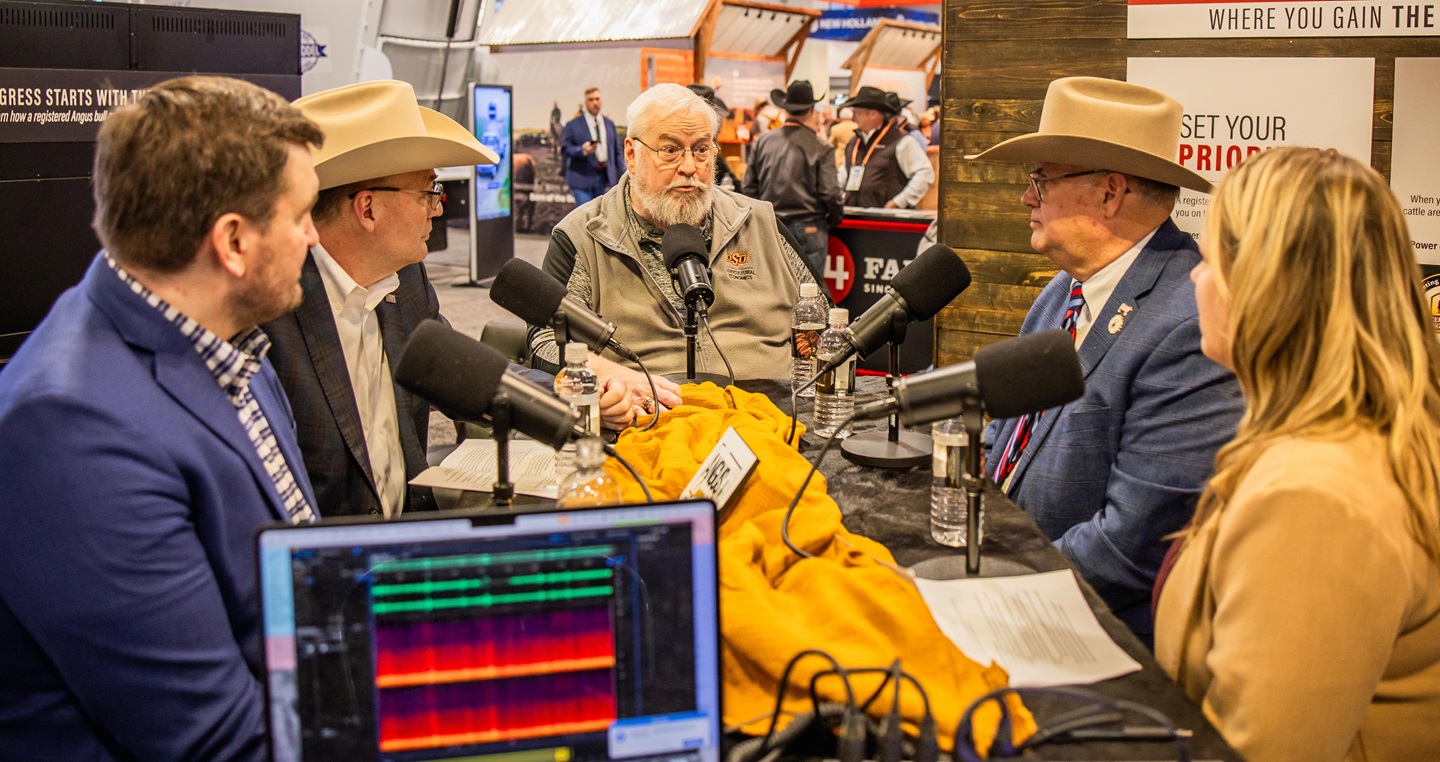

If the last U.S. herd rebuild can be described as a “jackrabbit” rebuild, this current period is completely the opposite, says Oklahoma State University ag economist Derrell Peel.
“We’re in a very challenging supply situation and that results obviously in a very dynamic market situation, especially for cow-calf producers,” he said on The Angus Conversation podcast. The cow herd is down 4 million head from its peak in 2019. “It’s a lot of fun right now, and we’re seeing unprecedented things we’ve never seen. In the rest of the industry there are some more challenges because pretty much everybody else is in a margin situation.”
Fellow guests Steve Sunderman, Nebraska cattle feeder and commercial cow-calf producer, and Gene Copenhaver, a stocker-operator from Virginia and newly elected president of the National Cattlemen’s Beef Association, represented different segments in of the beef industry in the discussion.
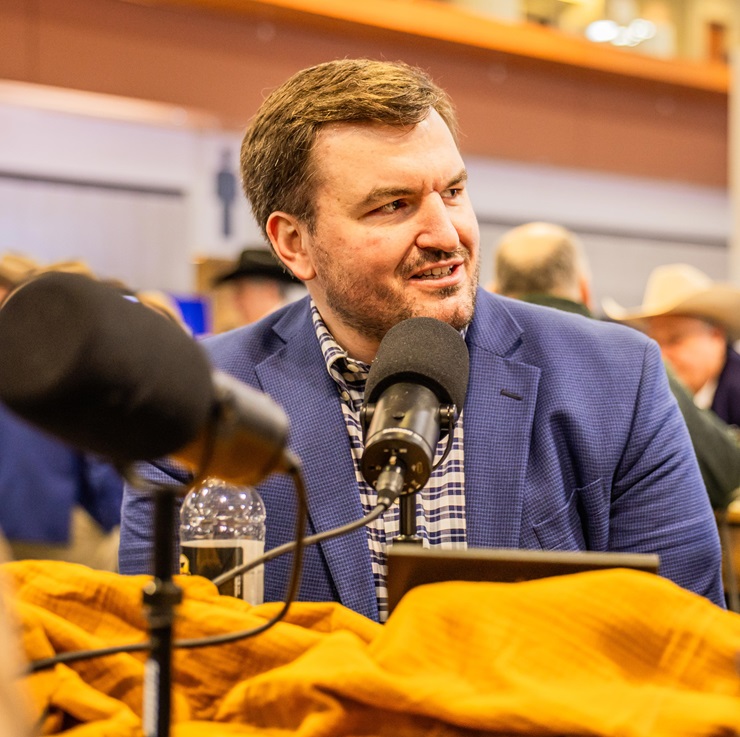
Steve Sunderman
Sunderman Family Farms
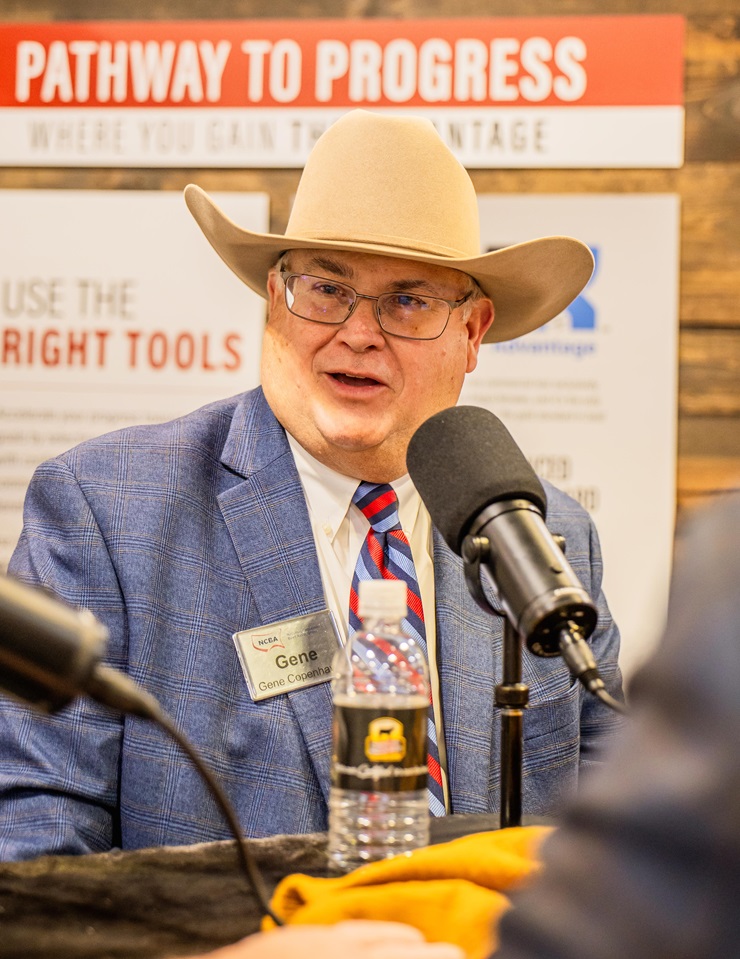
Gene Copenhaver
Copenhaver Brothers Farm
Sunderman says his response to the snail’s pace of the rebuild is to take the cattle in his yard to heavier weights.
“When you look at the cost of gain versus the market price. It’s never been wider,” he explained. “We've got cattle that are closing out on levels I would’ve never even imagined that: A) that we could do it, and B) that the packer would be willing to take them.”
Peel admitted that he expected the industry would have found the ceiling decades earlier.
“About 30 years ago I started predicting that cattle wouldn’t keep getting bigger, and after being wrong for 25 years, I quit doing that,” he joked. “I don't know that I know where the limit is.”
The rebuild isn’t limited by this next generation’s work ethic, but rather the capital requirements it takes to get started, Copenhaver said.
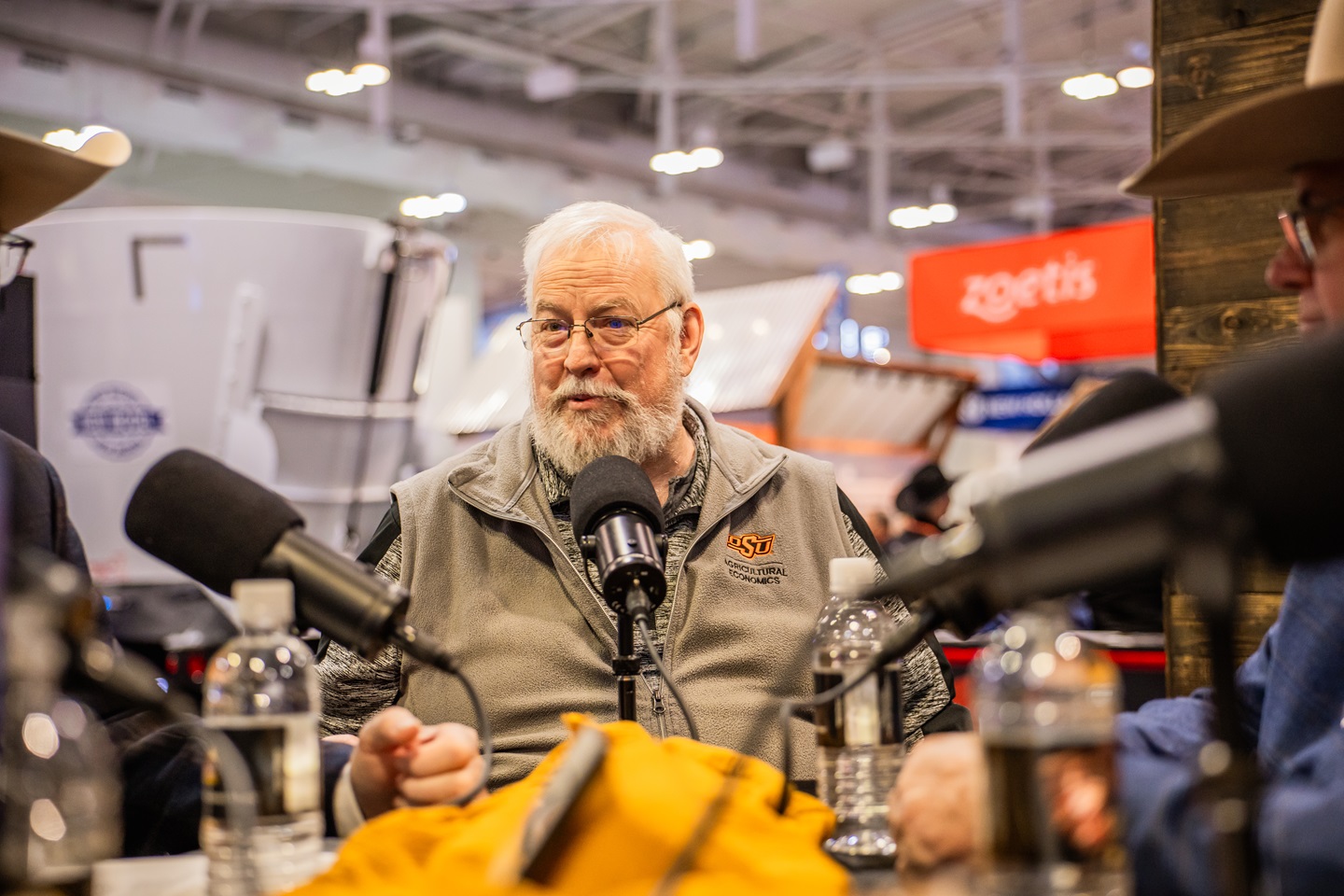
Derrell Peel
Oklahoma State University

"I think we're pretty optimistic for the industry in terms of that potential long-term growth and size of the industry." — Derrell Peel
“We’ve got to bring that next generation on with some of those new tools and expand some of the tools we already have, whether it’s risk management, whether it's interest rate programs,” he said. “And we’ve got to work on the other side on transition with these older producers. We’ve got to find tools that will help them get out at a reasonable level where it doesn’t all go to taxes.”
Looking to the future, all three say they’re optimistic, but underscore the importance of planning for volatility.
“I think as we move forward, my big thing is just keeping your equity together, taking advantage of opportunities as you get them, but just make sure that you’re using some sort of risk management to protect yourself so you can keep doing what you're doing,” Sunderman said.
“I’ve been bullish longer than I’ve ever imagined I could be in this industry,” Peel added. “Basically, my outlook story hasn't changed in about four years now, and it’s not changing going forward for the foreseeable future. “I think we're pretty optimistic for the industry in terms of that potential long-term growth and size of the industry."
If the last U.S. herd rebuild can be described as a “jackrabbit” rebuild, this current period is completely the opposite, says Oklahoma State University economist Derrell Peel.
The beef industry is on pace for a slow rebuild, and this episode of The Angus Conversation dives into the “why.”
Cattle feeder Steve Sunderman and stocker-operator Gene Copenhaver join Peel to discuss tight supplies, margin pressures and how producers are adapting. From heavier finishing weights to rising capital requirements for the next generation, the guests explore what’s shaping today’s dynamics and long-term outlook. The guests share why they’re “cautiously optimistic” and yet emphasize the importance of risk management.
HOSTS: Miranda Reiman and Mark McCully
GUESTS:
Derrell Peel is an ag econ professor at Oklahoma State University, holding the Charles Breedlove Professorship of Agribusiness in the Department of Agricultural Economics. He has served as the extension livestock marketing specialist since 1989, focusing on livestock market situation and outlook and marketing/risk management education for producers.
His work covers all areas of livestock production economics and marketing for beef cattle including meat supply chain and international cattle and beef trade with an expertise in the Mexican cattle and beef industry.
Gene Copenhaver is a fifth-generation cattleman whose family dates to the 1850s in Washington County, Va. Copenhaver currently manages his family’s stocker operation in southwest Virginia with his son, Will. He was an agriculture loan officer for 38 years and served his clients who were primarily cattle producers in five East Coast states.
Copenhaver is currently serving as National Cattlemen’s Beef Association president.
He has been married to his wife, Jodi, for more than 35 years, and they have three grown children, Brad, Will and Jaymee, and one granddaughter.
Steve Sunderman is a sixth-generation farmer rancher who works alongside his parents near Norfolk, Neb. Sunderman Family Farms is a farming, cow-calf and cattle feeding operation.
Steve has served the board of the Nebraska Cattlemen Association and is currently vice chair of the taxation committee as well as past chair of the marketing & commerce committee and past member of their executive committee. He is also a past chair and vice chair of the National Cattlemen Beef Association’s live cattle marketing committee.
Steve is a co-founder and president of Sunderman Investments, an investment firm focused on rural downtown development and value-added ag investments.
SPONSOR:
Angus Media: Are you ready to find your next influential Angus sire? Angus Journal subscribers will receive a free copy of the Angus Bull Book: Spring 2026 Angus Sire Directory, mailed right alongside their March edition. Visit www.AngusJournal.net to subscribe to the Angus Journal today.
Angus Media: A sale book isn't just a sale book. You have options. Big or small, private treaty or live auction, Angus Media’s Pasture to Publish online portal is here to serve you. Visit www.AngusMedia.org to learn more.
Miranda Reiman (00:00:02):
Welcome to the Angus Conversation. I'm your host Miranda Reiman with my co-host Mark McCully, CEO of the American Angus Association. And we are sitting down here in the trade show at the Cattle Industry Convention and Trade Show in Nashville.
Mark McCully (00:00:17):
Yeah, it's an event every year where we really get an assembly of folks from the beef industry, from
Miranda Reiman (00:00:24):
All different segments,
Mark McCully (00:00:24):
All different segments. I was talking to a chef yesterday. We've got packer, processors are here, feeders are here. Obviously lots of cow calf producers and I think this part of the world, when the CattleCon comes to Nashville, it's a lot of producers are able to drive in and so is, I have not heard numbers, but I know it's a big event with a lot of folks, a lot of Angus breeders. We have a booth here in the trade show and lots of Angus breeders hang out and a lot of some good commercial customers stop in and find out what's new at Angus.
Miranda Reiman (00:00:53):
It's definitely one of the biggest outreaches to commercial cattlemen that we have and we're able to really talk about all the entities are kind of represented in the booth, so if somebody wanders up and has a question on anything from GeneMax and Angus Link and any of that to, they want to get subscribed to the magazine. We've got everything in between.
Mark McCully (00:01:14):
Every piece and part now, and we've actually got Pathway to Progress. That's kind of our theme for the booth of really trying to, I've always said we tend to offer a lot of programs and I think at times our commercial cattlemen have a little bit of hard time seeing how do those pieces all fit together.
Miranda Reiman (00:01:29):
Alphabet soup.
Mark McCully (00:01:30):
And so we've really worked hard of trying to show that pathway of how you would use the different tools really starting with the purchase of the registered Angus Bull. And then how does that unlock opportunities down the road?
Miranda Reiman (00:01:40):
Absolutely. So this is also a good place that we get a lot of, I guess, state of the industry updates and we hear a lot of things that are going on that are going to affect our business from Washington to things going on out in the country. And today we were able to gather together some experts or people with different vantage points on the beef cattle market.
Mark McCully (00:02:00):
When cattlemen get together, we'd talk about the weather and we'd talk about the markets, right? And so we're going to talk about the markets. No, had a great conversation of folks coming at it from an academia standpoint, a stocker cow calf, and have a cattle feeder. And so this market is dynamic with lots of variables, lots of moving pieces and parts, and it was good to get to unpack that with our guests.
Miranda Reiman (00:02:21):
Listeners probably think that we say this all the time, but that conversation could have went on for another hour and we still wouldn't have covered all the ground. So I think you're really going to enjoy this one.
(00:02:30):
Today in the podcast, we've got three special guests that have a lot of experience in the cattle market, so we're going to start with Dr. Derrell Peel. He's an ag economist from Oklahoma State University. You've been there a long time. A long time.
Derrell Peel (00:02:49):
I'm going on 37 years at Oklahoma State in the same position.
Miranda Reiman (00:02:55):
And your background, you grew up in Montana?
Derrell Peel (00:02:58):
I grew up in Montana. I actually started out life in west Texas and my dad wanted out of West Texas when I was a little tyke, so we moved to within a hundred miles of Canada to get out of West Texas. And so I grew up in Montana on a little cattle operation and I've been around the cattle business all my life through college as well as other jobs.
Miranda Reiman (00:03:18):
Good. And you got your master's and your undergrad there at Montana State?
Derrell Peel (00:03:22):
Two degrees in Montana State, bachelor's and master's. I worked for Colorado State University running a range research station for about four years, three and a half, four years, and then went back to the University of Illinois for my PhD.
Miranda Reiman (00:03:38):
Good. And of course well respected in the industry. Whenever something's going on with the cattle market, I kind of think, what does Dr. Peel think about this?
Derrell Peel (00:03:46):
Well, I write a lot of stuff. I enjoy doing it. And yeah, I've been around a long time, so I write a weekly newsletter with some colleagues at OSU and I'm right out a thousand articles I've written I think in the last 20 some odd years that we've been doing this.
Mark McCully (00:04:00):
Wow, fantastic. Well, and there's enough going on in the market. You have a lot to talk about right now.
Derrell Peel (00:04:04):
There's no shortage of coffee, lots of content. Everything's moving right now. Yeah, for sure.
Miranda Reiman (00:04:08):
As we always like to do when we have academia on, we've paired them with folks out in the field doing the things that you're talking or writing about. So Steve Sunderman of Norfolk, Nebraska, sixth generation farmer rancher. And one thing in your bio that surprised me, you're a University of Chicago graduate?
Steve Sunderman (00:04:24):
I am, yes.
Mark McCully (00:04:30):
That's where all Nebraska kids go.
Steve Sunderman (00:04:31):
Trust me, I was one of the few. One of the only farm kids there. But yeah, I went out there to major in economics and I was on the wrestling team. A little bit of culture shock at first, being on the south side of Chicago, but I was able to get through it and really enjoyed it. Had a great experience.
Miranda Reiman (00:04:46):
I bet you know the city better than most people in Nebraska.
Steve Sunderman (00:04:48):
I know it pretty well. It was nice having my farm truck there. I travel all over, became a bit of a foodie out there, so they're looking for recs, let me know.
Miranda Reiman (00:04:57):
Very good. So you're the president of your family farm there.
Steve Sunderman (00:05:00):
Yeah.
Miranda Reiman (00:05:00):
Tell us just a little bit about what you've got going on.
Steve Sunderman (00:05:02):
Yeah, we've got a family farm and cattle operation, cattle feed lot and then more recently cow-calf, so I run that with my parents just outside Norfolk, Nebraska, but we background cattle in a couple states and run some grass cattle and just try to stay out of trouble.
Miranda Reiman (00:05:17):
Of course, have held leadership roles in the cattlemen's organizations.
Steve Sunderman (00:05:21):
I have.
Mark McCully (00:05:24):
Chaired the live cattle marketing committee a handful of years ago.
Steve Sunderman (00:05:26):
Gene and I were on the board at the same time as officers and was chair of the Nebraska Cattle Marketing Committee as well, as well as national cattlemen and definitely a little bit of a baptism by fire. But yeah, it was a good experience overall.
Mark McCully (00:05:37):
I would say the live cattle marketing committee is always the committee you go to when you assume there's something.
Steve Sunderman (00:05:41):
Well, that's right.
Mark McCully (00:05:42):
Spirited discussion.
Steve Sunderman (00:05:44):
And in terms of being leadership on that committee, it's a little bit of a drawing the shortest straw is how you end up there.
Miranda Reiman (00:05:51):
And Gene Copenhaver over here, you are also no stranger to NCBA, fifth generation cattle rancher from Virginia.
Gene Copenhaver (00:06:00):
Exactly. I've been part of NCBA leader policy leadership for 12 years and served with Steve and Steve's famous for chairing the six hour meeting in Denver several years ago.
Derrell Peel (00:06:16):
Infamous summer meeting.
Gene Copenhaver (00:06:18):
He knows how to handle people and yeah, my only problem with Steve
Miranda Reiman (00:06:23):
He's still here to talk about it.
Gene Copenhaver (00:06:25):
I tried to send him some of our good yearling steers to him to feed in Nebraska, but he's not took me up on it yet.
Steve Sunderman (00:06:34):
Well, we can negotiate here today. Tell me when the breds comes down Gene.
Miranda Reiman (00:06:40):
That's what we're going to talk about here today, but also have an extensive background in industry with your experience as a ag loan officer.
Gene Copenhaver (00:06:46):
Yeah, I was an ag lender for 38 years. Great career, great customers, covered five to seven states most of the time, mostly cattle customers. I don't miss banking, but I do miss my customers. I miss the people in the industry I worked with and taught me a lot about the cattle industry because it was a very diverse set of people that I worked with and it was very helpful for my leadership positions within NCBA, but I was a full-time cattleman like a lot of our producers, commercial and purebred. I was working two jobs at one time and the whole industry is still doing that and we need to still continue doing that to sustain this industry.
Miranda Reiman (00:07:29):
And speaking of leadership roles that it prepared you for, you're about to take on a big one.
Gene Copenhaver (00:07:34):
Yeah, this afternoon I'm going to be president of NCBA, so I'm looking forward to it, looking forward to traveling the country even more. And it's this how different God-given assets we all have and we do things different, but we're different landscape I say, but same people, just rural people in America is just great people. I used to think it was southern hospitality, but it's rural hospitality. Everybody takes you in like family and it's been great for me.
Mark McCully (00:08:06):
Yeah. Well we appreciate that leadership and I know for many they understand these volunteer positions, they require you to be gone a lot. Have you estimated how many days I got to meet your son here earlier, how many days that you are going to be on the road in the next year?
Gene Copenhaver (00:08:21):
Past presidents have served, some of 'em go up to 200 days or over 200 days, but I've seen my near schedule, but I have no idea.
Mark McCully (00:08:32):
You're just going to take it week to week.
Derrell Peel (00:08:34):
They won't tell you all of it.
Gene Copenhaver (00:08:37):
I'm very blessed to have my son Will back on the operation. It's a stocker operation there in southwest Virginia and he's very blessed to have him there and he owns more of the operation than I do now and we're looking at succession planning, so he'll have it all here someday.
Miranda Reiman (00:08:54):
Well we're looking forward to having all this expertise around the table to talk about the cattle market. It is so fun to talk about right now because everybody's optimistic and in good spirits, but we also know that that means that we need to be looking ahead. So I guess maybe start out by just letting us know historic prices have really caused that optimism. What do you think is the single biggest factor on today's cattle market? I looked right to Dr. Peel too.
Derrell Peel (00:09:22):
You looked at me, so I'll jump in here. I mean, it comes down to a supply driven market right now. I mean, we got here because of adverse weather conditions over the last several years. We didn't intend to be this small as an industry. The industry is naturally cyclical. It's been cyclical for 150 years, but when you go back to 2019, which was the last peak in the cow herd and in the total cattle herd, the beef cow herd, and we knew there would be some cyclical liquidation. At the time I described it as I thought it was going to be more of a plateau than a real liquidation. It didn't look like that severe. But by 2020 into 2021, the drought kicked in and around the country pretty much everybody experienced drought conditions somewhere in that period if not much of that period. And so we were forced to do things and bring these numbers down and here we are even smaller than we were the last cyclical low, which was in 2014.
(00:10:19):
And again, that one was driven by drought as well. We didn't intend to be that small. Then it's set up record prices then. And this time it's even more extreme. Well, was going to say 1.1 million heads smaller, but that was 2025's number. I got to go subtract another 1% out of that beef cow herd. I haven't even done that yet for my talking points here, but so we're in a very challenging supply situation and that results obviously in a very dynamic market situation, especially for cow calf producers. Yeah, it's a lot of fun right now and we're seeing unprecedented things we've never seen. The rest of the industry there are some more challenges because pretty much everybody else is in a margin situation. And so depending on who you are and where you are, some of those margins are a little bit tricky right now.
Miranda Reiman (00:11:05):
And absolutely, you guys are probably.
Steve Sunderman (00:11:11):
Dr. Peel, it's interesting, you ran up 2000 and what was it, 14, 15 was our last,
Derrell Peel (00:11:17):
2014 was the low. That was our cyclical low.
Steve Sunderman (00:11:20):
Just thinking back a decade ago, the optimism in the industry coming out that was unbelievable. You look at what we have for herd growth and retention
Derrell Peel (00:11:30):
Yeah
Steve Sunderman (00:11:30):
in 14 and 15, even into 16 compared to today, it could not be more night and day different. And as a young producer, it's kind of interesting to watch it because there's a lot of things to be optimistic about. Look at what beef demand has done in the last five years. Yeah, absolutely. I don't know a single person in the country that would've guessed we'd have the beef demand we have today. It is incredible.
Derrell Peel (00:11:55):
It is amazing.
Miranda Reiman (00:11:55):
Everybody's crystal balls did not work because they said has
Derrell Peel (00:11:58):
We've been monitoring it continuously since COVID looking for signs of any problems on the demand front and we just don't see any. It's just continued to march up.
Steve Sunderman (00:12:08):
Right. And so just looking at this herd regrowth, it's just amazing me to see the challenges that are there and the reasons why we're not seeing anything similar to what we saw in 14, 15 and 16. We had the inventory report last week. You can argue about how reliable that is or not, but just as a trend line, it shows what everybody's kind of been feeling and that's that it's not really happening very rapidly.
Derrell Peel (00:12:32):
It isn't. With the benefit of hindsight, I would argue now that the 2014 to 2019 herd expansion was actually historically rapid. I think we know at least some of the reasons why that was. This one is shaping up to be historically slow. So cattle cycles are regular. You certainly look at them, but they also, every one of 'em is unique in some way and this one is turning out to be just a remarkably slow turn for a variety of reasons. I think. So it it's playing out in a much different timeframe. I mean, we could have started expansion two years ago, didn't happen, didn't happen last year. It's not going to happen this year. We don't have enough heifers to possibly grow this year and not much in 2027. So we're pushing this thing off to the end of the decade now before we could potentially change numbers. And we still don't have any definitive evidence. We got a few more replacement heifers, so we're probably dabbling in heifer retention, but that's really about all it is.
Mark McCully (00:13:34):
Is it regional? Do you think it's regional?
Derrell Peel (00:13:37):
I haven't looked at the heifer stuff per se, but if you look at the top 10 beef cow states in this last report, seven out of 10 of them got smaller last year. Only three of the top 10 beef states actually increased their cow herd last year.
(00:13:50):
And I think it's about the same on the heifer side. So yeah, it's somewhat regional and some of that's still the fact that we have got drought issues. We've got a lot of concern at the end of the day, fundamentally, that's going to be the thing that determines what we can do regardless of what we might like to do.
Gene Copenhaver (00:14:05):
I got a question. The effect of dairy on beef on this inventory the last five years, and if we didn't have dairy on beef or the future of it and what's it going to do to our inventory situation?
Derrell Peel (00:14:19):
Well, from the standpoint of overall inventory, those cows were having calves all along and those dairy steers were coming into the industry and the culled, dairy heifers were coming into the industry. So we haven't really changed overall numbers that much. Now, we do have more dairy cows right now by about 200,000 head than we've had in 20 something years, but the dairy herd only varies by a couple hundred thousand head a year, whereas we're down 4 million head on beef cows since the 2019 peak, just over 4 million head. And so those beef on dairy calves built into our numbers, they're in the cattle inventory, they're in the calf crop numbers that we look at. They're in the feeder supply estimates that we make and they're in the cattle on feed numbers. So we're already counting on that. I mean, they're important in fact, given how small beef supplies are, they're proportionately more important, but they've always been there. They just look a little different now they got more black and less white on 'em now.
Steve Sunderman (00:15:14):
You know, Gene, and that kind of goes to the other thing I've been finding really interesting just watching is what is our kill been down the last year or two, Dr. Peel?
Derrell Peel (00:15:23):
Oh, last year fed slaughter was down five and a half to 5.6%. Something like that.
Steve Sunderman (00:15:28):
How about domestic production only down
Derrell Peel (00:15:31):
Down 3.7% for beef production.
Steve Sunderman (00:15:34):
Which tells us that we're making these cattle bigger. Oh yeah. And so as a feed yard, you look at my cost of gain versus market price, it's never been wider ever. And so the incentive to make these cattle as big as possible has been really interesting to watch how that's affected the market and how that's affected the whole supply chain. We've got cattle that are closing out on levels. I would've never even imagined. A, that we could do it B, that the packer would be willing to take 'em, especially on heifers. Who would've thought that I try to make a heifer weigh 1500 pounds. Usually 1400 was the drop dead level. And then I've seen heifers bring up to 16 weight, and so it just makes you wonder, okay, long term, how's that going to affect the industry? Are we going to, what is going to be the new norm as we move forward.
Mark McCully (00:16:26):
I was talking to a cattle feeder the other day and had some data and showing me we were looking at conversions and intakes on the last six to eight weeks on feed. The other thing that's different, as he would say 20 years ago, you would see a 20% drop off in intakes and conversions. Those cattle just, they were done, right?
Miranda Reiman (00:16:41):
These keep going.
Mark McCully (00:16:41):
These cattle aren't done.
(00:16:43):
Some of these cattle still have, they got a little more room to 'em, which is also maybe a little concerning.
Gene Copenhaver (00:16:49):
I think the answer would be where we go is where's the packers going to let this go too? And how big and how their kill floors, some of the modern plants can handle some of these carcasses and some of 'em can't. Some of the older plants.
Mark McCully (00:17:02):
I think they're limited by their hot box space right now.
Gene Copenhaver (00:17:03):
That's going to be a question. It's going to be answered probably this year, I think.
Derrell Peel (00:17:09):
Well, the other side of it is, and again, I'm not an animal scientist, so I'm out of my lane already, but I'm going to say this, the thing I'm hearing now more than ever before is we've got some different health challenges that I think is related to the size of these cattle for many years and you feed cattle. Respiratory disease has been the biggest challenge in the feedlots, but now we're seeing a lot more issues with this late stage cardiac death. And I think there's almost no doubt that that's related to the size of these cattle physiologically. We may finally be reaching a limit.
Mark McCully (00:17:41):
Some biological limits.
Derrell Peel (00:17:44):
At least for the time being. Now that doesn't mean we won't change the genetics and go even farther at some point, but now about 30 years ago...
Mark McCully (00:17:50):
There's welfare issues.
Derrell Peel (00:17:51):
Well, there is. About 30 years ago I started predicting that cattle wouldn't keep getting bigger and after being wrong for 25 years, I quit doing that because, and so I don't know that I know where the limit is. And I thought it would come from economics because these carcasses are bigger. That means the muscles are bigger. Consumers haven't been asking for bigger steaks for about 25 or 30 years, so we have to do more processing now. We have to do more fabrication to make it all work, but there's not enough economic signals to stop that at this point. Pounds still trumps everything else. Quality is fantastic, of course. But it may be these physiological animal health issues that winds up being the actual top that we can't really get around. I don't know.
Mark McCully (00:18:35):
And I'd mentioned welfare, but I do think that's a serious thing we've got to really keep our eye on. I mean, I hear about more bruising of the truck designs. It's just cattle getting stuck in chutes.
Derrell Peel (00:18:45):
Back to your point where the whole infrastructure is just not set up for cattle to keep getting bigger. So the trucks aren't bigger, the pens aren't big enough, alleys aren't big enough, plants aren't big enough. I mean, everything's got to change according to that.
Steve Sunderman (00:18:58):
It is interesting though how it's affected my feeder buying decisions. Historically, always about, okay, what do I think feed conversion and grade will be on these feeder cattle right? Now it's like when you're feeding this long, they all grade. Now don't get me wrong, there's some that are going to do a lot better prime, but we can make 'em all choice. We can try and make 'em all CAB. The question is what is their out potential? So now I'm looking a lot more at frame looking, okay, can I make these 1800 pounds potentially? That wasn't part of my buying decision so much three years ago.
Miranda Reiman (00:19:31):
And with that, we're going to take a quick time out for this word from Angus Media. Are you ready to find your next influential Angus sire? Angus Journal subscribers will receive a free copy of the Angus Bull Book Spring 2026 Angus Sire Directory mailed right alongside their March edition. The Angus Bull Book is your resource for some of the top genetics in the breed. Don't miss a chance to find your herd's perfect fit. Subscribe to the Angus Journal today and view some of the top genetics in the industry. Visit angusjournal.net to subscribe.
Derrell Peel (00:20:07):
That does raise an interesting question going back to the country then, because from your standpoint, there's no real limit to that. But there bigger calves come from bigger cows most of the time, and there is some issues out in the country then in terms of...
Miranda Reiman (00:20:22):
Especially when we talk about drought.
Derrell Peel (00:20:24):
You're talking about efficiency and matching cattle to their environment and so on. And one of my colleagues, David Lalman at Dr. Lalman at Oklahoma State has done a lot of work on cow efficiency. I think we have to watch that because it's always been a balance in this industry between production values versus meat values, carcass values, and that trade-off is still very much with us.
Mark McCully (00:20:47):
Very important. And we have a lot of registered breeders that listen to this and trying to figure out, okay, I just heard you say Steve, you need a steer that can go, or a heifer that can go to 15, 16, 17, 1800 pounds.
Miranda Reiman (00:20:58):
And they're commercial customers...
Mark McCully (00:20:59):
And I got a commercial co customer, I got to make sure I get
Miranda Reiman (00:21:01):
Get 'em smaller, smaller
Mark McCully (00:21:03):
Their cows got to get bred and how do we make this work? Right? It's I think a really important discussion.
Derrell Peel (00:21:09):
We deal with those. But again, we mentioned the carcass issues and the retailing issues there. About 10, 12 years ago, the prime rib holiday guys started telling us that the steer carcasses were too big to fit the prime rib roasters at Christmas and New Year's. So they started buying heifer carcasses. Well, 10 years later, the heifer carcasses now are way bigger than the steers were then. And so where do you go now? I'm sure they've probably made some changes, but the point is, again, it has implications for a lot of the system when you make these kind of changes.
Mark McCully (00:21:41):
Well, and case weights, you talk to the package, what their case weights are, they got to change piece counts in their boxes because of OSHA standards. How heavy these, I mean all, yeah, you don't even think about that stuff.
Derrell Peel (00:21:50):
It takes a bigger tray to put a bigger stake on, so bigger styrofoam tray. And so the retailers can't put as much meat out. That means you've got to have more labor to service the case more frequently. There's just whold ripple effect of things that happen when all of these things change.
Gene Copenhaver (00:22:05):
What do we do with our extra fat too?
Derrell Peel (00:22:08):
Well, right now we are getting a lot of, and a lot of that extra pound, we put about 50 pounds on steer carcass weights in the last two years. A bunch of that is fat and some of that's just short term market. We will pull back a little bit from that at some point. It may be three years down the road, but we will sometime probably. But we've also had a very strong talent market that has offset and really made that less of a penalty than it probably would've been at one point in time to be.
Gene Copenhaver (00:22:35):
And that market should get a lot better with their new dietary guidelines that came out last week and
Mark McCully (00:22:41):
Fat's not being demonized quite like it was.
Gene Copenhaver (00:22:43):
Putting beef back there and then turning it upside down, no one expected that. And as far as demand factor, I think it might be the biggest thing that happened for demand in a long time. We worked 40 years on demand, but this might be bigger than anything.
Steve Sunderman (00:23:01):
The thing I try to push back on now that we're making these cattle bigger, the common thing I'm hearing is, well, we just don't need as many cows now if we're going to make cow this big, we just don't need as many cows. And my argument is, well, if we're going to have this good a beef demand, why can't we just produce more beef? Why can't we try and get back to, we'll never maybe get back to where our peak was here in the last 10 years, but get back to a number where we can actually produce more beef than what we were before and actually get to more customers.
Mark McCully (00:23:27):
So I guess to that point, Gene, when you think about, we talked about drought being a limiter of rebuilding this cow herd and we are sending, we've talked about the historic cycles that may or may not be as in play as they once were. So we're sending this big economic signal back to rebuild. What are the other barriers you're seeing with cow calf producers in particular? Why is it age of producer? Is it availability? Is it..
Gene Copenhaver (00:23:49):
I think it's capital requirements to be honest with you right now, being an ex-banker too, an ag banker, there's tools out there bankers can use, but there needs to be a lot more tools that us as an industry need to work on with the government actually. And we got to bring that next generation on with some of those new tools and expand some of the tools we already have, whether it's risk management where it's interest rate or interest rate programs. And we got to work on the other side on transition
Miranda Reiman (00:24:19):
Yeah
Gene Copenhaver (00:24:20):
With these older producers. We've got to find tools that will help them get out at a reasonable level where it doesn't all go to taxes and whether it's capital gains or estate or we worked on the estate part, but there's still capital gains taxes out there that will eat a lot of older producers up if they ever get out. So there was some things right before the Big Beautiful Bill that wasn't including Big Beautiful Bill that would help on that side for the older generation to get out. So we need to look at those tools. But capital requirement is the biggest thing, I think.
Derrell Peel (00:24:56):
Yeah, I think it is. And behind that, I think a lot of producers and lenders still have very much in their mind what happened 10 years ago in the last cycle.
Gene Copenhaver (00:25:04):
Yeah.
Derrell Peel (00:25:10):
We clearly overdid it that time. In terms of some of the values on these breeding animals, we're not doing that this time. We haven't yet. And I don't know that we will because I think producers, and maybe more importantly, lenders are really being cautious this time as well. They probably should in some cases. And the capital constraints are not only on producers, they're actually on lending institutions. Ag banks are finding that they're tapped out. It doesn't take a very big cattle account anymore to tap out your bank resources. And so that's an issue too.
Gene Copenhaver (00:25:42):
And that's the reason we need tools. We got the USDA has a great guaranteed loan program that helps lenders with their risk management on ag producers, and we need to expand that program. It's a no net loss to the government on that program always has been. And I was in the secretary's office here before Christmas and I told her that and I don't think she realized that. And so hopefully we can get the ball rolling and get more capital where the ag lenders are protected and get more capital out to, especially younger producers and all producers.
Steve Sunderman (00:26:15):
Yeah, gene, it's kind of shocking to me just talking to some cow calf guys in Nebraska. It's like, okay, if I go out and buy a bred, heifer, young bred cow say I pay 4,000 for it. How much equity is your baker going to give you for that animal?
Miranda Reiman (00:26:26):
Yeah.
Steve Sunderman (00:26:27):
They're like, oh, he's going to be 1500. I'm going, you got to be kidding me. You're telling me that you're out 2,500 on your balance sheet from the get go?
Miranda Reiman (00:26:36):
On one.
Steve Sunderman (00:26:36):
Yeah, just on one head. And it's, we expect guys that want to regrow the cow herd underneath that environment. It's a huge issue.
Miranda Reiman (00:26:45):
Sometimes I feel like when I'm sitting around with people, generation, my dad's age, they like to say, well, kids your age and younger don't like to work anymore and that's why it is. And you hear these, it's like, I don't think that's it. I don't think maybe they don't have the stomach for as much risk, but even if they do, they don't have somebody who believe in 'em to...
Derrell Peel (00:27:03):
Well, we have to do business different than we did,
Miranda Reiman (00:27:05):
Yeah
Derrell Peel (00:27:05):
Generation or two ago. It's not just a handshake anymore. The numbers actually got to work at some level.
(00:27:11):
And increasingly there's just a lot more scrutiny. I think a lot of it is just this thing is so different this time. There's a lot of sticker shock right now on producers. And again, I think it comes from that memory of what happened the last time. And there is a feeling, I hear it all the time that, oh, I can't pay that much for heifer. In my mind, if you look at it, and it depends on your price expectation, I don't think we're overvalued yet. I didn't think there's room for them to go up and they will eventually in order for us to expand, but it's absolute dollars matters a lot. I'm seeing more producers that are operating, not so much on price per hundred weight, but on dollars per head.
(00:27:56):
We had a lot of guys last year that sold calves, unweaned, unprecondition in the summer. They just got scared that market was going to get away from 'em. And they knew they weren't marketing the calves the way they should be marketed, but it's still more dollars. And they did give up something by not doing those things. And yet it's still more dollars than they've ever seen before. So they were happy to take that.
Gene Copenhaver (00:28:15):
Can I add one other thing, Dr. Peel? Un castrated. Oh yeah. As a stocker producer, we do buy a lot of bulls and normally what we buy is about 50% bulls. Last year it's 75% bulls.
Derrell Peel (00:28:31):
I think we even saw a little bit of that in Oklahoma last year. Again, they didn't get 'em worked.
Gene Copenhaver (00:28:36):
Yeah they didn't.
Derrell Peel (00:28:39):
And if you ask them, they know they're not doing what we've been telling them for 50 years to do. But again, they're just saying...
Mark McCully (00:28:45):
Hey, I'm not being greedy.
Derrell Peel (00:28:46):
We're just saying this thing is just too good. I'm just going to go with it. And again, on a dollar per head basis, it's never been this good, so I'm going to take it, even though I know I'm probably leaving some on the table.
Gene Copenhaver (00:28:58):
On the same instance as a stocker producer, that's our value add right upfront. That's 20 bucks, a hundred and a hundred dollars a head. And that's for us, we look at that like that. Going back to what you said about the next generation, I would have to disagree. I think the next generation are really technology driven, change, ready for change, relationship driven. I have a lot of hope for the next generation.
Miranda Reiman (00:29:32):
I love to hear that.
Gene Copenhaver (00:29:34):
I've heard that all my life and I was part of one of those generations they said, wouldn't work, didn't know what's going on, whatever. And I think we all here sitting at the table are part of that generation. I've heard that all my life and as a banker, I got to hire a lot of young bankers and man are sharp. Kids this day are sharp and they know how to use technology. They know how to use equipment on the operation to make it more efficient. We also have a labor issue.
Derrell Peel (00:30:01):
Right.
Gene Copenhaver (00:30:01):
And we have to say that that's part of our solution is more technology, more equipment that equipment's not cheaper. That's the thing. It goes back to the capital issue. I disagree with that. That says the next generation is not capable of coming on.
Mark McCully (00:30:22):
So when you guys think about the rebuild, willing to make some predictions of do we get to 30 million cows, 31 million cows, 29 million, where is the top end of the rebuild, you guys?
Miranda Reiman (00:30:36):
It depends on how big they get.
Gene Copenhaver (00:30:38):
I'm looking at Dr. Peel here.
Derrell Peel (00:30:40):
Because I
Mark McCully (00:30:40):
Because I don't want to ask about structural changes and what that creates. Right?
Derrell Peel (00:30:44):
And you said it depends on how big. Obviously we do get more pounds per animal now, so we aren't going to rebuild. And you can take that all the way back to the mid seventies when numbers peaked, but at the same time, we're clearly smaller than we need to be from a market standpoint. And the market's telling us that we're smaller than we need to be. How much is that? I don't know. And to be honest with you, haven't at a bottom and really started the clock on that rebuild. So it kind of depends on that. But I'm going to say we need to rebuild at least 2 million head. I think we're going to regrow half of what we were down from. And again, part of that comes back to maybe we can produce as much beef, maybe even with less than that. I haven't actually tried to do the math on that, but why stop there? I think we have a lot of market potential. I think we have a lot of global market potential. The US market is more mature and that doesn't mean we don't have any potential here, but I think we have a lot of market potential globally, and I think we should be looking to try to be in a position to utilize that and to take advantage of that.
Gene Copenhaver (00:31:52):
Yeah, I agree. And talking to US meat exports, they said the price points and with different countries have changed so much where they knew the price points and they were out, but now they're asking, they don't even ask the price point. They're asking for more product. So it's changed globally the last 10 years tremendously.
Steve Sunderman (00:32:12):
No, I don't disagree. Dr. Peel, you talk about $4,000 not being too much for a bred heifer. You look at a four to $4,500 bred, heifer feeder calf can drop a long ways and you still are okay paying that. And so the incentives there to do it, you just need to find someone who's willing to calve that bred heifer.
Derrell Peel (00:32:32):
It's a combination of the physical constraints. What's the country look like? Drought issues, drought threat. I was in Wyoming in December for the stock growers meeting and I had a couple of producers that said we had a pretty good year this last year, but we're still marginal enough that I'm not going to get very aggressive.
(00:32:50):
They're not willing to step out there yet. We can't get a clean break. And the big difference in this low and this rebuild from the one that happened in 2014 and to 2019 is that drought was so severe in the southern plains. All of the losses happened basically in Texas and Oklahoma and the immediately surrounding area, the northern half of the country was actually acting like we were going to expand. And they did. They started saving heifers while we were in drought. So that when we finally broke the drought and it was a pretty clean break, man. We were ready to go. That's why we had that. I now call it a jackrabbit herd expansion, but that was because half of the country was getting ready to do that. We have not been doing that. Everybody's been in drought basically. And so the pull down has been much more broad based and the recovery is much more broad based and takes much more time. And I think that's a big part of why this one is playing out much slower than the last time.
Mark McCully (00:33:45):
So with the situation we're at today, we've lost one plant, what do you guys see in terms of structural changes over the next two to three years? Are we going to lose more capacity? How's the feeding industry structure change? What big structural changes do you guys see on the horizon? We going to reduce hours? Can we reduce hours and get through this thing with not losing any more plants? We got some more plants coming online too.
Gene Copenhaver (00:34:12):
I think we've got to look at the plants coming on in the modern and how efficient they are and how many of 'em are actually going to come on and then go from there and see actually what the big four, what they decide to do.
(00:34:27):
That'll be answer for me is see what these new ones come that are producer runned and then see what happens on the flip side.
Derrell Peel (00:34:36):
Yeah, I mean you never know what's going on in boardrooms, right? We're not privy to that, but this is playing out so slow and you just never know how deep the pockets are and how deep the commitment is to try to ride this out. So I think we're still vulnerable potentially to losing some more capacity at least. And maybe we do it in a way, losing one shift out of the Amarillo plant means it doesn't go away. And that can come back soon as numbers come back. Maybe we do more of that, but that's also a pretty expensive process.
(00:35:06):
And the big four don't own a lot of plants that are very new. That infrastructure is 40 years old or older, 40 to 60 years old. And so are there more plants like that Lexington plant that I don't know. I think we're vulnerable to that going forward, and we do need some new investment in infrastructure. And if we lose enough plants, we'll have to make that investment somewhere down the road because we're going to hit the limit quicker on the backside of this thing. That's not going to happen real fast. But we would eventually, and maybe that's what it takes to stimulate some. We've got a little bit of new investment now, but not really in our mainline big operations. And so maybe that's what it's going to take to get that. It'll be painful for everybody if that happens.
Steve Sunderman (00:35:55):
That's exactly right. And there's a lot of fringe. I say fringe packing plants out there, they're in areas that don't have a lot of cattle feeding numbers.
Derrell Peel (00:36:02):
Oh yeah.
Steve Sunderman (00:36:02):
I think those are definitely the most vulnerable at this point. Especially some of the swing plants that rely on a lot of cows. We're not going to have an increase in slaughter cows here for a while.
Derrell Peel (00:36:12):
Oh no.
Steve Sunderman (00:36:13):
And so those guys are going to continue to be under the gun.
(00:36:16):
But I think in terms of structural changes, I don't see these carcass weights really going back anywhere close to where we were before. I look at my breakeven for every a hundred pounds I put on a steer that it gives me another $4 on my breakeven. So I have all the. It's not hard. So you look at, yeah, we increase the weight where heavy discounts go in. A lot of 'em, it doesn't matter. They're not putting 'em on anyways. You can even pay a lot of heavyweight discounts. It's still be better off. So yeah, I think the weights are going to stay elevated probably going forward.
Derrell Peel (00:36:52):
One of the things, again, bigger carcasses does mean more processing, more fabrication issues and so on. So one of the things we're going to see is maybe a little shift in focus in some cases away from just packing and breaking carcasses to more of that further processing. I mean, again, these steaks are just bigger than people can eat or afford to eat. And so we're doing lots of things. About 15 years ago I started joking that when we got to having to market ribeye nuggets, we probably had gone too far, but we're essentially there in some cases now we're pulling off the spinalis muscle. You don't get a ribeye anymore, you get a center cut and those kinds of things. And we're trying to make it work.
Mark McCully (00:37:36):
Right
Derrell Peel (00:37:37):
There'll be more of those kind of challenges going forward, I think. And maybe that's where some of these companies will try to shift their focus and pick up some on that side relative to the losses at the primary processing area.
Gene Copenhaver (00:37:52):
Yeah. Well, we've already seen it like a chain like Texas Roadhouse. They have what they call a thick New York strip. What it is is a New York strip cut in half, and that's what they're doing. And they've been very successful at any place I go to a Texas Roadhouse, they're backed up to get in.
Miranda Reiman (00:38:13):
No matter what time of day too.
Gene Copenhaver (00:38:15):
And our product is so good and we have so many choice and prime now.
Derrell Peel (00:38:20):
Well, it's funny how your perspective changes. There was a time when we couldn't think about not marketing a rib eye hole or a filet, but you get used to the idea. I used to also joke that if we have to start cutting them in half, then there was going to be a big increase in demand for carrots and asparagus or things that you could lay against that cut edge. So it looked okay on the plate,
(00:38:41):
But it changes. We get used to it. You get used to it and perspectives change. Some of the real top end steakhouses are going to be the last ones to give up that traditional looking whole muscle cut. But they have to make changes too.
Mark McCully (00:38:54):
Well, and our consumer's changing too. I mean if you look at consumers, a millennial consumer likes variety. They're willing to try lots of different things. They don't need a strip steak or ribeye that necessarily looks like the one that probably all of us are used to. And we talk about the downside of carcass weight on these cuts. There's an upside. I mean, you start talking about yields on tenderloins get better when you get these bigger tenderloins. Some of these single muscles like flat irons and teres majors, they're a little bit of a challenge on a 600 pound carcass on a 900 pound carcass. You start getting some things that you can do. You've got some value there.
Gene Copenhaver (00:39:30):
What I've noticed in these higher end restaurants is they're doing their presentation different when they bring it up. It's more a family style presentation with different cuts and they're sliced for you.
Derrell Peel (00:39:43):
And certainly that's what they're looking at. Cuts. They've started marketing as a pair, a couple, a steak for two, steak for two, or comes automatically with a bag to take it home. It's two or three meals or whatever. So yeah, we're making those changes and I think some of the things that were a little hard to imagine 10 or 15 years ago, we're doing them. And that's the thing about this industry. We always do what we have to do, right?
Steve Sunderman (00:40:07):
That's right. And so it's interesting to see what's happened on the retail side. It's going to be interest to see what happens on the cow calf side too with these big finish weights. And we've been talking about having moderate size efficient cows, but at the end of the day, pounds pay. And so if you can get that calf to be 50 pounds bigger at weaning, and that's a big deal. And so it will be interesting to see how quickly that's adopted on the cow-calf side too.
Gene Copenhaver (00:40:32):
For the purebred operator too, it's going to be a lot about bull selection for these
Miranda Reiman (00:40:37):
Curve benders.
Gene Copenhaver (00:40:38):
Yeah, it's going, where are you going to go? You're going to go for a larger frame bull back to a larger frame bull, which we've got around away from, but with a lot of products still in it too.
Miranda Reiman (00:40:50):
And with that, we're going to take a quick timeout for this word from Angus Media.
Angus Media (00:40:56):
A sale book isn't just a sale book. You have options. No matter if you want our team to design the sale book, handle it yourself or upload a completed book Pasture to Publish our online sale book portal is the answer. Big or small private treaty or live auction, this online portal is here to serve you. Give us a call at 816-383-5200 to get started today or visit angusmedia.org to learn more.
Miranda Reiman (00:41:28):
And what about the technologies at the feeding level that could help you get to that, get 'em in smaller and grow 'em quicker faster?
Steve Sunderman (00:41:36):
Yeah, it's really made us think about, Hey, how do we start these cattle? How long do we keep 'em on a grow ration? How should we be trying to do more stocking with these cattle before we bring 'em into the yard? And how does it change our implant strategy? It's amazing. On an eight weight steer, five years ago, we were maybe finished for 180 days, then it was 200, then it was 220. We've seen steers go out with 280 days on feed. Trust me, we did not have the implant schedule set up properly for those cattle. And so you throw on Experior and other feed additives on top of that, it's really allowing us to keep efficiency at the end of the feeding period.
Mark McCully (00:42:14):
Structurally, do you see anything in our stocker grower segment changing much? I mean, will that always be resource dependent? Is there anything going on in the confinement side of things?
Gene Copenhaver (00:42:29):
We're grass based, but our grass is pretty dang good there where I live, so we can make 'em bigger and we have been making them bigger. We have marketed some thousand pound grass cattle and they're still very efficient on grass. Some of our most efficient cattle are some eight weights. We turn out in the spring actually for the spring flush, and they're up close to three pound a day on some of the gains, 2.75 and they're out six weeks and then they're shipped. But it's changed the way we look at things as far as putting a bigger product out there for the feedlots if they will buy 'em.
Steve Sunderman (00:43:09):
Well. Right. You feel like
Mark McCully (00:43:10):
I knew we'd get back around to that.
Steve Sunderman (00:43:12):
You'd hit that 900-1000 mark, you feel like you'd get penalized from being too big coming off grass.
Gene Copenhaver (00:43:16):
Yeah.
Steve Sunderman (00:43:17):
Well a lot of these feeders are looking for that animal.
Derrell Peel (00:43:20):
That's changed a lot. It's, see if went over eight, you were in penalties, now it's nine and then a thousand.
(00:43:27):
And back to the cow calf levels, the challenges there. We talked about weaning weights, if you can get that. One of the things that we've seen for the most part, the data really shows that cow weights have gone up and weaning weights have not kept up with them in most cases. We've not seen the commensurate. And so can we do that again? We probably can. That means some things differently. And I think there's all kinds of exciting things. Again, it's not my area, it's not my science, but some of this fetal programming we're beginning to understand. I think this is what I read at least that issues that we've been dealing with a lot all the way to, particularly at the feedlot level and the stocker level, a lot of health issues and so on are really originating at the cow-calf level. And there's a lot of potential. If we understand that gestational process matching the cows and making sure nutritionally that they're done right at that level, we can change the value of those calves and the weight of those calves all the way through the system and make it work. So I think there's a lot of physical or production things that we can do that we haven't done maybe because we haven't really had the incentive to do that up until this point, but we're getting there.
Miranda Reiman (00:44:41):
So we've talked about this kind of state of the markets and we've talked about the structural changes and those kinds of things, but I want to talk a little bit about risk and volatility in this market. Is there more volatility than ever?
Derrell Peel (00:44:56):
You can look at it two ways. Absolute terms, yes. There's more volatility. If you look at it in percentage terms, it actually hasn't increased that much for the most part. Now when you throw in some external stuff and things that are completely outside the market, that's a little different deal. But just in terms of the volatility we're seeing, would you agree with that?
Steve Sunderman (00:45:14):
Absolutely, doctor.
Derrell Peel (00:45:16):
I did it as if you just do a quick percentage. The volatility is about the same.
Steve Sunderman (00:45:19):
You look at this market trend in the last three to five years, it is the most consistent sustained rally we've ever had in the history of the cattle industry. It is amazing. And when you look at that chart, so yeah, on a percentage chart, it actually has been, I say relatively low. Now we know that when you get to a cycle high, that changes really quick.
Derrell Peel (00:45:39):
Yeah, well at some point,
Steve Sunderman (00:45:41):
Exactly. Wherever that's going to be.
Derrell Peel (00:45:42):
And the thing is, 3% on today's prices is still a whole lot better. And so for producers, on average, prices are higher. On average, we're still moving higher. But you know what? Producers don't sell on average prices. They sell a given day or week.
Gene Copenhaver (00:46:00):
Exactly.
Derrell Peel (00:46:01):
And that's where my message has been is I don't care. We're in a bull market and that hasn't changed, but you still need to do some risk management because if it's the day or the week you got to sell, when either the market's just doing what it's doing or externally, we're getting a lot of influences that cause short-term shocks in the market, then you better have some way to protect.
Gene Copenhaver (00:46:23):
Yeah, that was just right. Real PC there.
Steve Sunderman (00:46:27):
The sticker shock is real though. Right? So when you're looking at say, these LRP pricing, how much is going to cost you per head to protect that animal? You look, oh my god, that's a lot of money per head. But I keep reminding guys, just remember what you're protecting. What is the margin you're protecting on that animal?
Derrell Peel (00:46:43):
Yeah, exactly.
Steve Sunderman (00:46:44):
A hundred bucks sounds like a lot per head to do this, but you're protecting maybe a thousand or 1500 and don't lose sight of that.
Gene Copenhaver (00:46:53):
And going back to the percentages, I think it's perception. They don't think about the percentage. It's all perception.
Derrell Peel (00:47:00):
No. That's what academics do. We look at it that way.
Gene Copenhaver (00:47:04):
But I looked at it the same way. It's all what's in your mind. You see that big jump that day or up or down, and it's all perception.
Derrell Peel (00:47:13):
I think that's part of the whole sticker shock we're seeing just because we've never been here before. And so people see these values and they just can't deal with it. We can't wrap our mind around. And again, the dollars per head is just so phenomenal whether you're buying or selling either way. And so it's a real mental jump to really get into this thing and see it for what it is and how it's working as opposed to just having a historical perspective.
Gene Copenhaver (00:47:44):
But it all goes back to risk management and how well you sleep at night. We have done it for 40 years, some type of risk management. We've tried it all, but right now we're LRP people and it's a big cost as far as per head cost. That's the highest cost we have right now. It's amazing. But we're protecting our livelihood.
Derrell Peel (00:48:11):
A lot of dollars on the table.
Gene Copenhaver (00:48:13):
We borrow money. I have a banker just like I used to be a banker after. They makes them feel a lot better too.
Mark McCully (00:48:20):
Do you see stronger adoption of the tools LRP in particular, the instruments of risk management? Are we
Miranda Reiman (00:48:26):
Getting better?
Mark McCully (00:48:27):
Are we getting better? I mean, what's the,
Gene Copenhaver (00:48:31):
We're getting better, but we're still not where we need to be. And I think,
Derrell Peel (00:48:35):
I don't have the numbers in front of me, but my perception is that we're using it a lot more. LRP took 20 years to kind of take hold, but once it has, I think it's really accelerated quite a lot. And I'm pretty sure the numbers are there. I just don't know them off the top of my head.
Mark McCully (00:48:50):
Are they being required? Is it a lender forced?
Derrell Peel (00:48:54):
Sometimes. Yeah. Sometimes lender.
Mark McCully (00:48:55):
Is it education and just awareness?
Derrell Peel (00:48:58):
I think a lot. Well, and again, it's just we're in this unprecedented thing and producers are, I described. Markets are scary good. They're good and we're excited about it. But we're also a little bit scared just because we've never been here before and it's uncharted waters. And so I think a lot of guys that have not done it before are saying, man, what can I do? And they're asking more questions in many cases.
Gene Copenhaver (00:49:21):
And I think they understand LRP better than they ever have. Anything with the CME products, it is a lot easier to understand as an insurance product. But that sticker shock on it is it's tough.
Steve Sunderman (00:49:35):
And after you pay in for one year, two year, three years in a row, you're going, why am I paying in? Exactly right. Maybe I should take off this year and just not pay that premium. Right. That's going on in a lot of people's heads. And it's like hard to stay the course.
Miranda Reiman (00:49:53):
You don't want to have to use it, but you need it.
Derrell Peel (00:49:55):
Well, that's just it. When they start getting into that mentality, and I've heard the same thing and it's like, well, do you need to drop your house insurance this year or your car insurance? Or I had guys years ago, tell me, oh, I bought two or three years and they never paid. So I quit doing it. I said, that's what's kind of like bitching that you haven't collected on your life insurance. That's not why we have insurance. You have it because you can't afford not to have it. And it is a cost of doing business.
Gene Copenhaver (00:50:23):
Well that happened in 15 and 16 after 14. Everybody in the industry heard said, well, we're at a new plateau here, price plateau. And I'm not pointing fingers.
Derrell Peel (00:50:34):
Yeah, no, I was wrong on that one. I'll be the first to admit it.
Gene Copenhaver (00:50:38):
But not only you, but the whole industry was saying that we're in a new plateau and they were listening to that so they didn't protect themselves. And that's when I had customers get in trouble because of that.
Steve Sunderman (00:50:49):
And the USDA is going to continue to increase subsidy levels, I think on those products.
Derrell Peel (00:50:53):
We keep sweetening it.
Steve Sunderman (00:50:53):
And so there's going to continue to be as much incentive as ever to utilize them. And I hope guys take a hard look at it.
Gene Copenhaver (00:51:00):
Yeah. And should be. It should be should USDA needs to look at that.
Mark McCully (00:51:05):
So from a cattle feeders perspective, Steve, are you able protect yourself as much? I mean, I look at some of these breakevens and I'm like, I don't know how you do that and sleep at night.
Steve Sunderman (00:51:18):
What do you mean, mark? Are you trying to say we're buying cattle that don't make money? Is that what you're alluding to?
Mark McCully (00:51:24):
I just love your optimism.
Steve Sunderman (00:51:31):
No, when we get to tight feeder cow supplies like this, it happens every time. And you just as a cattle feeder, try to stay disciplined and not bet on the come if you can. But with cheap cost of gains and with what weight we've been able to do, you've been allowed to buy and pay prices you never thought you could have. And so a lot of times I'll look at
Derrell Peel (00:51:54):
It and it's worked up to
Steve Sunderman (00:51:55):
That's right. I'll look at it.
Derrell Peel (00:51:57):
It may change a little.
Steve Sunderman (00:51:57):
It may change. Yeah. Well, I look at a price and the sale I go, oh my gosh, how could they have done that? Then I run the numbers. Well, if I take 'em to 1700 and I use 90 cents a pound, it's like, oh, they actually don't lose money. I can't believe this. Now you're right, Dr. Peel, that weight may change, that cost gain might change, but in the meantime,
Derrell Peel (00:52:18):
I think the feeder numbers is going to catch up as much as anything.
Steve Sunderman (00:52:22):
That too.
Derrell Peel (00:52:23):
We just can't hold the inventory. And frankly, you've done it better for the last two years than I thought you could.
Steve Sunderman (00:52:33):
Cattle feeders get a bad wrap, but we were very charitable. We have no problem sharing profits.
Derrell Peel (00:52:37):
Oh yeah. No, that's always been true. If there were any profits, they usually bid 'em out of feeder cattle pretty darn quickly.
Steve Sunderman (00:52:43):
We're really good at it.
Derrell Peel (00:52:44):
Yeah, exactly. But the numbers thing, I mean, the calf crops been getting smaller for seven years, and yet feedlot inventories went for about 24 months where they didn't on average change,
Steve Sunderman (00:52:55):
Yeah.
Derrell Peel (00:52:55):
We were extending days on feed and doing other kinds of tricks. And I get it. I mean, that's the incentive, but I think the numbers are catching up with us now, and so these feedlot inventories are falling faster. It's going to be trickier going forward, I think, than it has been. It's great that it's worked as well as it has for the last two to three years.
Steve Sunderman (00:53:16):
There will be an adjustment eventually.
Derrell Peel (00:53:17):
But I think it's going to get a little more tricky going forward at that level.
Miranda Reiman (00:53:23):
So this conversation has been so fun, but I know everybody's on tight schedules here, so I'm going to ask ,
Mark McCully (00:53:29):
We knew this was going to be a problem when we put this together. Oh boy. We have a lot of things we can talk about.
Miranda Reiman (00:53:34):
So you've got to answer this short before we always end the podcast on a random question of the week, but I kind of want to wrap up question first, and that's, are you optimistic or cautious about the long-term profitability of the beef industry?
Steve Sunderman (00:53:47):
Am I allowed to be cautiously optimistic?
Miranda Reiman (00:53:53):
Yeah, that's good. That's a non-answer actually.
Steve Sunderman (00:53:54):
It's a non-answer.
Miranda Reiman (00:53:55):
I'm kidding. No, go ahead.
Steve Sunderman (00:53:56):
I think we've been very fortunate the last couple of years of the industry just with the market that we've had. And so I think as we move forward, my big thing is just keeping your equity together, taking advantage of opportunities as you get 'em, but just make sure that you're using some sort of risk management to protect yourself so you can keep doing what you're doing.
Gene Copenhaver (00:54:15):
I'm optimistic, and that's not short term, but long term, I'm very optimistic with demand, with new dietary guidelines. I'm optimistic about the next generation coming on, but we have a lot of work to do to make that happen. And I'm big on risk management. I think we need to promote that a lot more people need to be doing, and we have an uptick in people doing it, but we have a lot more producers that need to jump on that bandwagon.
Derrell Peel (00:54:45):
Yeah, I'm pretty optimistic too. I mean, I've been bullish longer than I've ever imagined I could be in this industry. Basically, my outlook story hasn't changed in about four years now, and it's not changing going forward for the foreseeable future. It will sometime, I presume, but we're in a very different environment. So I think short term, depending on where you are in the industry, some of the margins are going to be trickier. But fundamentally, I think we're pretty optimistic for the industry in terms of that potential long-term growth and size of the industry. I think we've got lots of potential, again, largely based on a global market. We've got to get some of that straightened out and get some trade relationships built and stabilized a little bit, but I think we have a lot of potential.
Miranda Reiman (00:55:29):
I love ending on that kind of a note because it's good messages all around.
Mark McCully (00:55:33):
And I guess just a final, we've talked so much about supply, but I mean we didn't really hardly touch on demand, and that's obviously another enormous part of where we're at. And I think another reason to be optimistic, I guess where we at, the quality of product and the consumer response to our product is one I think we could be excited about.
Derrell Peel (00:55:50):
Well, the industry deserves a lot of credit for the way we've changed. The quality has improved tremendously in the last 15 years in this industry, 15 to 20 years. And I think the consumer response to that is testament to that. And so we have not seen, we don't have a demand problem in this country. Consumers are buying the beef. Beef production is down, and I'll say this because I always do with audiences, and somebody somewhere in the media is going to say, well, beef consumption is falling. So beef demand is a problem. Per capita consumption is not a demand measure, it's a supply measure. And you can't eat it if you don't produce it. So we're going to be down for a couple of years just because we're not producing as much beef, but I think we're going to price it even higher because the consumer demand is there, and we'll ration smaller supplies with even higher prices.
Miranda Reiman (00:56:38):
So all the reasons to be optimistic. So random question of the week, we always end on that. I want to know something that you either learned growing up on your operation or in college that is no longer true today, something that was just definitely fact and now you're like the business has changed enough, that's no longer true today.
Steve Sunderman (00:56:58):
That's a tough one.
Miranda Reiman (00:56:59):
Yeah,
Steve Sunderman (00:57:03):
I could go for growing up in eastern Nebraska, we're the heart of row crop country, and it would've been a sin if you'd ever say you do anything underneath a pivot besides grow corn and soybeans, and given what we have for opportunities in cattle industry, you can run cattle underneath pivots and you'll make money or not lose money versus what the alternative is. So that's been a big game changer for us is seeing what the potential of that can be.
Gene Copenhaver (00:57:36):
I guess one thing for me is I graduated from Virginia Tech in 83, and I think I have five or six classmates here at CattleCon that's still deeply involved in the industry, but when we graduated was the eighties tough times, high interest rates, and we were all told not to go back to our operations. And I think now I think we should be encouraging our young people to get back in production agriculture. There's room for 'em. I think that's changed for me.
Miranda Reiman (00:58:09):
And thank goodness you didn't listen to that advice.
Gene Copenhaver (00:58:12):
Well, I did for a while. I've been an ag banker, but I had double troll and having two jobs, but I did.
Mark McCully (00:58:18):
You didn't get too far away though.
Gene Copenhaver (00:58:19):
No, I never did. I never did. I love and have the passion for this industry, and if I didn't, I wouldn't be doing what I'm doing today.
Derrell Peel (00:58:29):
Boy, I tell you, I'm having a hard time coming up with that specific thing that I had to unlearn, but I,
Mark McCully (00:58:33):
Just supply and demand curve still work the same way.
Derrell Peel (00:58:35):
Well, some of those things do, but on the other hand, this industry, I have argued for years and years, this is the most complex set of markets on the planet, and I believe that this industry has got so many moving parts and so many dimensions of complexity. And so I'm a student at every day and I learn something every day if I just remember to pay attention. And so every time you think you got it figured out, it don't stay figured out.
(00:59:01):
And so you're constantly learning. And I think that's the watch word for everybody in this industry is we're constantly learning. There's, there's more things to get our hands around. This industry is bigger than anybody, and none of us can get our hands around it completely, but collectively, we get it figured out. And the basis for all of that is markets. Markets, work, markets coordinate a lot of stuff from people who don't necessarily know each other. And yet, it's amazing if you think about it, the idea that you can go into a grocery store in this country any day of the year and find a piece of fresh beef that started in a process two and a half years or more ago and ensured that it would be there today, that's pretty impressive. That's absolutely amazing that we can take for granted that it's going to be there. And so I think that's a testament to how well markets work and how well this industry works despite how big and complex it is.
Miranda Reiman (01:00:01):
Well, thank you so much for joining us today to help us all kind of unpack a little bit about all those moving pieces and continue to be students. I think I left with even more questions, so
Mark McCully (01:00:12):
No. Yeah, we appreciate you guys, and I think we knew when we were putting this together, it's like this is going to be fun, and you guys all bring such unique perspective and experience and a background on how this industry does work from some different seats. And so really, really appreciate you all, in particular, your industry leadership. I know each of you are industry leaders and give a lot of time and effort to make all of us better. So thank you. Thank you for joining us.
Gene Copenhaver (01:00:39):
Thanks for having us.
Steve Sunderman (01:00:40):
Thank you.
Derrell Peel (01:00:40):
You bet. Thanks for the opportunity.
Miranda Reiman (01:00:44):
What a fun conversation we got to have at the Cattle Industry Convention. As a reminder, if you ever want to check out real time coverage when we're at events, follow us on our social media channels, Angus Journal, on Facebook, Instagram, and X, or Angus Media on TikTok. This has been The Angus Conversation, an Angus Journal podcast.
The Crystal Ball is Broken
Why we haven’t built back, capital concerns and the demand-driven future.
Topics: Association News , Business , Industry Insights , Industry News , Member Center Featured News
Publication: Angus Journal
Related Publications


Current Angus Journal
Keep up on the latest stories of the people and programs in the breed.

Latest Podcast Episode
Don’t miss conversations with breeders and industry experts.