



From One Dream Job to the Next
Worthington on serving customers and building demand.
December 16, 2025
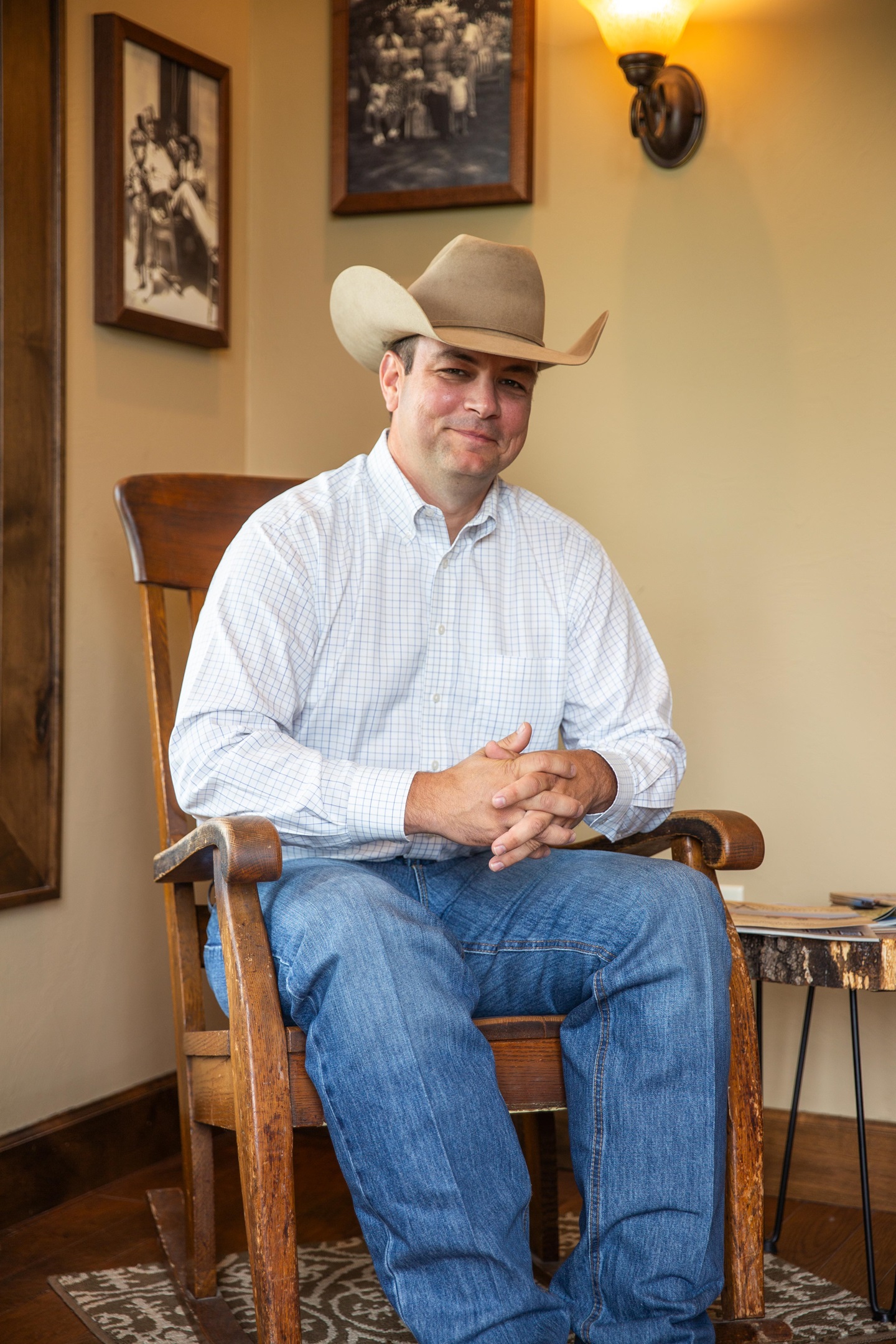
Worthington Angus, Dadeville, Mo., started out as four registered Angus cows grazing a three-quarter acre lawn at Josh and Corry Worthington’s first rental house.
“I know what it's like to be somebody showing up at a sale or something to make a purchase that's a really, really big purchase and a big sacrifice in some ways to advance that family's program,” Josh said.
That was true when starting his operation from scratch, and also true decades earlier as Josh watched his parents juggle multiple jobs while taking care of their own commercial herd.
“And because of the way I grew up, that responsibility weighs very, very heavy on me. I need it to be right every time.”


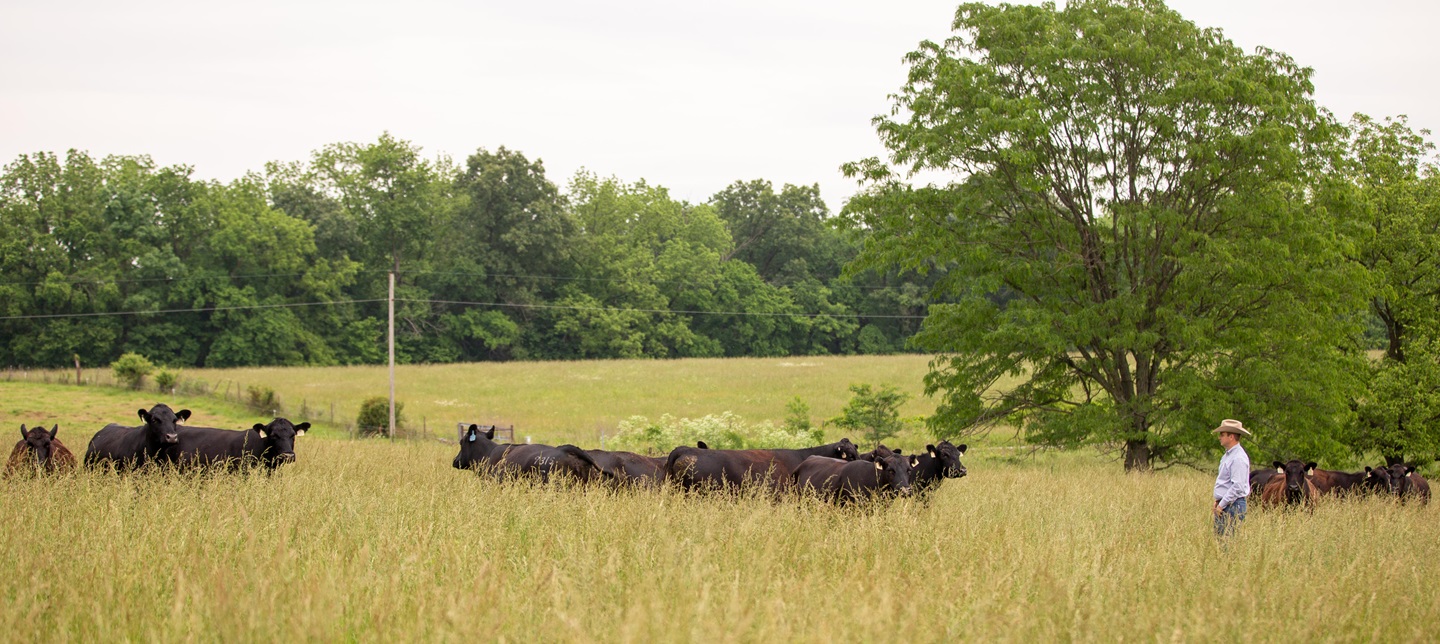
For him, that means using proven genetics, collecting data to test his assumptions and looking further down the line to see what his customers’ customers are demanding.
“We need the cow to be a cow, to have a calf, breed, to do all those things. But if the cow produces a product that nobody wants, what was the point in having the cow?” Worthington said. “We don't want a bunch of factories around here that produce a product that people don't want or that they're not willing to pay a premium for.”
Carcass traits are important while not sacrificing any other economically relevant measures, he said.
Worthington recently joined The Angus Conversation to talk about his start in the business, how he helps customers market their calves and how he defines balance in his program.
“We give all the breeding females here a job. We give them a time frame to do the job in and if they can’t do that, they can get moved down the road and enter the supply chain and we’ll make them better the next round,” he said.
Worthington knows looking ahead is part of his job as a seedstock producer and appreciates that the American Angus Association helps him do that.
“I need the Association to keep tools and programs in front of me that allow me to be competitive in the marketplace,” he said.
Worthington was honored as the 2025 Young Breeder of the Year during the Angus Convention this fall and said he never could have imagined how the story would write itself when he started.
“The Angus breed creates avenues for people. They take work and good fortune and great mentors, but it was a little surreal for me,” he said.
To hear the full story, including how he went from those few cows and a day job as the executive director of the Missouri Angus Association to two production sales a year, listen to the full episode.

When Josh Worthington was driving up and down the highway, working with Angus breeders across the state, he couldn’t imagine a better job than executive director of the Missouri Angus Association. But then he and his wife, Corry, started raising their family, and he knew he needed a job that kept him at home more often. Worthington Angus was born and quickly grew to include two production sales a year. Today, he’s focused on helping his customers market their calves, whether that’s by providing genetics that will be in demand by the ultimate consumer or by offering an outlet for bred females. This conversation covers everything from Josh’s journey to the Angus breed and mentors along the way to how he defines balance in his breeding program and who does chores on Christmas.
HOSTS: Miranda Reiman and Mark McCully
GUEST: Josh Worthington
Josh Worthington is a first-generation Angus breeder who calls Dadeville, Mo., home. Josh runs Worthington Angus with his wife and childhood sweetheart, Corry, and three sons, Wriston, Grayson and Corbin. They started the operation in 2005 and now breed around 350 females and transfer upwards of 400 embryos annually. He was recently named the American Angus Association 2025 Young Breeder of the Year.
RELATED CONTENT:
Worthington Named Angus Young Breeder of the Year
SPONSORS:
As you plan your spring production sale, Superior Purebred Auctions has cut broadcast rates in half with a new $3,000 flat rate fee, making it easier than ever to showcase your genetics nationwide. Backed by Superior Livestock Auction, your sale reaches the largest commercial cattle buyer and seller base in the country. Visit SuperiorLivestock.com to learn more.
Your bull is worth the hype. With the Angus Bull Book: Spring 2026 Angus Sire Directory, your customers will know it, too. The Angus Bull Book will be mailed along with the March Angus Journal, reaching 27,500 readers. It will also be published online through Pasture to Publish, with live EPDs updated weekly. Give your bull the attention he deserves. Secure your advertising spot today. Contact your regional manager or Rachel Hunter at 816-383-5226.
Miranda Reiman (00:00:03):
Welcome to the Angus Conversation. I'm your host Miranda Reiman with my co-host and CEO of the American Angus Association, Mark McCully. Mark, we are into the holiday season, I would say. So this is our final episode of the season and it's been a fun season.
Mark McCully (00:00:21):
Yeah, I think we said that last time. The season has gone fast, but it really has and we're into December now and looking forward to, I hope everyone has a great holiday season and some safe travels and then of course we'll kick off the new year and all sorts of Angus activities starting off in January.
Miranda Reiman (00:00:42):
Yeah, one thing, my algorithm feeds me a lot of these tiktoks and reels about corporate office jobs and things like that, and a lot of them I've gotten lately joke about how between Thanksgiving and Christmas it's the time to get nothing done or everybody's out on PTO and people don't feel like working. I will tell you that is not the case at the American Angus Association. We've had a lot of things that continue to keep moving on, but one thing that I was going to bring up is we got a whole host of updates from Esther Tarpoff last week that seemed important to mention here.
Mark McCully (00:01:23):
Yeah, yeah, and you're right, and I'll tell you that was a bit of an adjustment going from Certified Angus Beef where largely our customer base, were foodservice distributors, processors, retailers, and not that they're not busy over the holidays, they tend to just not, they're so busy they don't tend to do. It becomes a little bit of a slower time to interact with the brand in terms of licensing, marketing, promotions, that sort of thing. On the flip side, I do know that for our members, the holidays in many ways it's times when maybe it's the kids are home and they can help 'em enter some data or get some cattle registered or do some cattle work and do some, so there's lots going on and I know the holiday season, we do have some office hours where we'll be closed, but we will be fully staffed through that time and making sure we're serving the members as they have a lot going on over the holidays.
(00:02:24):
But you're right, Esther sent out a handful of updates and things we've all things we have talked about I think in past board and committee meetings and reported out that we were going to do them, but now things that we've basically got done, one is, and it's actually I would call it a soft launch, but a plan, what we're calling a planned mating tool. Basically a tool that members can use, and this was available in AIMS, a feature like this, it's now available, going to be available in AAA Login to where you can basically enter some potential sires and it basically in your cow herd and it'll look at calculating some parental averages for you. So kind of a soft launch through December here and watch for more information on that at the first of the year. We also introduced a new feature that is populating breeding data off of, if you enter that breeding data it's auto-populating it on your transfers.
(00:03:27):
And so that's, I know a feature that some folks I think will like and save a couple steps. We've also made a few other tweaks on inventory reporting if you're calving in multiple seasons. So just some all things that have been requests of members that, hey, if you could do this, it would make my life a little easier and some programming and some changes that we were able to make. And then we also just rolled out the 20, the spring 2026 Sire Evaluation Report, which that I know a lot of people look to that it's got breed averages, percentile ranks, genetic trends that folks can go out and access. So yeah, lots of stuff that just got rolled out here in the last few weeks.
Miranda Reiman (00:04:10):
Sure. Another thing that comes to mind here at the kind of close of the year as a lot of our members are doing maybe some tax planning or maybe facilities updates, purchasing things, that kind of thing, we wanted to make sure people know about our member rewards program, Mark.
Mark McCully (00:04:28):
And that was something we've rolled out and talked about at the convention, but there was a lots going on there. And so we had two new partners, Cabela's and [MJE] Equipment that have entered into an agreement or a partnership I should say, with the association to offer a discount out to members of the American Angus Association. So it's something we know that, again, over the years we've looked at that and we look at some other associations that we look at some benefits that you, additional benefits that come with being a member and we thought it was time to see if we could leverage the collective strength of the membership and the size of our membership to get some additional discounts that breeders can take advantage of. So we've got a couple out there now. It's available out on angus.org and go out and learn more about it and stay tuned because we're going to be looking to offer some more member rewards partners as we move forward.
Miranda Reiman (00:05:32):
Sure. And if anybody has ideas for places they'd like us to partner with, I mean we can always make the ask, so be sure and let us know.
Mark McCully (00:05:42):
Absolutely.
Miranda Reiman (00:05:43):
Perfect. Well, like I said in the beginning, we are looking forward to seeing you at these events that are coming up in January.
Mark McCully (00:05:49):
Yeah, it's going to be a great January of whether you're in Oklahoma City, National Western Stock Show, there'll be lots of Angus activities in particular at those two events and probably the first two events that we'll run into a lot of people.
Miranda Reiman (00:06:07):
And so now we'll jump right into our last episode. I think it's one that you guys are really going to enjoy as we highlight our young breeder of the year in Josh Worthington and hear more about his story.
Mark McCully (00:06:20):
Yeah, it's a great story and I think one, it was really a privilege to honor Josh at the convention with the Young Breeder Award, and I think his story is one that resonates with, resonate with a lot of folks. A couple episodes ago we had some young breeders on that were getting started and I thought their stories were really inspiring. I think Josh is too a first generation kind of talking about getting his start and has very rapidly, he would say not rapidly enough, but I would say in cattle terms of such this business is to get established to the way he has and to grow his program and to do it in such a disciplined way. It's really a treat to sit down and visit with him and have him share what that path has looked like and what's on the horizon for him
Miranda Reiman (00:07:12):
For If you want to listen to these in a different order, we probably did this wrong, Mark. We could have started with the young breeders and Calli Williams and Jake McCaleb first, then put in this one that we're going to have you listen to right now with the Worthington Angus, followed by Barb Downey. And you might see a little bit of the progression of sets of first generation Angus breeders and where they're at in their journey. But at any rate, I think you guys are really going to enjoy this one. Today on the podcast we have gotten Josh Worthington right in from breeding some cows and ready to visit with us. For those of you who don't know Josh, he grew up in Dadeville, Missouri, where he got into the cattle business kind of showing cattle and went to Missouri State University for undergrad in, ag education?
Josh Worthington (00:08:04):
My undergrad is in ag education. That's correct. Yeah,
Miranda Reiman (00:08:07):
Very good. And then also continued on in graduate work there
Josh Worthington (00:08:11):
Did, went on and got a master's in animal science and did my thesis work in chuteside interpretation, ultrasound programming,
Miranda Reiman (00:08:22):
And then right out of college, your first job put you in the Angus business right away
Josh Worthington (00:08:27):
It did. So I was at Missouri State, working on my graduate work, was end of my first year completing my first year, and we hosted our first sale at Missouri State University that year. At the time, we didn't have enough cattle in the program there at the university for our own, so we kind came up with the idea, we'd bring alumni in and more or less it would be a consignment sale and a way for us to market some of the university cattle and ended up great for me and I think for the university as well. So from that stemmed conversation, actually, I called the office and they connected me with Don Laughlin to buy an ad in the Angus Journal because I knew I needed an ad in the Angus Journal for the sale. And in our conversations getting that ad sent in, Don mentioned to me, Hey, if there's anybody down there at the university that might be interested in this job at Missouri Angus Association, they're going to be hiring here pretty quick for a general manager there.
(00:09:28):
And so I got off the call and went on about my day and then kind of got to thinking maybe I'd be interested in that. I went and talk to my advisor, which was Dr. Tommy Perkins at the time, and we kind of came up with the idea that I should apply and it was a success if I could get an interview. Dr. Perkins thought it would be good to be in front of the board to get some experience with those folks in a large setting, just get an interview. And that was the goal. The goal was just to get an interview. There was no comprehension, no thought of getting the job. The goal was just to get an interview and then I guess fast forward and did get the job and spent 11 years there working for Missouri Angus and that first sale at Missouri State University, we called it the elite event, but it went on to kind of help them jumpstart the beef program there, which also created an avenue when Leo Journagan came to 'em with this concept of donating the Journagan Ranch. They had a road map and a plan and felt like they were in a situation that they could handle that. And all of a sudden here came one of the largest ranches and university-owned cow herds in America, set in Missouri State University, all from the beginnings of a little consignment sale, multibreed consignment sale. So everybody got a win in that one. That's awesome.
Mark McCully (00:10:45):
Josh, talk a little about Missouri Angus as a general manager. You were there 11 years. Did I research that correctly?
Josh Worthington (00:10:51):
11 years? Yeah. I started, let's see, I believe it would've been in 2014, I believe was my first year there. It was the year that Missouri hosted the National Junior Angus Show in Kansas City. That was my first week working for Missouri Angus Association was National Junior Angus Show
Miranda Reiman (00:11:11):
You're going to meet everybody all at once.
Josh Worthington (00:11:14):
Yeah, it was a good time. We rolled right into it. But yeah, it was a great opportunity. Obviously those are dream jobs in my opinion. That's what I've always called. It was my dream job and loved it. I got to work with one of the greatest memberships anywhere in the country. They had a great association. Already rolling, great program. I had an opportunity to just kind of come in and grow that and maybe kind of bring it forward into the next generation with some of the things that we tried to create and do there. And kind of brought the Missouri Angus Trails Magazine into a color publication and really grew that, started mailing it to commercial producers at that time and started a commercial female program during that time, marketing bred heifers and things for some of our members and started doing some sale management work at that time to supplement the income for Missouri Angus. So a lot of different things that grew from that and obviously had a chance to meet a lot of people. And yeah, it was a dream job. I loved traveling. I love the sales, I loved working with the membership, loved going to the shows. I really, for the most part, loved every single thing about it.
Mark McCully (00:12:33):
And for maybe listeners not, you're blessed in the state of Missouri to have one of the really active state association. Obviously it's a big state, a lot of members, a lot of cattle, a lot of registered Angus cattle. So that was a full-time general manager role where you could really focus on bringing value to members there in the state. And you guys put together some really progressive things and some consignment sales. And I remember when you were first hired, because I was at Certified Angus Beef and Ben Eggers was telling me about this and he said, now if you hire, try to hire him away at CAB, I'll kill you. I remember him telling me that. So you were, and I say that the state of Missouri, I think is also all breeders have, whether you're an established program like Sydenstricker or whether you're a new startup kind of program, it feels like the Missouri Angus Association really has a place for all of those members and everybody stays active and engaged, and it's a real model of how to do a state association well, so compliments, to that, Ms. Julie doing a great job today. Yeah,
Josh Worthington (00:13:40):
Driven by the membership. They've been fortunate to continue to have great people working there. I had great people before me, but the thing that didn't ever change through all those was the membership. It was just a great group of people. And to your point, one way or another, there was a place there. Like I said, I was just kind of getting to know, the first time I met you, I think you picked me up at the airport, I think there was what they called Brand Builders conference or something like that at Wooster. And I don't believe I'd ever met you. You picked me up. We were riding in a car and you tell me this story and honestly, I didn't know Ben that well at the time either, but you told it just like that, Ben Eggers called me and said that if I tried to hire you, he would kill me. And I'm like, okay, alright. And this is a neat introduction to everybody around here right now.
Miranda Reiman (00:14:22):
That was a vote of confidence.
Josh Worthington (00:14:23):
Now I probably understand those comments better.
Mark McCully (00:14:26):
Yeah, good deal. So you left the dream job
Miranda Reiman (00:14:31):
For a new dream.
Josh Worthington (00:14:33):
Yeah, so I ended the dream job really for one reason, when that all came to an end and it was a work in progress over a few years. When I took that job, I was newly married. My wife liked it when I'd leave every Thursday or Friday and come back on Sunday night or Monday morning after being gone to sales or a show all the time. So that was the easy, for the most part, for a newly married couple. We weren't used to being together all the time necessarily. Anyway, it all worked fine. We had our first son and as he got older, it got a little harder at leaving home to be gone. I, I've spent a lot of time, we screened a lot of cattle for sale, spent a lot of time at sales, spent a lot of time shows, made a lot of herd visits, just spent a lot of time on the road.
(00:15:17):
And I think there are some of the peak times. I remember just going back through the books at the end of the year and expense reports. I mean, there's times 140, 150 nights a year plus in a motel. It was a lot. And so by the time our second son came, it was getting really hard to be gone. So when my second son was getting a little older and we started thinking, this is probably not going to be the forever job. As much as I love it, it wasn't right for us in a family setting, it was hard for me to look at the boys and tell 'em on Friday afternoon when I had to leave, be good this weekend, don't act up in church with your mom and you go and all these things and they kind of look at you like, well, it's not important to you.
(00:15:59):
You're never there anyway. And so that was kind of a driving force for me as I need to be at home and raise boys and not be gone most Sundays and those things that became very important to me. So before our third son, we started creating the exit strategy, and when I bought my first four Angus cows, basically when I started working for Missouri Angus, I don't know that the vision at that point was, we're going to grow this thing and it's going to become self-sufficient, and that's the exit strategy. That wasn't really the goal when we bought the first four cows. It became the goal in order for me to find a way to be at home, and if you're working in your dream job and you're going to leave it at a young age, you really don't want to be, downgrade, right? You're trying to figure out is there another dream job? What could be better than this? And so we had to kind of, in my mind, dream pretty big and think pretty big to find something better than working at the association. And that's when the goal to grow the Angus herd started.
Mark McCully (00:17:01):
Talk about making that, so you had started building a cow herd. I think I heard in a video one time you had a little patch of maybe three acres or a half acre or something that you put those four cows on. So you had been building a cow herd along the way, but to make that jump, I mean that was a leap. That was a leap.
Josh Worthington (00:17:22):
It was. So I grew up in the junior Charolais program. My mom and dad had a very, very, very small commercial cow herd when I was growing up. So there wasn't a big farm or any operation to work with or come back to when I took the job for Angus, that seemed like a good time not to be in the Charolais business. Not that I didn't enjoy that time and that originated because my great uncle had Charolais cattle and lived here in town where I did. So that's what he let me buy a heifer for market price when I was a kid in school. And so down the junior Charolais program path I went, but when I took the job for Angus, we sold the small Charolais cow herd that I had and then bought four Angus cows. We were renting a house in a little neighboring town. That's where we moved to right after we got married. It had three quarter acre yard with it, and I didn't ask permission. I bought the four cows and brought 'em home and we turned the four cows out. I strung a hot wire around the yard and we put the four cows in the yard of the rental house.
Mark McCully (00:18:23):
That's awesome.
Miranda Reiman (00:18:24):
That's a pretty intense stocking rate.
Josh Worthington (00:18:26):
It was. It's a very intensive rotational grazing project in your yard when you're trying to work through that. But it was good. And so yeah, we kind of grew it from there and start trying to find a place or two to rent and honestly, it didn't come quick and we were just trying to do a little bit of ET work, nothing crazy dozen transfers here and there just to try and work with some of the cows we started with and we bought our first piece of ground. But when Corry was pregnant with our first son, Wriston, so about 18 years ago now, we bought our first piece of ground and just kind of been building it ever since and still trying to build it, but I couldn't tell you that there was this moment when it's like, oh, we're going to make this leap. The moment was I've always tried to be fairly decisive and things, and so the thought in my head was, love Missouri Angus, can't be here forever, want to be at home with the boys.
(00:19:23):
What's a job that could be better than this? Nobody would've ever thought the kid who didn't have a farm to come back to was going to go into production agriculture in his early thirties and make a go of it. But I just started trying to plan. I mean, I knew how many lots I needed in a sale to make the first sale work so that we would have enough money to pay bills. And so then you just back up, okay, how many cows and transfers are required to create that many lots? What year does it have to happen? Okay, well just do it right. And you just figure out what needed to be done. And then I didn't worry about whether or not it was possible. I just knew what needed to be done. So we did it, and that's still the day a little bit how I try and operate.
(00:20:05):
And so we just started growing the cow herd as fast as we could. I knew we couldn't grow it through ET and keep 'em back heifers fast enough to get to the sale for the exit strategy plan as we call. But so we bought a group of bred heifers along the way. I think there was between 35 and 40 bred heifers. And so that was kind a big growth spurt for us in that moment. That kind of helped get the catalyst going. That was actually the set of cows that sold in our first sale was more or less that set of bred heifers that had been the nucleus for growing the program. But I've always just functioned on what needed to be done and don't waste time figuring out can it be done if it needed to be done, there's got to be a way and so, go do that.
(00:20:44):
My wife likes to joke that I decided we were having a fall sale and went to two sales a year before I ever told her, which is true, I did. I was just working through the numbers one day and realized how many bills we were selling privately and how many guys we were leaving out, not giving 'em a chance and the cash flow would be better if we went to two sales. And so I'd already booked it on the calendar called the auction year, had everything done, and then later we was talking to her a few days later. I'm like, oh shoot, I forgot to tell you I booked a fall sale for this fall. We're going to have a second sale. And she's known me long enough now. It really was no shock to her, but it wasn't a discussion, right? I mean the numbers had already demonstrated that needed to be done and since it needed to be done, you just go on.
Miranda Reiman (00:21:21):
Let's take a really quick break to hear from today's podcast sponsor
Speaker 1 (00:21:26):
As you plan your spring production sale, Superior purebred auctions has cut broadcast rates in half with a new $3,000 flat rate fee, making it easier than ever to showcase your genetics nationwide. Backed by Superior Livestock Auction, your sale reaches the largest commercial cattle buyer and seller base in the country. Producers asked for affordability, Superior listened. Book today at 1-800-422-2117 or visit superiorlivestock.com to find a Superior purebred representative for your auction. Additional fees may apply.
Miranda Reiman (00:22:06):
We skipped over an important note in our introduction that I think hearing you say, just do what needed to be done and take the leap would be characteristic of several of the people that we have honored with our Young Breeder of the Year award, which you were just honored with at Angus Convention this year. So first off, congratulations on that honor, and sorry we missed that in the introduction. That's actually a huge, huge accomplishment.
Josh Worthington (00:22:30):
It was unexpected, and I don't know. I mean, when Mark called that day, and he's known me a little while now, I mean, I told him, I'm like, I'm really rarely at a loss for words, and that's true, but I was a little bit at a loss for words at that moment. It kind of gets to me now, honestly, just sitting here thinking about it. I mean, you've really got to consider the story of a young guy who didn't grow up in the business, didn't have an acre, a cow, went to work for an association, a group of people who had no idea who he was, bought four Angus cows, kicks them out in his yard, quits his day job when he's 33, and then staring down the barrel of being very kindly awarded a young breeder of the year.
(00:23:18):
It's a moment when you realize lots of things can happen and the Angus breed creates avenues for people. They take work and good fortune and great mentors, but it was a little surreal for me. I would've never thought that was a possibility even when we started the program that a guy who had absolutely zero ties to it when he started could be walking up on stage, get that award, and I thought about it a lot because we were very thankful for it, but it was a great recognition of our customers' accomplishments. The reality is Mark would've never called me that day and told me that we were going to receive that award if it wasn't for the customers that we get to work with. And so it was really, to me, great recognition for the collective efforts of a really progressive group of customers that we get to work with and has allowed us to do the things that we do here at Worthington Angus. And so I thought it was as much for them as it was for me, and I was really happy for them. They deserve it.
Mark McCully (00:24:24):
Well, I applaud your humility in that, and I think that is all true, of course the success of your customers. But I also think you point out the opportunity that the Angus community, if you will, provided as you say, a young guy coming in, not from the Angus world, but obviously it was your dedication, perseverance, hard work, all those things that earned their respect and the reputation that you have. But it was the opportunity that's there. I mean, this is kind of a theme, Miranda, we had some young breeders, first generation breeders on a couple episodes ago, and it's really, it's highly exciting for me and encouraging to think about that those opportunities exist today. They don't come without some sacrifice and some hard work and some risk, but they're there and this Angus family and Angus community tends to wrap around those individuals that have all of that and give them an opportunity to be successful. That's exactly what you've done. So congrats.
Josh Worthington (00:25:31):
That's very kind. It's a unique industry. We're fortunate to get to be a part of it, but it is unique that you can kind of see the playbooks from everybody. I got to do that at Missouri Angus, and we were getting down towards the end of that. I already had the quote unquote exit strategy in place, and frankly, there were going to be a lot of cows around here for working full-time for Missouri Angus and still getting ready to have a sale. And I tell the story whenever I announced that this was going to be it in the last year at Missouri Angus, the question that ran all throughout the association, even by those who knew me best, were like, what are you going to go do? And that meant to me I'd done my job, right? Because I had continued to work for them wholly and totally to the point that they didn't even know that there was an entire cow herd built here that six months later we were going to have our first sale.
(00:26:19):
And so it really is just a great group of people that will create avenues and opportunities for you. They may look different. I'm not saying the way we did it looked exactly how I thought it was going to go. And sometimes you got to be a little unorthodox. If you're a complete first generation entrant into the business, you're going to have be a little creative, especially now it's not easy to gather the capital, the resources, the land and those things to jump into this thing totally fully and make a hundred percent of your living doing that.
Miranda Reiman (00:26:59):
For sure. When I think about people starting out in the business and first generation sometimes, you outlined a lot of the challenges and opportunities there. I wonder if this is a challenge or an opportunity that you get to start from scratch with your genetics. You didn't have a herd already built that you're trying to maybe put your own stamp on what dad and mom had already done, that kind of thing. So that's my question. Was it a challenge or an opportunity to start from scratch?
Josh Worthington (00:27:26):
Yeah, so the answer to your question is yes, it's a challenge and an opportunity. Nobody was sitting at the table telling me that I couldn't do it a certain way. Nobody was sitting at the table sin. That's not how we do it. At the same time, nobody was sitting at the table saying, we're not going to do that. We already did that and that didn't work. So yeah, it had opportunity and it had challenges. I think for my personality, it was probably a blessing. I wanted to go find the way and find the path. I do not appreciate brakes being put on. I want to be able to go pretty. I've been described as aggressive. I take it as a compliment. So I found the value in not being restrained to what had been, but it also created some challenges because we didn't have that experience.
(00:28:20):
And so I relied heavily on mentors to kind of be the kitchen table right over the phone to bounce the things off of that maybe you normally would if it was a multi-generational family operation. I needed that resource. We found it with guys that actually just got to know working at Missouri Angus that worked at American Angus, right? I spent a lot of time with Don Laughlin on the road when he was a regional manager, and he probably had no idea that when he was calling to finish selling the one page ad in Angus Journal to some kid sitting in Missouri State University that was going to up traveling a lot of miles with that kid. But he was great mentors. We built the program and obviously has a lot of experience in the business. Fast forward, continue down that road. Bill Bowman became one of those mentors.
(00:29:07):
Dr. Sally became one of those mentors. And so I had this group of people that were willing to be the sounding board and let me just voice all the thoughts that were in my mind and then more polite about trying to point out maybe some of the flaws in the plan or some opportunities that I had missed. And as we fast forward, I think with those folks, my relationship is strong enough. You want great people around you that are willing to tell you the truth at all costs. And if you don't have that group of people, you're probably wasting your time. I want people that will pick holes in everything. It's hard to be a bigger critic on myself and our operation than what I am, but I need somebody to try. I want somebody to be honest enough to have the conversations with me that they might be willing to have about me. Right? That's important. So I consider myself fortunate. We've always said we're a product of the people that we've been able to surround ourself with and been so fortunate to get to do, and we have got to surround ourself with some of the very, very best.
Mark McCully (00:30:11):
So talk about the program today. You mentioned already the fall sale, but you started with the spring sale, you've got into the business, you left your day job and had a sale plan within months. So talk about that of where you've grown the program to today.
Josh Worthington (00:30:27):
Yeah. I left Missouri Angus in July of that year after 11 years with them and had our first sale in March. So not a lot of months went through. It's kind of a nerve wracking thing. It's kind of weird. When I quit working for them, they quit sending me a check. Not weird that though. Yeah, right. It's really a weird thing that happened. Now, those were some tough times when you're getting, trying to wait for that first sale. There's a lot on the line. And so we were really excited to get to that first sale for multiple reasons, and it was hard. I remember being as nervous as you could possibly be. And now fast forward between the spring and the fall sales, we've had 17 sales. I asked one of my longtime friends who's been in the business a long time, if it ever gets easier, and he made the comment to me, I just had my 40th sale and I was still pretty nervous on mine, so that did not make me feel better because I was hoping that it would get easier, but it doesn't, right?
(00:31:24):
You're still wanting to make sure that you're bringing the best set of cattle forward for your customers that you can, you want 'em to get delivered and know that they're going to go out and do an even better job than the last bull that they bought. And so those things are going to make us nervous for the sales. But that first one was especially nervous. We had three really, really young boys and a lot on the line, we'll put it that way. There was a lot on the line. And very fortunate in that first sale, it exceeded our expectations. And for the most part, we've been fortunate to get to say that as we've moved along and I said 10 spring sales, now we've grown it. I think there was 40 or 45 bulls in the first sale and 35 females, I think around 75 lots in that first sale was the number I had set in mind that we had to have. And that's kind of on the nose, I think what we had, and it's grown from there. I think now we'll sell over a hundred bulls in both the spring and the fall sale. Number of females kind of moves a little bit, but for the most part we'll try and sell another 50 to 60 registered females in both sales and then some commercial bred heifers for our customers in both those sales as well.
Mark McCully (00:32:39):
Now, when you started the fall sale, is that when you first started the commercial, putting those commercial bred heifers in there, or had you been doing that a little bit before?
Josh Worthington (00:32:48):
So actually we had commercial bred heifers in the first sale
(00:32:51):
In 2016. Those were not for customers. We didn't have as big a customer base then. But in the time I spent traveling around working for Angus, trying to see what I thought worked, what didn't work, one of the things that was abundantly clear to me is the programs who had stood the test of time, at least for the programs I was trying to work with and be a part of, they had one thing in common. And it wasn't Angus specific, it was what I saw common amongst different breeds. But the breeders that had stood the test time had a really close tie to the commercial cow calf man. And so when I look at the industry, I think the commercial cow calf industry represents this huge pool. And when we look at the seedstock part of that business, well, it's a very small segment of it.
(00:33:35):
So it made sense to me that we wanted be very closely tied to the commercial cow calf man. When we had our first sale, I decided we needed to have some commercial bred heifers in the sale because folks who would say, I don't need a Worthington Angus bull, they're not coming to the sale, but maybe they want some replacement females. So it was a carrot to bring in another group of potential customers that I didn't know if we were going to recruit, especially in those early years. So you quit your job and then I went and bought a set of commercial bred heifers that we actually owned in those first, I think two or three sales. I just went out and bought 'em from some of our private treaty bull customers that we had been selling to over the years. And so the first few years they were our commercial bred heifers. But that's the purpose for it, was to attract potential bull customers.
Miranda Reiman (00:34:23):
And then you sort of outgrew that and turned it into a marketing outlet for your customers.
Josh Worthington (00:34:28):
Yeah, I mean, the goal and everything that we do here revolves around the end game of the customers or marketing calves, right? Because if I go out and sell two or 300 bulls a year, when we multiply that, if they're out there working for five or six years and two seasons a year, I mean, it doesn't take long add up to tens of thousands of calves are available out there, the beef industry that we like to think we were the genetic nucleus for. And so the main goal is to help them market calves, and we can do that, feeder calves, help 'em get relationships built with feedlots if they want to retain 'em all the way through. But we had this subset of folks who didn't need all the replacement heifers that they were developing and felt like they had some heifers that, yeah, they'd have fed really good, but if somebody needed some replacement heifers, these were certainly some that could do that.
(00:35:19):
So it grew out of the concept that, again, everything we do is to help customers market their product, and they had a product there that we needed to create an outlet for them to market. And so we already obviously had the model in place. We'd been doing it. I liked having commercial females in our sale, and so just opening the door for them. And we had grown the program where I didn't need to be buying lots of commercial bred heifers and taking up space. And so it was just a win-win for everybody that we could market some of those top end replacement females that they didn't need that were out of our genetics since day one when they were our heifers. In 2016, we started, we were DNA testing those heifers and have been making that a requirement ever since. And this last sale actually transitioned our customers from epigenetics to GeneMax. And so all the females through our sales moving forward will be GeneMax tested. And this last, I think was actually one of the first sets, probably anywhere to sell with marketed indexes on them in a sale. So it was kind of a neat opportunity for our customers to participate in that.
Mark McCully (00:36:26):
Josh, I'm curious with your background and your technical training and education, a lot of the seedstock role, sometimes it becomes education to your commercial customers. Do you find yourself leaning on some of that from time to time as you're introducing maybe some new ideas or new technologies or new selection tools?
Josh Worthington (00:36:44):
A hundred percent. I've always felt like our job here was to provide information to our customers and let them make decisions. And now in doing so, we provide some education that allows them to make the best decisions possible, but we give them information and then we help provide education so that they can use that information to make the best decisions for their operation. And so yeah, I was always planning on going and being an ag teacher. I mean, I went all the way through the program, student taught, interviewed for the job, had the job offer, and was actually in a classroom student teaching. The day the call came in, and I knew it was a school I'd interviewed at, they said they had to know by noon if I was going to take the job or not. It was 11:55 before lunch. I was finishing up a lesson in class, the phone rings.
(00:37:33):
The main instructor came to that and said, you have a phone call. I knew it was at school. It actually was the dean at the College of Agriculture at Missouri State and said, Hey, we've got a donor here that wants to pay for you to go to grad school, teach a couple classes and keep working with the beef program. And so I digress a little bit there, but education was always it. Like I said, I was minutes away from literally minutes away from accepting a job to go teach ag and kind of a blind offer came to go back to do my graduate work just a few minutes before the other call came in. So education vitally important and it has played a great role. I think if I had it to do over again, it's still probably the path that I would take because I do think it serves us well in providing information and getting that out there in a way that's meaningful to our customers, and we want to always be able to communicate effectively with them. Spent a lot of time in FFA growing up and actually got serve as state FFA president here in Missouri back in '99, I guess it was. So a long time ago. But that role of ag education, information communicating effectively with people has really been the center for everything that we've done and certainly has been in our Angus operation.
Miranda Reiman (00:38:53):
We know that that's not a one-way street. You're also probably learning from your customers and applying that. How do you know what they want or how are you learning, letting them educate you, I guess, a little bit too?
Josh Worthington (00:39:07):
Yeah, listen is the first thing and be present in order to listen. We're not a huge operation, but we have two full-time guys here, Ben Van Hooser and Justin Sissel work with us, and I rely on those guys to keep the day-to-day operations running here, and they're two of the most talented guys I know, and that makes it so that I can spend lots and lots of time with our customers, whether that's at a sale barn, marketing calves, making a herd visit video and replacement heifers to try and help 'em sell through the bred heifer sale, whatever it is. We try and be very present every single day with customers. Before I got on this call with you, we were getting semen shipped to customers and getting another set of calves placed. They're heading to the feedlot. Just that type of constant communication with customers. And so if you're immersed with your customer base all the time, it's not hard to learn from them if you're willing to because you're constantly surrounded by them and they'll let you know what they need. And we just always tried to make it our focus to deliver that.
Miranda Reiman (00:40:17):
We are going to pause for just a moment so you can hear about an exciting new Angus Journal advertising opportunity.
Speaker 2 (00:40:24):
Your bull is worth the hype. With the Angus Bull Book Spring 2026 Angus Sire directory, your customers will know it too. The Angus Bull Book will be mailed along with the March Angus Journal, reaching 27,500 readers. It will also be published online through Pasture to Publish with live EPDs updated weekly. Give your bull the attention he deserves, secure your advertising spot today. Contact your regional manager or Rachel Hunter at 816-383-5226.
Mark McCully (00:41:00):
So talk about what that has shaped in terms of your genetic program there. Talk a little bit about what Worthington Angus is, what's your breeding objective, what the bulls coming out of your program are designed to go do for your commercial customers?
Josh Worthington (00:41:13):
So kind of always use this little tagline. It's probably similar to the other folks, but we want cattle that calve easily, grow rapidly to a desired endpoint, produce the highest quality carcass that's possible, and leave a set of daughters in the herd that not only replicate that process, but improve it with each generation. And so that encompasses what we try and do. And so people will say, what program do you follow or what do you do this? None of 'em. I set specs in place that we need to utilize to create the next generation of genetic tools for our customers, and we vet those genetics to the best of our ability. DNA technology has allowed us to do that more effectively than we ever could have in the past. And then we start stacking those genetics on top of each other. We're a total AI and ET program. In our history, we've never turned out a cleanup bull. And so it allows us to meticulously individually mate every animal on the place. And we do that with that idea in mind that we want 'em to be able to calve easily. That may be at a different level for some folks. We have customers that may kick out a set of heifers on two sections out west, and they're going to see those things once a week. Calving easily for them is different for somebody who has 10 heifers that are in a trap behind the house and they see 'em every couple of hours, but we need 'em to calve easily for whatever that program is. We want 'em to grow rapidly to a desired endpoint, and that is important. So we have some guys that want to, the nucleus of their program is to develop replacement females, and so they're trying to keep some mature size in check and those things and while also having as much growth as possible on the steer mates, but the focus is that replacement female and they have an ideal size in mind for her.
(00:43:07):
And so we try and help 'em get the genetic tools to hit that. And then we have the lion's share of our customers that they're going to sell pounds at some point in the supply chain, whether that's shortly after weaning or whether that's as yearlings or whether that's on the rail. And they're going to own 'em through and get rewarded on the grid. They're going to sell pounds at some point, and we want those pounds to be the highest quality that they can possibly be. Mark has heard me and John has heard me a lot when we talk about the CAB Targeting the Brand logo, and I think the specs are too low. And I think that we need to create another level of that. We jokingly tell people that we would cut the bulls that are just meeting that threshold. I don't mean that as any disrespecting anybody, but that's the program that we're trying to build.
(00:43:57):
It has to be elite from that standpoint because the first four cows we had, there were two bulls that year. When I went to sell those two bulls, I sent out letters to everybody that I knew that we went to church with or friends from school or whatever. I think there was 50 of those letters that went out. And I'd put all these bulls EPDs, and wrote all of this great dialogue that I thought was vitally important. And in that I said that the bulls that we produce will go out an dsire calves, that we will never actually be a part of the life of that calf, but we know that every animal we help produce ends up on the plate for somebody and will be a part of someone's eating experience. And that has to be a good experience. And so that's always been the mindset.
(00:44:48):
Every single animal that we help produce, and that's not the bulls we produce, but the calves they're producing, it's the step down the road, that is going to be an eating experience for someone. And so we keep that in mind. There's this back and forth. What comes first, the chicken or the egg? I hear all the discussion. She has to be a cow first. That's important. Well, sure it is. We need the cow to be a cow, to have a calf breed, do all those things. But if the cow produces a product that nobody wants, what was the point in having the cow? And so you can kind of make this argument both ways on the chicken or the egg, but we don't want a bunch of factories around here that produce a product that people don't want or that they're not willing to pay a premium for.
(00:45:33):
So whether you agree with us or not, and that's okay. Everybody gets to have a diverse opinion, that's just fine. Our objective is that everything we do comes down to someone's eating experience. That's the priority first. And we will build factories that produce that product that someone's willing to pay a premium for. That's kind of the nucleus of the program. And I said the last part of that is to leave a set of daughters in the herd that not only replicate the process but improve it. Guys come back here year after year to buy bulls and they expect to buy a better one next year than they bought this year. And it's our job to make that right. And so the daughters have to continue to make that process work better and better. And we expect cattle to do that. We give 'em specs. We give all the breeding females here a job. We give 'em a time frame to do the job in. And if they can't do that, they can get moved down the road and enter the supply chain and we'll make them better the next round. That's what we do to
Mark McCully (00:46:36):
Put that kind of focus on carcass merit. I'll ask the question. Do you feel like you have to give something up?
Josh Worthington (00:46:44):
No. And we get that question a lot because I think that there's some misconceptions out there, but the reality is we don't buy replacement females here. Every bull in our sale for the last several years maybe for always maybe has met the requirements for the CAB logo. And we don't buy replacements. So I would tell you that the daughters, the sister mates to all those bulls we send out the door meeting those what I would consider pretty good carcass specs have done what we ask 'em to, and that's to be cows here. They live and work on Missouri fescue. They breed in a total AI program without cleanup bulls. So I think the fertility would speak for itself. We ask them to do that in a 60 day window, and we want to be at 90% conception. We're very intense at it. We check heats for 60 days and we'll do rereads.
(00:47:33):
That's what I was out doing this morning was a few rereads on some heifers. And so I don't think that we give anything up. Our cow herd wouldn't demonstrate that we have, we've continued to make progress each year. And so again, it just goes back to this concept. You can build a factory to make whatever you want. I mean, pick the widget that the factory's trying to make, and the factory could be the greatest widget maker there was. But if it was a widget that nobody wanted to buy, what was the point in the factory? And so we have always felt like we needed to understand what business we're in. The business that we're in is producing a protein to feed the world we produce beef, and the factory that we do that with is the cow herd. But at the end of the day, we have to know what that factory is doing and that factory is producing that high quality protein that beef.
(00:48:24):
And so no, I don't believe that we give anything up. I'll probably get in trouble for saying this, but I've never been scared of saying what we believe. If I had to give something up to actually produce a product that we needed to sell, we would have to make those adjustments. Right? That's no different than any other business. You still have to keep in mind what you're producing. But I would still stand by the answer to your question. No, we haven't given anything up. And I think the total AI and ET program here and the parameters that we set on this cow herd, and I think the data would demonstrate we've made continual progress. So I don't know that you could point to anything that we've given up since we started.
Mark McCully (00:49:02):
That's awesome. I would say maybe your sale reports, you talk about your repeat customers. I was curious, you just completed a sale, a very successful one, and I think I teased you, your boots were probably still warm as you made it up on stage there at convention because it was that day and you were probably still dusting off your clothes from finishing up the sale to get over to Kansas City. But I went back and pulled the sale report from 2019. Your first sale, you sold 26 bulls and averaged, I think you were just shy of 4,000. I wrote down $4,000 and this last fall, and you sold 87 bulls and averaged 13 eight, almost 13 nine. Your commercial breds were 1,587, and you averaged 4,900 this time. Now we know the market's a little different, of course, but in a pretty darn short period of time to build a program. I think that speaks a lot. So congratulations to that for sure.
Josh Worthington (00:50:02):
Thanks. That's nice. I guess I'm aware of those things. Hadn't really thought about 'em or compared 'em quite like that. You're one of those guys that's saying in a short amount of time, I'm the guy. I hear that from some of my friends. You try and make me think everything's gone. I'm the guy. This is taking way too long. What? We've got to make progress quicker. We have got to keep moving.
Mark McCully (00:50:22):
Yeah. Well, I think in cattle terms, so I tend to think 10 years is, I mean, that's nothing, right? That's nothing. So yeah, good stuff. Good stuff.
Miranda Reiman (00:50:34):
So when you look back over, I mean that shows success in numbers, but your goal was to get more time with your family to raise them in the business. Do you think you've, I don't want to say completed that goal, but did it work out the way you'd envisioned that?
Josh Worthington (00:50:51):
Yes. The ultimate goal of the driving force was with exception of a few mistakes, maybe I get to be at church services with them. And that was the driving factor is it's hard for me to tell them that was important if Dad was never there. So that was there. There's a lot of flexibility in this business except when there's not, and then there's no flexibility. And so when we're calving and breeding and those things, there's not much flexibility. But I try and be at all the ball games. We're in the middle of basketball season now and going hard about every night a week, and the boys play baseball and like to hunt and do some things in FFA and all those things. And so I wanted to be as present as possible. I grew up in a house. My dad worked two and a half jobs my entire life.
(00:51:45):
My mom worked one and a half, and still I felt like they were present in everything, which is a little astounding because that's what I told you when we started the dream job. As great as it was, I still wouldn't have been able to be as present as what my folks were. And so that was important to me. My dad would get up before daylight every morning and go work for actually the Charolais breeder. I told you I bought my first calf from work, worked before daylight. And then he would stop and go drive the local bus route for the little rural school here. And when he got off the bus route, he would go back to the ranch and taking care of cows and feeding all day until that afternoon and he'd go back and drive the bus route again. And while he was driving the afternoon bus route, he was in uniform because he went and worked the night shift as the dispatch for the local sheriff's office.
(00:52:40):
And then he'd come home, get a few hours sleep and go again. So I think about those things and can kind of get choked up about, I tell people that no matter how hard I try, I'll never be able to work as hard as my dad. I mean, it doesn't matter how I set the stage. I'm never going to be able to work as hard as see him. I'm going to try, but I'm not going to be able to. But I tell you all that to say he did all that and my mom worked a bank and cleaned the church building and different things. And so all these jobs make it all work, but I still felt like they were present. They might not have never been able to just hand us anything, but they created opportunities for us. They put us in a position, my brother and I, to connect with people.
(00:53:24):
They taught how to treat people and they taught us how to work. And so I wanted to be present with our three boys to try and do a decent job of doing that. And I do feel like we've got to do that. There's some parts, and I know I've been hard on them. I tell people starting a business or being an entrepreneur, regardless of what business it is, you pay a very, very high price that has nothing to do with money and few are willing to pay, and lots of people make that sacrifice. And certainly our boys have made some of those and I'm thankful for it. But hopefully we're giving 'em a good life and get to be present in their life and try and coach from the sidelines, not in athletics. The last thing I am is a coach, but coach 'em a little bit in life and be present for them.
Miranda Reiman (00:54:13):
I ID with you there completely, Josh. Anytime there's a sporting team or something like that, I'm like, sorry, I can make the cookies or drive kids where you need 'em. Or someday when they need to apply for jobs, send me their resumes and I will edit them. But I am a coach.
Mark McCully (00:54:33):
Josh, when you think about your path thus far and your future road in front of you and you think about the American Angus Association, what do you look to the association here? We recently did a membership survey and folks are probably tired of me talking about it already, but it was so insightful and affirmed some things and shed light on some new things of the diversity of our membership and the diversity of the programs that we try to offer. But when you look at the American Angus Association and think about what you need moving forward, what programs, services, opportunities are most valuable to you?
Josh Worthington (00:55:11):
It's a loaded question, Mark, with it is with lots of answers that frankly we may not know right now.
(00:55:18):
I think when I look at it from a 50,000 foot view, I need the association to keep tools and programs in front of me that allow me to be competitive in the marketplace. And so if you're paying any attention at all, there are plenty of private entities who are entering the genetic space and creating supply chains to serve the beef industry. It will come as a shock to no one that as they learn things, make discoveries, get additional tools and technologies. They did not come to Dadeville, Missouri, and say, look what we did. Would you like to have some of this? They have not provided that to me. So I need the American Angus Association to be at the forefront of tools and technologies as they come down the pike because I need access to 'em through the association, whatever that is, whether it's another EPD, whether it's a set of indexes, whether it's a supply chain connection.
(00:56:25):
I don't know that there's a specific thing that I would just hang the hat on today. But overall, and you and I have had some of these conversations before, I believe that the American Angus Association has to move forward at a pretty rapid pace in order to stay competitive and remain relevant. And that scares some people, right? It's hard to be a membership driven organization when your membership is so diverse and everybody maybe wants something a little bit different. And so the association staff and board of directors are charged with trying to deliver everything to everyone. I have asked the questions before, can we be an association that delivers everything to everyone and still remain relevant at the speed at which the industry moves today? I don't know the answer to that. I think everybody wants the answer to be yes, but I don't know if it's true or not.
(00:57:28):
You asked me in our program, have we given anything up? I don't believe that we have. Has the American Angus Association had to give anything up because they're trying to serve everyone and everybody that pays dues has the right to be served just like I do, but at some point, does it come at a cost to someone else? That's the challenge. The board of directors and staff, I'm assuming probably struggle with, but I think this industry moves at a pace at which it never has before. And the reality is it's slow compared to how it's going to move tomorrow and next week and next year. And so if we're struggling to keep pace now, we'd better be having some big conversations because if we're not keeping pace now we've got a tall order in front of us. So it's probably a long non answer to your question.
Mark McCully (00:58:22):
That was a great answer. You've articulated perfectly.
Josh Worthington (00:58:28):
Well, it's vitally important, right? It's important. I depend on the association because that's my access to the things that allow me to breed cattle that are competitive in the business and my customers require that and expect that, and I do that through the tools that are available at American Angus Association. And right now, that's what I need. And if the day ever comes at American Angus Association can't deliver the tools for me to remain relevant and provide the genetic pieces that our customers need, well, I have to go take care of customers. Just the reality.
Mark McCully (00:59:03):
And you articulated that challenge to me a couple years ago, and it's one of those things that you and I have talked about. I think about it a lot. I think about, and I think I have a host of members and breeders that represent our membership in different ways and that have said those types of things to me over of what they need. And your comment, I remember exactly where we were and standing in the back of the room. And I think it is the challenge that we have as an association moving forward most definitely, is, how do we make sure that we move and do to stay as relevant as the member that wants to be out on that leading edge, maybe sometimes bleeding edge. How do we maintain relevance to that member without leaving some others totally behind or feeling that they don't have value and the association's not relevant to them. Finding that balance and dealing with that tension is what we've got today. And as you well said, we'll only get more tense probably as we move forward.
Josh Worthington (01:00:12):
So it's a great challenge. So I appreciate staff and board members who I know are working aggressively to try and address those concerns and they're good concerns to have. It's a good challenge to have with the market share we have in the beef industry, the decisions that the American Angus Association makes, moves the industry, and that's a heavy weight. It's great responsibility, but it's an awesome place to be. I mean, what a cool place to be when you sit down and start making decisions knowing that you're moving the needle of the beef industry and in doing so, the eating experience of people around the world. That's really cool, isn't it? I mean, that's fun to get to think about. Yeah,
Miranda Reiman (01:00:56):
Absolutely. So as you think ahead to the future of your own operation, what's next for Worthington Angus? What are your next goals or what's it going to be like in 10, 20 years if we had this conversation?
Josh Worthington (01:01:09):
Yeah, I think the concept of how we've built our program and in our first ad we put this line and I was sitting at my desk trying to figure out what the ad was going to look like for our first sale and kind of coined this deal, discipline plus proven genetics creates value. And it's not that we're opposed to updating things as we go along, but that still represents a lot of what we feel like we're trying to do. And it's a little different, right? Discipline was our approach to breeding cattle. It was Corry and I and now the boys and our philosophy. And I've always been a very driven, focused, disciplined person. And so that kind of represented us, proven genetics at the time represented those bulls that were maybe not the newest and shiniest, but that we knew what they were and DNA wasn't utilized in the same way then as it is today.
(01:02:07):
So I would tell you that the proven genetics phrase of that tagline has changed a little bit because with DNA advancements, I can kind of find even more proven genetics in a young bull than I could have with an older bull at the time that we created that. So it's still the focus of proven genetics to do what we need them to accomplish for our customers. So that's still relevant to us. And ultimately that disciplined approach to using a very specific genetic package allows us to create value for our customers. And so 10, 20 years, I still feel like that concept still probably serves us well. We want to be disciplined in that approach using proven genetics. I don't know what technology is going to allow us to identify as proven genetics in 20 years from now. I bet it's going to be really cool.
(01:02:57):
I hope I'm around to get to see it, but we'll still do that. I think if we do that, it'll create value for our customers. So I would tell you, we won't stray, right? I have no intentions of straying from that concept. And then as far as our movement forward, our goal is to serve our customers and have the opportunity and ability to continue to serve even more customers and that through thoughtful growth. And we've been very fortunate to get to work, as I mentioned earlier, with some of the best cattlemen and women in the industry. And that's a blessing that I can't fully explain. There's been a lot of things in my life I can't fully explain. Good Lord's has blessed us in ways that I'm not for sure, but we've got to surround ourself with great people, great mentors, get an education working through a state association as one of the top notch, great family.
(01:03:47):
And then the good Lord has blessed us with this great set of customers that have let us be a part of their program. And so we want to do that with more people. That's exciting to me. There are a few things that make my adrenaline flow any more than being connected with people and being able to look 'em in the eye and just know that we're working through things that make a difference in their lives. This is not an easy business to be in, but it's a very rewarding one. And so I think back to those days, I was telling my mom and dad moved to Missouri in 1980 and bought the farm. That was a fun time to buy a farm and pay interest and work the multiple jobs they did. But I say all that to just reiterate this concept that I know what it's like to be somebody showing up at a sale or something to make a purchase that's a really, really big purchase and a big sacrifice maybe in some ways to advance that family's program.
(01:04:48):
And because of the way I grew up, that responsibility weighs very, very heavy on me. I need it to be right every time. And I tell folks it will be. We guarantee our cattle just totally and fully and I tell people, when you buy bulls or females with us, it will be a great experience and it will every single time. No matter what happens, it will always be a great experience and we want the opportunity moving forward to have that experience with more people currently today. That means we've got to keep growing. We're doing that through embryo transfer as rapidly as we possibly can.
Miranda Reiman (01:05:26):
I can say that this has been, I think, one, no doubt that you'll accomplish that because you've got the right mindset and have proven that in the past. But too has been really just inspirational too. The wisdom that you've left with us. Your story I think is going to be really fun for people to hear and to listen to. But before we go, I always do a random question of the week. So we're approaching Christmas. I want to know what's your favorite Christmas tradition?
Josh Worthington (01:05:56):
I'm going to have a terrible answer for this. I can already see. We're fortunate to have really good folks who help us around here, but it's been vitally important to me that they get to enjoy the holidays to the best of my ability with their family. And so we always tell our kids here, and again, everybody pays a sacrifice. I mentioned that earlier, the running line around here is holidays aren't for us. We have great traditions. Corry and I are both from the town of Dadeville here. We went to high school here and childhood sweethearts, and so it's the only girl I've ever dated. So both our families are here close. It's not like we don't get to spend time with family and we'll get to eat good and spend some time with family, and that's really, really important to us. But at the end of the day, we try and use those few days to let the folks we depend on throughout the rest of the year go spend time with their families, and our name's on the shingle around here. And so we'll take care of cattle and breed cattle and probably start calving some calves and finish breeding. And sometimes we even use that time frame to start shooting some pictures for the next spring sale book. We'll try and stay busy. But yeah, I don't know that I have any specific tradition other than since we've had the operation here and had folks helping us, we try and make sure that they're not spending their holidays here with us
Miranda Reiman (01:07:19):
So there really is no way to spin that. My favorite tradition is we all wake up on Christmas morning and go out together and it's idyllic this nice picture-perfect.
Mark McCully (01:07:30):
We skip to the barn.
Miranda Reiman (01:07:31):
Yeah, that's right.
Josh Worthington (01:07:35):
And I guess, yeah, lately that has been the tradition, right? My boys are old enough, they can go out and we all collectively knock it out pretty quick. And so maybe that's the tradition and maybe I just didn't see the joy of that, but it is pretty rewarding to watch these boys be able to go out and accomplish tasks on their own. I've always said there's nobody, I'd rather stand in a sorting pen with and sort cattle than my dad. And probably, like I said, I've got a couple of guys that are as good as there is in the cattle business, work for me every day, but I still think these three boys, I don't know that they do it the right way, but they've sat next to me their whole life, so they do it the way I want 'em to. So I think they do it really, really well. So they're pretty helpful too. So it's fun on Christmas and through all the holidays to watch them go out and be able to handle things on their own, see their growth. So that's a neat tradition that I'm enjoying and reveling in that growth as we move forward.
Miranda Reiman (01:08:29):
I love that.
Mark McCully (01:08:31):
Awesome.
Miranda Reiman (01:08:31):
Well make sure you pass along, I mean, Merry Christmas to you and your family, and appreciate ...
Josh Worthington (01:08:37):
Likewise
Miranda Reiman (01:08:37):
...you guys taking the time that you did this morning. I know holidays are a busy time, but to visit with us and share a little bit of your journey.
Mark McCully (01:08:46):
Absolutely.
Josh Worthington (01:08:47):
I appreciate the opportunity. Think a lot of both you guys and the work you do. Got to kind of know you when I was working at Angus, but I did appreciate what you both do. It's important work, and it's just kind of a joy for us to again, be folks who didn't grow up in the business and get to be openly accepted by so many people. It just sits. It's a big deal to us. It's a big, big deal for us to get to be a part of the Angus business and the Angus family.
Mark McCully (01:09:18):
Yeah, it's a big deal for us too, and it's a big deal to be a part of organizations that serve and we serve members and members serve customers and customers, ultimately, we're serving consumers and taking care of God's creation and feeding God's people. And so just, it's truly, and as Miranda mentioned earlier, you serve as an inspiration to us. So as we get up and move forward every day of why we do what we do, and just such an honor to do it. So thanks for joining us. Again. Congratulations on your recognition and all the fun success you have at Worthington Angus and looking forward to decades more.
Josh Worthington (01:09:59):
I appreciate that, very kind. Thank you guys for the opportunity to visit with you a little bit here today. It's been fun.
Miranda Reiman (01:10:04):
And with that, we wrap up season 7 of The Angus Conversation. Thank you so much for coming along with us for the ride. For more on Josh Worthington, look for a story in the January edition of the magazine or visit angusjournal.net to view his award video. From all of us here at the Angus Journal team, we wish you a very merry Christmas and all the best in 2026. This has been The Angus Conversation, an Angus Journal podcast.
Topics: Award winner , Business , EPDs , Industry News , Management , Member Center Featured News , Ranch profile , Success Stories
Publication: Angus Journal
Related Publications


Current Angus Journal
Keep up on the latest stories of the people and programs in the breed.

Latest Podcast Episode
Don’t miss conversations with breeders and industry experts.