





The Life of a Champion
Paul Hill on raising Angus cattle, Angus youth and Angus enthusiasm.
August 26, 2025
Paul Hill says he probably took some risks that didn’t make sense to most at the time, but through the lens of history, he can see they played out all right.
“I always think of myself as a person that’s been lucky all his life — opportunities coming before me and I had the guts to take them,” says the longtime Angus breeder.
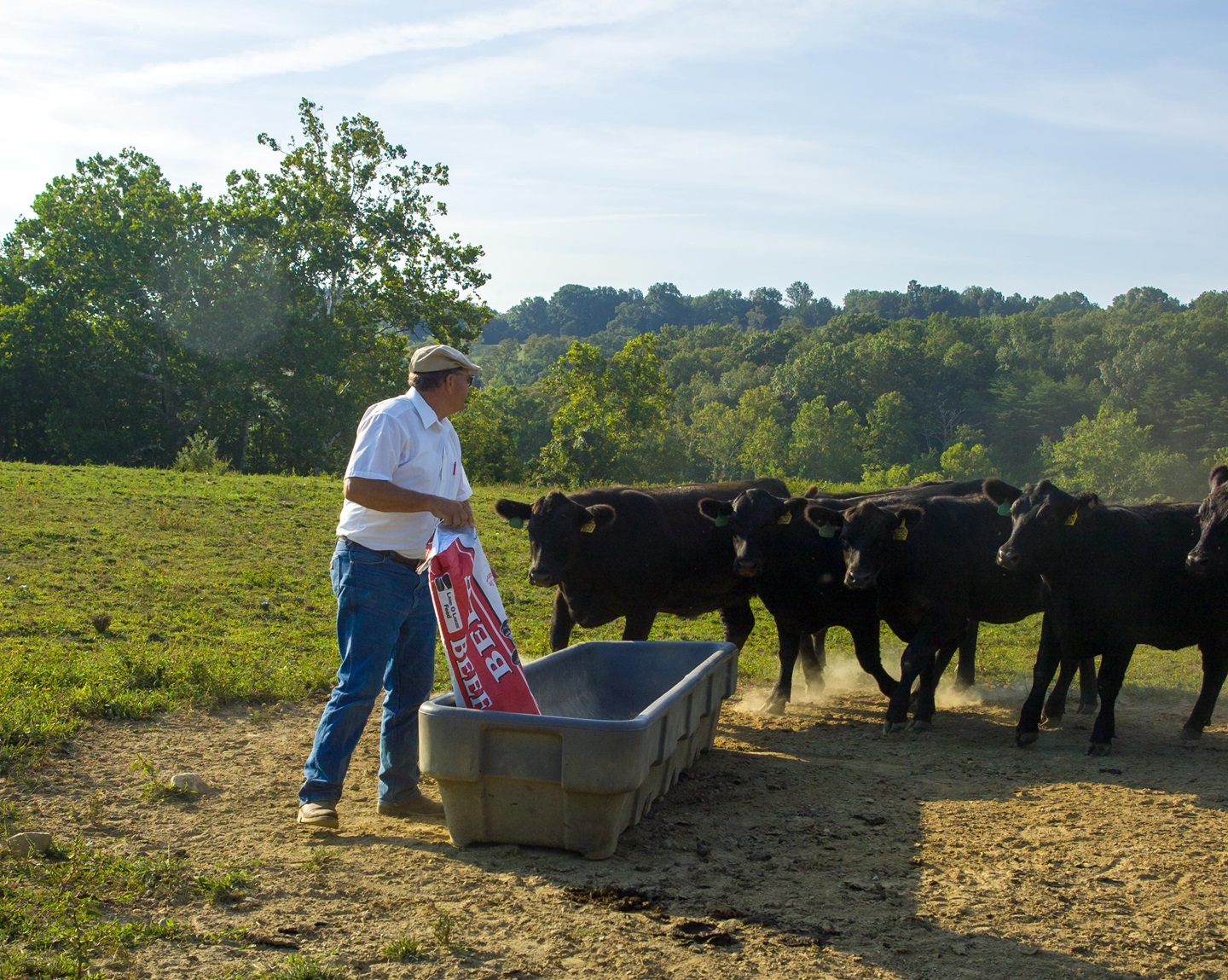

Hill joined The Angus Conversation as the podcast’s Season 7 podcast opener and talked about his journey in the cattle business, storied bloodlines and the evolution of the show ring. He recounts how he brought Saugahatchee to Champion Hill and the story behind the Sara cow family.
“The deal I made ... nobody in a good mind would’ve done it at that time. It was more money than had ever been paid for a cow,” he said.
Being surrounded by good people, including his wife, Lynn, and his business partner, Marshall Reynolds, taught him a lot and made him better, Hill said.
“Probably the people were more important than the cattle along the way, but the cattle that I put together over the years was really when I saw it, I had a gut feeling about it,” he said.
Hill grew up on a peanut farm and commercial cattle operation in Florida, but his lifetime in the cattle business has taken him from Missouri to the East Coast and eventually to Ohio. He was the managing partner in Champion Hill Angus, Bidwell, Ohio, until its dispersion in 2017.
He’s always been a strong supporter of the show cattle industry and is still very involved with the Atlantic National Angus Show.
“Showing cattle still is very important I think, because [of] what it does for young people,” Hill said. “More people come into a breed of cattle through the show than any other way I think.”
He served on the American Angus Association Board of Directors and was chairman in 2007-2008. During his time on the Board, Hill chaired the Angus Foundation Board four times, helping guide the structure that’s in place today and spearheading the $11 million Vision of Value: Campaign for Angus.
Sometimes he had to push a little to get done what he wanted to get done, but looking back, it was worth it, he said.
“As you go back in history, success and failure [are] one step away,” Hill said. “The way I look at a lot of things in life is, [the difference between] success and failure is a slim cut.”
EPISODE NAME: The Life of a Champion: Paul Hill on Raising Angus Cattle, Angus Youth and Angus Enthusiasm
HOSTS: Miranda Reiman and Mark McCully
GUEST: Paul Hill
Longtime Angus breeder Paul Hill is most notably associated with Champion Hill Angus, Bidwell, Ohio, which he owned and operated with his wife, Lynn, and business partner, Marshall Reynolds. They dispersed in 2017 but still remain involved in various ways. The Hills raised two daughters in the Angus business, Sarah and Neenah. Sarah served as 1992 Miss American Angus and on the National Junior Angus Board of Directors in 1993-1994.
Paul’s career started at the Herdsman Institute, with an intermission for service in the Army during the Vietnam War. He worked for Briarhill Angus Farms in Union Springs, Ala., in 1971, as in Connecticut, South Carolina and Virginia before working for Marshall Reynolds 1990. The two became business partners in 1993, founding Champion Hill Angus. The herd, which included 200 donor cows and 900 recipients, had a year-round breeding program to maximize the use of recipients and supply the demand for show heifers.
Paul served on the American Angus Association Board of Directors and was chairman in 2007-2008. During his time on the Board, he was a four-year chairman of the Angus Foundation, helping guide the structure that’s in place today and spearheading the $11 million Vision of Value: Campaign for Angus.
SPONSOR: Ready to see how Vermeer can help you get more done in a day? Visit Vermeer.com/angus to learn more and find your local dealer.
RELATED CONTENT: A Purpose for Coming Home Champion of Opportunity
To read all the Salute to Service stories, click here.
Miranda Reiman (00:02):
Welcome to the Angus Conversation. I'm your host Miranda Reiman with my co-host Mark McCully, CEO of the American Angus Association. And Mark, we are back for season seven of the podcast.
Mark McCully (00:14):
That's amazing to me that we've been doing this for seven seasons. It's flying by, it feels like we just started.
Miranda Reiman (00:20):
It really does. And I guess that's probably because of the quality of the guests that we continue to get time after time. So it's always fun to take people's suggestions, add 'em to our list, and we've got lots of material to cover. Lots of great Angus breeders across the United States.
Mark McCully (00:35):
Absolutely. We do love that feedback. And I run into people and they're like, Hey, I love this one. And what about, I would love to hear a similar story of so-and-so and so maybe somebody that like I would say we had today and Mr. Paul Hill that most people in the Angus world know Paul, maybe not everyone's had the chance to just sit down and visit with him for an hour like we got to today.
Miranda Reiman (01:02):
It was really fun. We got to hear about a lot of the different pedigrees or storied cow families. But we also got to hear about experiences of going on long runs of shows together and all the way over to, I would say, experiences that would shape the history of the United States. And that would be when he talked briefly about his time serving in Vietnam.
Mark McCully (01:28):
And it was such an honor to showcase Paul as well as several other veterans that we have in our Angus family in the salute to service edition of the Angus Journal there. And I hope folks really I think are just some fantastic stories and some wonderful people, and those are great to go back. If you missed those, I would highly encourage you to go back and check 'em all out. And Paul's story was one of those.
Miranda Reiman (01:55):
Absolutely. You can either pick up your July edition of the Angus Journal or go ahead and go online to the angusjournal.net and you can find all of those stories, as we all know that out in cattle country freedom ranks high as a value we all share. And so it's fun to read those stories of those who protected our freedom. So I guess Mark, without a lot of further ado, I think we just jump into this one because Paul just starts right off telling his story and it's going to be fun to listen to.
(02:27):
Today on the podcast we have Paul Hill with Champion Hill at Bidwell, Ohio, actually located in Indiana, I think today, if that's right, Paul.
Paul Hill (02:36):
That's it.
Miranda Reiman (02:37):
And an Angus Heritage Foundation inductee, you and your wife Lynn in 2009, longtime Angus Foundation supporter and a former president of the American Angus Association Board of Directors. So a lot of credentials on there.
Mark McCully (02:52):
And Paul, I think of you most famously as Champion Hill, but I know we will hear in your story, you've got such a rich Angus background of different operations that you were a part of and came up through, so we just appreciate you joining us here today.
Paul Hill (03:10):
Yeah, it's kind of been really, always, think of myself as a person that's been lucky all his life, opportunities coming before me and I had the guts to take them. And a lot of people in life think, might be the worst thing they ever did, a lot of times in my life, some of the things I thought was pretty bad at the time turned out to be the best thing that ever happened to me. So I would like to thank myself as being fairly lucky in life. But actually to start, my story is, my grandfather was one of the first landowners in Jackson County, Florida around Marianna area. And actually his funeral, his, he's buried right on his own land there. So that would be the start of my heritage on my dad's side, my mother's side were actually French and Irish. My grandmother on my mother's side was Irish and my grandfather was French.
(04:11):
We actually sharecropped when I was a kid. And since I've retired, I've actually, I've got a grand nephew, which is my brother's grandson, bought a little piece of property that we sharecropped when I was a kid and then I bought some property next to it and we're in the process of clearing it up and going to put some cattle on it with him. I mean, I actually just kind of help him really kind of a deal. So long story on that little deal, but that's kind of the start. And along about the time I was in high school, there was a gentleman came to Florida to manage a polled herford operation, which was a neighbor of ours. He and his family were pretty famous in the cattle business, and he got the Angus Journal and the Polled Herford World, and I read 'em cover to cover, especially the herd bull issues. January, February, about 65, I got a chance to go to the last registered merit show was in Georgia, which Herman Purdy had a show string there and there was strings of cattle all over the United States there. And it was quite a deal for a guy that was 17 years old and just turned 17 and a wild-eyed guy. And I got to meet Herman Purdy, Jack Phillips.
Miranda Reiman (05:29):
It was like a celebrity to you.
Paul Hill (05:31):
Yeah, Jack Phillips, Gail Long and got to meet them there and Jack Phillips and Gail Long was going to start a herdsman institute, which was kind of a short course for what the college would give you, but without having to learn English and math and all those things. So they asked me if I wanted to come up and come ahead of the time and help 'em build the operation. And I got on a bus and about 5:30 in the morning, took a day and a half to get there, almost two days on a bus. But it was really quite an opportunity for a young guy that don't know what I'd have been doing today. I hopefully had been successful, but it kind of put me on a path to success in the cattle business.
Mark McCully (06:17):
Well, that Herdsman Institute, was that just getting started when you went up to, or had it been kind of established at the time?
Paul Hill (06:25):
It had not had been established. They had took and rented a 300 acre property. It's right there at Coleman Road and 7 Highway today. And I go back there. I've been back there quite a few times just to drive down through that big oak trees and things and down memory lane as you'd say. And actually the house that was a dormitory at Missouri Town there now not too far out from Lee's Summit if you ever had a chance to go there.
Mark McCully (06:52):
So was that. I've always been fascinated by this Herdsman Institute and I've actually heard it referenced many times of folks even saying, well, maybe we ought to do something like that again today. But how big was the class that you were a part of there?
Paul Hill (07:06):
Oh, generally about six to eight students. And what they would do,
Mark McCully (07:11):
Very hands on
Paul Hill (07:12):
It was a six weeks course, they would come in and then they would wind up at a state fair, the American Royal, Denver, Chicago, and all those different, all American Futurity and those kind of things. My deal was, our first deal was to go to the All American Futurity. And then after I went there, I went on every trip with every student because my job was to, part of these kids were young, part of 'em were 35, 40-year-old people. But my job was to get 'em up in the morning, go to breakfast, really do work for you, go to breakfast about three in the morning and go through the whole thing. And my deal was kind of a den mother or den father or whatever. And after I completed the course, I had a job already lined up in Kentucky, Rural Venture Farms, going to hire me as a herdsman.
(08:04):
And that was through the guy that I worked with there in Florida as the manager of Malloy Polled Hereford, fellow name of Roger Hardin. Jack said, oh, you don't need to do that. And then talked me into staying and called me a staff assistant, which it was. That was a den father. But different things we did kind of let the people know what we're going to do and how we're going to do it. And in other words, if we did something wrong, my job was to correct them. So the big cheese didn't have to do it, but it was quite an adventure really. And get to know a fellow like Herman Purdy was just unbelievable. And then along the way, I had different mentors come along and after being there a couple of years, the Vietnam draft was going on, so I went down to the draft board and I said, well, my number, when am I going to come up? They said, well, within six months. I said, let's get on with it so I can get back to what I love the cattle business. So I did that and about two weeks and I was off to Fort Leonard Wood, Missouri, and advanced training and Vietnam training and then off to Vietnam. That was quite an adventure to say the least.
Miranda Reiman (09:21):
Was that a hard switch, to go from ranch life to army life?
Paul Hill (09:25):
Really, they'd whip you into shape pretty quick. I can remember kids there that come in with overweight about a hundred pounds, and they'd go through the chow line and they'd get stuff raked off their plate into the trash can. And so I felt sorry for 'em. I'd get an extra piece of bread or two and I was kind of shaped up ready to go and I'd kind of slip 'em an extra piece of bread or two. So really it was quite an adventure, really. Vietnam I feel like taught me a lot about life, taught me about, appreciate America in the utmost, only time I ever get emotional about it ... is just thinking about the people that didn't come back. I'm sorry.
Mark McCully (10:12):
No,
Miranda Reiman (10:12):
No, understandable. And what was your job there? What kind of tasks were you, what kind of company were you part of?
Paul Hill (10:22):
Oh, we were a combat engineer company and our job was landmines and booby traps, and I was the demo man on that. And then actually, demo man doubles as a squad leader too. So I was a squad leader and we were on patrol every day. That was in Vietnam. And at night we were on guard duty, have every third night you get to sleep. So two hours up, two hours down, quite an experience.
Mark McCully (10:52):
Well first, thank you for your service, and we were fortunate to be able to showcase that service in the Salute to Service in the Angus Journal, and so thank you for that and sharing some of that story. Remind me, Paul, how long were you in the service?
Paul Hill (11:11):
I was only in about 19 and a half months and 17 and a half of that was in Vietnam. But I got out early because I extended my time there a little bit. That was quite an experience, but it really taught me how to read people and I think that's one of the great assets in life. If you can read a person carrying a conversation, that's pretty important. So you'll learn how to read people is pretty important in life. Yeah, I went to that. Then I came back and spent a year, a year and a half at the Herdsman Institute, come right back and went right back to doing what I was doing. And then from there I got a job offer to go to Briarhill Farms as a herdman and spent seven years there as a herdsman and about three and a half, four years as a manager.
(12:06):
Had a lot of good mentors there at Briarhill when we were there. And a lot of, we felt like we were the leader of the industry when we had Columbus of Wye, Big John, Little John, and some of those very important bulls that's in pedigrees today. And then got to work with a lot of different important people. I felt like Byron Good was one of our advisors, Gary Minish and also Michigan State, Harlan Ritchie. So we had some really great people on our staff. They weren't on staff, but they were actually consultants and they came once a year. And Mr. Haynes really, one of 'em was his cousin, first cousin, Byron Good was, but he really turned them over to me a lot of times and I got a lot of one-on-one conversation with those people, which I think I value to today. So different things about the industry, about the cattle business and just life in general.
Mark McCully (13:09):
So Paul, that would've been early seventies, correct?
Paul Hill (13:13):
Early seventies, 71 to 81. Yeah.
Mark McCully (13:18):
So kind of during the, you mentioned those folks that Dr. Good and Dr. Ritchie and folks during a type change, the Continentals were coming in. And so talk about breeding Angus cattle through that period in time and what was being competitive, I assume you were showing quite a bit at the time.
Paul Hill (13:38):
Actually at times went for nine, nine shows in a row, leave home and come back in the fall.
Mark McCully (13:48):
Wow. So talk about what it was like to breed cattle in that time. When we were shifting the type and some of the trends were changing,
Paul Hill (13:55):
The first bull that we actually, the first I'd only been to the institute a few months and we took a bull called Eva's Royal Supreme in 1966 to the futurity and as a mature bull, he probably would've never weighed a ton. He was a junior yearling bull and he was supreme champion that day and things. And so I saw the cattle from not real small cattle, but fairly small all the way to cattle that was too big. And I actually bred a lot of the cattle that was too big, but yet still, it was kind of a thing that they said if Paul Hill needed a pink one, he could probably come up with one. But yet still as through all the type change, I think when the reality, when I left Northcote and went to Champion Hill, I went back to my roots from Briarhill and had 700 purebred cows at Briarhill and we sold about 300 commercial bulls a year. So I kind of knew what a commercial man wanted. So really I followed the show trends and whatever it took to win, cause that's what people hired me, to win, they didn't hire me to take in and just breed...
Mark McCully (15:09):
Participate.
Paul Hill (15:09):
That'll last a long time.
Miranda Reiman (15:12):
Yeah. I'm thinking of when you talk about going, a string of nine shows in a row, how do you keep the cattle on feed and looking good and I mean that seems like quite a tour you took.
Paul Hill (15:26):
Yeah, yeah. Actually we'd leave and go to the futurity and go to Illinois, Indiana, Iowa, Knoxville, Nashville, Memphis, those kind of shows, Birmingham, Montgomery, but yet still you take and you didn't leave the cattle out in the sun, you brought 'em in before daylight, took 'em out after dark and really they actually gained and did real well on the road. They get accustomed to it. When you got ready to travel, you cut 'em back on half feed and then you got 'em back on full feed. A lot of times you're at a show for two weeks, 10 days or two weeks, the state fair lasted. You get there and you stayed 10 days, two weeks. So you got to know a lot of the breeders of all different breeds of cattle and create a lot of friends throughout the deal.
Miranda Reiman (16:15):
Sure. Probably also got to know where the laundromats were and the good places to eat and the fairgrounds and all the above.
Paul Hill (16:22):
Yeah, actually usually the cheap place to eat, there's a place in Iowa there, you get up on the counter and you get a whole breakfast for about a dollar and a quarter and coffee the whole bit and drink coffee until they keep filling out that coffee cup. But a lot of fond memories though, you learn and actually in all reality, we slept, in the summertime, we slept in the barns.
Miranda Reiman (16:47):
Oh wow. So you did need a laundromat and a shower?
Paul Hill (16:52):
But the state fairs had showers. I mean they had facilities there that Kentucky State Fair, even as modern city is, of course it's been there 50 years, but they got shower rooms in there now. But not at the extent that you'd have a dormitory that could house a hundred people in some of those places for the kids to shower. That's way back. I'm going way back in the day now.
Miranda Reiman (17:15):
Yeah, I love that. And that's a good place to put a pin in it while we hear from today's podcast sponsor.
Nick Jorgensen (17:23):
My name is Nick Jorgensen, I'm the CEO of Jorgensen Land Cattle here in Ideal South Dakota. When it comes to getting forages put up, the most important thing for us is getting it done as efficiently as possible, and that's largely dictated by the equipment that you're using. So we've really focused on looking out in the industry and finding the best, most efficient equipment that we can find out there. But if you don't have equipment that's reliable and that runs well, when you get it in the field and stays running, you're going to have a hard time. Vermeer products are a big reason that we can get more done in a day.
Speaker 1 (17:54):
See how Vermeer helps Angus producers do more at vermeer.com/angus.
Miranda Reiman (18:02):
And now back to Paul.
Mark McCully (18:04):
So Paul, of all of those shows used to go to, was there one that was your favorite, the one you looked forward to the most?
Paul Hill (18:12):
Well, I guess the one I looked forward to the most was the All American Breeders futurity, and that's why I'm still involved in it today and been the chief fundraiser for many, many years. There's lots of shows today, so at one time it was the show to go to because all the young calves out of the new bulls would show up there and if you could take and make a dominant stand there, you really kind of set yourself up for the show season for the year. And so it was a coming out deal, but it was the most important show. And then I guess Chicago and Denver would be very important. And then in 73 it was moved down to Louisville. And so Louisville got to be a very important event also. And as times change, different shows has had different prominence too, and I've seen that come and go and today show cattle don't correspond with breeding cattle a lot, but they do somewhat. All I can say is that those people surely know how to make 'em look good. A lot of people think they're a great judge of cattle, but when they get out there in the ring and start looking at 'em, it gets a little tougher because they man, their eyes get big and I'd like that guy thinks he's over his head.
(19:36):
So showing cattle still is very important I think, because what it does for young people, more people come into a breed of cattle through the show than any other way I think. A lot of times they come up with one heifer and then they get in the cattle business, but back in the day you had a lot of people got Angus cattle, rich people got into Angus business because it gives them a prominence and they wanted to be attached to the land. And a lot of great people got into the cattle business for different reasons. But today the family oriented places kind dominate the thing I think
Mark McCully (20:11):
From Briarhill in Alabama and then take me, get me up to Champion Hill, you have a couple stops in between there.
Paul Hill (20:20):
Oh, five or six stops, more stops than I was really wanting, but you had to kind of roll with the punches a little bit. But actually there was a guy came to Briarhill called Nat Shaffer, and he had started, he'd rented a place in North Carolina and really it was kind of a thing that he was looking for a manager and Greg Krueger myself, I told Greg I wished he'd have got the job, but maybe I wouldn't have wound up where I'm at today if he'd have got the job. But yet still it was a big thing really in the south. Our oldest daughter was in second grade, or first or second grade and really kind need to go into an environment that was a little better school system. My wife says we need to, Dr. Hicks is one of the greatest guys in the whole world to work for.
(21:16):
Probably him and Champion Hill would probably be those two people. I've worked for a lot of different work with a lot of different people and and for a lot of people, but they really were there, but yet still we kind of need to think about our children and those kinds of things. So we thought that was a good opportunity to move to North Carolina. And then along the way, about a year after we'd been there six, eight months to a year, ... kind of got in a little bit of trouble with import taxes and so then we were looking for a new deal. So we took and went, there's a guy in South Carolina named Joe Hayes and their grandson's still in the cattle business today. Went there for about a year and a half. And then really the herd was a pretty famous herd because at the time we sold it probably for a million dollars to Cobble Pond and Bernie and Pat Shear was already there.
(22:11):
And that guy said, he had the idea if you hired four or five of the top people in the cattle business, he'd control the cattle business, but he was from New York and a lot of people use the same philosophy and the cattle business don't work in other life as it does in the cattle business. And so after about nine months I said, I don't know about this guy. So the North was really not for me. Certainly I liked the people work with, but I didn't like the owners. So I ... looking for something else and Stan Coley was in the embryo transfer business and I went and worked with him in the embryo transfer business for about a year. Northcote Farm was looking for a manager. They, usually about a four year stint was good with him. So Albert Epperly was there four years before me and I was there five or six years.
(23:03):
He was really a perfectionist in some way, but really his leadership style didn't fit with me very well either. So I had a contract with him, worked five years and I finished up the contract and was looking for a new gig. He liked to intimidate people into doing good instead of leading them into doing good. So at that time I had really, Mark Duffell had worked with me at Hay Star Ranch and then so Mark come back and work with me there at Northcote. And at the same time I had Frank Jackson working there too. And I think success means the people around you more so than you, if you've got the right people around you, success comes. But when I left there, I went to work with Marshall Reynolds. He was looking for a guy, he had five different breeds of cattle and he actually had a dream of producing one breed about five different breeds in one and have a deal. And he had quite a research project going where we weighed the cattle about once a month and then feed 'em all out and then whatever cow made the most money, different genetic makeups, that went on for about a couple of years. I've worked with him on it for two or three years and before long I'd kind of eased everything else out of the program except the Angus and a few Simmentals, and eventually eased them out too.
Miranda Reiman (24:25):
Sneaky.
Paul Hill (24:29):
But it was kind of a thing. Marshall taught me more about business than probably anybody I ever worked with. And he was kind of a guy that would give you a lot opportunity, but you had to produce. So he was really, really a great individual and really, really honored to work with a guy like Marshall Reynolds. And then Bruce and Amie Stertzbach worked for me 10 years and they worked for me a little bit at Northcote and then they moved with me to, not immediately, but moved with me to Champion Hill. Then I had one guy work with me 14 years there and he's actually running a commercial cattle operation there with Marshall now also John Davis and his family, his family actually was born at Champion Hill and they're still there close within 10 miles of Champion Hill. And John worked with me about 17 or 18 years and great friend, great family.
(25:29):
His wife was actually, served on the junior board and actually she was actually chairman of the junior board I think. But great set of young people and actually I think kind of what made ... my career, what it is is probably the young people that we work with over the years, we took and strive for them to be successful. We had quite a few of 'em spend summers with us there. One young lady spent 10 summers with us and she's in the photography business now. But I could go on and on about the people that's worked with us and those kinds of things. But I think that is the major thing about the success deal. And our daughter showed cattle and helped us sell cattle. I mean when we went to a lot of events throughout the year, we were trying to always win and influence friends.
Miranda Reiman (26:33):
So I've got to ask, in that timeline, you mentioned, I think one of those first moves you said, I had to think about Lynn and the kids, but where did Lynn enter the picture when you started the family?
Paul Hill (26:45):
Well, Lynn entered the picture when I came back from Vietnam. Of course I was taken and I was there at the institute and she actually had took a job with the Polled Herford World setting up their first performance program. She came out to the farm one day and on a Sunday and I showed her and a couple of her aunts around the farm. And then Dr. Phillips, I remember just like yesterday, says, he said, that lady's out of your league. So it was kind of, I don't know. So I give her a call and we went out on a date and she was out of my league. But then that didn't ever bother me. It was really a great, great thing that happened for me, me and my two daughters for sure.
Miranda Reiman (27:40):
So she came along with you on all those moves then?
Paul Hill (27:42):
Yeah, actually really, we dated at a distance for six months while I went to Briarhill because the job was there and she was still working for the Polled Hereford Association. And once we got engaged, she told 'em it'd be about six, she'd give 'em six months and the rest of it's kind of history. We've been together 53 years now, 54 coming up.
Miranda Reiman (28:08):
Congratulations.
Paul Hill (28:09):
Yeah. Yeah, she's... You ought to be interviewing her. She's been a big part of the success story because she's a realist. I'm an optimist.
Mark McCully (28:23):
Sometimes you need both. That tends to be a very nice balance.
Paul Hill (28:27):
Well, I think she kept the train from running completely off the track.
Miranda Reiman (28:31):
My husband and Lynn could probably swap stories then.
Mark McCully (28:36):
So Paul, talk about the Champion Hill program a little bit more I mean. And as you said, coming into it, it sounded like Mr. Reynolds was pretty focused on a commercial focus and the multiple breeds. And then you obviously evolved it to obviously one of the most prominent registered Angus outfits. But kind of talk about what you were doing there and the kind of cattle you were striving for.
Paul Hill (29:00):
When I got to Champion Hill, Marshall always said Paul is very patient and he makes those little bitty steps and before long, you're in the ball game with him. So really he really was very focused on the commercial industry. He actually owned a portion of a feedlot in Ohio. He really wanted me to buy cattle pretty regular on the commercial cattle, but you get cattle from a lot of different herds, you get disease coming in and everything. So I kind of isolated things a little bit to get away from the disease part and it was an evolution there. But from the very start, we started showing cattle and he was very supportive of our kids showing cattle. And in fact, he paid our expenses for our kids to go to the cattle shows and he said, well, we're going to gain from it because it gets us out amongst people.
(30:05):
And he had a lot of vision about a lot of things. So we started there and then actually I brought a few cattle. I was in a partnership with Northcote and I brought a few cattle from Northcote there with me. And then there was actually a pretty good cow or two. There was a Meng bred cow there that actually come through. Wehrmans' was there and there was a few Angus cattle there that he had bought that was pretty good. And then we actually put the cattle together one deal at a time. I don't remember what year the show was in Wisconsin, but we actually had Reserve Champion Heifer that day. But I thought the best heifer in the thing was one in a division just below us. And I thought she was the future of the thing. And that wound up being the, you hear a lot about the Sara cattle, Sara's Dreams.
(31:00):
That was the start of the Sara cattle, right there is that particular cow. And I actually had to pay a lot more than I wanted to, but I wanted her pretty bad. And the deal I made was kind of, nobody good mind would've done it at that time. It was more money than had ever been paid for a cow, I gave him 40,000 cash way back in the seventies. No, it's about mid eighties. And then he got a pick of every flush we got out of her for about four or five flushes. So he wound up with five heifer calves plus $40,000. And then I bought the bull called Touchstone from him was actually a brother out of that cow. And then I bought the Sara cow's mother, that whole Sara family went to Champion Hill. And I kind of did that with the other cows that I saw along the way, like the Georgina 419 cow.
(31:53):
I saw her at a show. I thought she was the most feminine cow I'd ever saw. And breeding cattle, femininity is a ticket. When you're breeding cattle, they're more dominant than the bulls ever. I mean if you go follow the history of the Angus breed, it goes back to the dominant cows control it. The bulls are out of dominant cows, but the dominant cows, a real feminine cow don't need to look like a bull. They need to be really feminine. But I saw that female, I got her bought, she actually dominated our program, but then I'd had some cattle at Northcote I got from Vance Uden and I went out to Vance's place and kind of did a deal going through the cattle and I got to looking into all these cattle and I said, what do you take for looking? I looked at a lot of different cattle and he kept looking at me, what are you looking at that damn cow for? And I'm looking at this cow. I said, what do you take for just a pick of this whole group? And he said, oh heck, I don't know, I'd have to have $10,000. But he'd already sold Al one out of the same family for 135,000. So that was three years before then.
(33:10):
So he said, well, which one are you going to pick? I said, I think I'll take that cow right there. And like, oh, like oh hell, I didn't think you were going to pick that one. But he kept his word. He kept his word. And that cow made he and I both a lot of money. And then Tom just wrote the last history and that was the first influential cow he's got in the book. So I dunno if you've read, got Tom's book, it's 900 some pages. I know you haven't read every page, but I got quite a few cows and influential cows in the breed in Tom's books. Of course Tom would be a little favoritism to me also. So I'd have to take that in effect.
Mark McCully (33:50):
Shadow, or a Peg?
Paul Hill (33:51):
She was a Peg. Yeah, A Peg,
Mark McCully (33:53):
Okay.
Paul Hill (33:54):
And see the Blackbird 33 would've been another cow. She came through a, Stoney Lonesome had been in business for 50 years. Tom called me, says they're going to sell that herd of cattle out there. And what happened was the owner, Tom had a sale out there and some of the vehicles drove over her azaleas. So those cattle had to leave. It was kind of an interesting story. But the manager, I went out there and I bought the whole herd and this cow and I was looking through those cattle and I bought the whole herd for that one cow. I didn't pay a whole lot for 'em, but I sold some 25, $30,000 females out of that herd in our sales along the way. And herd that herd was really a great herd of cattle. And that got added to our deal. But it's really, the whole Champion Hill program goes back to about five cows and there were elite cows that kind of picked out on an individual basis. Just one of those things that I think I developed the eye for that kind of cattle and early on in life that would reproduce. Yeah.
Miranda Reiman (35:06):
Did your look change over the years?
Paul Hill (35:09):
Really? Not really. Some of the very great females we had at Briarhill looked the same as they did. And when we sold out at Champion Hill, see the cattle at Briarhill was bigger than the average. They were leading in size, but they never got real big. They were six frame cattle. It was a lot of beautiful udders and a lot of capacity. And that's kind of where we went to real big and then back to that kind of cattle today. So it's kind of all the way around the horn to get back to where I was at. And when I got to, I was there at Champion Hill, was it 20, 27 years? Yeah, 27 years. So really from the time I got there, I said, well this is my chance. And actually I tried to get Marshall involved in, I'm going to get called. I said, I want to buy this cow, whatever. And he said, well son, if you have to have me, you need to quit today because you better it's your ball game. Said you either make it or don't. So I said, well, he said, don't be calling me so I got more important things to do. So that's where it went and he was involved, but yet still he was not a hands-on guy by no means, it was my ball game. And he didn't, he actually, you never saw him in a photo of a show or anything. He only came to one show that I remember the whole time. But he really liked to see the write-ups that he got in the Huntington newspaper.
Miranda Reiman (36:47):
We are going to pause for just a moment so you can hear about an exciting new Angus Journal advertising opportunity.
Speaker 2 (36:54):
You have the Angus Sire other cattlemen are looking for with the Angus Bull Book 2025 Angus Sire Directory. We'll make sure those customers see your offering. In this inaugural Bull Book, you can reach new customers ready to use your genetics. This exciting advertising opportunity will be published within the October issue of the Angus Journal, putting your offering in front of an engaged seedstock audience of more than 10,000 Angus breeders. The Bull Book will also be available on Pasture to Publish with live EPDs updated weekly. Call your regional manager to secure your ad space today. Reservation deadline is September 1st.
Miranda Reiman (37:34):
Now let's pick up right where we left off.
Mark McCully (37:37):
Paul, how about so those a lot on the cows. How about on the bull side? I mean I think of one of the bulls when I think of you and Champion Hill, I think about Saugahatchee. So what's the story on him?
Paul Hill (37:47):
I actually owned interest in quite a few different bulls along the way. We bought Touchstone and actually Touchstone was a great bull. He put a lot of, he actually, he had a lot of body and his mother was a great cow, probably better than the sire side of that. But Touchstone did a lot of good at Champion Hill, but really the bull that kind of made Champion Hill was Saugahatchee. I actually saw Saugahatchee a photo of Saugahatchee on the cover of the Leachman catalog. He was a seven frame calf, but he turned out to be a five two mature bull
(38:26):
And he had that accelerated growth and he actually had the bulls in the pedigree that I kind of liked. He goes back to Saratoga, Colossal Saratoga 2100, and then he was sired by EXT and I'd already was using EXT and I was kind of looking for a bull that built Champion Hill Bull. And I bid on him but didn't get him. And I actually thought they were kind of fudging on me a little bit because they were coming right back to me real quick. So I quit and then all of a sudden somebody bought him. So, I thought maybe they were coming back to me and I'd get him, but they didn't. But the people that bought him really was trying just as hard as I was. And he went to an outfit, Alabama because, and he really, his name was BC Leachman, BC EXT is what he was, was his name.
(39:19):
And I changed it to Saugahatchee. And to get that bull I took and actually Leachman on their cover of the catalog, they kind of advertised who the bull had went and all that. I couldn't even find out where the bull went. And then when I called the manager down at Saugahatchee Creek, the bull's not for sale. So I said, well who owns the place? So this guy that was a lawyer in North Carolina, I called the guy and he says, well come down to visit us. We look at the cattle. I said, well, I says, well what about, I called him back in about an hour. I said, what about today? I got a flight to be in Atlanta in about two hours, three hours, four hours, whatever from Ohio. He met me there and I went down there and we looked through the cattle and everything and then actually talked him into selling all his cattle, buying some cattle from me. And then let me have Saugahatchee
Mark McCully (40:11):
Wow.
Miranda Reiman (40:14):
How'd you talk that? Yeah, that seems like a,
Paul Hill (40:17):
Yeah, actually that's how I wound up with Saugahatchee. And I told him that well actually used Touchstone. I said, I made this bull famous, I'll make this other bull famous. I said, you alone, this bull will make you more money with me than he will this whole herd of cattle. And I said, he said, well, I bought the top cattle out of this sale on this sale. But I said, the problem is the top cattle wasn't very good.
Miranda Reiman (40:44):
So you lived up to your promise then?
Paul Hill (40:46):
It worked out really, really good though. Yeah, really good. Saugahatchee is a great individual, really. In fact, he can sire cattle today that will compete. I mean if you really check the pedigrees of all these cattle that go back to, in fact a lot of the show cattle that win the Blackbird 33s, the Sara's dreams and all, a lot of 'em go back to Champion Hill cattle. It'd be about three acts of outfits. It would be Alan Miller's, Gary Dameron's and Champion Hill would count most of the prominent cattle would be those genetics.
Mark McCully (41:19):
So when you bought Saugahatchee, he was an EXT, I mean, was he a little off the beaten path in terms of cattle that were winning in the show ring or was he not that different bred wise at that point in time?
Paul Hill (41:34):
Well, they really hadn't got to that type of cattle yet. He was in a field of 125 cows the day I saw him. And he was still in pretty good shape. And that was, it was late August, I think of whatever year it was. And it was pretty dang hot. And he was chasing cows and he still looked really good. And I actually halter broke him as a 2-year-old and I took him to Denver. You might've been there. I took him to Denver and Gary Dameron was judging. He was actually third in class and the Fame bull was fourth in class, the Sydenstricker bull. And both those bulls are pretty good in pedigrees today.
Miranda Reiman (42:20):
Do you remind Gary of that from time to time?
Paul Hill (42:23):
Oh, after he started using them, I said, Gary, I said, this is that bull that was too little to use when you were judging. He said, "... go to hell."
Mark McCully (42:32):
Oh, now we're going to have to have Gary back on to defend himself.
Paul Hill (42:36):
Yeah. But Gary and I are really, we spar a lot, but we're great. I actually consider him a great friend. And I think really in all seriousness, a lot of people should be indebted to Gary Dameron for keeping the Angus show thing alive and keeping it prominent. Yeah, Gary Dameron's a very special guy in the cattle [industry] as far as I'm concerned. Yeah,
Mark McCully (43:01):
I agree. We were able to have Gary on as a guest here a little while ago, so those that maybe missed that they can go back and listen and you'll hear some similar philosophies between Gary and you Paul, in terms of how to breed good cattle and the importance of the show ring and the importance of developing young people. So lots of similarities for sure. So talking about the show ring, I know you're still involved today and you've seen changes of the show ring over time. I guess what are some of the biggest things that you're paying attention to? And I guess maybe things as you think about in the future of how we're going to use the show ring moving forward.
Paul Hill (43:44):
The show ring really its biggest contribution would be the youth part of it. And the junior national is evolved to the point that it's so many ways that people can come together there and learn about Angus cattle, learn about the beef industry and all those things. So as far as the show cattle today, like I said before, you have to analyze 'em pretty good to able to, they get these groomers are so good at it
(44:23):
And of course the part that I think they make 'em look good, the hair thing as far as reality is a detriment, but yet still, I don't know how you can change that totally because you'd be a fighting uphill battle because the hair makes so much difference in an animal, how they look and how those things. But really a lot of those cattle turn into being pretty good mother cows too. The big thing about to go back to Saugahatchee, they had beautiful hair, but they were the first cattle to shed. Now the shedding thing is I learned that what cattle would shed and which wouldn't shed and those kinds of things. And really the thing I think would we call ourself the Business Breed. And I think one thing that I think would be like at the junior national, more so the junior national to start with is have the cow calf compete with a heifer for supreme champion.
(45:23):
And it's just one more ribbon, but you'll create a whole new market. The market would be the fact that some of these show heifers that do make great cows fine, but ones, a lot of people would start looking in fact, go pick a guy's herd. Well that calf's out of a great cow, maybe it's not this way. Or a lot of cattle that really are real feminine are not as broader based as some of the cattle that win, but the femininity part of it as they mature is not an issue. Once the time they're about 18 or 20 months old, it's not a big issue because the femininity starts taking over them when they get start looking like a cow. And it would create a whole new market really. I mean if I know I was big, we didn't have a cow calf show until I was kind of big and getting that started the first time when I was on the board, we actually about double the amount of classes at the junior national because used to have had a senior calf from September through December 31st you had about two classes and then had a championship.
(46:34):
Now we got about three divisions in that. And my deal is, older cattle get the less age makes a difference, but the younger they are, the age makes a lot of difference. And that was my pitch to get that done. And actually a guy like Mark Gardiner was on when we got that changed and Mark said it makes sense to me. So I actually loved serving on the board with Mark Gardiner. Of course I served with 14 different presidents, so serving on the board was quite a learning experience to say the least.
Miranda Reiman (47:09):
And talk about why you decided to run for the board in the first place. We're in that kind stage right now, but why'd you say that you wanted to serve and take the time away from the farm and ranch to do that? I
Paul Hill (47:24):
Really looked up to a lot of different people that served on the board, like Bill Conley senior and a guy from Mississippi way back in the day. And John Smith, John McCurry's grandfather was on the board. He actually, him and him and John's mother came, bought a bull from me, his mother and me about the same age, but maybe I was a little bit older. She was probably younger than me a little bit, but she was with her dad when they bought a bull from me one time at Briarhill. And Harris Swayze had a good manager and he bought a bull on the phone from me one time. And so I looked up to people that served on the board and be honest with you, I had a dream of taking the Foundation to a whole new level and really I schemed a little bit to get it done, but Bob Schlutz and I had the same dream.
(48:19):
So we had a long range planning deal one time and was starting to lead to take, was the show important anymore. And not knowing the answer to it, I listened to it long enough, I got hit and got up and made my speech from a standing deal and asked the guy in charge of our finances how much money we spend on youth programs. He said, 4%. And I says, you mean that 4% of our budget goes to the future of our breed? So I said, well, I think we're in trouble. I won over quite a few different board members at that deal and that's where we hire a professional guy for the Foundation and actually had a great year that year and we took a million dollars out of the budget to fund it for 10 years. And it was quite a deal really. And actually I was, served as four years in a row as chairman of the Foundation. And so that was one of the things I wanted to get done and accomplished it. And the other thing, I wanted to make the junior national a bigger and better thing too. So
Miranda Reiman (49:36):
Two gold ...together
Paul Hill (49:37):
And I never served on CAB, but I was always a great supporter at CAB because I actually was a good friend that Jerry Helgren just passed away about a month or so ago. But the first meeting for CAB was at the picket fence, had a lot of great leaders at CAB, but CAB would be like my family just, we took a little trip to Eastern Europe and the CAB didn't say it, but Angus was, if you want great beef, Angus is on the menu. And even Argentina, this is Argentina Angus or this is American Angus from Nebraska. So if you didn't eat that, my granddaughter went to eating a hamburger there and said, this thing is tough, this ain't fit to eat. So CAB has changed the beef industry worldwide. So I would be, and I never served on CAB, but my main focus was a lot of people said, if you'll help me to get on CAB, I'll help you do this. So it was a little bit of trading going on,
Mark McCully (50:47):
Just reflecting on that, you saw a lot of change in the organization. But I think back and I think that vision of value campaign and of getting the Foundation to where it is today, foundations don't just take hold overnight, but you look at what the Foundation's able to support today in terms of our youth and education and research pillars. Yeah. But it took somebody with a passion and a vision for what could be to make those things happen and appreciate you doing that.
Paul Hill (51:21):
Yeah, I really, to be honest with you, I never envisioned it to be, what Milford Jenkins said it could be this way, but I never, I said, I just want it to be better than what it was. So work with young people, it really, that was one of the things that I thought that was probably the most important thing. And of course I knew CAB, it was off and going. The first guy that had CAB almost, CAB almost failed. I remember, and actually I talked, there was 15 board members and two officers, president, vice president, and I personally knew all 15 of 'em and not one of 'em said they voted against it, but it was eight of 'em did one time. Well it was a legitimate argument they hadn't, hadn't took root yet. But good thing we had Mick Colvin that he was dogmatic and he had his nose to the grindstone. And of course we've had a lot great people since then, but he made it happen. So what really, as you go back in history, success and failure has one step away. And I mean that's the way I look at a lot of things in life is success and failure is a slim cut.
(52:49):
Yep.
Miranda Reiman (52:50):
You're supportive. The youth, even if you didn't envision it being what it could be today, I mean we saw that, Mark, here at junior show last month, I guess when they're handing out scholarships and all the things that the Foundation supports and all the good kids that are running around there.
Mark McCully (53:07):
Yep, absolutely
Paul Hill (53:08):
Yeah. And the educational programs you'll have when you get all through different stages, even this young leadership deal, you get 'em all together and they swap ideas and there's no second for it. There's absolutely no second for just face-to-face swapping ideas when you go those young people or those middle-aged people, a lot of 'em are middle-aged people when they get home, they got a whole new set of ideas to push 'em forward. It's no second for it as far as I'm concerned. Yeah,
Miranda Reiman (53:39):
Absolutely. Well we have enjoyed having you on and hearing your stories. We always end on a random question of the week. So before I do that, is there anything else that you wanted to be sure that we covered or asked you about?
Paul Hill (53:51):
I would like to say a little bit about the people that I've worked with over the years. Starting back at real quick, starting back with the gentleman that came from Kentucky to Marianna, Florida, Roger Hardin, Jack Phillips, Gail Long, and then all the consultants we had at Briarhill, Kenny Haines there and then from Kenny Haines, Pat and Bernie Shear was friends that they were actually institute kids and still great friends today and without friendship like that. And then the people that worked for me worked with me would be guys like Mark Duffell Bruce and Amie Stertzbach, John Davis there that worked with me over the years.
(54:43):
There probably the people was probably more important than the cattle along the way, but the cattle that I put together over the years was really when I saw it, I had a gut feeling about it. And actually a guy like John Davis, I'd seen him two or three years before him and his sister bring one or two calves that they couldn't afford to buy a calf, but they was always competitive because they did a better job than anybody else. And so to say that about somebody and see their kids grow up today and we patterned the Atlantic National Scholarship Program kind of behind the deal that we give about 10 scholarships there a year and I've been a fundraiser for that for 30, I think maybe the 39th year this year, maybe the 40th, I don't know. But it's, it's been a pleasure to do those things and to be blessed for the people that I've had the chance to work with. I wanted to get that said before we finished up the deal. Yeah,
Miranda Reiman (55:48):
Good. That sounds kind of like a who's who list you've got going on there, so I'm sure that they would say the same thing about you. So the random question of the week is I want to know out of you're very competitive in the show ring, if you have a particular one that stands out as a favorite memory or a favorite win in the show ring, is that like asking you to pick a favorite kid?
Paul Hill (56:13):
Yeah, yeah, yeah, actually very much so. Well, we've, let's see. The favorite deal, yeah, we've had a lot of good wonderful days. I guess when we won Denver, with a female called 3842, she was champion at the Junior National that year and she went back in Denver and was champion at the same place. Different show, I guess. That was pretty exciting day. Yeah.
Miranda Reiman (56:46):
Very good. Well thank you so much for taking the time to visit with us and share all of your wealth of experience in the business and obviously thank you for your service back and you've continued to be a big champion of the Foundation too. So I'm sure Jaclyn would scold me if I didn't also thank you for your continued support of the junior program.
Paul Hill (57:06):
Yeah, really y'all got a great staff there actually. I know quite a few of the people that worked there and unfortunately I've known 'em since, some of 'em, when they were in strollers. So when people are successful, it warms your heart. So yeah, very much so.
Mark McCully (57:27):
Well thanks for coming on. Thanks for sharing. I know this will be a lot of fun for our listeners to hear some of. I'll be honest, Paul, I thought I knew you pretty well and I've learned quite a few different things here today. So I know you've got such a rich and deep heritage in the breed and programs and your breeding philosophies and cattle you've touched. And so thank you for coming and sharing and I know this will be a lot of fun for our listeners.
Paul Hill (57:53):
Well, thank you very much, Mark. And you all taking your lunch, you must be on a diet, so take your lunch hour to visit with me and I don't take that lightly either. I've seen a lot of people come and go at the Association office and a lot of great people, a lot of great service that along the way. And I remember they had a pre-meeting at the Herdsman Institute and I was upstairs and they were talking about, Lloyd Miller's going to be the next executive secretary. So actually eavedropped a little bit there a little bit. I was in the bathroom, but I overheard though, I said, oh man, looked like, and it did happen the next day and I'm quite sure I never knew the other gentleman, I'm quite sure he contributed greatly and we've had a lot of great leaders and it's a great position and it does deserve, I mean, it has to have a lot of great leadership to get there and do the job that y'all are doing. And we've been fortunate to have the best people in the beef cattle industry head the job. So you're doing a great job and I really appreciate you every day.
Miranda Reiman (59:02):
We better cut you off, or Mark's going to be blushing here.
Mark McCully (59:08):
Well, I do appreciate that. It is a privilege to sit in this role and think about the great leaders and team members that we've had today and have had in the past of this organization that serve in the way they do and put us in the position that we are. So thank you for that.
Paul Hill (59:23):
Thank you. Yes, sir. Thanks for having me.
Miranda Reiman (59:26):
And just like that, we're back for another season. As we mentioned in the beginning, we do really enjoy getting your feedback, so always feel free to go to theangusconversation.com where you can find the latest episodes or scroll to the bottom and suggest a topic or a guest for the podcast or learn how to reach our listeners through your support in advertising. We're really looking forward to a lot of great discussions this fall. Thank you for joining us for the Angus Conversation, an Angus Journal podcast.

Topics: Association News , Member Center Featured News , Success Stories
Publication: Angus Journal
Related Publications


Current Angus Journal
Keep up on the latest stories of the people and programs in the breed.

Latest Podcast Episode
Don’t miss conversations with breeders and industry experts.
