

SALUTE TO SERVICE
A Purpose for Coming Home
Defining opportunity gave foundation to legendary Angus cattleman before and after Vietnam War.
June 24, 2025
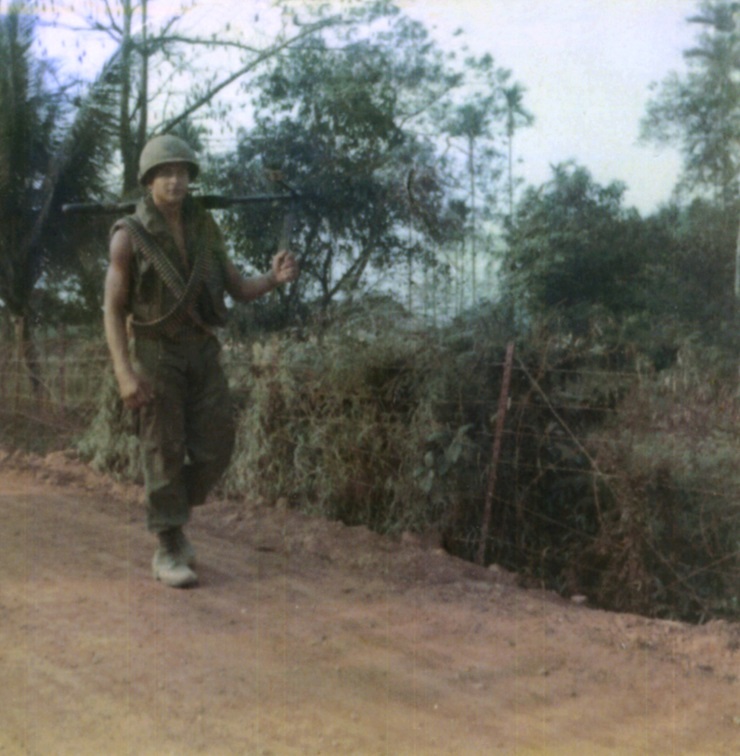
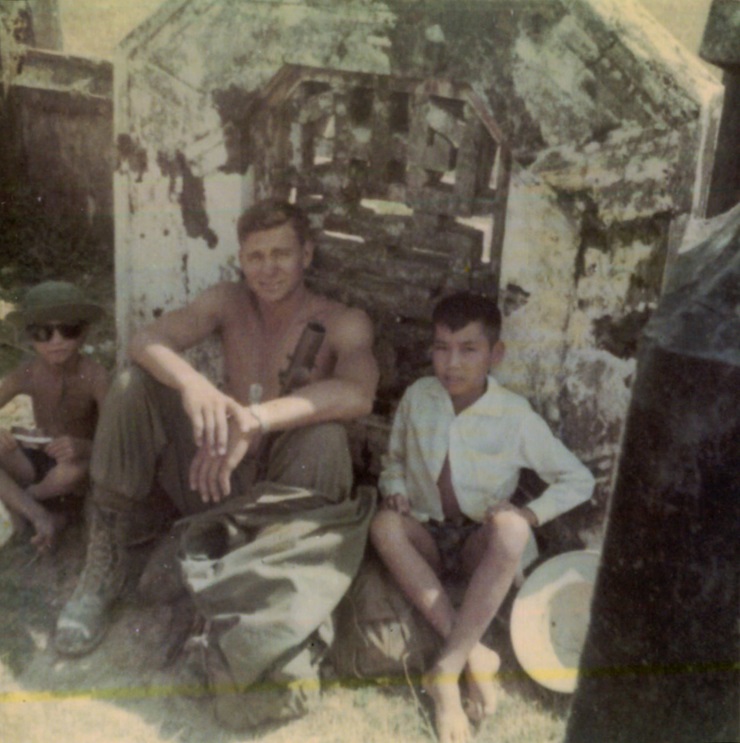
Paul Hill volunteered for the Army during the Vietnam War and served 1.5 tours of duty. He patrolled at Quang Ngai Province, Vietnam, 1968-1970.
Paul Hill and Champion Hill are well-known in the Angus business. His list of accolades is long — major shows won, Association Board of Directors president, Angus Heritage Foundation honoree, Beef Improvement Federation’s Seedstock Producer of the Year, the spearhead of the Angus Foundation’s $11 million Vision of Value campaign, among many more. But what’s less known is the defining opportunity that got him started in the Angus business. This opportunity helped him return from voluntary service in the contentious Vietnam War, an experience not known for its warm welcome home.
An early interest in cattle
Hill grew up on a peanut and cattle farm near Marianna, Fla., and participated in 4-H and FFA livestock judging. During the summers, starting when he was 13, he worked for a neighbor’s operation, where he learned that a professional herdsman was an occupation choice.
Roger Hardin was the herdsman, and received both the Polled Hereford World and the Angus Journal. Paul read both publications cover to cover each issue, fanning the flame of his cattle interest.
Hardin took Hill to the National Hereford Register of Merit Show in Athens, Ga., in February 1966 when Hill was 17 years old. While checking out the Pennsylvania State University show string, Hill met exhibitors Jack Phillips, Gail Long and Herman Purdy. Both Phillips and Long wanted to create a trade school for animal husbandry that doubled as a professional fitting service. They had already found land and facilities near Lee’s Summit, Mo.

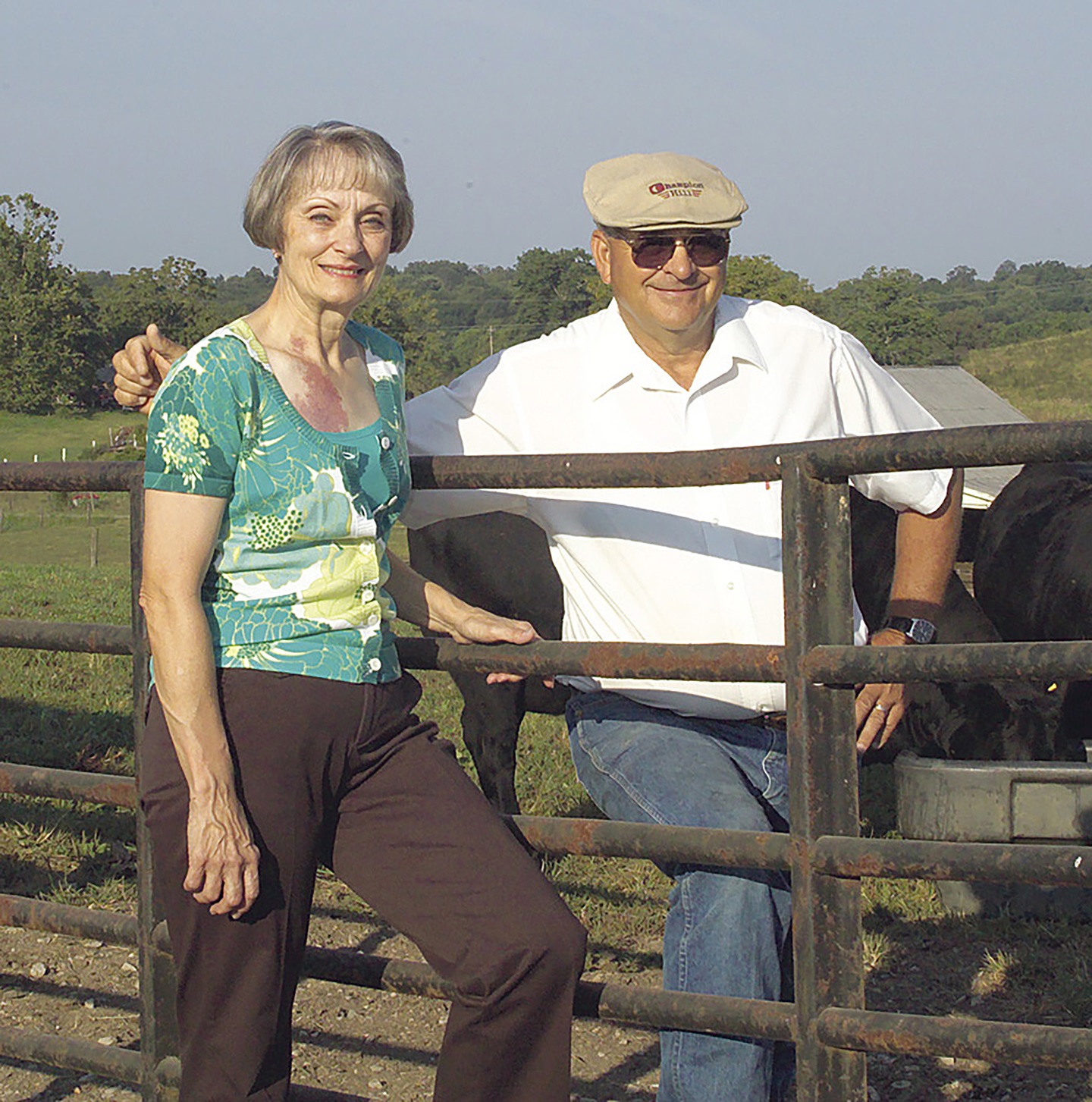
Paul Hill (right) and wife, Lynn, built an Angus legacy at Champion Hill, Bidwell, Ohio.

The American Herdsman Institute was born. In June of 1966, Hill got on a bus to Missouri as the first enrolled student. Classes hadn’t started by the time he arrived, so he helped in setting up the farm, including digging postholes in rocky soil. Once classes did start, they taught everything from herd management to showing.
Students were taught how to observe cattle for problems, how to register a calf and keep herd records, how to trim hooves, showmanship skills, grooming techniques, live-animal evaluation, marketing and salesmanship.
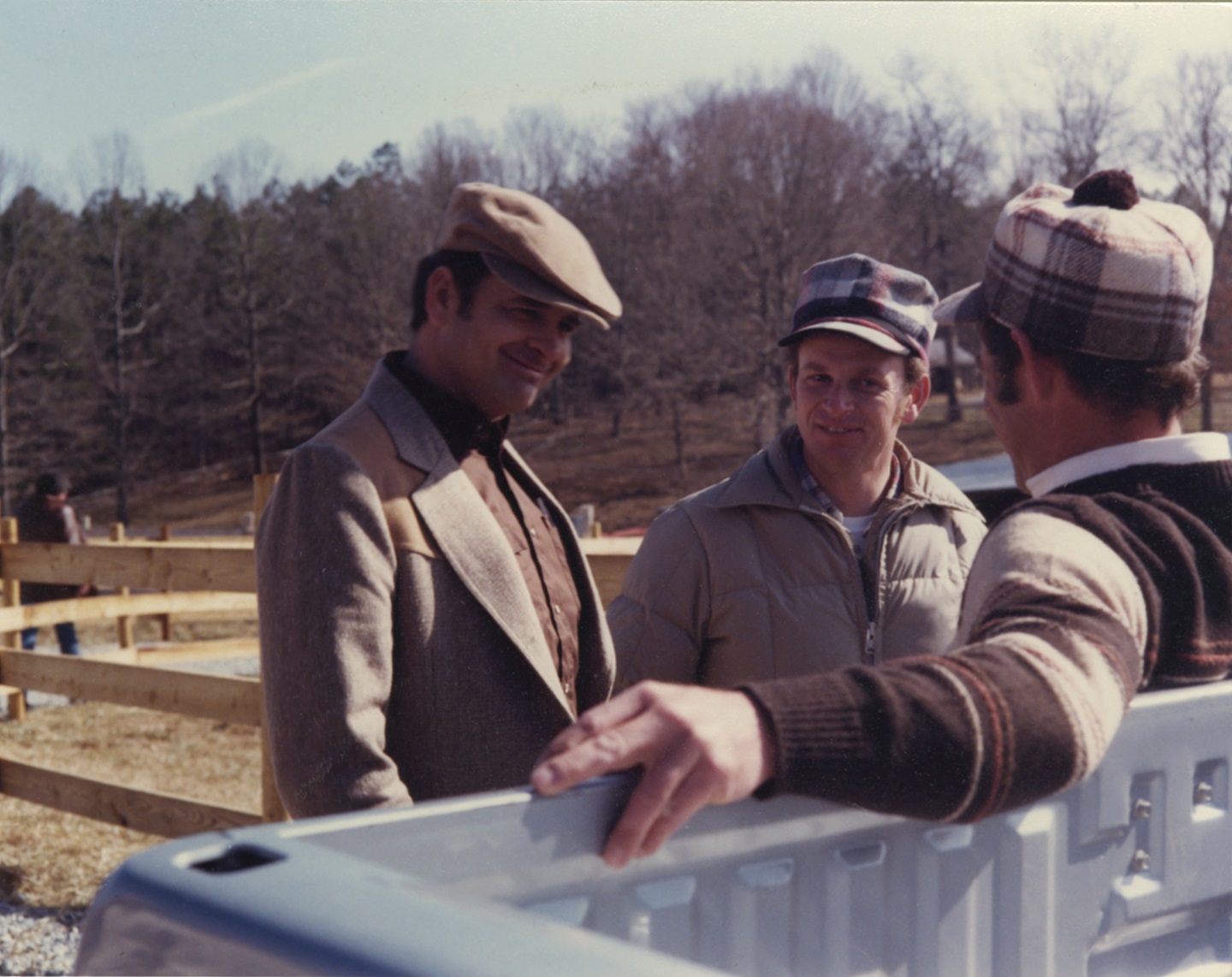
Paul Hill (left) met lifelong friends among his schoolmates at the American Herdsman Institute, including Bernie Scheer (center) and Pat Scheer (right).

“After I was through with the class, I was offered a job in Kentucky. But they talked me into staying there on staff,” he recalls while chuckling. “We got a new class of students in every six weeks, and my job was to take them to eat, tutor them or whatever they needed after classes until the next morning. We started about 3 or 4 in the morning, and we went on up to about 9 at night. So it was a long, long day. But my job was to take care of all the new students.”
Hill says he most appreciated getting to work side-by-side with Phillips and Long. Phillips had worked at Penn State for years with a storied history, and Hill says Phillips was a personal mentor to him.
“Dr. Phillips was a great teacher. He and Gail judged a lot of shows, and they could come home and tell you about everything at the show, the people and the personalities. Part of his deal was to teach you how to read people, and when to keep your mouth shut,” Hill recalls.
It was a lesson that would help him during his military service.
Half a world away
Hill knew he would be drafted, so in July 1968, he volunteered for the Army. He served on active duty for a tour and a half as a demolition specialist. He was responsible for detecting mortars, rockets and “zapper squads” (suicide squads attempting to enter their perimeter). Other duties were to find the many land mines, booby traps or tunnels they encountered daily, and then either dismantle them or put a charge through them to blow them up, Hill recalls.
He was on patrol every single day while in Vietnam. There were six men to a bunker, so four men would rotate every two hours between being on guard and asleep, and the other two would get a full night’s sleep. That meant Hill only got a full night’s sleep every three days for a year and a half while in Vietnam.
Vietnam service was a giant lesson in patience.
The biggest thing there was to figure out survival, and patience was the thing that kept you alive.”— Paul Hill
Hill was twice named Soldier of the Month for his Battalion, and he was awarded the Army Commendation medal. He was also chosen to escort Colin Powell from Chu Lai Air Base to battalion headquarters for a ceremony to advance rank.
His time overseas broadened Paul’s view and gave him a deeper appreciation for the opportunity available in the United States, even though he did not receive a warm welcome coming home.

“The country changed quite a bit during the time I was in Vietnam. When we came back to Washington, we had just come right out of the field, dirty in our fatigues. We got showers and they gave us dress uniforms — I still have mine,” he adds. “We boarded the bus for Fort Lewis, Wash. There were hundreds of people spitting at us. All of the soldiers ignored them; we didn’t retaliate. You know, we didn’t get a warm welcome. They called us baby killers. But they weren’t there so they didn’t understand.
“A lot of people didn’t survive Vietnam, for different reasons,” he continues. “But I had a purpose that carried me through. I actually went back to the Institute before I went to see my parents. I was so anxious to get started again.”
When Hill was back at the Herdsman Institute, he got quite a few job offers, several offered $20,000 — quite a lot of money for 1971.
“Dr. Phillips said, ‘You need to be with Angus. You’re too good for these other breeds.’ So I took a job for about $12,000 because it was Angus,” Hill says.
That decision, thanks to his mentor, paved the path to an outstanding career in the Angus industry.
“I just had a lot of good opportunities in my life,” he says, but his ability to maximize them is evident in his long-standing career.
The people he met at the Herdsman Institute as staff advisors, as clients and as students were key to his success.
“I think our life is all about creating good relationships,” he emphasizes.

Topics: Salute To Service , Success Stories
Publication: Angus Journal
Related Publications


Current Angus Journal
Keep up on the latest stories of the people and programs in the breed.

Latest Podcast Episode
Don’t miss conversations with breeders and industry experts.