







A Masterful Mentor
Educator and cattle breeder David Hawkins honored as 2025 inductee into the Angus Heritage Foundation.
March 20, 2026
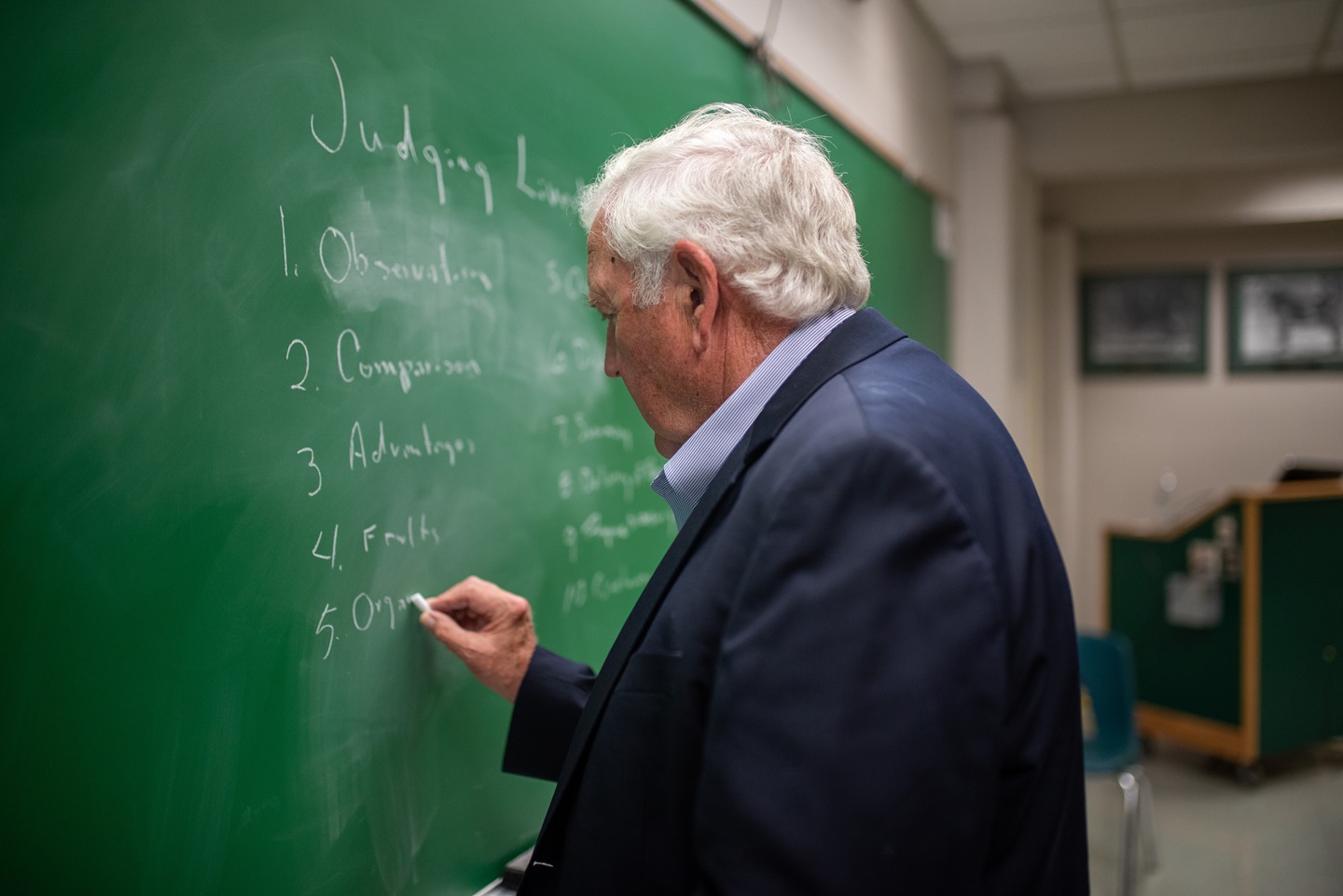

The best teachers foster learning far beyond the pages of any textbook. They find ways to light sparks and guide people and programs into greatness. Just ask anyone who learned a thing or two from David “Dave” Hawkins.
“You cannot repay the people that mentor you, but you can mentor other people and pass knowledge along that way,” says Dave of Mason, Mich., and professor emeritus at Michigan State University. “If we can help our students have an easier path and succeed in their careers, that’s what it’s really all about, because people really are the most important thing we have.”
Before his retirement, students and colleagues found evidence of his people-centered philosophy when they planted themselves in the chairs in his office and talked with him as a mentee or a friend.
“Those chairs, most of the time during working hours, were always filled with somebody seeking his counsel,” says Jennifer Hawkins, the younger of his two daughters.
Much the same, this translates into Dave’s family life, too.
“All the same love and support that he gave us girls growing up he’s extended to the next generation,” says his oldest daughter, Lisa Moser.
The sisters have many fond memories with their dad, raising cattle and attending state and National Junior Angus Shows (NJAS) together. They saw him in his element, and he says he was happy to share it with them.
“Walking through the aisles with Dad has always been fun because of all the people that want to engage with him along the way,” Lisa says.
Mark McCully, American Angus Association CEO, had an office as a graduate student at Michigan State a few doors down from Dave. McCully says Dave takes pride in the success of others.
“His fingerprints are all over this industry,” he says. “One of Dave’s greatest legacies is his impact on and mentorship of leaders and folks that have been able to go out and also have an impact."
How legends are made
Teaching, coaching livestock judging teams and working with colleagues to raise award-winning purebred beef cattle — Dave did it all with excellence during his career.
“All over the country, he was advising new breeders, advising experienced breeders, and really helping the communication networks across the country and internationally,” says Dan Moser, Dave’s son-in-law.
Dan says Dave is wired to study cattle, the science of them and everything else that goes with a herd.
“When you rode through a pasture of the Michigan State cattle or the cattle in Ohio that come from the Hawkins’ farm, he could give you the pedigrees, seven generations, eight generations, as far back as the records go,” Dan explains.
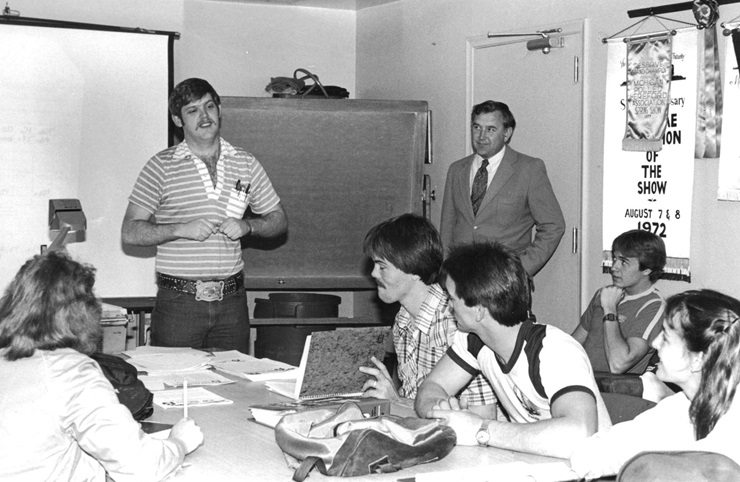
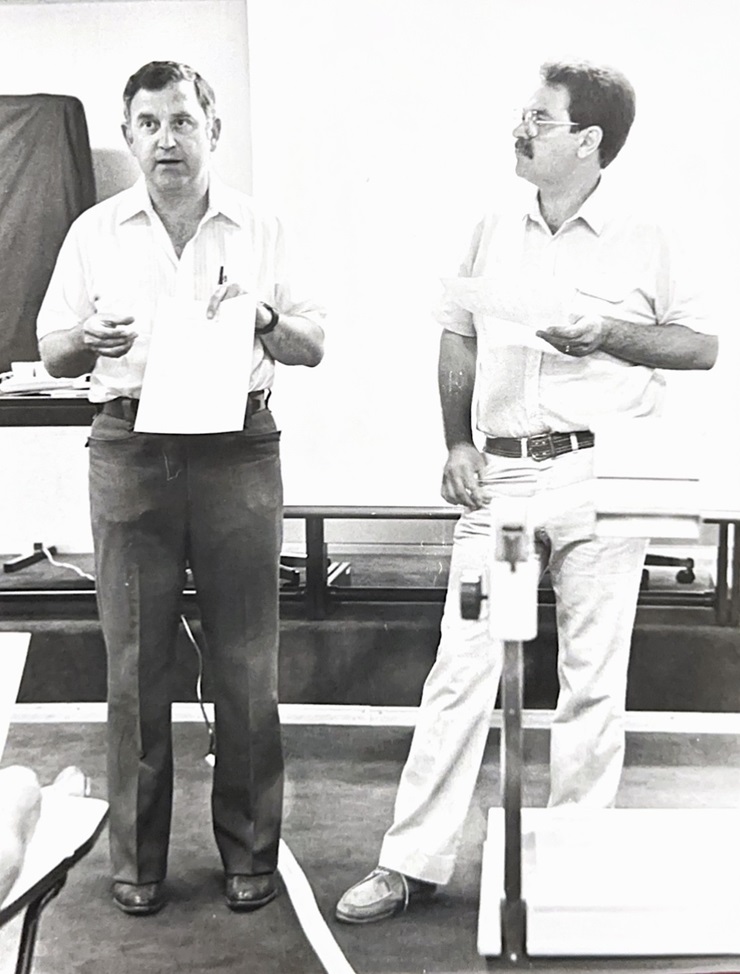
A well-respected instructor at home and abroad, Dave Hawkins (far left) lectures to a group in Brazil in 1984 and (far right) facilitates discussion with students in the Michigan State University beef barn classroom.
Dave grew up in and around the show ring, from the time he was a young boy in southwest Ohio. His parents, who he names as his first mentors, operated a potato farm as well as a livestock herd that included Angus cattle. Dave was one of three children, all involved in the family farm during their upbringing. During this time, their parents emphasized the value of education.
“Professor George Wilson from The Ohio State University judged our county fair in 1955 (when I was 14) and I had the champion steer,” Dave says. “He said if I enrolled at the university, there was a possibility of having a job at the campus beef barns.”
Dave remembered that nudge a few years later and attended Ohio State, becoming the first in his family to earn a bachelor’s degree in 1963. He continued his schooling, earning a master’s degree in animal breeding and genetics. While he would have liked to return to the family farm, he says he knew that was not a financially viable option.
As fate would have it, he had crossed paths with Ron Nelson and Harlan Ritchie of Michigan State, and they had encouraged him to continue his education and earn a doctorate. He took their advice and eventually transitioned from studying ruminant nutrition at Michigan State in the late 1960s to a grant-funded beef cattle Extension position with the university for five years, before joining its animal science faculty permanently in 1971. Then he really began making history.
Dave says of when he started as a faculty member, “Our department chairman, professor Ron Nelson, felt that we needed to have better livestock to inspire the students.”
For many years, Dave has called livestock a vehicle for the development of people, but that statement alone masks his accomplishments in the cattle business and the show ring.
As faculty coordinator of the university’s Beef Cattle Teaching Center, Dave led genetic improvement of its purebred Angus and Hereford herds. His team sold cattle, embryos and semen to every continent except Antarctica.
“We tried to develop cattle that were useful to the industry but were excellent teaching tools,” Dave says.
In the ’70s and ’80s, Michigan State’s herd produced numerous national champions at futurity shows, the National Western Stock Show and the American Royal. Dave remembers Michigan State exhibiting the grand champion female and reserve grand champion bull in the Angus show at the last International Livestock Show hosted in Chicago in 1975. A couple weeks later, that bull went on to be the grand champion bull at the stock show in Denver in 1976.
“That really put Michigan State on the map,” he says.
At this time, the show ring was still the ultimate marketing platform for registered genetics, and animals from the university herd went on to be influential in other herds. Dave says he saw the need for cattle with more growth and performance potential. From the show ring, as a breeder and a judge, he helped lead that type change for the beef industry.
“No doubt, it took some bravery. It took some conviction on the direction that he was leading the purebred herd,” Mark adds. “Of course, we look back on those times now and realize that we needed to make that shift. Dave spent a lot of time out visiting herds and traveling and studying different programs and different genetics to find those cattle, in particular, that simply had more growth.”
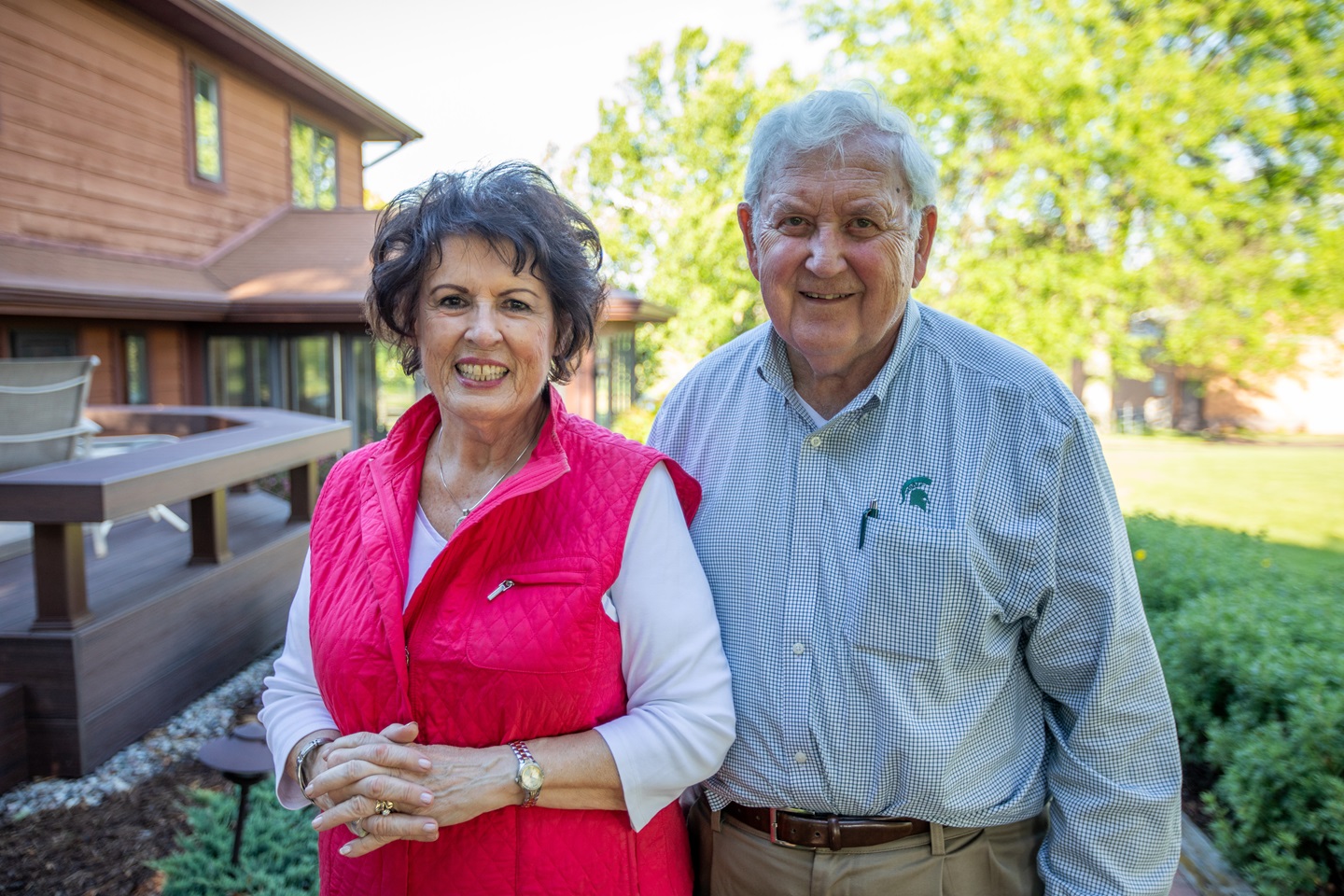
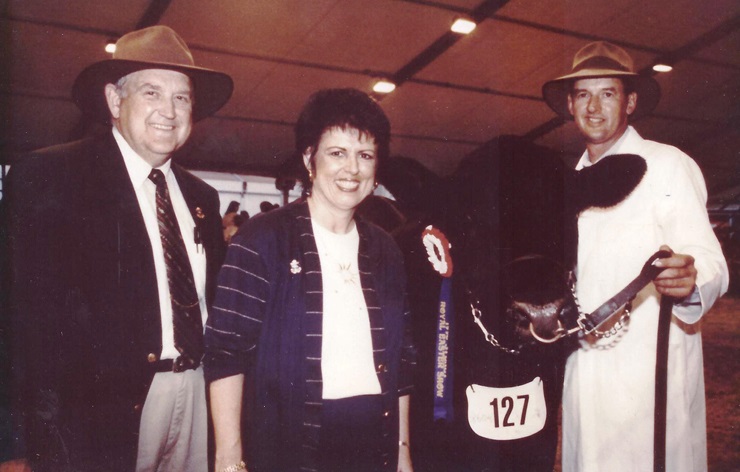
Pictured (above) are Kathleen and Dave Hawkins. The couple, advocates of the beef industry throughout their careers, has been married since 1967.

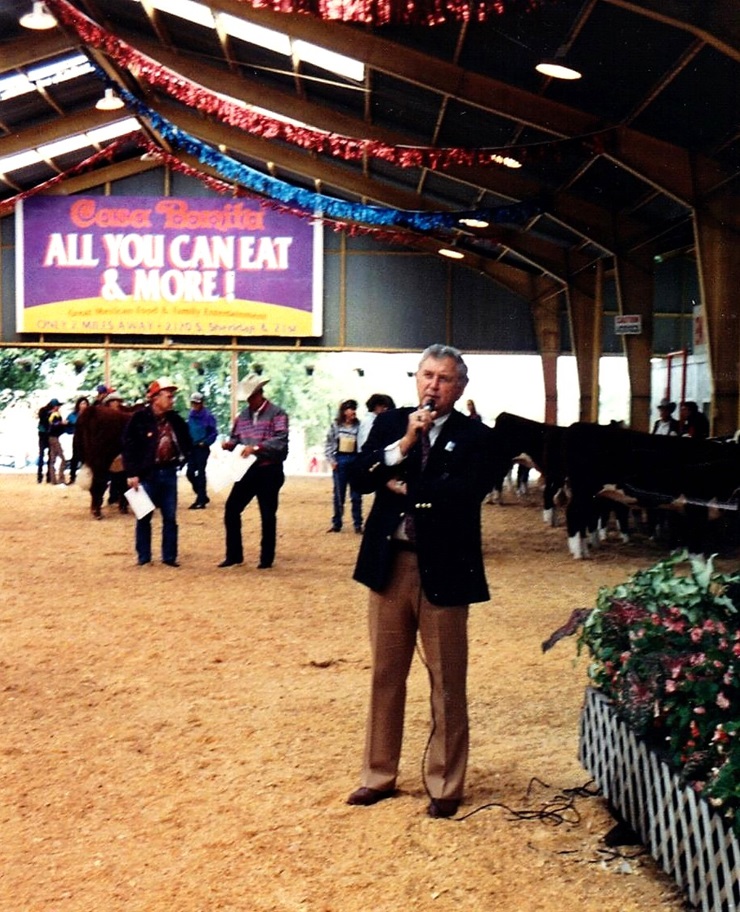
As a prominent judge, Dave Hawkins influenced breeders’ and industry decisions through his work in the show ring.
A humble, trusted leader
Dave looks back on that golden era for animal science at Michigan State and says the best part was they could work together with a common goal and not worry about who was going to get credit for their success.
“The graduate students, the farm managers, all had a part in what was occurring with the program and took great pride in it,” he says. “The fact that many of us were asked to judge shows several times over a 20-30 year period meant that there was some longevity to the program and that people did appreciate our opinions.”
Highly sought after, Dave judged major shows across the United States, Canada, Australia and Denmark during his career.
His first international experience was visiting Australia in 1982, and he collaborated with its Angus society to develop an exchange program that lasted 26 years, creating a rich network of international breeders and exchange of ideas.
As a representative of Michigan State, he also spent time leading student study tours to the British Isles and was invited to São Paulo, Brazil, to give lectures on North American beef production.
“These international opportunities allowed me a chance to meet new people and to broaden my horizons,” Dave says. “I tried to bring new information back into the classroom.”
McCully says he remembers Dave’s teachings always being current, prepared with care to help set up as many students as he could for success.
“Dave was always one that wanted students to expand their horizons, to think big, to understand the world in maybe a little bigger way than the perspective they came from,” McCully says. “When he taught, it was 100% about the students, and it was 100% about them getting the knowledge that they needed.”
A standout class for many students, including McCully and Lisa, was a livestock merchandising class. Students would hear from auctioneers, sale managers and successful breeders, while also gaining hands-on experience pulling together a sale at the university.
“It was one of my favorite classes that I took because he had speakers that would just volunteer their time to come in — industry leaders from all over the country,” Lisa says. “They wanted to help by talking with the students, but they really came because he asked.”
With meat animal evaluation courses and livestock judging teams, Dave says he found students to be highly motivated, and he enjoyed seeing them develop their decision-making, communication and time management skills. He coached and traveled with teams for seven years before stepping into a faculty mentor role for coaches for 20 years and later as superintendent of the National Collegiate Livestock Judging Contest.
At the university, he did all this working alongside other legends in the making: Nelson, Ritchie and Byron Good. This beef group had a hand in updating the university program’s Angus genetics, beginning in the late ’60s until Dave retired in 2006. Several of Dave’s former colleagues’ portraits hang alongside his painting in the Saddle and Sirloin Portrait Gallery, where Dave was inducted in 2013.
“I can’t help but think they made each other better,” McCully says. “To be able to take a class from the classroom out to the barn and see national champions, that was special. I think Dave’s passion for quality livestock — really all of those gentlemen’s passion for quality livestock — really set Michigan State apart in that time.”
Since retirement, Dave has continued to pour into others and watch his former students and even grandkids grow in their confidence and find success in their chosen career fields. He calls that a great reward for his labor.
Decades of teaching also honed his skills for helping students learn how to think through problems. Lisa says he is still the first person she goes to for advice.
“He’s such a good sounding board for me, his daughter,” she says. “But he would be that for anybody — any student, any young person that comes to him. He would do that for them because that’s just who he is.”
Topics: Award winner , Association News , Industry News , Member Center Featured News , News , Success Stories
Publication: Angus Journal
Related Publications


Current Angus Journal
Keep up on the latest stories of the people and programs in the breed.

Latest Podcast Episode
Don’t miss conversations with breeders and industry experts.
