




A Prairie’s Song
Saying goodbye to a tradition in the Flint Hills.
December 5, 2025
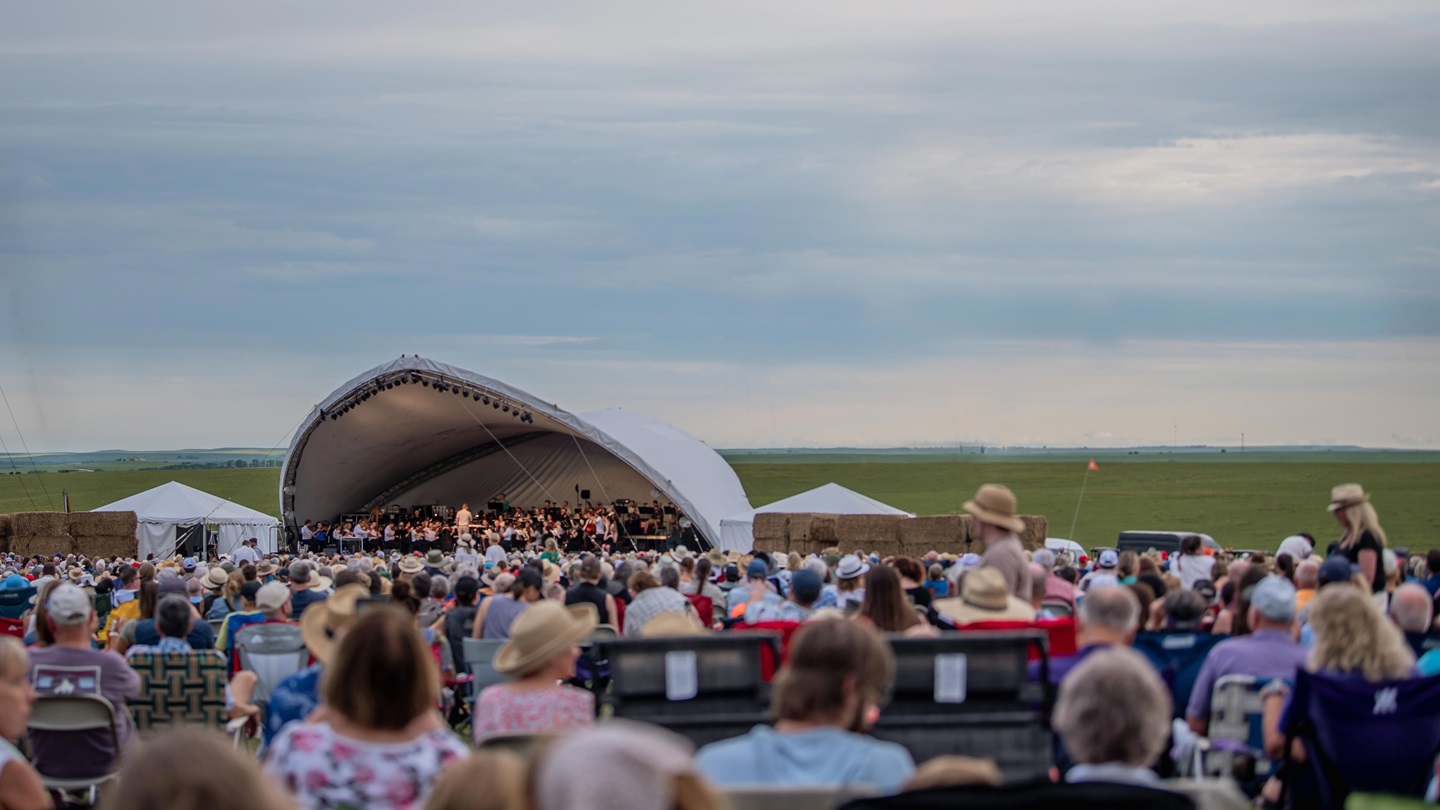

Sloping across eastern Kansas and Oklahoma, the Flint Hills stretch like a canvas brushed by God’s hand. But these rolling green pastures are more than just the perfect frame for a summer sunset; they are a living testament to natural and cultural history.
In fact, this region is home to the densest remaining tallgrass prairie ecosystem in North America.
“The main reason that it’s still there is not because we were such brilliant conservationists 150 years ago, but it’s because the soil is only a few inches deep,” explains Matt Perrier, Kansas native and owner of Dalebanks Angus. “Even though the federal government told us through the Homestead Act of the mid-1800s that we had to plow this ground up in order to make it productive, the limestone rock that was right below the soil surface wouldn’t allow it.”
The Perriers have been raising livestock on the Flint Hills for generations. He says his ancestors started Dalebanks as a sheep farm when they immigrated from England to the United States in the 1860s, settling on the same ground he raises his family on today. In 1904 the first Angus cattle were purchased, and a legacy was started.
Perrier says his family chose Angus cattle because they were unique, black and polled. As for why they chose the Flint Hills region, he’s not entirely sure.
“We ask ourselves that a lot,” he admits. “I think probably the biggest thing was it felt like home to them, because a decade or so before they had moved away from someplace in England that looked very similar to this.”

A unique celebration
Perrier is just one of many who are passionate about the region they call home. That’s why 20 years ago, a group of leaders in the Flint Hills collaborated to host an annual event honoring the area: the Symphony in the Flint Hills.
The Symphony’s goal is to heighten appreciation and knowledge of the area, and it seeks to accomplish that in a unique way, featuring a blend of music, art and education to draw people from all walks of life.
Each year, for one day in June, a pasture in the middle of the Flint Hills is transformed into a lively event space. Giant white tents are erected, grass is mowed to create walking paths and thousands of people flock to attend.
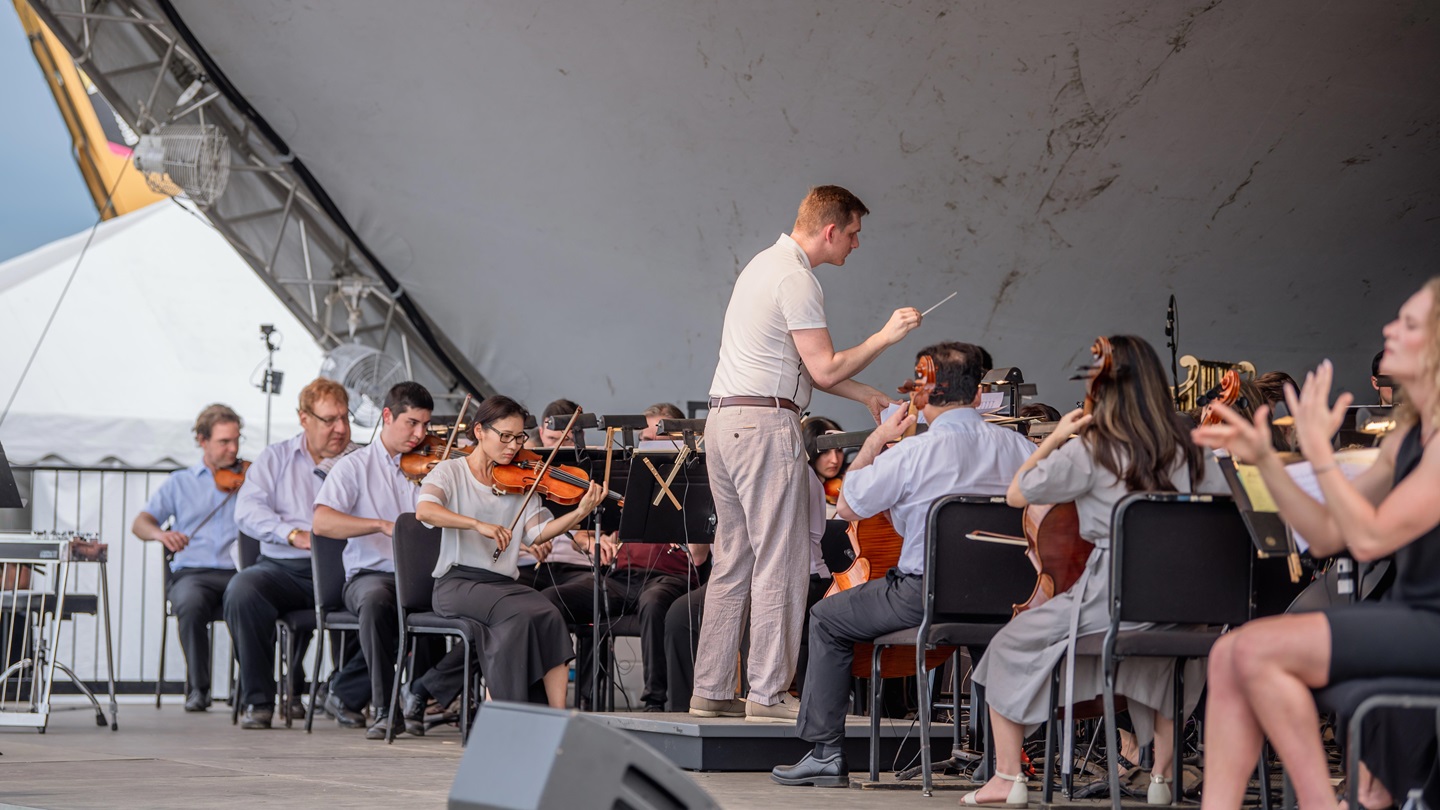
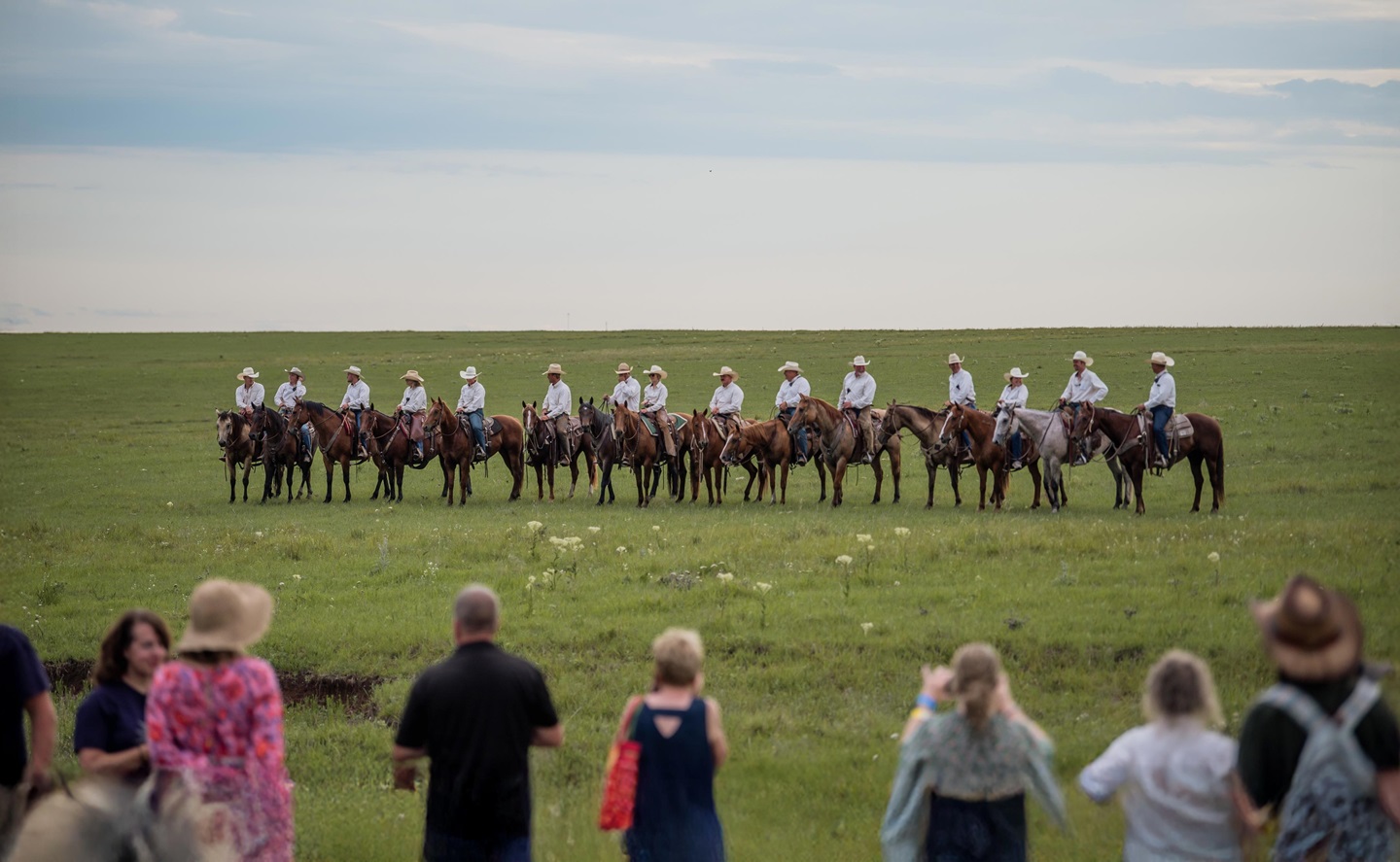
The event starts with a series of educational talks and presentations, featuring speakers discussing history, conservation, ranching and more. Guided prairie walks, an instrument petting zoo and an art gallery are also offered throughout the day. In the evening, the Kansas City Symphony performs a sunset concert while cowboys on horseback drive a group of cattle across the hills.
John McCurry of McCurry Angus attended the Symphony for the first time in 2024, and he says it was unlike anything he’d ever seen.
McCurry attended the event for a special reason — it was his cattle being used in the cattle drive. He says it was a special experience to sit alongside thousands of people and watch cattle from his ranch be driven through the pasture, serenaded by the symphony playing John Williams’ “The Cowboys.”

“To my knowledge, that was the first set of mama cows that were ever in the symphony,” he shares. “I still watch the video of the cows coming over the hill to the song … it was just awesome.”
Perrier has also attended the event, but for him, it’s something of a family tradition.
“I have probably gone to about 10 symphonies,” he says. “But my mom and dad have been to nearly all of them. In fact, I think they went to all but maybe one or two.”
Both McCurry and Perrier agree that the signature event is a great space for ranchers and conservationists to connect with others who don’t know as much about the history of the Flint Hills.
“I think it’s a great way for ranchers to be able to associate with and learn from those folks that maybe have never been in rural Kansas before,” Perrier says. “They wouldn’t come if we just said, ‘Hey, we’d like to teach you about agriculture.’ But they do come when they say, ‘Hey, you get to hear a world-class symphonic music event in the middle of a 5,000-acre tract of land.’”
McCurry agrees. When he attended in 2024, he says he was mainly focused on soaking in the experience but was impressed by the engagement from the community.
“I bet there [were] 20 of those breakout tents that had seminars every 30 minutes,” he says. “The amount of people that were engaging in those breakout seminars and the questions, I think it is a great tool.”
The end of an era
This June marked the 20th anniversary of the signature event, but it was also the grand finale.
While sad to see it end, Perrier says he understands.
“I served on their board of directors for several years and I saw the challenges and the risks that were associated with having an outdoor event with that little infrastructure and with that many people in one area,” he admits. “It was a lot to juggle.”
McCurry only had the opportunity to attend the event once, but says the experience made him realize how difficult an event like the Symphony would be to plan logistically.
“Those people that started that 20 years ago aren’t spring chickens anymore,” McCurry laughs. “It takes, I don’t know, maybe a hundred people … from parking cars to hauling equipment to all the speakers.”
There’s a lot of things to think about when coordinating an event of this size, especially in a pasture whose only regular visitors are grazing cattle. Figuring out food, drinks, shade and parking for such a large crowd is a challenge the Symphony in the Flint Hills staff and volunteers have taken on year after year.
Perrier says from his experience, the main logistical issues are the weather and traffic.
“The biggest challenge with having an 8,000-person concert in the middle of nowhere is getting people to and from in a short time on a one-lane gravel road,” Perrier explains. “Since everything is held outside, if Mother Nature delivers a thunderstorm during setup or the event itself, things can get complicated or even canceled.”
Conservation continued
Although the pastures of the Flint Hills won’t see so many people coming to celebrate and honor the heritage of the area anymore, that doesn’t mean protecting the ground has become any less important to those who call the hills home.
“It’s an important part of our ranch and our family’s legacy,” Perrier explains. “I’ve heard varying numbers, but about 2% of the native tallgrass prairie that used to go across the North American continent is left. Most of that is right here in this small region in East-central Kansas called the Flint Hills.”
He says for the people who live here, every decision they make is in the interest of protecting the tallgrass prairie. Perrier says at Dalebanks, they’ve seen how the native grass is important not just for natural sustainability, but for the sustainability of ranches and communities.
McCurry says his ranch home base is located in the Sandhills area about an hour west of the Flint Hills, but he’s still passionate about protecting the prairie some of his cattle graze on.
“As land becomes more valuable and less accessible, we’re trying to make more out of every acre,” he explains. “So how do you do that? Soil health, plant health, rotational grazing. You’ve got to control brush and all those invasive species, and that’s what we try to do.”
McCurry says he’s sad to see the annual symphony event end, but he’s not worried about the future of the grasslands.
“There is an incredible young population over there that I think has taken sustainability and grass management to the next level,” he says. “I’ll support however I can.”
Protecting What We Have
During the 2025 Symphony in the Flint Hills Signature Event, Angus breeders Joe Carpenter and Barb Downey led an educational session about the importance of conservation for their ranch.
“We run about 6,000 owned acres,” Downey shared. “Most of our ground is native tallgrass … meaning for the last several thousands of years, it has looked like what you see out here.”
At the Downey Ranch in Wabaunsee, Kan., Carpenter and Downey have learned firsthand the challenges of balancing cattle production and conservation.
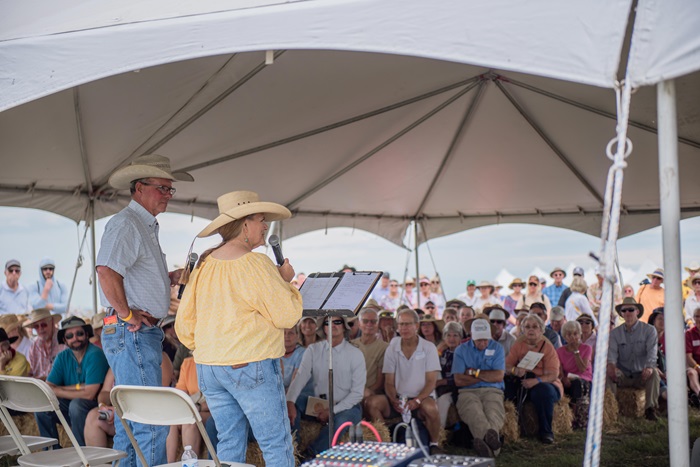
“It all comes back to the health of the soil, the foundation of … why a prairie looks like it does,” Downey explained. “We love this ground. It talks to us.”
Carpenter stressed the necessity of regenerative agricultural practices like burning, no-till and cover crop diversity. But he also reminded attendees that grazers like cattle are an essential piece of the prairie ecosystem, explaining how grazing triggers a release of sugars in the soil, which attracts microbes and unlocks minerals vital for plant growth.
“They’ve got that symbiotic relationship going,” he said. “They’re relying on that cow to graze and disturb that plant to cause all of this to really happen.”
Downey reinforced his point, telling visitors that as ranchers, they are the first line of defense in protecting the tallgrass ecosystem. She admits ranching in an area like the Flint Hills is not always easy, but it’s worth it.
“Ranching is not a get-rich-quick enterprise,” Downey said. “It’s something that we do because we love it. It’s a way of life.”
Topics: Association News , Consumer , Events , Industry News , Member Center Featured News , News , Pasture and Forage , Sustainability
Publication: Angus Journal
Related Publications


Current Angus Journal
Keep up on the latest stories of the people and programs in the breed.

Latest Podcast Episode
Don’t miss conversations with breeders and industry experts.