



BY THE NUMBERS
Feed Efficiency in Focus
How dry-matter intake helps guide Angus breeding decisions.
November 7, 2025
The Angus breed has made remarkable strides in growth, performance and carcass traits over time. Animals are finishing at heavier weights, and carcass quality continues to improve. But with this impressive performance comes a natural trade-off: feed intake tends to increase, as well.
Larger, faster-growing cattle simply require more feed to fuel their growth. Feed remains one of the largest expenses in beef cattle operations, often accounting for 50–70% of total operating costs. Even though today’s relatively low feed prices and strong cattle prices may soften some of the pressure, the economic value of improving feed efficiency is clear. Small gains translate into meaningful savings and stronger margins. That’s why finding the balance between growth and feed efficiency is essential.
To support this goal, the American Angus Association provides weekly genetic evaluations for three key feed efficiency traits: dry-matter intake (DMI), residual average daily gain (RADG), and residual feed intake (RFI), which is available only to breeders who submit intake records.
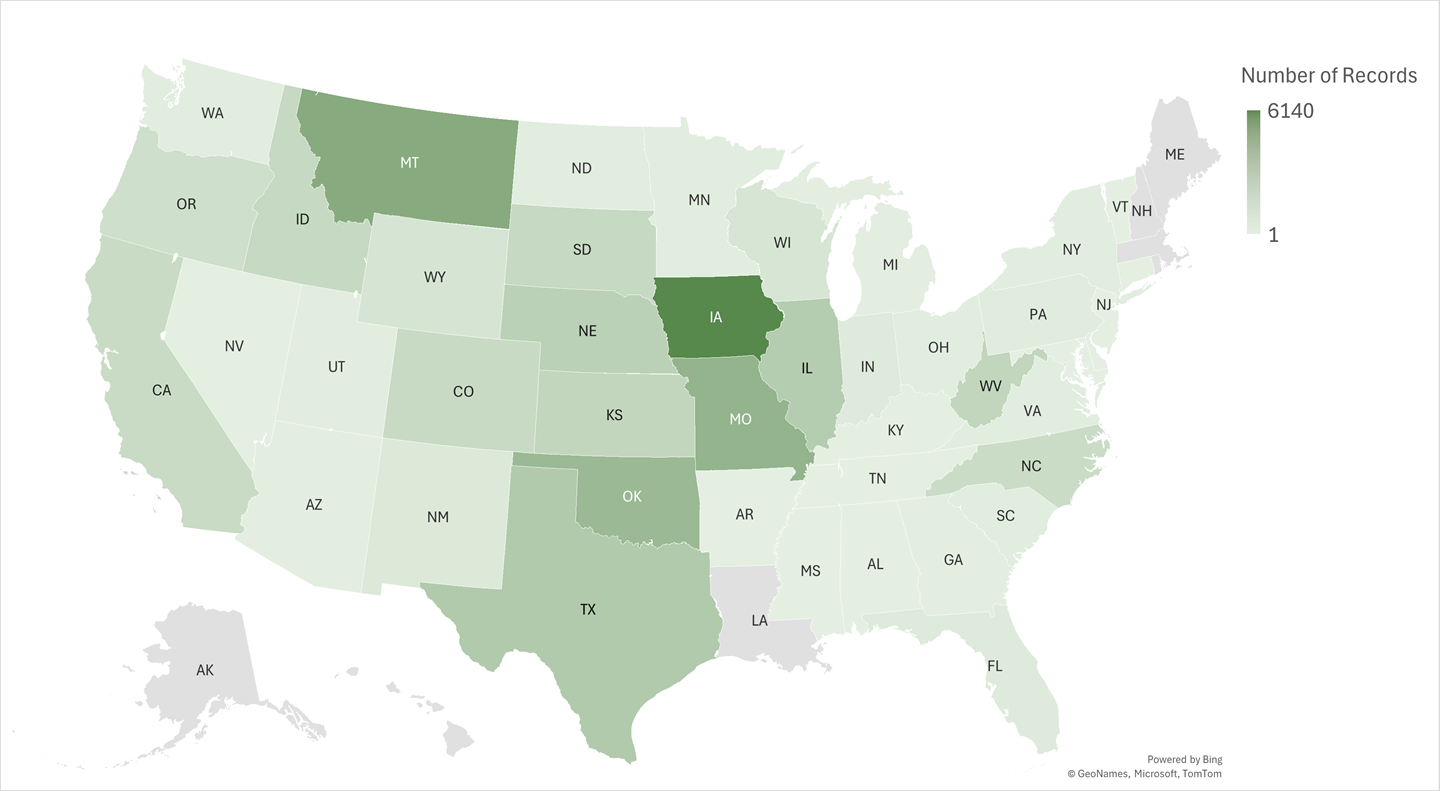
Fig. 1: Distribution of Dry-Matter Intake Records Across United States

When selecting for feed efficiency, DMI alone doesn’t tell the whole story. Animals that consume less feed but also grow more slowly may not be the most productive. That’s where RADG and RFI come into play. These traits take both feed intake and growth into account, providing a more complete picture of efficiency. RADG is expressed in pounds of average daily gain, with higher values being more desirable. It reflects the variation in weight gain beyond what’s expected based on feed intake, helping identify individuals that outperform weight gain expectations.
These expected progeny differences (EPDs) are calculated using a multiple-trait model that incorporates indicator traits such as weaning weight (WW), postweaning gain (PWG), ultrasound fat thickness (UFAT), pedigree, and genomic data. Together, these tools give breeders a stronger sense of their herds’ feed efficiency and help guide better selection decisions.
Fueling accuracy
High-quality feed intake records are the backbone of accurate feed-efficiency evaluations. While collecting this data is complex and expensive, expanding the number of records remains crucial. More data means stronger evaluations, greater accuracy and sustained genetic progress for the breed.
With nearly 40,000 records from more than 800 herds across the United States in the current Angus DMI dataset, there’s a solid foundation for feed efficiency evaluations (Figure 1). Breeders’ ongoing commitment to data collection is essential for continuing to advance feed efficiency in the Angus breed.
While the indicator traits like WW, PWG and UFAT provide valuable support, the most significant improvements in accuracy come from the direct inclusion of dry-matter intake records. These records offer a more precise signal of feed efficiency than correlated traits alone.
To illustrate how accuracy improves with additional information, Figure 2 shows the distribution of DMI accuracy across four groups of animals with different amounts of information. This comparison highlights the importance of DMI data and how accuracy increases as more sources of information are included. Accuracy peaks on average (0.36) when direct DMI records are available.
Figure 2 also shows genomics plays a crucial role in improving EPD accuracy. By incorporating genomic data, we gain a clearer picture of the specific genotypes an animal inherits from its parents. This enables the calculation of genomic relationships that are more precise than those based solely on pedigree. The result? More accurate EPDs and more confident selection decisions.
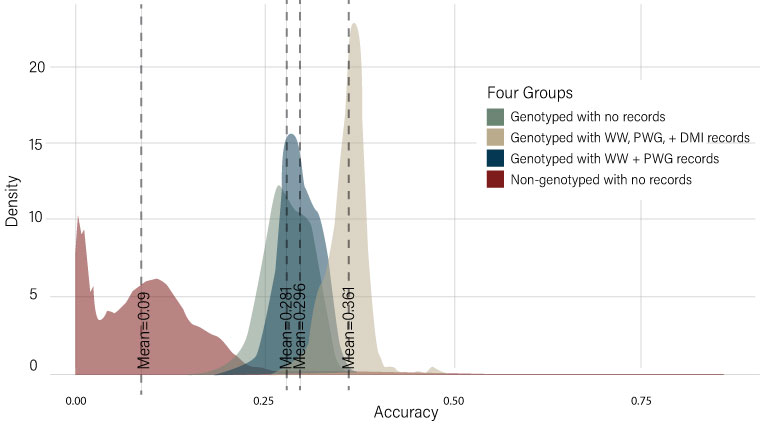
Fig. 2: Distribution of DMI EPD accuracy given different amounts of information

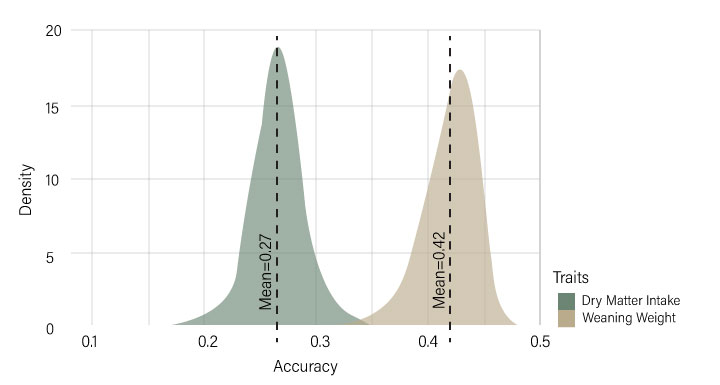
Fig. 3: Accuracy distribution and average accuracies for young, genotyped animals, without phenotypic records born in 2024

Phenotypes remain king
While genomics enhance accuracy, its effectiveness depends on phenotypic data (actual performance measurements). Genotypes alone are not enough to drive accuracy, and the genetic evaluations model needs phenotypes to establish meaningful links between genotype and performance data.
Figure 3 demonstrates how the accuracy for genotyped animals only goes so far as the amount of phenotypic data in the genetic evaluation. When we examine the accuracy distribution and average accuracies for young, genotyped animals, without phenotypic records born in 2024, a clear difference emerges between weaning weight and dry-matter intake.
Both traits have similar heritability, meaning they’re equally influenced by genetics. But here is where it gets interesting: genotyped animals with no records show higher average accuracy for WW EPDs compared to DMI EPDs. Why? Simply put, it comes down to the amount of data (phenotypes) behind each trait.
The Association’s database holds more than 12 million weaning weight records, compared to nearly 40,000 for dry-matter intake. The larger pool of data allows for more precise genomic predictions, boosting accuracy; so more actual phenotypes for the trait being evaluated translate to higher EPD accuracies for animals with only a genotype and pedigree in the evaluation.
Increased collection of dry-matter intake records could be a strategic investment in the future of the Angus breed and the breed’s reputation for performance. Increasing the DMI records is the most effective way to improve feed efficiency accuracy and will fuel not only sustained genetic progress, but also support the profitability of the generations of Angus herds to come.
Three key feed-efficiency traits
- Dry-Matter Intake (DMI), expressed in pounds per day, is a predictor of difference transmitting ability for feed intake during the postweaning phase, compared to that of other sires.
- Residual Average Daily Gain (RADG), expressed in pounds per day, is a predictor of a sire’s genetic ability for postweaning gain in future progeny compared to that of other sires, given a constant amount of feed consumed.
- Residual feed intake (RFI), expressed in pounds of intake per day, measures how much feed an animal consumes beyond what’s needed for maintenance and growth. Lower (more negative) values are preferred.
DMI and RADG are reported on all registered Angus cattle. RFI is available only to breeders who submit intake records.

Pedro Ramos, geneticist

Topics: Genetics , Management , Member Center Featured News , Nutrition , Pasture and Forage , Record Keeping , Association News
Publication: Angus Journal
Related Publication Articles


Current Angus Journal
Keep up on the latest stories of the people and programs in the breed.

Latest Podcast Episode
Don’t miss conversations with breeders and industry experts.