




DATA DIVE
Moving Towards Genetic Improvement
Putting selection to work for low heritability traits.
October 7, 2025
Expected progeny differences (EPDs) have been available for many decades. Both seedstock and commercial producers use these tools to make genetic improvement in their herds. There are many factors that influence the differences between progeny. The EPD of the individual sire or dam and how it compares to others, the heritability of trait, and variation within the population can all influence the phenotypes of the next generation, and breeders should consider these when making selections for genetic improvement in their herd. In the “By the Numbers” column on page 30, you can read a review of heritability and how variation occurs within a population.
A practical example
Leveraging data in the Association’s database submitted by members, we compared weaning weight (WW), functional longevity (FL), and heifer pregnancy (HP) traits. Based on their EPD for each trait, 2,000 sires were ranked with 1,000 of those sires ranking in the top 5% of the population and the other 1,000 in the bottom 95% of the population.
Then, the average of their progeny’s phenotypic records was compared within each trait. Table 1 shows the EPD distribution for those sires for each trait.
Comparing the progeny performance of top 5% and bottom 95% sires, we expect the progeny of top-ranking sires will, on average, be heavier at weaning (WW EPD), produce more calves (FL EPD), and present a higher proportion of pregnant heifers (HP EPD).
For WW, all male and female progeny were included; while for FL and HP, only the daughters have phenotypic records. Table 2 shows the average progeny performance for the sire groups.
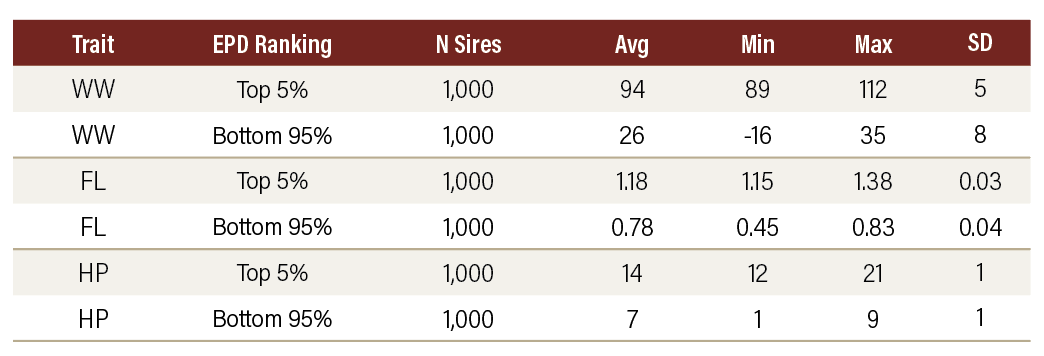
Table 1: EPD distribution for top and bottom ranking sires within each trait

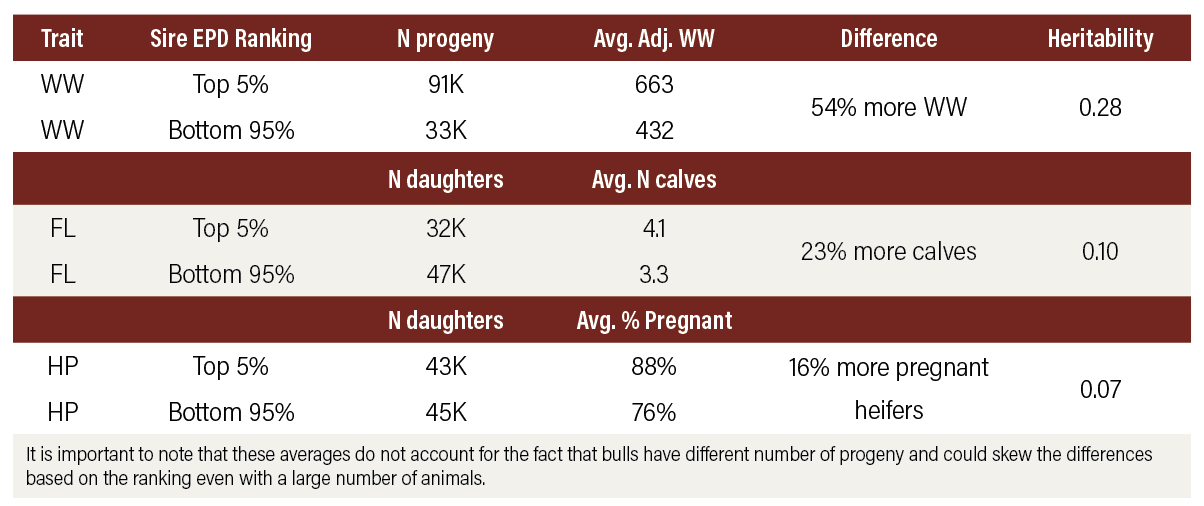
Table 2: Average progeny differences for top and bottom ranking sires within each trait

A few key takeaways
Table 2 shows the difference in progeny performance between top and bottom raked sires. Sires ranking in the top 5% had better performing progeny on average. For instance, in FL, daughters of top-ranking sires have 23% more calves on average than daughters of sires ranking in the bottom 95% of the population.
For WW, the calves of top-ranking sires will weigh 54% more on average than calves of sires ranking in the bottom 95% of the population. For FL, the difference in the average number of calves is 0.8 calves between the sire groups. If all conditions were held the same and assumed a cow herd of 100 cows mated with the top or bottom ranked sires based on the FL EPD, through the years, the herd mated with sires ranked in the top 5% would produce 410 calves (4.1*100), while the herd mated with sires ranked in the bottom 95% would produce 330 (3.3*100) calves. The difference creates 80 additional calves because of genetic selection.
It is important to remember that while a good illustration, this example does not consider the genetic merit of the cows to which those sires were mated or the environment those progeny were raised in. While spread over a large number of progeny the effects of these are minimized, this is an important aspect of this example that needs to be considered. While a hypothetical scenario and implementation has challenges, this highlights the power of genetic selection, even for a lowly heritable trait.
Do all progeny of top sires outperform all progeny of bottom sires? The short answer is no. When we predict EPDs, the E stands for Expected, which in statistics means “on average.” When looking at individual progeny, especially in small numbers, it is common to see variation.
This variation exists due to a few reasons. First, the environment they were raised in and the nutrition they were provided may vary drastically and there are many unknown environmental factors that we can’t record or account for. Second, EPDs are not 100% accurate, but will be correct on average. Third, there is a portion of genetic variation that is due to the random segregation of alleles, called Mendelian sampling (scan the QR code below to learn more).
These factors all contribute to why every single progeny from top ranked sires will not necessarily perform exceptionally for that trait. These principles apply to all traits. It is important to remember each bull will sire a distribution of progeny with most of the phenotypic variation we would observe normally.
Figure 1 further illustrates this concept with weaning weight. Included in this figure is the distribution of weaning weights on progeny from both top and bottom ranked sires for WW.
As anticipated, there is a portion of progeny from the top ranked sires that weigh more than the bottom ranked sires, and there are progeny from the bottom ranked sires that weigh less than those from the top ranked sire.
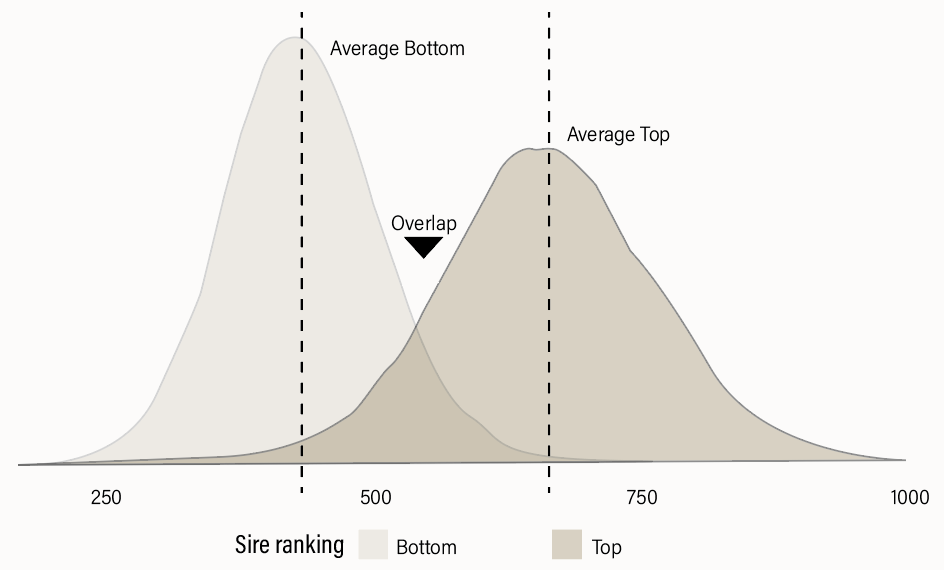
FIG. 1: Adjusted WW distribution of the progeny of top and bottom ranked WW EPD sires.

More interesting is the area under the arrow. This is the overlap of weaning weights where some of the poorer performing progeny from the top ranked sires are outperformed by the best performing progeny of the bottom ranking sires. While there are individual calves that outperform or underperform expectations, on average, progeny from the top ranked sires clearly outperform the progeny from the bottom ranked sires.
Phenotypes are influenced by both genetics and the environment. While good management can influence the factors affecting the environmental contribution, EPDs are tools that offer the opportunity to make genetic improvement. Genetic selection pressure can be very effective in making directional change for a given trait. When you have well-defined breeding objectives, the genetic selection tools can help you achieve the objectives in your herd. Find more on Mendelian sampling.
Editor’s note: If you have any questions, call the Member Services team at 816-383-5100. If you would like additional resources for data collection, visit www.angus.org/university.

Andre Garcia, senior geneticist

Topics: Association News , Member Center Featured News , Genetics , Selection , EPDs
Publication: Angus Journal
Related Publication Articles


Current Angus Journal
Keep up on the latest stories of the people and programs in the breed.

Latest Podcast Episode
Don’t miss conversations with breeders and industry experts.