




Built to Thrive
Breeding Angus cattle for environmental fit and long-term function.
October 6, 2025
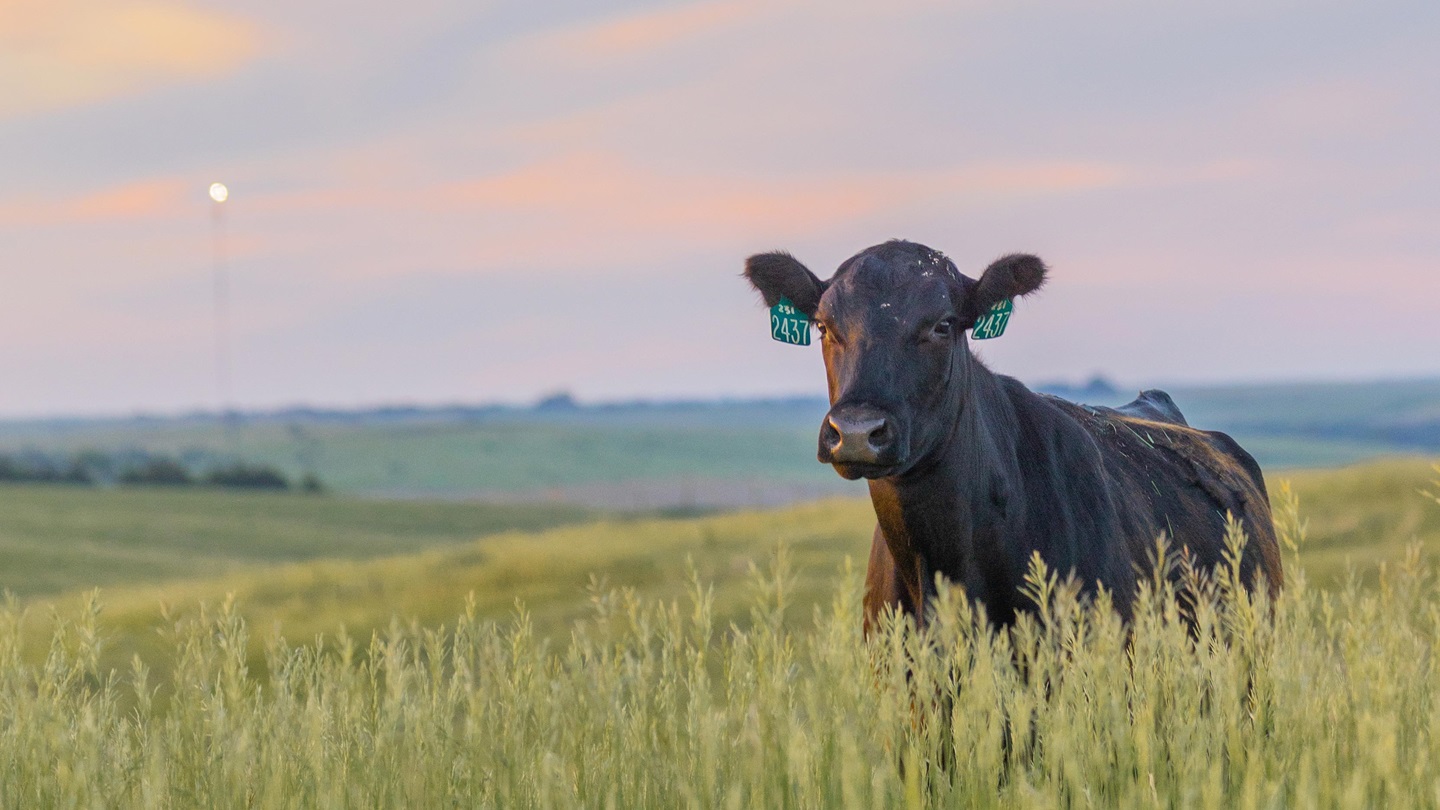

From the tall fescue belt of the Midwest to the high mountain ranges of the Rockies, U.S. cattle producers face a broad spectrum of environmental challenges. While forage type, climate, altitude and pasture availability vary widely across the country, one truth remains the same: breeding cattle to fit their environment is essential for profitability and longevity. Increasingly, that fit starts with genetics.
“In today’s cattle environment, we’re focused on efficiency,” says Jared Decker, Wurdack Chair of Animal Genomics at the University of Missouri. “Environmental stressors drain productivity. We used to manage around those stressors. Now we can breed around them.”
Tall fescue is a forage mainstay in many parts of the country, especially Missouri and the surrounding region. But it comes with a hidden cost: fescue toxicity. The endophyte found in many common varieties of fescue produces toxins that can cause heat stress, reduced appetite, poor fertility and lower performance in cattle, says Harley Naumann, associate teaching professor and state forage and grazing specialist at the University of Missouri.
“Fescue is productive, and we couldn’t get by without it,” Naumann explains. “But managing it properly is critical.”
Grazing management can reduce the effects of the toxin, such as rotating cattle onto warm-season forages during the peak heat of summer, but Decker emphasizes genetics offer an additional and often more scalable solution.
Targeted trait selection
Among the most valuable tools is the Hair Shed (HS) expected progeny difference (EPD), released to Angus breeders in 2022. The trait predicts how early an animal will shed its winter coat, offering a measurable indicator of heat tolerance.
“If you’re an Angus producer on fescue, hair shedding needs to be at the top of your EPD list,” Decker says. “It’s highly heritable and selection pressure can make a quick impact.”
Multigenerational Angus breeder Duane Robertson of Missouri has long been focused on environmental adaptability in his herd. Before HS EPDs were released, he relied on observation and trial and error.
“We used to guess based on pedigree or phenotype,” Robertson says. “Now we can make more informed choices and reduce our management costs.”
Robertson aims for bulls in the top 30% of the breed for hair shed, balancing selection with the need for functional cattle.
“You can make progress fast with hair shed,” he explains. “But don’t get tunnel vision. We’re still breeding complete cattle.”
At Basin Angus Ranch in Montana, Doug Stevenson is applying the same principles, even outside the fescue belt.
“When the Angus Association started collecting data for hair shed, we were unsure about our role in collecting data and if it would be meaningful to us. But then while it was still early on in the process we decided to pay attention to it,” Stevenson says.
Initially, the team at Basin was also experimenting with Pulmonary Arterial Pressure (PAP) data, commonly used for high-elevation selection.
“We started to see a general correlation in our cattle between ones that struggled on PAP and the cattle that didn’t shed off right. While there can definitely be outliers, in our opinion there seems to be a lot of overlap in the PAP and hair shed genetics.”
The relationship became even more noticeable when evaluating reproductive performance in their replacement heifers.
“When we would preg-check, what we would see is that generally the ones that were higher PAP and had not shed hair were the ones that would show up late and open,” he says. “There was a general correlation between all three components, most noticeable in our heifers.”
Stevenson’s program has leaned into this data, tracking both EPDs and phenotypes over multiple generations.
“PAP, we have a lot of confidence in and hair shed, in our herd it ranks everything right, top to bottom,” he says. “We preg-checked our yearling heifers recently and what I found really interesting: there were about 10% heifers that were late or open, and almost all of those were ones that had not slicked off yet. The 90% that bred early, very few were not completely shed off.”
Even in a northern Plains climate, Stevenson sees long-term value in hair shedding.
“In our northern environment — which would normally not be a place people would be concerned with hair shed — I think we still need to be very cognizant of it because of the general health and fertility of those cattle. If they are shedding early, then their biological makeup is more in synch with how it needs to be.”
Structure, feet and longevity
Environmental selection also enhances market potential.
“We sell cattle all around the country,” Stevenson notes. “Most of our cattle aren’t at that level of elevation for it to be a huge concern for us as far as PAP, but we have lots of customers that are at higher elevation and see the value in selecting for it. Our concern on hair shed, our concern on PAP, and everything else we select for is purposeful for our customers using the cattle and their needs of the areas they are based.”
Environmental fit also includes structural soundness, particularly foot quality. As grazing conditions vary widely across the country, cattle must be able to move effectively across terrain ranging from steep hillsides to expansive rangeland.
In places like the High Plains or Western rangelands, stocking rates may be as low as one cow per 30 acres. Compared to regions where one cow per two acres is common, it’s clear cattle must perform under dramatically different conditions. Decker stresses genetic selection helps level the playing field.
“We used to just roll the dice on whether cattle would adapt to a new environment,” he says. “Now, producers can look at national EPDs and know if a bull from one part of the country will work in another.”
Stevenson reinforces this with a structural-first mindset.
“Foot scores is where it all starts — they have to be able to walk,” he says. “We [record] foot score[s] [for] all of our cattle at 12–14 months, and then go back and look at those feet on the females that stay in the herd every year and collect scores on them as older cattle. It signals to us if we are on the right track and selected for something that’s going to work.”
He’s also quick to note genetics can outmatch terrain.
“There’s a lot of environmental things we can do that are adverse to foot health, but genetics overcomes a lot of those environmental issues. If you’ve got the right genetics and the correct type of feet, they are going to survive through a lot of those environmental challenges.”
A data-driven future
Robertson agrees these data-driven tools are transforming how cattlemen make decisions.
“It’s been a game changer,” he says. “The hair shed EPD helped us identify new bloodlines we never would’ve considered before.”
Beyond hair shedding and altitude adaptability, Decker encourages producers to make use of economic selection indexes. These tools combine multiple traits including fertility, feed efficiency and longevity into a single value tied to profitability.
“At the end of the day, the most important trait is profitability,” Decker says. “Make the first cut based on indexes, then go deeper on environmental traits that apply to your environment like hair shed, foot structure, PAP and fertility.”
Robertson notes while commercial cattlemen may not follow EPDs as closely as registered breeders, environmental fit still plays a major role in marketability.
“Hair shed is a trait that gives our customers a marketable edge,” he says. “They’re getting animals [that] require less management dollars to thrive. That matters.”
Decker believes the next wave of innovation will come from enhanced genomic tools and better phenotyping technologies. He expects to see more predictions for traits like metabolic efficiency and fertility measured as a spectrum rather than a binary outcome.
“We’re at a turning point,” Decker says. “We have the technology to make fast, data-driven selection decisions. Producers who embrace it will be ahead of the curve.”
Whether your operation runs in the rolling hills of the Ozarks or the wide-open spaces of the West, thoughtful genetic selection can create a more profitable, resilient herd.
“We can’t eliminate stressors like heat, altitude or poor forage,” Decker says. “But we can breed cattle to be ready for it.”
Editor’s note: Elizabeth Rosson is a freelance writer from Louisa, Va.
Topics: Genetics , Health , Management , Reproduction
Publication: Angus Journal
Related Publications


Current Angus Journal
Keep up on the latest stories of the people and programs in the breed.

Latest Podcast Episode
Don’t miss conversations with breeders and industry experts.