




DATA DIVE
New Calves, New Opportunities
Fall calving is here. Set the calves up for successful data collection.
August 18, 2025
For those who have fall-calving females, now is the time to prepare for a successful calving season. The contemporary group a calf is in at birth will continue to follow that calf as it gets older. Records from calving are also fueling the three new traits released in May 2025: functional longevity (FL), teat size (Teat) and udder suspension (UDDR).
When to measure
Calving records should be recorded within 24 hours of the birth to have an accurate measure for the birth weight of the calf and udder quality of the dam.
For complete information on calving records, visit www.angus.org/ahir/how-to-collect/calving.
There are several data points that should be collected at calving for both the calf and the dam. For the calf, tag, tattoo, sex, sire, dam, date of birth, recipient dam if an embryo transfer, calving ease and birth weight should be recorded. In addition, if the calf dies prior to weaning, it is important to still record the calf in the calving book but include a birth disposal code for the cause of death. Keeping records of calves born, even those that may not be registered, is important for calculating the dam’s calving interval and maintaining complete cow production records as well as providing records for the FL EPD.
For the dam, calving is the time to record scores for teat size and udder suspension. These scores are used in the Teat EPD and UDDR EPD.
How to measure
When measuring birth weights on calves, using a digital or spring scale is the best method and the only method accepted by the Association. Options like hoof tapes or heart and girth measurements provide only an estimated weight, often overestimating the weight of smaller calves and underestimating the weight of larger calves.
Birth weight is the greatest recorded trait each year. In fiscal year 2024, there were more than 347,000 birth weights submitted to Angus Herd Improvement Records (AHIR®).
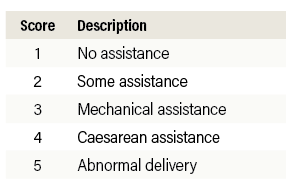
For calving ease scores, use the 1-to-5 scoring scale from the Association. Table 1 lists the scores and their description. While all females can have a calving-ease score recorded, only calving-ease scores from first-calf heifers are included in the calving-ease traits.
For the dam, birth of the calf is the time to collect scores on the udder. Teat and udder scores are collected at calf birth because that is a critical time in that calf’s life to ensure colostrum is received. If a calf is unable to nurse after birth because of udder problems, inadequate colostrum intake can have long-lasting effects for the calf.
Teat size and udder suspension are both scored on the combined worst quarter of the udder and each trait is scored independently on a 1-to-9 scale. In fiscal year 2024, there were more than 100,000 scores submitted for udder conformation. For more information, visit www.angus.org.
How to record
Each member has their own system for successful data collection. Some choose a notebook and hand record the information. Others use the Angus Black Book, while others use a digital device or the calving-book feature in the Angus Mobile App.
After collection of quality and accurate records, the next step is reporting the data to the American Angus Association to have those phenotypes included in the weekly National Cattle Evaluation. Watch Data Drives Decisions: Best Practices for Submission
Editor’s note: If you have any questions, call the Member Services team at 816-383-5100. If you would like additional resources for data collection, visit www.angus.org/university.

Esther Tarpoff, Director of Performance Programs

Topics: EPDs , Genetics , Management , Record Keeping , Member Center Featured News , Association News
Publication: Angus Journal
Related Publication Articles


Current Angus Journal
Keep up on the latest stories of the people and programs in the breed.

Latest Podcast Episode
Don’t miss conversations with breeders and industry experts.