



Board Recap: The Commercial Pathway and DNA Sample Storage to Member Feedback and Research Updates
The latest episode of The Angus Conversation summarizes topics of discussion from the February Board of Directors meeting.
February 13, 2026
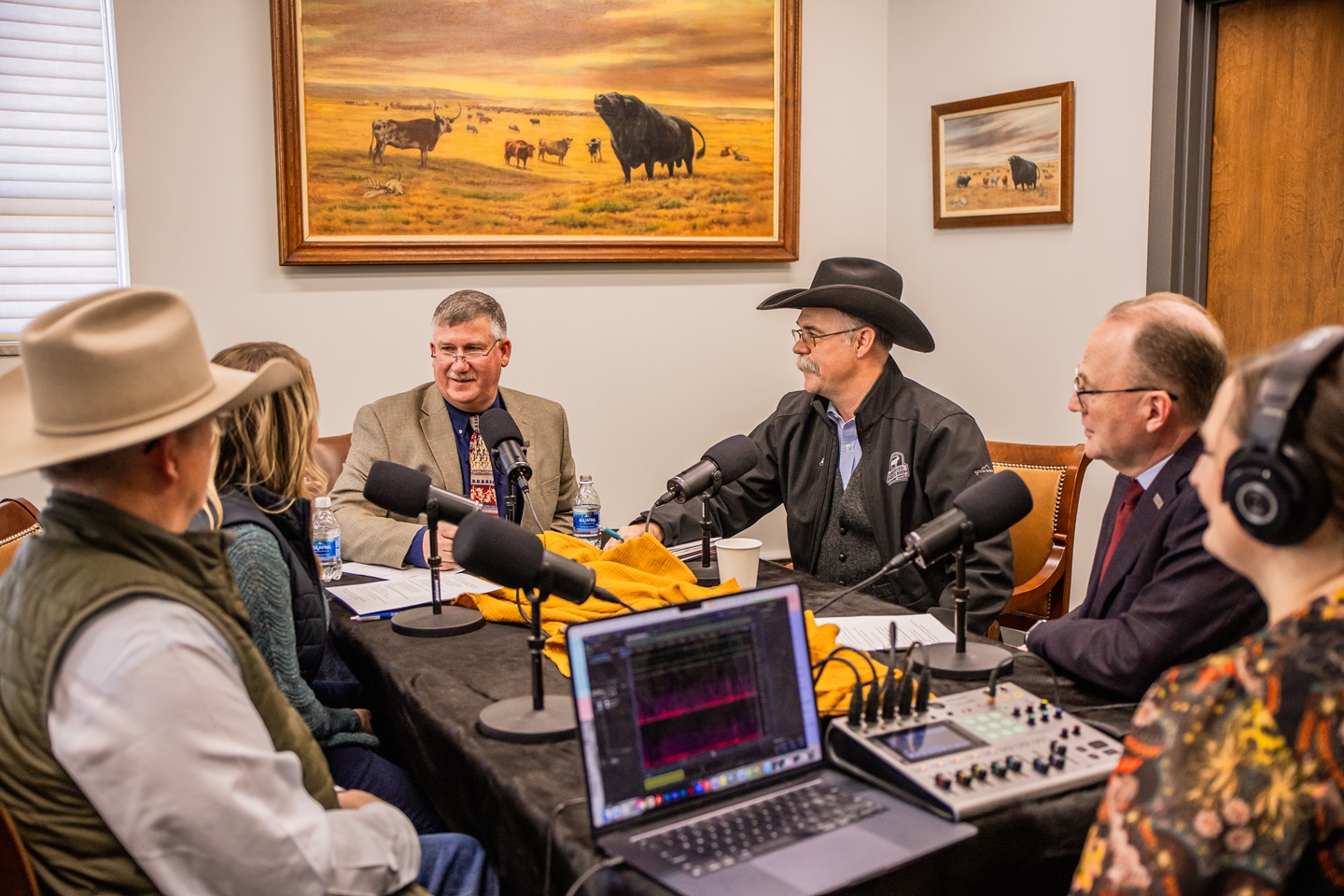

Sale reports continue to show strong demand for Angus genetics across the country. The American Angus Association Board of Directors met this week to keep arming its members with the tools and services to help keep them in the lead.
“We want to provide our people with the best path they can to be successful,” says Angus breeder Henry Smith, Russell Springs, Ky. He joined fellow Board members Art Butler of Bliss, Idaho, and Darrell Stevenson, White Sulphur Springs, Mont., on the recap edition of The Angus Conversation.
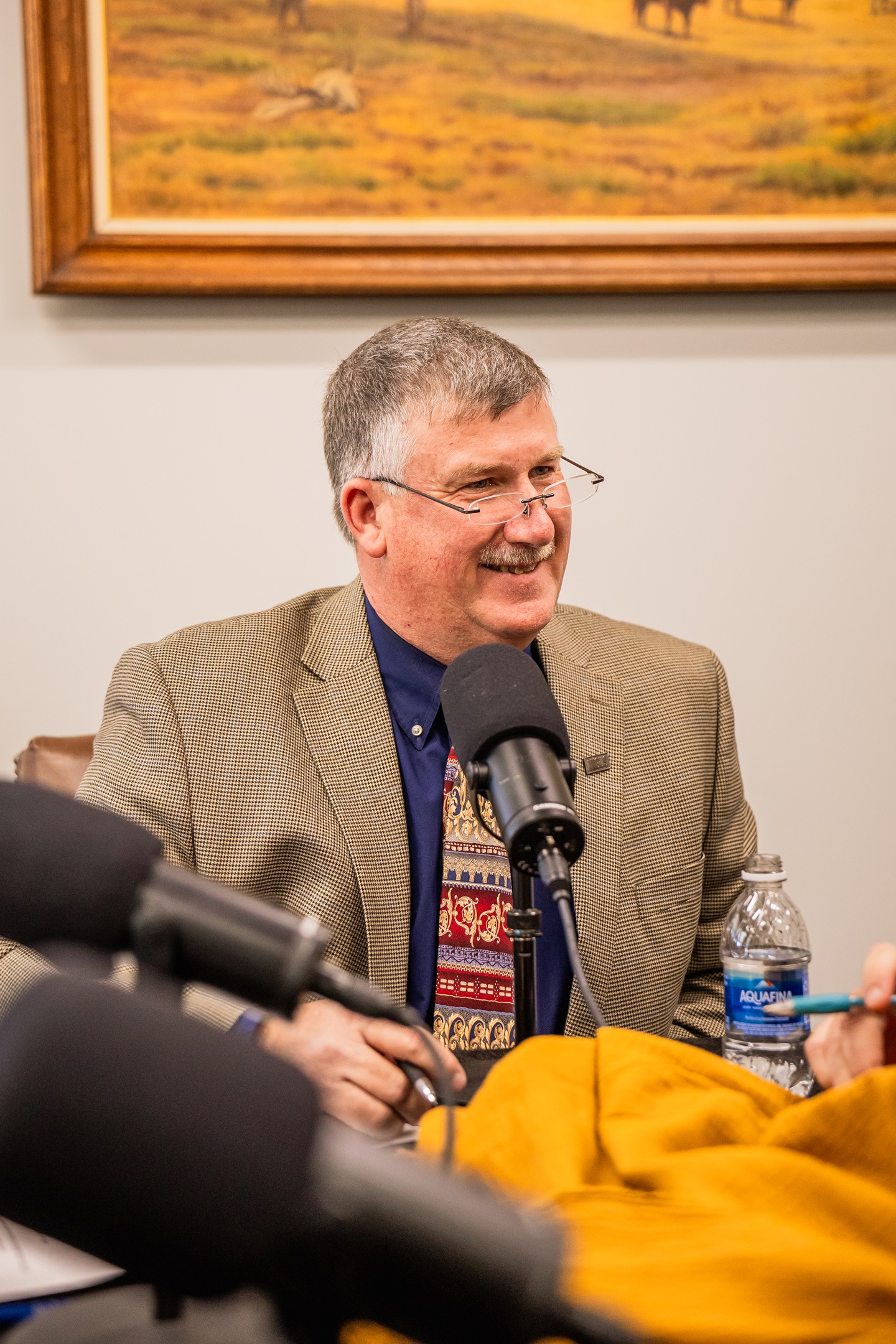
Henry Smith
Director

“We want to provide our people with the best path they can to be successful.”
— Henry Smith
Discussions on commercial customers included an introduction of The Pathway to Progress, a new communication effort to help explain how the breed’s industry-facing genetic tools work together for commercial producers.
“We're providing a lot of tools and creating a lot of tools, and they've been sitting here and there and people don't know which one to adopt and use, and we're getting a central pathway that people can follow and it becomes a logical progression from buying that bull to selling the feeder calf,” Smith said.
The Board reviewed several member letters, and Stevenson urged feedback on several areas including the information on a registration paper, the need for access to group health insurance, and the looming challenge with archiving physical tissue samples used for genomic testing.
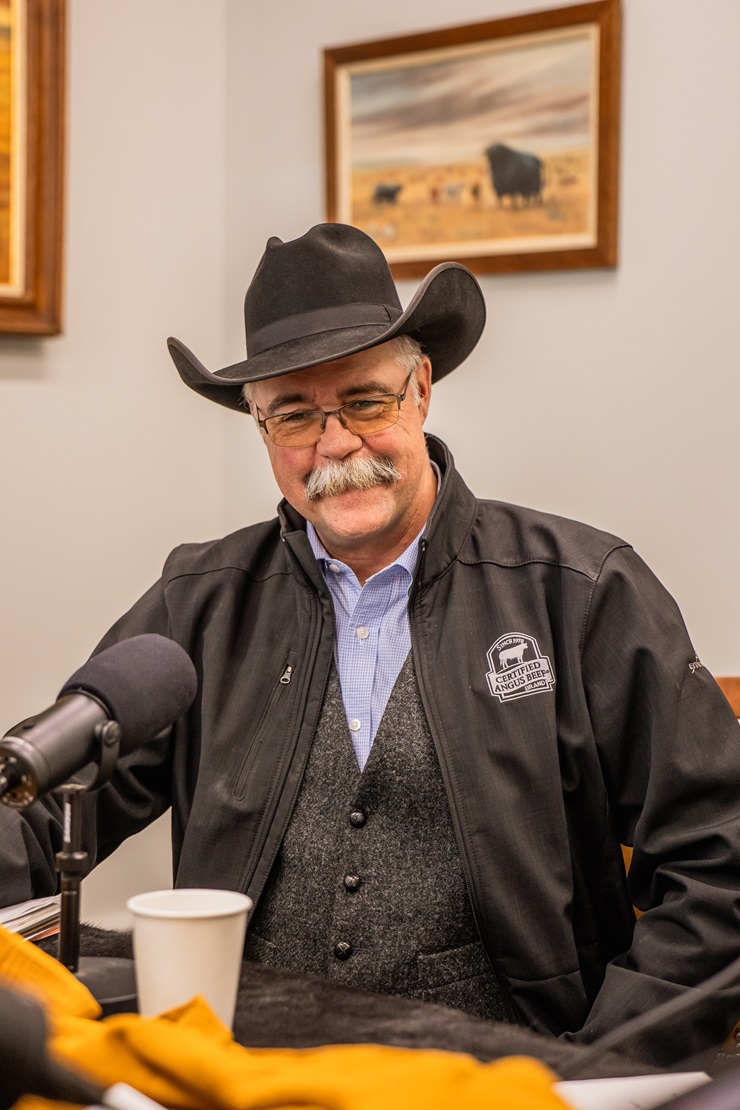
Darrell Stevenson
Vice President and Vice Chairman
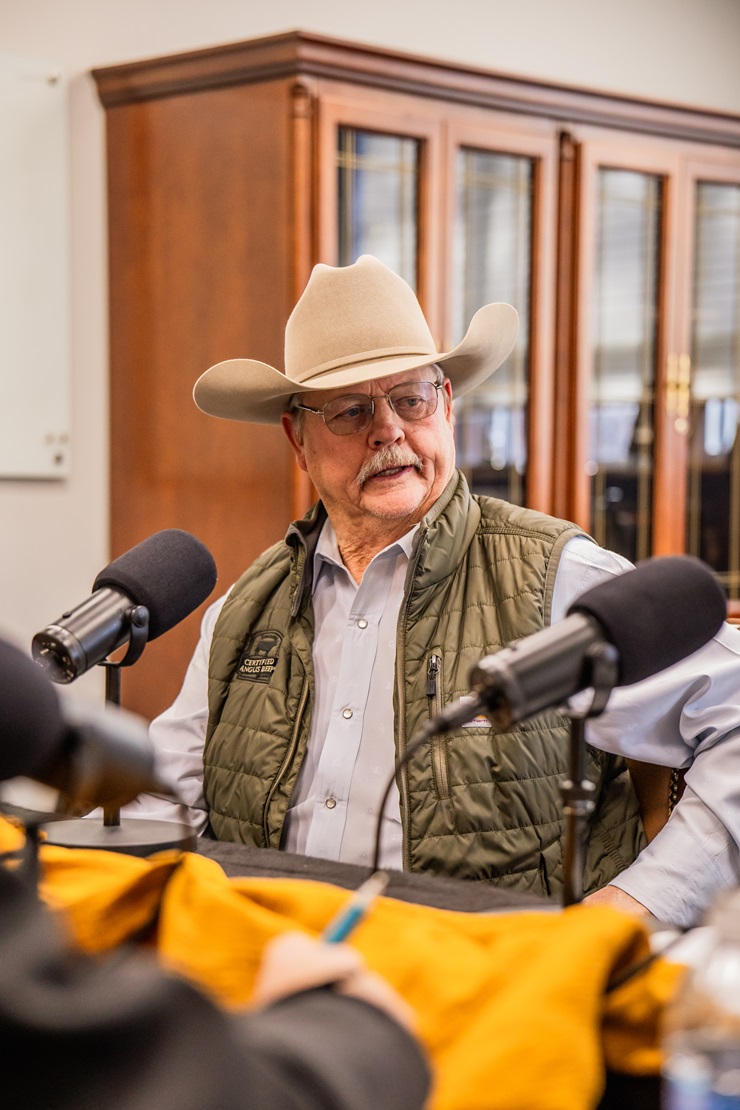
Art Butler
Director
“We are going to be confronted with some decisions moving forward about lack of storage space and whether or not we need to upgrade or expand or actually look into what has the most long-term value versus not,” he noted.
Each of the entity boards also met. To hear about everything from the expanding production of Certified Angus Beef® and Angus Genetics Inc. (AGI) research updates to discussions on the role of the Angus Journal in membership communication and recaps on Angus Foundation fundraising, listen to the full episode.
EPISODE NAME: Board Recap: From the Commercial Pathway and DNA Sample Storage to Member Feedback and Research Updates
There’s strong demand for Angus genetics, and the American Angus Association Board of Directors met this week in Saint Joseph, Mo., to discuss ways to keep providing its members with the tools and services to help keep them in the lead. Some of the topics covered in the quarterly meeting include:
- The Commercial Pathway, a new communication effort to help explain how the breed’s industry-facing genetic tools work together for commercial producers.
- Member feedback on everything from the request for a gestation-length expected progeny difference (EPD) to the decoupling of breed registration from EPDs.
- The Data Driven Herd Recognition Program and data submission overall.
- Storage of tissue samples and a looming challenge for archival.
- Research updates, such as $B validation work, cow efficiency and bovine congestive heart failure (BCHF) studies.
- International production of Certified Angus Beef® to increase market access.
- January Angus Foundation events and fundraising success.
- The role of the Angus Journal as a membership communication tool.
The in-depth discussion gives you a snippet of the conversations and a preview of the work being done in at the Association office on behalf of Angus breeders across the country.
HOSTS: Miranda Reiman and Mark McCully
GUESTS:
Darrell Stevenson, vice president and vice chairman of the American Angus Association Board and native of White Sulphur Springs, Mont., holds strong ties to the Angus breed and a history of activity in the Montana Angus Association. In 2019 Stevenson and his wife, Sara, expanded from Hobson onto a new unit in White Sulphur Springs to establish a later-calving herd operating as Stevenson Down T. Although separated by a mountain range, Darrell continues to breed and market genetics with Stevenson Angus Ranch.
Art Butler is the third generation to raise registered Angus cattle at Spring Cove Ranch in Bliss, Idaho. Spring Cove Ranch was settled in 1912 by his grandfather A.H. Butler, who chose to make his desert homestead around a natural spring in northwestern Gooding County, purchasing their first Angus cattle in 1919. After college graduation in 1978, Art returned to Spring Cove Ranch to continue the family tradition of raising Angus cows and kids. He and his wife, Stacy; son, Josh; and daughter, Sarah, manage the 350-head cow herd, producing all-purpose Angus cattle that will perform under the variety of range conditions of the West.
Henry Smith is a fourth-generation Angus breeder who grew up on a diversified family farming operation in south-central Kentucky. The farming operation consisted of a registered Angus herd, burley tobacco, corn, soybeans, wheat for feed and cash market. The Smith family settled and began farming in the Fonthill community in 1810. Smith’s great-grandfather and his sons began the registered Angus seedstock operation in 1940, and it continues today with Smith raising the fifth generation invested in the Angus industry. For 33 years, he has successfully operated Smithland Angus Farm with his late father, Charles “Bud” Smith. Smith married his wife, Melissa, in 1997. They have two children, Bryanna and Blane.
Miranda Reiman (00:00:02):
Welcome to the Angus Conversation. I'm your host Miranda Reiman with my co-host CEO of the American Angus Association, Mark McCully. Mark, this is the first time in a year I'm back at the board recap podcast.
Mark McCully (00:00:15):
Yeah, we're here in St. Joe and just wrapping up four days of really some productive meetings, jam packed agendas, and we just appreciate as always, the dedication of our board members to take this much time away from their operations to come help guide and steer this organization. So four really good days.
Miranda Reiman (00:00:36):
So we've got a couple of those board members here to help represent the discussions that were had. But one thing I was thinking about reflecting on the week is this is such a great place to take all the individual member feedback that these gentlemen get when they're out in the field, when they're out at these Angus sales that we've had when they're out at Angus events. And then get to bring it all back, mash it all together and see where we land on some things. So thanks guys for volunteering to be with us on the podcast. Mark, I'll let you introduce our guest today.
Mark McCully (00:01:05):
Well, yeah, as I'll go around the table here to my straightaway. Mr. Art Butler, of course from Idaho and Art, I know you've been on the podcast to maybe one other time. Yeah,
Art Butler (00:01:14):
That's correct. One time. Yeah.
Mark McCully (00:01:16):
Oklahoma City.
Miranda Reiman (00:01:18):
You have to note that he's from Bliss, Idaho because how can you have a bad life when you
Art Butler (00:01:22):
Live in bliss? Yes.
Miranda Reiman (00:01:23):
You raised your family in bliss.
Art Butler (00:01:26):
My wife Stacy says she's got it really made. She grew up in Eden and moved to Bliss. There you GOs. Perfect.
Mark McCully (00:01:32):
There you go. And from Kentucky we have Henry Smith and from Russell Springs. So Henry, I think the first time we've captured you to be on a podcast, is that correct?
Henry Smith (00:01:43):
That's right. First time I've got the honor to do so I'm glad to do it. I look forward to the conversation.
Miranda Reiman (00:01:48):
I think you volunteered right up right? This is going to be your favorite part of the week.
Henry Smith (00:01:51):
It would be. Yes ma'am.
Mark McCully (00:01:55):
And rounding out our group this morning, is Darrell Stevenson from Montana. Darrell, I know currently serving as an officer on the board and we've captured you several different times on the podcast. So I think you've got one of the later flights out, and so you make yourself kind of a target for us that we can grab you before you have to jump on a shuttle and head to the airport. But thanks for joining us again.
Darrell Stevenson (00:02:18):
Yep. Yes sir. Glad to be here. It's a great opportunity.
Miranda Reiman (00:02:22):
It was a surprise invitation for Darrell this morning, so if he seems less prepared than usual, it's my fault.
Darrell Stevenson (00:02:29):
Yeah, poor Jim's got everybody his teeth worked on, so we got to get him healed up.
Miranda Reiman (00:02:34):
Well, part of the reason for that is we had such good discussions all week that our board meetings took perhaps just a little bit longer than we typically would finish up, but lots of good news to report both in the pre committee meetings that happened two weeks before and then this week. So I guess we're just going to jump right into it, talking about commercial programs.
Mark McCully (00:02:55):
Yeah, just a reminder, this board gets together two weeks, virtually two weeks before the board meeting and goes through six different committees and those calls last gosh hour or two hours, some really good conversation and then the report come and bring that committee work back and report back to the board. Even some of the committees, Henry, I know you sit on events and junior activities, that committee met virtually also met in person to hash out some more of those topics and get together and discuss. So lots of work goes into these.
Miranda Reiman (00:03:26):
Yeah, absolutely. So as we turn our attention to the commercial programs, the one thing that really seems like it's coming together, Mark and Art, I guess you've been in some of those early discussions too as we talk about the different programs that we have available to commercial producers, we're doing a better job today of putting those all together or making 'em kind of fit together for the commercial producer.
Art Butler (00:03:48):
Yeah, that's correct. Miranda. We on that commercial committee meeting, we had all our committee members as well, but we had 40 interested other people from the board and staff and we reviewed the Angus link enrollments and those type of enrollments and that continues to grow and gains traction and the Angus verified and our GMS scores are being more and more adopted and used and more interest. So in that line we've started a commercial pathway and it's just integrating all of those tools that we have in the commercial space. Put 'em all together to start with registered Angus bulls powered by Angus, and then follow up with GeneMax scores and then follow or GeneMax Advantage test in your commercial heifer space and then follow up with and integrate them into our GMS scores on our feeder calf marketing. So it's all driving demand for registered Angus bulls.
Darrell Stevenson (00:04:53):
I have to comment on that. Art, I mean it seems pretty basic, those four principles that we include in that commercial pathway, but it's the first time that we've been able to organize it and present it from start to finish. And connecting those dots I think is helping deliver our message now better than ever. And this, although it's brand new, this is going to have to be a drumbeat moving forward for several years for better understanding. But I think we're going to see tremendous response back not only on Angus Link assignments, but uptake in usage of GeneMax Advantage.
Mark McCully (00:05:32):
And maybe for some kind of hearing about this for the first time, I'll be clear, it is not necessarily a new program. I kind say it is really the way we're talking about it and presenting it. I've said many times as an Association we tend to say, here's all the different programs we have. And I think for our breeders, sometimes that can be overwhelming, but for sure for our commercial producers that can be a little overwhelming. And so this pathway, as we say, kind of a to success is really a way for us to talk about buying the registered Angus bull. Here's as you make more informed heifer replacement, heifer selection decisions using GeneMax, those scores now fuel and are integrated into informing the Angus Link genetic merit scorecard. And then we've got Certified Angus Beef out here driving demand, and we put more product into that that creates more demand and more signals back. So it's really kind of our way of talking about these things and hopefully it makes more sense. I think at some of the early meetings we've had and conventions and things we've presented that that approach, it seems like it's resonating with our commercial producers
Darrell Stevenson (00:06:36):
And the confidence is just absolutely exploding. As of, for instance, there was an Angus Link sponsored sale in Beaver, Oklahoma for the first time here just a couple of weeks ago. And the enthusiasm behind that I think was quite well proven through the value of those Angus Link calves. And so it does have a flow through effect from each segment of the industry. And we're really working together, I think, on how to better improve these cattle and create more value
Art Butler (00:07:05):
In that space we're providing a lot of tools and creating a lot of tools and they've been sitting here and there and people don't know which one to adopt and use, and we're kind of getting a central pathway that people can follow and it becomes a logical progression from buying that bull to selling the feeder calf and ultimately producing Certified Angus Beef at the end. But one other thing they've done is we've integrated our maternal and beef indexes into the GeneMax scores, so that's been a good addition too. So that's valuable.
Darrell Stevenson (00:07:42):
The intent of this podcast is for report of board activities, but for you listeners and the members, if this is the first time you're hearing about GeneMax Advantage or the Angus Link program, please reach out to your either seedstock provider or regional manager. I think these are all critical programs moving forward.
Henry Smith (00:08:03):
We believe this to be a great tool. I know a lot of the thought process as we rebuild this nation's cow herd and we've offered this opportunity through GeneMax scores and the maternal scores that's available there, we need to build this cow herd back much better. And this gives us a great path to do that. We know the high demand for Certified Angus Beef and the demand is out there, the market's telling us we want more of it, bring it to us, and this is the best path in the country to get us to that point.
Darrell Stevenson (00:08:30):
Absolutely.
Miranda Reiman (00:08:32):
So this breed has a long history of focusing on the commercial producers, but we did have member feedback that they'd like us to continue to do more of that. So I'm going to kind of jump into where we got feedback from a number of different members and got a member letter that was requesting some ideas for some more commercial producer engagement. And you guys discussed that letter.
Darrell Stevenson (00:08:55):
Yeah. This was reflective of past programs actually that were tightly tied or very similar to our current AHIR program, whether we should reengage that or not. And so the discussions that came up, I mean you had to bring up GeneMax instead of age old performance data. Were in a new era of genomics as well. And so where's the crossover or what's more critical? And I think this is something seriously to consider moving forward. In addition to that, from that member letter was maybe consideration for better field outreach for the commercial sector. I like that idea personally, but we've all got to stay financially responsible within a budget and figure out how we fit that into the team. So great ideas, and I mean in this circumstance, these are just thoughts for consideration further.
Miranda Reiman (00:09:45):
Sure. And also when you say better field outreach, if any of you RMs are listening, I want you to know that there was great praise for the RMs out in the field and also recognition that we've added an awful lot to their plates and what would that look like, more staff and things like that.
Mark McCully (00:10:00):
Good clarification.
Miranda Reiman (00:10:01):
Yeah, that's right.
Mark McCully (00:10:02):
Think one of the other letters that you guys took up and this one got taken up in Breed Improvement Committee was a request to consider and researching gestation length and maybe the need for a gestation length EPD. And I know there was pretty shared observations around the table, you guys as Angus breeders. I think a recognition that gestation length has probably shortened in the Angus breed over the last couple of decades for sure.
Darrell Stevenson (00:10:29):
The data that was showed to us that 10 years ago versus 20 years ago, that the average range today is five days shorter than 283 days. I mean it's pretty obvious that there has been a change genetically in these cattle. So that poses the question, is this important enough critical enough to actually stamp a full EPD or do we consider other options with maybe presenting a matrix? This is a thought and an idea that's going to consider deeper consideration. How did you guys see this?
Art Butler (00:11:01):
I agree with you, Darrell. The observation is cattle, these calves are coming sooner, five days sooner gestation is probably accurate I think in my estimation, and I don't know that we need another EPD, I think maybe we need to revisit our gestation tables. Certainly that's going to impact the entire formulation of calving and rules and everything like that. And whether or not a cow can make Pathfinder, it changed that status. But I think there's probably a need to change our app to a shorter gestation.
Henry Smith (00:11:38):
Yeah, I feel like that was the consensus for the most of the discussion everybody's had, we've all experienced. Everybody looks at their busy schedules in their life and as they do matings and so forth, we all have to back those cabin windows up when we're going to be available and help be available and all those different things that goes with it. But sure enough, it's a concern. I think it's reality for everybody all across the country whether or not we need to breed for it as an EPD necessarily. It is a discussion that we're having. It's continuing on and we'll continue on, but it'd be great to hear some feedback out from those that listen and got concern. Maybe we just make note that it's real, it's there and we just back it up a little bit whether we need an EPD or not. Kind of get some feedback from our membership and can you utilize it and we'll help you.
Mark McCully (00:12:22):
And I think the thought in support of the idea of looking at it further is some would say, well, as we continue to put emphasis on calving ease direct, we know we're reducing birth weight, we're reducing, are we potentially reducing gestation length to a point where these calves are being born without full development? And I think that's the question that's out there. And I think it's an interesting question. I've heard it probably for years. We actually, 10 years ago at CAB, we held a little think tank and did a little white paper on it. So I know there's a lot of research around it. I think it's a really interesting question. One of those things I think we just need to continue to be observant and make sure that there's, and I think that was the thought process of if there was a tool you could select for calving ease and at least keep a barometer on where gestation length, but nothing at this point was decided to move forward with other than pretty interesting topic, we need to hear more feedback and continue to research it.
Art Butler (00:13:21):
Certainly. And part of that goes back to your an EPD is there's optimums. You don't necessarily have to go to the extremes. There's optimums for every environment and every producer. So continuing to select for an extreme of one thing might necessarily not lead to what we desire in this particular trait.
Miranda Reiman (00:13:44):
So another letter that kind of falls in that same category of interesting, going to take a lot more discussion, definitely didn't make any sweeping decisions in this board meeting would be a letter that we got from members requesting that maybe we don't put EPDs on registration. Maybe we make that optional.
Mark McCully (00:14:03):
I kind of refer to as decoupling. And some will remember that EPDs and performance numbers haven't always been on a registration certificate, what we call today a performance registration certificate that was added I think back in the, gosh fact check me here. But late seventies I think maybe is when those were merged together.
Miranda Reiman (00:14:23):
Art's going to fact check in real time
Art Butler (00:14:26):
I think it was a little later than that.
Mark McCully (00:14:28):
Was it? Okay.
Art Butler (00:14:29):
Yeah. I think in the nineties you had to request a performance certificate to get that information even maybe as much as 2000.
Mark McCully (00:14:36):
Okay. So the question was, as we know, there's differences of opinion of our breeders of whether they want the tools or don't want the tools and how many of 'em they want. So this idea was should decouple 'em and you guys kind of kicked that around.
Darrell Stevenson (00:14:55):
Yeah, there's a lot of points of consideration. This is not a new request. I've heard it in conversation, but this was a formal letter I think that we take very seriously on this option. The way that I understood it and heard it was giving members the option to include or not.
(00:15:14):
And it's rather interesting on what that would do for the individual producer as his choice versus how it affect the entire membership or the herd book. So certainly no decision made on this. This is a topic I would personally like to hear a lot of feedback on and there will be no swift movements on that, but I think this is a good example of membership requests. We just went through three different letters that were discussed throughout this week and this is other outside ideas that are concerned that I think needs be taken into consideration. So this is part of that feedback that we're always requesting.
Henry Smith (00:15:51):
I think in that space, it's something that we've got to consider all way down the road. We getting other entities and corporate things that's providing data, providing possible like a BRD selection tool and those type of things. Does Angus take the responsibility when they put their stamp of approval possibly on that? Do we record it? Do we allow it for our members? Do we not? What space do they maintain in that and where do we stay as an association to provide that service? Do we stay out of that service? We want to provide our people with the best path they can to be successful? Of course. And we continue to look at that and the importance of getting it validated through AGI and the things that everyone out there that listens and depends on this organization to provide them the best tools they are, we want to continue to do that for sure.
Darrell Stevenson (00:16:41):
To Henry's point, there are two health EPDs out here. One newly announced for BRD last week and a little older than that is bovine congestive heart failure that are available to the industry. And I mean those are easier to include in the discussion when they're out here in commercially available. And believe me, there's no action going to be taken on this, but as we move down the road, where are the limitations of AGI? But how broad is the service to the membership to include all that information in one spot or not? And so this is another point where we would certainly like feedback and this is going to be an interesting topic moving forward,
Mark McCully (00:17:24):
And I think that as I said, I think it's maybe one of the most important discussions that you guys had over this week. And again, not with because there's action that needs to be taken immediately, but it is a long-term consideration of where things are likely headed. We know we have a couple tools that are out there today that are being offered outside of the American Angus Association, but what I think about is awfully important is those tools were built off of data, health data, heart data that our members don't have the ability to collect
Darrell Stevenson (00:17:59):
Outside of our contemporaries,
Mark McCully (00:18:00):
Outside of our view as breeders if you will, downstream data or non-traditional data we've referred to in a lot of different ways. So it starts to make this whole decision process, it's a different beast today and going to be likely changing down the road. So I think you guys had a really great discussion about some pros and cons, all the considerations that need to be taken up as you consider what this thing is going to look like five years down the road and where should the American Angus Association be in that space as best we can. So again, to your point Darrell, I think one member feedback and perspective is one that's definitely is being invited into this discussion.
Art Butler (00:18:41):
Agreed Darrell, we need a lot of feedback on that particular subject and this commercial space is moving rapidly and there'll be a lot more tests probably in the future on other traits that we may or may not get behind and have enough data to really make logical decisions with. But we have members interested in BCHF tests that's available right now. We have members interested I'm sure in the BRD test that's available. So we got to make some decisions whether or not we add that to the page or not. So
Miranda Reiman (00:19:21):
One thing that I really heard you guys talk about was both the advantages to the individual member. How does that change your having to send in two samples today and some of that, and then how does that change the breed and the relevance that the breed and us as a whole has? So I mean you've got to look at it kind of from two lenses every time.
Darrell Stevenson (00:19:39):
And I think it changes the landscape in the future for data collection as well. I mean it really does validate the mindset of commercial data collection. I guess I was really pleased at the annual meeting as we were doing the live survey that there was a strong understanding and support level that future data collections not going to move away from our registered herd contemporaries, but in addition so that we as AGI have better and more opportunities to probably research some of these non-traditional traits that the future is going to present us.
Mark McCully (00:20:18):
That same survey also was in strong support that we're going to see more probably private genetic evaluation on these kind of traits and that's, here's your example, and it's going to fill in on, especially in places where breeders and associations aren't able to get that data and develop those tools. Again, we've got some real world examples right in front of us. It's not theory anymore.
Darrell Stevenson (00:20:40):
How do we integrate it or separate ourselves? It's a big question
Miranda Reiman (00:20:44):
And an important note on that was when you don't have the in-house, then we don't exactly know what's in those tests and then are we endorsing a test? So I mean you might think, why don't we just already do that? I mean there's a lot of considerations.
Mark McCully (00:20:59):
I think that point got made several times. If it comes out on the American Angus Association,
Miranda Reiman (00:21:04):
I mean we're talking about it today, that doesn't mean we're endorsing it. Right. What does that mean?
Henry Smith (00:21:09):
Yeah, very important. It comes out of house here. I know we all made our livelihoods, we depend on the information comes from here. We put a lot of faith in it. The beef industry puts a tremendous amount of faith in it and we want to be very diligent that we let whatever comes out of here that we endorse is the best the industry offers.
Art Butler (00:21:25):
Well, our IT and our geneticists are top notch and we hold them to a high standard of a product that we've going to put out here. And consequently, we haven't got a BCHF test where there's one commercial available in the industry, but we're not comfortable releasing one yet because we don't have enough phenotypes. And so when we reach that threshold, we'll
Miranda Reiman (00:21:53):
Let you know.
Art Butler (00:21:53):
We'll have a tool. Yeah, we'll have a tool and it would be the best because it'd be made on our population.
Darrell Stevenson (00:22:01):
I respect that. But let's be patient, we'll get there.
Miranda Reiman (00:22:04):
Right. Well those are kind of difficult discussions I guess just because of the complexity of them. But I will say we had some easy decisions to make too. I say we, you guys had some easy decisions to make and some things that just hopefully make our members' lives a little bit easier. One of them would be we reviewed the fee for membership name changes, which I didn't even realize was such a big issue until we got to talking about it.
Mark McCully (00:22:30):
This one was historically to change a membership, a name on a membership, a good example of a female that gets married and changes her name. That was in the past. There was a pretty manual process to that and that was a $500 change fee. And you guys looked at that and we looked at it in terms of automation and it's just a simpler process today. So you guys lowered that to a hundred dollars as a change fee. We looked at some other things around paperless billing and so you're going to hear more about this. We've seen more and more of our members that have moved to paperless billing and requested paperless statements. So we're going to make that to the default option come June, but if someone still wants paper, they can request that at no extra fee that they can continue to go the paper route. So some of those things were really had some rule changes around clarification. I mean just some changing of some things in our breeders reference guide around some clarifications arounds used in embryo transplant in the past that had been, there was some language in there that's specifically around AI sire that kind of, there was honestly a little bit of maybe some gray area around service. There's just some clarity of that. You guys are always looking at those rules and making sure they're current and fresh and such
Miranda Reiman (00:23:52):
As you can imagine. That's the most fun thing we talk about all week. Sarcasm. But they're important. They're important. That's right. They are important. One of the things that we've really tried to listen to members on is solving their problems. And as we know across rural America, one thing that gets to be a great challenge when you're self-employed is health insurance. And so one thing that our member services committee we talked about, would there be a need for us to look into options to provide some group health insurance options, as you've probably heard of other organizations doing.
Mark McCully (00:24:27):
It, is also in line with we've said, are there ways we can bring more value? We've got a big membership and is there a way to bring that we could collectively go as a membership and leverage some things to provide some discounts back for our members? So back in the fall, we launched our member rewards program that has a couple both Cabela's Bass Pro Shop is one and Edge Equipment is the other. You can go out on our website. So kind of in line with that was this idea around could we ever collectively go together and offer a program out to make access to a program to our members around health insurance. So the decision made was let's ask our members really. And then we're going to send out a survey here just to kind of get some feedback.
Darrell Stevenson (00:25:13):
When I first heard this, I thought what in the, this is not our wheelhouse, but in the sense of the entire membership and providing a service. I do understand the logic behind this because of the sheer size of our membership and the diversity and this might be an avenue for assistance and we are taking it to the membership. I mean no decisions are going to be made. And so I don't know if we have a timeline or when it's going to go out, but please look into this, take the survey. If there's legitimate interest, I think we possibly could further investigate. If it gets shot down, well then we know where we stand. So once again, membership feedback.
Miranda Reiman (00:25:53):
So be sure to watch for some information in the March Angus Journal on that, on how to take the survey and just more information. Another thing that we've heard a lot from members, especially members who've been submitting the data, was that they wanted some kind of a program to recognize or to show their commercial producers that they were invested in submitting data. And out of that was born our data-driven herd recognition and we heard a report on how that's going.
Mark McCully (00:26:22):
It was in our breed improvement committee. And I guess you've heard some pretty positive things on the program and some feedback from members so far.
Darrell Stevenson (00:26:30):
Yeah, in general, just for review on that, it's a b schedule for a certain amount of submissions, low level bronze, silver, and then obviously I think is it 12 of the 16 primary traits you will make gold and had over 140 herds that qualified for the data-driven program, the herd recognition, and with 20 being gold members. And that was presented main stage at the annual meeting for the first time. And I can say within two hours of that, the plane ride home, I had conversations about how do I better qualify? And I feel there's a growing enthusiasm to actually step up and maybe major a couple of more traits or submit in the timely manner being requested. I am incredibly optimistic by how this might've incentivized or regenerated some enthusiasm for phenotypes from the membership.
Mark McCully (00:27:27):
I think if I compared, it was maybe 54 more herds in our first four months of reporting phenotypic data than we had last time compared to last year. And we see lots of the traits, especially traits like cow weights, mature heights, some of those weights. We've seen some really nice uptake and I got to think it's probably a reflection to some degree of this program.
Darrell Stevenson (00:27:49):
Well to that point mark, but I think one of the initial charts that you showed, if anybody's got any doubt whether phenotype submission is declining, that's just not correct. I mean we are as high for submissions today for fiscal year 25 as we have been in quite some time.
Art Butler (00:28:06):
I had a lot of positive feedback too. People appreciated getting recognized on the main stage especially. And of course it was printed. All those award levels were printed in the journal as well.
Miranda Reiman (00:28:18):
And I've seen that added to some sale books and some websites here recently too. As we see marketing of Spring bull sales.
Henry Smith (00:28:25):
It sure sparks, I think it's sparked everybody's got a little competition in them and they see their neighbor or somebody down the road, well, they've done that and we're doing it and I just need a trait or two or something. And I have a good conversation around.
Darrell Stevenson (00:28:37):
I'm proud of that.
Henry Smith (00:28:37):
I think folks will jump in.
Art Butler (00:28:39):
It was good, very good.
Mark McCully (00:28:41):
But all new programs, they're not always perfect when you roll 'em out. We did hear some feedback about some improvements we could make in terms of
(00:28:48):
What the enrollment time of that program was. We had it set up on our fiscal year because we tend to think in fiscal year, but that kind of could split you right in the middle of weaning. And so we moved that up to be a summer break. And so I think that'll probably be a little more favorable. We also made some modifications that if you're enrolled in Maternal Plus, then that's going to give you credit for your breeding records and some other things. If you're maybe a program that sells a lot of those weaned heifers early or some reasons that you physically couldn't meet that threshold requirement, but if you're in Maternal Plus and you're doing all the things that we need to do in terms of turn in breeding records, so just some tweaks to the program, again, all based off of breeders and members that had suggested some things that we could make it better. And you guys acted on that.
Darrell Stevenson (00:29:40):
Common sense adjustments. I think it's for the better.
Miranda Reiman (00:29:41):
Sure. So during one of our breaks, we took just a little bit of a field trip to the basement here in St. Joe. Who wants to talk about what you saw in that?
Darrell Stevenson (00:29:51):
What do you mean break? We don't give you breaks.
Miranda Reiman (00:29:52):
Barely. We give you a working break.
Art Butler (00:29:56):
We got to go to the dungeon I guess.
Miranda Reiman (00:29:57):
Yeah, that's right.
Art Butler (00:29:59):
Yeah. We went down and looked at the storage facilities for our tissue samples and hair samples and what that looks like. And the magnitude of the samples that we're getting right now is very good and we need it to continue to grow. But that does pose a physical problem. How do we store those samples? So we're looking at that right now as well.
Miranda Reiman (00:30:23):
Did it surprise you when you were down and saw them?
Henry Smith (00:30:26):
Oh, for sure. I was blown away personally. I mean you think about, well, when you was getting a lot of blood cards, when you're getting hair samples, they're small and they're not so hard to store and a little bit of space, but boy, they're evolving tissue sample that I think the data tells us that about half of the submissions nowadays is coming by tissue. And that's a different beast. You've got to have cold storage, you've got to have power and backup, power in the event of, we've been seeing my world anyway without a power. So it makes you wake up sometimes and say, Hey, we got that taken care of. And to make sure here the organization is Angus got generators that are protecting that valuable resource all they can and it is going to continue to grow and it's going to take a lot of space, it's going to take some cost and it's something we got to really consider going down the road and and how to manage that.
Darrell Stevenson (00:31:13):
Well. This is a very valid point of awareness for the listeners as you analyze this, spread this around because we are going to be confronted with some decisions moving forward about lack of storage space and whether or not we need to upgrade or expand or actually look into what has the most long-term value versus not. And the fact is, I was unaware of this, but the blood and semen samples pretty much are usable indefinitely where these tissue samples are kind of questionable and we're just limited with space. And then I don't want to push a burden onto future boards to make these decisions because I think this becomes a complicated issue moving forward. So this will be an ongoing topic, a topic of concern that's probably going to need to be deeply considered in the next few months actually. So feedback is very welcomed on this point of consideration.
Art Butler (00:32:14):
This is imminent. I mean in that one room she showed me that this is for blood and hair cards. She had, I think there was 25 empty boxes, that hold 2,500 that's only 62,000 samples left room for storage.
Mark McCully (00:32:34):
In one vault.
Art Butler (00:32:36):
In our two vaults. So down there.
Henry Smith (00:32:39):
To put that in a little context, I thought it was interesting the lady there doing that, they're pushing over a thousand of them a day out of here. So the members are using the tools, they're sending the samples, but a thousand a day they pile up pretty fast.
Mark McCully (00:32:56):
So I think what you guys talked about, and again, we didn't as staff bring you necessarily recommendations at this point other than maybe some different paths around how much archiving can we do. Archiving blood cards is different than archiving these tissue samples. So you've got differences in the way that genomic labs handle those and what's left after that. And so we're now dealing with refrigeration and lots more costs. And you think about what's, we're talking about the physical samples here too, right? I mean I think it's always important to remember you've got the raw genotype right now. That's another issue around storage because that storage isn't free either. And we talked about the cost of memory storage and servers and all those things that have gone through the roof since the growth in artificial intelligence. But that aside, we've got then these physical samples or what's left after the initial sample has been taken.
(00:33:53):
And I think the value in those obviously is to be able in the event that you need to go back and test an animal back deep in these pedigrees if there's a genetic condition or for some reason to do that. But we also recognize there's a lot of these samples that are on bulls that you guys sold and turn out in commercial herds that probably the value of ever needing to go back is zero. Right? So you guys talked about should we look at some, maybe if we're looking at high influential animals within our breed and maybe moving those to a hole, a sequence as opposed to a profile. So a whole genome sequence and we can maybe have that information should you ever need to go back to it on those influential animals. So kind of a strategy approach to how we deal with this that we're going to need to sort through. Yeah,
Miranda Reiman (00:34:45):
Well kind of, I mean we had a lot that we went through on the entire association agenda, but I want to dive into some of our entity agendas here too that we talked about things. So I guess we'll flip right to Angus Genetics Inc. first we had a lot of research updates, which I kind of nerd out over those. So I guess I'll start with the University of Illinois dollar value validation project update and some possibility for additional research we can get out of that. Ways that we can leverage a project we've already been involved with and find out more stuff.
Art Butler (00:35:18):
Yeah, we're fortunate to have the access to that herd, get those validation. Our dollar B is what it was started for. What is there? 600 mama cows there we're breeding. And so to some planned sires, high dollar B, low dollar B, high paps, low paps, I mean we're going to be able to glean a lot of information from that and then we can just tag on more and more research projects as we go. And the oldest calves, the first calves in that herd are being weaned this coming week I guess.
Darrell Stevenson (00:35:53):
And midstream now they've decided normally on the research projects they would've been strictly terminal, but there's enough value and replacements that now we're going to be able to go in and validate some on dollar M as well, which I find interesting. And then in addition to that being a university herd that you get graduate students with keen ideas. And so we've got even further opportunities. I believe it was five different research projects that we can participate and support along the way as well. So ideally to me, if this continues partnership that it looks like it is to be evolving, this possibly could be a prototype for other university herd type settings or commercial herds down the road. Referencing back to what we were visiting earlier, some of this commercial data collection.
Miranda Reiman (00:36:42):
And speaking of commercial data collection, that is something that we talked about also in AGI and initiatives or ways to get access to more commercial data, more structured ways of getting that. So you guys want to share any insight on that discussion at all?
Darrell Stevenson (00:36:58):
Well, we've had the historic structured sire evaluation that probably has worked and I'm so grateful for because that is where our kill data essentially is all submitted from. And the fact is we've got to make harder, bigger strides to get more diverse herds regionally, different environment, different management practices. Larger contemporaries are probably more useful in that, but we're not going to deny any smaller herds. And I mean this is from the perspective from both terminal and maternal traits. And so as we develop this, I think we need to include every segment along the way and back to the whole conversation of commercial data collection, I think it's just all critical moving forward for our research. So that's in the works, we're planning it and tackling it and trying to get something going.
Mark McCully (00:37:53):
I think you guys heard reports out on, again, some of the other research around congestive heart failure. I know you referenced that earlier and I know there's an urgency to continue in advance that research also recognizing it is tough data to get to and so you guys saw some of that early data, just being honest as you guys see it, that some of the heritability we're seeing in our data sets, not nearly what maybe we've seen in some of the other literature and things. So continuing really the pursuit now is looking for other ways to get more of that data in and hopefully advance the ability to come out with a tool. We know for some breeders it's something that they're very, very keenly interested in, have customers that are very keenly interested
Art Butler (00:38:42):
And it's a significant loss, especially in the Intermountain West and the High Plains. So this is something that we've been working on for several years and we'll continue to work on it diligently and I see a real urgency and Darrell keeps saying patients, but we need it badly and we were making attempts to get some more packing plants and feedlots to get us some more data. If we could double the size of our data or phenotypes, we'd probably have a pretty accurate measurement. So,
Miranda Reiman (00:39:16):
I have to kind of laugh that they're saying Darrell's the one saying patients that doesn't feel like that's a normal
Darrell Stevenson (00:39:22):
That's not usually the case is it?
Miranda Reiman (00:39:24):
I think when they were presenting that when the AGI team was presenting that, I was thinking about how they were, I don't want to say they were disappointed it wasn't more highly heritable, but that's the reason we need more records because if it was a little bit more heritable, it'd be a lot easier to come up with something based on a smaller number of records.
Art Butler (00:39:42):
We need to get it from different regions like Darrell referenced earlier. So we get a little more diverse population of cattle in that.
Darrell Stevenson (00:39:49):
And this is the challenge of the new landscape of research. This is very difficult data. We're taking heart scores, lung scores, liver scores. I mean we would like to be parentage verified along with everything to birth date to environment raised under. I mean each data point is significant on improving that heritability and we're just limited on the amount of group sets of cattle that we can actually access for this and that known history.
Mark McCully (00:40:21):
I think that's important as I've talked to some folks, well how hard is it just to get in the plant and just go measure hearts and take a DNA sample?
Miranda Reiman (00:40:29):
You got to match it to something.
Mark McCully (00:40:30):
I mean not say I've done some of that before. It's not all that fun. But that part is not necessarily the barrier. It is tying it to the pedigree information and known history behind that animal leading up to that measurement is what's most critical that the team's really trying to get at because that again, to try to control as much of that environment to really tease out the genetic piece is what's key. So that part's hard, but we've got some cooperation from some breeders I guess is also a call for those listening that if you've got some ideas of where some of that data could be captured from, please reach out to the team and absolutely we're very aggressively going after it. Kelli also shared an update on the methane efficiency research. That was again, we, as we've said all along, that's a long-term project.
(00:41:23):
Probably the most significant piece of that research was really some change in some methodology of equipment. I think some of it maybe followed it. The early design research design was on building these portable accumulation chambers. They've been trying some differing, they call 'em sniffers mounted to some different equipment that would be a cheaper way to get at some of these measurements. A little more portable, probably a little more practical. And so she shared some of the updates on where that research has gotten to. And so again, it's not a fast moving project, but that was probably the biggest advancement in that particular research.
Darrell Stevenson (00:42:08):
And that switch in that technology I think is going to give us one advantage specifically that we're going to be able to get more data points.
Mark McCully (00:42:16):
And get some potential partial body weights that go with that and a body condition score and some other things that maybe could all be coupled in with that necessarily that measurement.
Art Butler (00:42:26):
It looks to me like that particular piece of equipment be much more cow friendly and we'll have more rapid access and comfort and they'll go in and we'll get that data.
Henry Smith (00:42:35):
Well the labor it seems to take to make that happen.
Miranda Reiman (00:42:43):
And as a reminder, we do have that project and a special place on our website, so you should be able to go and see. We'll be updating that with these updates. If you're really interested and I don't want to dig into the details, then I guess we moved Angus Foundation. We have lots of good news to report from that as you come out of a point in the year when we've got a lot of events where you see Angus breeders gathered together in person, which is a great place for the Angus Foundation to shine.
Henry Smith (00:43:10):
Yeah, they kicked off a big part of their event there at OKC and with their heifer auction and to get 'em going and all the events that surrounded around that. Great enthusiasm around it. We so gracious to get some of these really high impact animals. Just really good individuals, good outfits to help, wants to support the cause. And then on the buying end as well, so people seeing the impact most important and it touches a lot of folks in our association, our juniors, it does our research projects, it does our education projects. So very valuable resource for what we have and started out with a lot of enthusiasm really going to grow and going to give these a lot of these different projects, a great opportunities in this coming year.
Darrell Stevenson (00:43:56):
Really grateful for the donors and the buyers of these donations. We couldn't do it without 'em and staff that's on this. It's such a big part to funding that foundation and everything we give back for the membership is an entirety. The scholarships, the research, and then all the education events that we sponsor throughout the year. So my congrats and thanks to the whole team on that.
Mark McCully (00:44:21):
And you guys got to see firsthand that impact and that we had Miss Ava, who's the chairman of our National Junior Angus Association board serves along. I know Henry, you're a little partial to one of those green jackets and your daughter Brianna also serves on that great board. And they had come off a weekend as a junior board of working together and doing and planning and a lot of their events and activity and then Ava joined you guys virtually there to kick off our meeting and report out all the great stuff that they're doing. Of course a lot of those activities supported by some funding from the foundation. So it all kind of came full circle.
Art Butler (00:45:01):
Yeah, it's great to see those young people step up and the leadership and their projects they've got going and it's an amazing thing to watch. From my perspective, we didn't have that opportunity when I was a junior. So it's certainly fun to watch and see those young people grow.
Henry Smith (00:45:18):
Well, it's the next generation of, I think every Angus breeder in across the country. We're generational thinkers and for the most part and we want to see it continue and go down the road and this is our way to give to 'em and help these young people be successful and they're going to be advocates for our breed no matter where they're placed in the world, whether they're back ranching or whether they've got a job or whether they're CEOs. And we sure some of 'em will, some very influential places. Angus is touching 'em. It's going to help us stay in the forefront.
Darrell Stevenson (00:45:48):
Well said.
Miranda Reiman (00:45:50):
Well I guess just moving right on to the next entity. We've got Certified Angus Beef board meetings also happen at this time and we heard everything from updates on sales numbers and market numbers. One thing that you were pretty quick to point out Mark was that number that CAB is now 27% of all fed cattle. It's like, wow.
Mark McCully (00:46:09):
Wow, the team shared no surprise to anyone that probably the biggest challenge of Certified Angus Beef today is supply. Even though we see the influence of Angus continue to grow, we see...
Miranda Reiman (00:46:22):
We're bumping right up on 40% acceptance rate.
Mark McCully (00:46:24):
Yeah. Actually had to change the stat for years and years. We'd used three in 10. They actually have changed the stat to start now saying four in 10.
Miranda Reiman (00:46:32):
When I started at CAB, that stat was one in 10. We were just above the,
Henry Smith (00:46:37):
Are you dating yourself?
Miranda Reiman (00:46:39):
I think so, yeah.
Henry Smith (00:46:41):
That's doing, showing us the tools all of our breeders have and the uptake of it and they're making their cattle better.
(00:46:46):
Direct result.
Mark McCully (00:46:47):
Absolutely. Absolutely. So when you do the math on that and you look at certified carcasses as a percent of total US fed cattle, the number they shared was 27%. So you think about that, that's pretty incredible.
Miranda Reiman (00:47:04):
And yet we know that cattle numbers are down and that's where the supply challenges come.
Mark McCully (00:47:08):
And yet sales were up just a little bit. So who would've thought in this kind of a climate of prices and tight supplies that you could still continue? So I know the team is aggressively out there looking at bringing on new customers, looking at customers, existing customers, how we can grow with them in the face of all of this. But lots of good news. One of the thing I think maybe is interesting, a discussion around we have Certified Angus Beef Prime, which was the cream of the crop, the top of the top. And now we're talking about is there an opportunity to even differentiate Certified Angus Beef Prime? Is there another layer in there that we might be able to segregate and market to our very, very upscale restaurants that are wanting something extra special? So you guys heard a little bit of a report on what that might look like.
Darrell Stevenson (00:47:55):
Who would've thought? I mean it came to us. I mean it came from both food service and even from a packer that there is room with, I mean historically what have we been two to 3% prime is total production and now we've jumped up to 12% as an industry and there is room I think at the top to sort this out as yet one more layer of the highest of the quality to be able to compete with that and then to serve that. So that conversation is quite interesting for that opportunity and there's more available supply there, consistent supply than what I was expecting. So exciting times.
Art Butler (00:48:37):
Yeah, we've been talking about that in my family for quite a while. When are we going to have another grade, another standard up there? And certainly my family would be excited about that, but I think CAB was reluctant because of the supply more than anything. And now there's a reliable supply where they think some of these plants they could get 200 carcasses a week. Well and that's significant and we can run with that.
Miranda Reiman (00:49:04):
We see at CattleFax, Mark, cattle industry convention that they said that Prime has outpaced select week over week. I mean more Prime being produced than Select. Fantastic.
Mark McCully (00:49:17):
So you think about, and again you think about Prime, it was always a positioning piece for our very high end. You think about those high end steakhouse to your point now you can with 10, 12, 14% of the cattle grading prime, you can prime availability over the last four or five, six years has really increased. So I don't want to say Prime is not special.
(00:49:37):
Prime is special. But for those accounts that are needing to still differentiate themselves, we want 'em staying within the brand. We don't want 'em candidly out looking at Wagyu or something that they think they've got to go to be extra special. We can provide extra special under the certified Angus Beef brand. And so looking at maybe some creative ways to do it, no decisions made necessarily on that one, but I think the opportunity is kind of in front of us to do something with you pretty shortly.
Darrell Stevenson (00:50:04):
Yeah, we fully realized genetically we want to take some of the credit, but in the era that we're at, we're just feeding these cattle heavier. It doesn't look like that's going away very soon. So I mean there is building confidence that that supply level is sustainable to be able to go out and actually promote or create this product line.
Mark McCully (00:50:27):
Thinking about Prime and some beautiful product you guys got actually to look at some product that for many of you been, we've been talking about some potential with some international brand production and specifically in Uruguay. And for some that may be news or may be surprising the reality of we were approached a couple years ago, we've really been talking about this for a couple years of could Certified Angus Beef be produced in Uruguay? They've got an interest in US Angus genetics, but the position is they have access to the EU market and they have access to some markets that candidly China, we just simply don't have. And so you guys have talked about this as a CAB board for a while and production of that product was just kind of getting started and you guys got to see some pictures of what that product could look like and it some pretty beautiful product.
Darrell Stevenson (00:51:23):
To be very clear before we continue this conversation,
(00:51:26):
The consideration on this is if there is branded product in Uruguay, it will never see the domestic United States. It will not compete with anything that we produce here at home. The consideration, I will repeat what Mark just said, is to access the global markets that we are challenged by, we either can't enter or we're just strictly challenged. You mentioned the eu, China, some of the mid east. I mean we just don't have access. And so this is an opportunity for global brand growth and I think there is certainly some opportunities in this and we did see some of the product and what they were showing us wasn't upper two thirds choice, it was prime. So that partnership,
Henry Smith (00:52:12):
What I found real interesting, Darryl, not to interrupt, but I found that real interesting. Some of their specs even, they're still following the same specs to be sure. As we know traditionally here in the states, our top 10 specs and they've got, I think it was three of those specs or even tighter requirements there for this particular product than we do here in the US.
(00:52:31):
Going to be labeled well, it's going to be good representation, be great for our global markets. It's going to build trust for the brand.
Darrell Stevenson (00:52:37):
And the fact if we can get Angus product into those countries, it does nothing but feed the genetic pool that we've got here as a membership here at home.
Art Butler (00:52:47):
Adds demand to our cattle.
Darrell Stevenson (00:52:49):
Absolutely.
Mark McCully (00:52:50):
And an element that I think is really important has been an important part of this discussion all along. And maybe for listeners it sounds like maybe a trivial point, but it's not. And it's the ability to protect the brand, the trademarks in markets where you aren't able to access. So in some markets that we can't access, it's almost impossible to protect our trademarks and yet we might find our trademarks there, but without product in those markets, it becomes almost impossible to go and protect our trademarks.
Miranda Reiman (00:53:20):
Which can be an expensive and laborious process. To try to in all these individual countries with all the, I mean when you go to international trade, we got a whole set of people at CAB who know what a headache that is to deal with.
Mark McCully (00:53:35):
So this does give an opportunity for, again, putting that product, the volume's honestly probably going to be relatively small, but the importance of it in terms of accessing those markets and protecting the trademarks could be pretty significant.
Darrell Stevenson (00:53:50):
And I'll repeat, in no way will it compete with product that we are producing stateside.
Miranda Reiman (00:53:55):
Or in Canada.
Mark McCully (00:53:56):
Yeah, and that's a great point. We all know the discussion, I'll call it that. That's going on with imported beef and beef from Argentina and trade deals and all that. So everyone's all fully aware of that. This is different. This is not that. This is product, again, largely going into I think EU, but markets not the North American markets.
Miranda Reiman (00:54:19):
Did you want to repeat it a third time, Darrell?
Mark McCully (00:54:22):
We know it's sensitive.
Miranda Reiman (00:54:25):
Moving on to our Angus media entity board meeting. Of course, when near and dear to our heart here at the Angus Journal, we did talk about some improvements in Pasture to Publish, which we're right now here into sales season and the heart of people using our Angus media services, but also
Mark McCully (00:54:42):
Just the cool things coming with video down the road.
Miranda Reiman (00:54:44):
Absolutely. Some improvements in how you can view your lot videos on there. Those aren't live yet, but they'll be coming because we've heard member feedback. But then yeah, not quite for this sales season Art, but pretty soon, however, if you are a Pasture to Publish user, you've gotten used to our analytics that we provide both on your sale book and on your digital campaigns. And we now have your website analytics in the same spot. So you can go to your Pastor to Publish accounts and look up everything from how your digital campaigns did to how your website's doing and your sale doing all in one place.
Darrell Stevenson (00:55:18):
Well, and this is a big machine to move, but I want to remind everybody that last fall we had a membership request for parent average EPDs on embryo lots and that came forward in the September board meeting and as of January 1st, Angus Media, it was up and running. I was glad. I mean that's rapid fire. That's pretty fast. And I had immediate positive feedback and a lot of thank yous for that. So I think it was helpful in a lot of people's marketing programs.
Art Butler (00:55:50):
It was very evident right off the bat in the foundation sale at Denver, here's these catalogs selling all these pregnancies and you had a much simpler catalog to read and it was much clearer.
Darrell Stevenson (00:56:01):
And it's consistent between, maybe
Miranda Reiman (00:56:04):
It's not everybody figure in their own
Art Butler (00:56:05):
Yes.
(00:56:08):
And labeled as parent average. Obviously EPDs will change based on each performance or DNA profile, but it's parental average. It's right there that everybody's trying to do on their phone or in their head or whatever it is. Great service. And they jumped on it, got on it fast and I was glad to see it.
Mark McCully (00:56:29):
We had some great discussion about Angus Journal, right? The Angus Journal of our flagship publication as I always call it, and just kind of the strategy around Angus Journal and terms of the resource it is to our members as an advertising tool, but also the resource it is to the American Angus Association as a communication tool out to our membership.
Darrell Stevenson (00:56:51):
Opened up the discussion. And this is an important one that we looked over a timeframe over the last 20 years and the decline of that distribution and I think there is interest in trying to get it back into every member's household and we're looking at ways to potentially do that, manage it, be financially responsible and grow its outreach not only because of the advertising and marketing, but the message in the communication that is so critical between the membership and St. Joe here.
Mark McCully (00:57:27):
And we heard that in our survey last spring that the number one of our survey respondents back in the spring, the number one place and preference for them to receive information and updates about the association was through the Angus Journal print very specifically.
Art Butler (00:57:41):
Another research shows print's one of the most trusted resources of information. So I think it's important that we continue to print even in this digital age.
Miranda Reiman (00:57:55):
Absolutely. For all of you that are now listening to us talk about this, know that anything that we've talked about here today, if you're a subscriber to the Angus Journal, you can go back and read more in depth about it and have it at quick reference. So we closed out today talking about events that we had been at with cattle industry convention, but also looking forward to events kind of further on down the line. Our number one, I guess our flagship event you would say in that way too would be Angus Convention.
Mark McCully (00:58:24):
We kind of reviewed the 2025 Angus Convention. Both the feedback we've gotten and feedback from you guys as board members, the new agenda and the financials of these things. I mean we try to be very fiscally sound with how we manage 'em and then everyone knows the cost of these things.
Miranda Reiman (00:58:41):
It costs a lot to feed people. Let me tell you. I know that.
Mark McCully (00:58:44):
Everybody could just pack a lunch. Somebody jokes that if we just serve chicken we could drive the cost out of these things, but we know that's not an option.
Miranda Reiman (00:58:54):
Let us repeat, we're not serving chicken.
Mark McCully (00:58:57):
But talked about that kind, talked about 26 convention and kind of the initial draft of what that agenda and Henry coming to Kentucky coming
Henry Smith (00:59:06):
Back to. Sure. Yeah, we're excited about that. Down in Kentucky. I know a lot of folks have reached out over the years and that's come for a long time. A lot of the long time participants, they used to come to Louisville and come in conjunction with the North American and the livestock event. So a lot of excitement about coming back. It's not going to be quite like, of course the North America is not quite like it was 20 years ago or 25 whenever it left or whatever. But still today a lot of excitement. I know a lot of folks get an opportunity to put that event back with our convention and our business meeting. So I look forward to that. It's going to look a little different. Schedule will be a little different than what you might've remembered years, years ago, but nonetheless we're going to have some time to let those that travel in for the convention have time to visit that livestock show and bring back some old memories maybe. And for those of you new attending, get to see what that all that event's about too. So it's going to be a lot of fun. We look forward to it.
Art Butler (00:59:59):
You can take the board to Churchill Downs if we come.
Miranda Reiman (01:00:04):
I've never been to the North American song personally. I'm looking forward to it.
Mark McCully (01:00:09):
That'll be good. So we talked about convention, we talked about the 2029 World Angus Forum. We did some more planning and discussing around how we get to host that event and really kind of moving forward with this idea of we can incorporate the annual meeting and the convention along with the forum and try to kind of hub it out of Kansas City and tour in and out of there. But lots of moving pieces and parts and still a lot of discussion to have.
Henry Smith (01:00:40):
I think that's something that's going to be really cool here for me the more I keep hearing about this World Angus Forum, of course Darrell is definitely our international man. He's well traveled, atten 'em all. He's really passionate sometimes he educates us all the time about how this is and how American Angus, the influence they've got in the international world. And it's very great to hear that perspective. And I've not seen it firsthand myself, but it will be something that everybody listening and your neighbors, you need to definitely put this on your list to attend. Looking at the schedules on how to make all that happen. But that will be a destination spot that we all want to be able to go to.
Darrell Stevenson (01:01:18):
This is a heavy lift. This is a massive project. The last World Angus Forum that we hosted in the United States was 1993, Art. You were a young man when you went to the first one.
Art Butler (01:01:37):
1973 in Kansas City.
Darrell Stevenson (01:01:39):
That was the first time it was host hosted by the United States. And I believe this will be the third one. And it's evolved since then. The last couple forums in Australia last year and then in Scotland and the UK actually seven years prior to that. It's a three week event that they were doing the host country. And it's complicated to be able to bring in, we're on the world stage and we want to showcase everything Angus that we are in the United States. And so to be able to narrow that down and manage that fiscally responsibly while still giving everybody the experience that they need is a challenge. So first discussion was in November setting staff given some directive now one step at a time coming up with a budget. I can't wait for the opportunity to host these folks and it will be a once in a generation experience when it happens. So we will host in, looks like October right now of 2029. So put it on your calendar today. Still much to be considered, but it'll be a great event.
Art Butler (01:02:44):
Like Darrell says, it'll be very exciting to have it there. And kudos to the staff for realizing it'd probably be best if we coupled the annual meeting with that. And so all you members listening, be sure and come to the forum and we'll do the Angus Business same time first class.
Mark McCully (01:03:02):
That'd be a really good event. We're even thinking about how do we plug in tours ahead of time. I know one of the thing is there'll be, especially our international guests, we'll want to see some different places. So we want to set it up in a way that different states or regions could organize themselves with some tour options. Kind of think of it as a menu for an international person to come in and make some of those selections. And we will do our best to try to find a way to get multiple of these options to fit together and really provide a lot of different options and ways for our breeders to even showcase their genetics as well.
Darrell Stevenson (01:03:37):
Yeah, I think we're kind of generalizing it, making it sound like it's just a tour, but there's so much that goes into it. The formal meetings will be the technical meetings, very educational. The youth contest, I think last year there was 15 teams and they were spread from around the world. Three from Australia, Canada, New Zealand, I mean all over Europe. And it's so exciting to see these kids interact and create these relationships. So not only learning everything Angus, it's the educational standpoint, but the networking at the end of the day, it's meeting like kinded breeders from all across the world. Learning and understanding their challenges, what genetics work best for them. And I mean it is literally one big brotherhood. So great opportunity.
Henry Smith (01:04:26):
Related to those youth events there. Darrell, didn't you sire maybe one of those in that event? Maybe that's probably had a little bit to do with,
Darrell Stevenson (01:04:35):
That's verging on the crossing the line of being a bragging dad if I talked about that.
Henry Smith (01:04:41):
No, we was really well represented at that event. That was great
Darrell Stevenson (01:04:45):
America. Well, there's some backstory. Very strong. Mark was there. We didn't have the highest expectations by the end of that, but they pulled it out so we couldn't be more proud.
Miranda Reiman (01:04:54):
That's because they had to do things like back up a horse trailer with on the opposite side side on opposite side side with the steering wheel on the opposite side.
Henry Smith (01:05:02):
They Had to have a pretty unique skill. I understand. Do some fencing and some cattle handling. And then we do get into the livestock show arena.
Miranda Reiman (01:05:09):
We better get real creative on what we're going to make them do over here.
Henry Smith (01:05:12):
Also, we get to organize an event here. It'll be interesting.
Art Butler (01:05:16):
Put them on a hillside with a standard pickup.
Darrell Stevenson (01:05:18):
They had a lot of debate contests. I mean stock handling, judging, showing, fitting. It was fantastic.
Miranda Reiman (01:05:27):
Well, as you can tell, we are all really excited about that event and also just excited about a lot of the things we've got going on here. This we're at the end of our list that we had on things we wanted to talk about on the podcast, but it's just a snippet of some of the things that we talked about this week. So just want to thank you guys for one sticking with us for that whole week and all the listeners for sticking with us on this list. But thank you for your leadership here and for as Mark said in the beginning of the time that you take away from your own operations in the middle of a busy season for most of you.
Darrell Stevenson (01:06:00):
Well, thanks for the opportunity. I mean, one more time, I do want to speak to the listening base that we are sincere when we want feedback. So this is meant to convey, communicate kind of the high points. There's so much more that we did do, but this is our opportunity to share immediately, board overview and please let us know what you think or have any further input.
Mark McCully (01:06:22):
Watch your Angus journal for the board meeting highlights. We'll have more details where you can actually literally look into all of the committees and the decisions that were made. And we didn't even get into some of the cool discussions we had around a parent match and some of the new things had been enabled.
Miranda Reiman (01:06:38):
Oh, Sarah's going to be so mad at me that I didn't cover that. Sorry Sarah.
Art Butler (01:06:42):
That's another fantastic tool. I mean, we're doing stuff.
Mark McCully (01:06:46):
There's lots of great stuff going on. So watch your Angus Journal and appreciate again you guys, your service to this organization and all the heavy lifting you did here over the last four days. So thank you.
Art Butler (01:07:00):
Thank you. Appreciate it. A good opportunity.
Miranda Reiman (01:07:02):
And that's a wrap and a great week here in St. Joseph. For all your membership news. Be sure and check out the membership center on angus.org or pick up your most recent edition of your Angus Journal. This has been the Angus Conversation, an Angus Journal podcast.

Topics: AGI Research , Association News , Board Meeting Highlights , Business , EPDs , Genetics , Industry Insights , Industry News , Member Center Featured News , News
Publication: Angus Journal
Related Publications


Current Angus Journal
Keep up on the latest stories of the people and programs in the breed.
Latest Podcast Episode
Don’t miss conversations with breeders and industry experts.