



Board Recap: A Changing Landscape
From industry shifts to market challenges, strategic planning sets Angus up for the future.
June 11, 2026
Keeping the breed moving forward, guided by the membership — that's the role of the American Angus Association Board of Directors. They met this week to make decisions, review progress, take advantage of opportunities and solve challenges.
Board members Paul Bennett, Jim Brinkey and Alan Mead joined The Angus Conversation to give a look inside the discussions.
The Board reviewed fiscal year trends in fiscal numbers and program enrollments. Brinkley, president and chairman of the Board, noted a 6% increase in registrations reflects the demand in the marketplace.
"That's certainly a positive sign, but to me, it's also a telling sign that there's demand for our product,” he said. “I mean, the people are certainly registering bulls and females and the breed's certainly growing in registrations, which is certainly a positive outlook for me.”
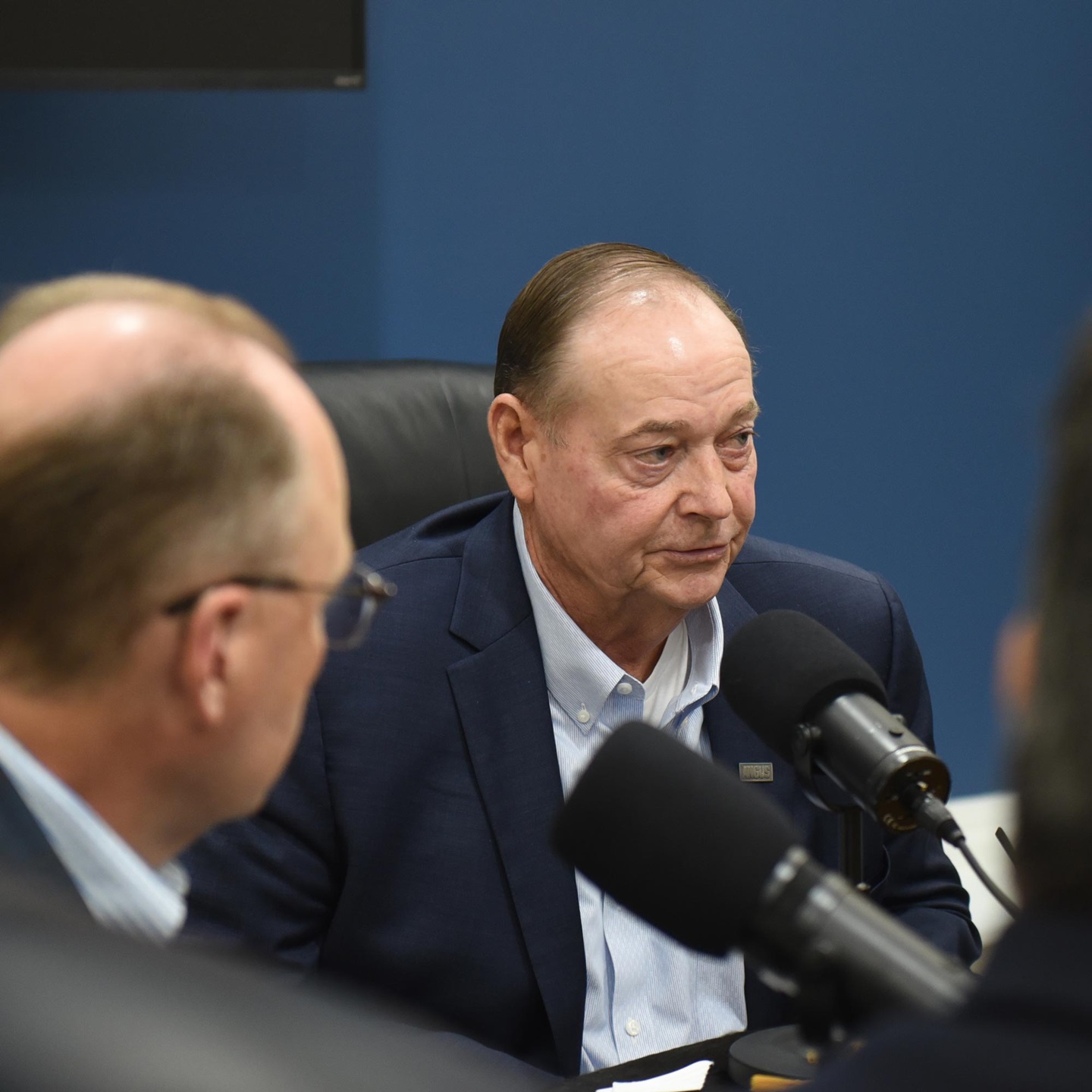
Jim Brinkley
President and Chairman

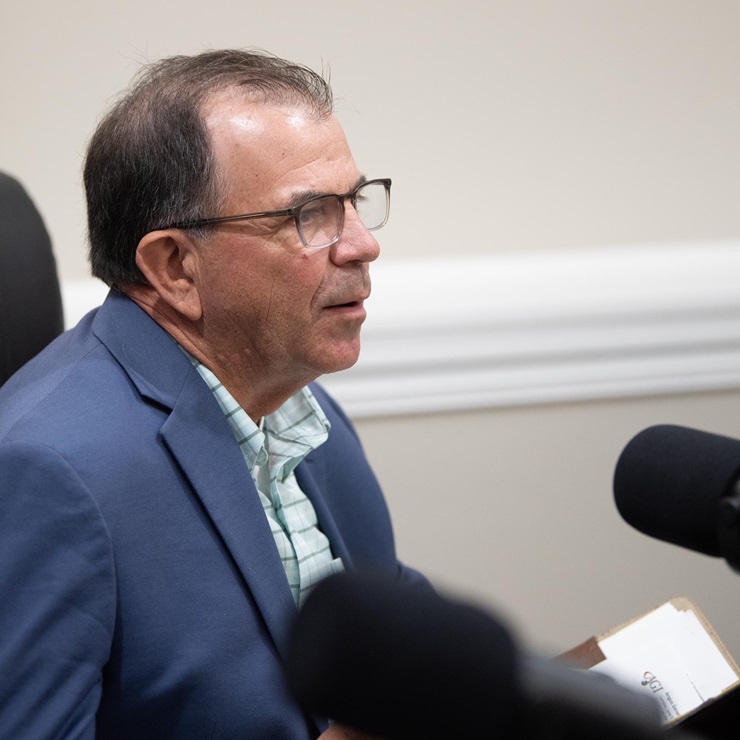
Paul Bennett
Director
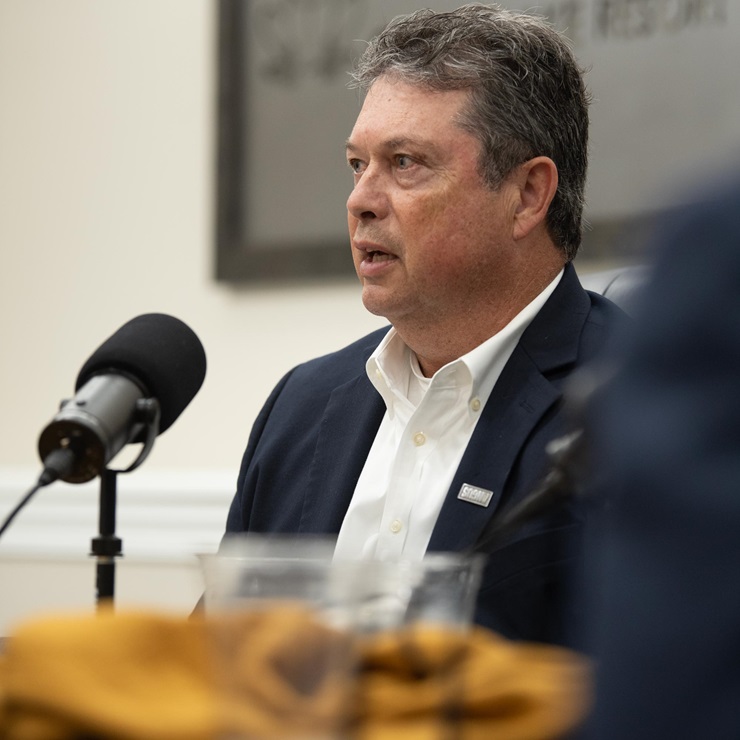
Alan Mead
Director
In February, the Board asked for a recommended solution to the challenges with a growing number of archived tissue samples. The options were investing in more freezer storage or a change in the storage criteria.
“My initial thoughts about this a year or two ago was, ‘Well, we just need to save all these samples indefinitely,’ and it became very evident that there was just no practical financial solution to doing that,” said Bennett, an Angus breeder from Red House, Va. “The proposal that was brought back to us this morning protects the integrity of our DNA log, our DNA archives, but it allows us to discard those samples that we think will not have future need or use.”
Tissue samples will be maintained by the genomic lab for 13 months from the date received, and then older samples will be discarded on a regular basis.
“With this, we're still retaining the samples on the high-impact sires and historically less than 1% is when they needed to go back in,” said Mead, of Barnett, Mo. “So, it's not real common historically that that happens anyway. I think where we landed, in my opinion, was a good place to land.”
Looking to the future was a theme of each of the entity meetings, from the approval of an Angus Genetics Inc. (AGI) three-year plan to set Angus Media up for financial stability in light of inflation.
AGI president Kelli Retallick-Riley walked the Board through the planning for the next three years.
“She always says, ‘Hope is not a strategy,’” Bennett said. “I can attest to the fact that she very much thinks about that. I’m really excited about the future of AGI and the strategy, the strategic plan that’s going to be implemented.”
Angus Media and Angus Foundation are making progress on their own visions for the future, and the Board got updates on that in addition to various program updates from GeneMax® sales growth to Certified Angus Beef ® supply challenges.
The Board addressed member feedback on everything from amplifying the Pathfinder® program to a rule change for donor dams. They updated rule 104.d and added an option for juniors to show owned bulls.
To hear about current numbers, progress reports on research or further discussion on a variety of topics, listen to the full episode.
EPISODE NAME: Board Recap: A Changing Landscape — From Industry Shifts to Market Challenges, Strategic Planning Sets Angus Up for the Future
- Keeping the breed moving forward, guided by the membership — that's the role of the American Angus Association Board of Directors. The group met this week to:
- Review fiscal year trends in fiscal numbers and program enrollments
- Address member feedback on everything from amplifying the Pathfinder® program to a rule change for donor dams
- Adopt an updated tissue sample archival policy
- Get updates on the following research projects: $B validation, cow efficiency, bovine congestive heart failure (BCHF) studies and haplotype
- Approve a three-year long-range plan for Angus Genetics Inc.
- Discuss the increases inflation and price hikes have had on the long-term profitability of the Angus Journal®
- Learn more about the Certified Angus Beef ® supply challenges and strength in demand
- Discuss the Angus Foundation opportunities and planning for the future
This conversation gives you an inside look at discussions around the board table, including decisions that were made and how the Board arrived at them.
HOSTS: Miranda Reiman and Mark McCully
GUESTS:
Jim Brinkley, 2026 president and chairman, has served on the American Angus Association Board of Directors for the past seven years. Along with their children, Crystal and Justin, Brinkley and his wife, Sherry, own 1,300 acres and 400 registered Angus cattle at Brinkley Angus Ranch (BAR) near Milan, Mo.
Alan Mead is a third-generation Angus breeder from Barnett, Mo. After completing his undergraduate degree, medical school and his residency, Mead returned to the area in 1994 as a board-certified anesthesiologist practitioner, serving his local community while harboring a new vision for Mead Farms. The farm has grown to more than 7,000 acres and close to 1,500 registered Angus cows in addition to Charolais, Hereford and Red Angus cattle. Mead has two daughters who are actively working as the fourth generation of Mead Farms.
Paul Bennett manages Knoll Crest Farm, Inc., a four-generation seedstock operation, near Red House, Va. Bennett’s grandfather, Paul D. Bennett, established a registered cow herd in 1944, and the family transitioned the farm from a typical southside-Virginia tobacco, livestock and crop farm to a beef seedstock operation in the 1980s. Today, Knoll Crest is operated by the team of brothers — Jim, Brian and Paul — along with Paul’s nephew, Dalton. Bennett and his wife, Tracy, have two children, Scott and Sarah, and four grandchildren.
RELATED READING:
President's Letter
Angus Genetics Inc. research projects
Brand Production Beyond Borders
Miranda Reiman (00:03):
Welcome to the Angus Conversation. I'm your host, Miranda Reiman with my co-host CEO of the American Angus Association, Mark McCully, and we are here in Missouri where we've just wrapped up with Board meetings. We have a couple of different guests around the table, one being a native Missourian, I guess, sitting right here at the helm and chairman of our Board, Jim Brinkley.
Jim Brinkley (00:25):
Thanks, Miranda. Appreciate you having me on and we had a wonderful week of meetings. Thank you.
Miranda Reiman (00:32):
Yeah. And hosted in your home state. I must admit your state is much greener than mine is right now. I think I drove down in like, I don't know, more rain than we've seen in the last two years in my part of the state.
Jim Brinkley (00:44):
We have been blessed with ample moisture and as you well know, the grass always looks greener on the other side of the fields.
Miranda Reiman (00:53):
Absolutely. I did notice that the torrential rain also came with some drown out spots in some fields and things like that too.
Jim Brinkley (01:00):
Yeah, I've been blessed with having about 70% of my soybeans having to be replanted.
Miranda Reiman (01:08):
Be careful what you wish for. Yeah, that's right. Absolutely. Well, it was raining when I came down. I am looking forward to driving home today because it looked like it's a beautiful country, lots of rolling hills. So appreciate being in Missouri. And we also have Alan Mead, who's also a Missourian here, joining us second term on the Board and first time podcast guest. Yeah,
Alan Mead (01:28):
My first time. Appreciate you inviting me and we've had a great week and accomplished a lot of things and just been a really, really nice week.
Miranda Reiman (01:38):
And then of course to get some balance, we can't have this whole podcast dictated by the state of Missouri. We've got Paul Bennett over here.
Paul Bennett (01:46):
Thanks, Miranda. It's certainly been an honor for me to serve on the Angus Board as I sit in our board meetings surrounded by people, co-board members, as well as the staff and support folks that attend our meetings. I do realize how blessed I am to be a part of this tremendous group. And it's always exciting to see what we can accomplish in two or three days and always a jam-packed agenda that bears a lot of fruit typically.
Miranda Reiman (02:16):
Absolutely. And I guess I didn't mention you're from Red House, Virginia.
Paul Bennett (02:19):
Red House, Virginia.
Miranda Reiman (02:21):
That's right. So
Paul Bennett (02:21):
Speaking of the moisture, I got a text from my daughter this morning. She was very excited. We got 15 hundredths of an inch of rain overnight. So they were doing back flips.That's the most we've had in a while.
Miranda Reiman (02:33):
I didn't know you guys measured it in hundredths of an inch out there.
Paul Bennett (02:37):
When you've had as little as we have, you measure it in hundredths.
Miranda Reiman (02:40):
Very good.
Mark McCully (02:42):
I always do, of course we know we have so much of the nation's cow herd that's under drought conditions and when you're talking to folks and they're measuring in hundredths, that is something that again, now living in Missouri, if you said you got one to two, those were inches and how much dew was on the grass was in hundredths maybe.
Miranda Reiman (03:01):
Absolutely. Well, I guess as we just jump right into it, those of you who are maybe longtime listeners know that we'll kind of rapid fire some topics, but we always start our June Board meetings, checking back in a little bit on kind of fiscal year projections and where we're at, the financial health of all the entities and those kind of things. And I guess good reports that we're up in registrations and on many of the metrics that we look at.
Jim Brinkley (03:28):
Yeah. Registrations have increased this year up a little over 12,000 from year to date, which equates to around 6% increase in registrations. And that's certainly a positive sign, but to me, but it's also a telling sign that there's demand for our product. I mean, the people are certainly registering bulls and females and the breed's certainly growing in registrations, which is certainly a positive outlook for me.
Miranda Reiman (04:08):
We especially appreciate that I think in this time that we are in the cattle cycle where we know that there's still fewer cattle around the country. So glad to see those coming in as Angus.
Jim Brinkley (04:19):
For sure.
Alan Mead (04:21):
I'd also like to comment the phenotypic data has been strong also with that. We still across the board see members turning in a lot of phenotypic data in the various traits and has been a significant increase in several of the traits. So I think that's exciting.
Mark McCully (04:38):
Absolutely. We dove into that a little bit, of course, and looked at, as you guys have talked about the impact of the Data Driven Herd recognition program we think really across the board we've seen with some sizable increases in herds reporting data, things like teat and udder scores, foot scores, hair shed, pretty promising results across the board.
Paul Bennett (05:01):
We've exposed our membership to a lot of new trait opportunities here in the last few years. And I think that we need to be cognizant of the fact that sometimes they feel like they're an overload posture. But as I've talked to members and looked at the statistics, it's been really encouraging to see the uptick in participation, particularly with these new traits. And as I think about genetic evaluation, I'm really excited about the fruit that those phenotypes are going to bear in the next few years as these EPDs evolve.
Alan Mead (05:37):
Yeah. Paul, to follow up with that, the fact that we're acknowledging those herds that are turning in that data and rewarding them for that, I think also really has been a good for the association and our membership.
Miranda Reiman (05:50):
As you said, as I got out and talked to members, that's like a really good segue into the fact that we had a couple of member letters and some member feedback that we addressed in various committees. I guess maybe we'll just jump right into that, Mark, with the Pathfinder.
Mark McCully (06:04):
Pathfinder was one that a member just asked for, to look at the program and consider maybe ways ... I think most that are familiar with Pathfinder know the, whether it depend on how old you are, whether you call that a pound sign or a hashtag ... of designation, but that topic was taken up, Paul, at the Breed Improvement Committee around that program.
Paul Bennett (06:25):
We had a good discussion around that in our committee meeting and I think it brought a level of awareness that we really need to revisit the Pathfinder program, which was due, I think. And so we look forward to having staff look at ways that we might update that program and make it more relevant and we appreciate that member letter as we appreciate all those letters, but it was a good opportunity for us to start looking at some things that could make that program more valuable moving forward, I think.
Mark McCully (07:00):
So we will take that back. No decisions were made, I guess, just to be clear that other than to, "Hey, we need to take a deeper dive beyond maybe even what the ... " Again, to your point, it stimulated other questions, which was then some really great discussion and we'll keep charging forward on that one. I think another topic that also, taken up in Breed Improvement, Paul, specifically was our testing requirements around donor dams, references rule 104D as in our Breeder's Reference Guide, but we'd heard some feedback over time as that rule had been implemented and the committee considered some options and made some slight tweaks to that rule.
Paul Bennett (07:40):
Exactly. And actually that was in Member Services, but I think our goal there was to reduce the burden and not have redundancy in testing and I think our members will find that rule to be very user-friendly. It'll reduce some cost and redundancy in testing for the defect panel.
Alan Mead (08:04):
I think it's important that we did get some recommendations from membership and the Board looked at that and realized that that was something that probably did need to be changed and took action on it. So it's real important for the membership if they do have concerns or suggestions to reach out, because we do look at those.
Mark McCully (08:23):
And I think the intent of that rule, and thank you for correcting me, which committee, that was Member Services.
Paul Bennett (08:29):
That wasn't my intent. I just wanted to give them credit for that.
Mark McCully (08:32):
I'm glad you did, but it was the intent when that was put in place. I think that you always come back to what that intent was and with the growth and genomic testing and the ability to do more and more, having more and more parent verification, it was logical to look at that and so we'll put more of those details out on the website and such, but ultimately if animals are parent verified, it's going to reduce that requirement on testing.
Miranda Reiman (09:01):
So speaking of other member ideas or feedback, we heard in the activities committee that some folks would like to see an owned bull show added to the roster of things that we offer, I guess. And I think that came right from, was it from a junior that that came from, the recommendation?
Mark McCully (09:21):
I think it was a family suggestion.
Miranda Reiman (09:23):
Was it a family?
Alan Mead (09:26):
And so yeah, we approved that going forward. I believe that will go into effect starting next year. Is that right?
Mark McCully (09:33):
Yep.
Miranda Reiman (09:35):
Just another option out there if that's something that you've got some-
Alan Mead (09:38):
We felt like that was another option that we had some input from members and thought it was a good idea.
Miranda Reiman (09:46):
Excellent. Speaking of that activity we did spend or that Activities Committee, we did spend quite a bit of time looking at the kind of future show locations and how those decisions are really made and what kind of things that they've got to look at when they're considering. You'd think to me, not growing up in the show world, that gosh, there must be facilities all over the country and every state and every part of the country that fit what we need for the National Junior Angus Show and that's not the case
Alan Mead (10:14):
Yeah, there's a lot that goes into that and a lot of moving parts. We look at various locations, whether it be where they stay, whether the facility's big enough. We also look at the cost, something that we look at and look at all those options and it's not probably as easy as you would think to find those locations that fit and we definitely are going through that and looking at all the options.
Miranda Reiman (10:43):
It was surprising to me that, and I'm not going to make you guys recall all the numbers, but that there were like several hundred thousand dollars difference between locations of similar size. I mean, that really does impact the decision quite a bit.
Alan Mead (10:58):
Yes,
Mark McCully (11:00):
And some of these facilities are set up to where they're multipurpose. So the setup fee for a cattle show, there's a significant lift and some are staying that... Again, there's just some real variability that maybe folks might be surprised by. So
(11:14):
We got direction to just continue the search for what options are out there and bring that information back to the committee to wrestle with of where we go in the future. But near term, where this summer we're going to Kentucky, of course, got kind of all the plans and update on entries for the National Junior Angus Show. Kind of maybe a related question tied to the National Junior Angus Show is related to New World screwworm. I think again, that's obviously a very emerging topic that our industry is dealing with, but then also asked some questions that we're getting from exhibitors around what's that being-
Miranda Reiman (11:51):
Can they bring their cattle from these areas?
Mark McCully (11:54):
And so we'll continue to ... It's a little bit of a fluid situation at this point. These decisions will largely be outside of our hands. It'll be up to the state, the state of Kentucky and so on, but we'll continue to work and get that information out to exhibitors. But as folks have questions, please reach out and we'll do our best to stay as super current on that and be a resource to answer folks' questions.
Miranda Reiman (12:19):
Absolutely. I guess moving through our committees and the communication committee, one thing that we highlighted quite a bit was the mobile app update. So that's been out, I guess. Folks have downloaded it, they've seen it, but we also got to hear some numbers on uptake of it. I guess, were you guys surprised to hear that there's 16,000 people using the app or is that what you would have expected?
Jim Brinkley (12:42):
Certainly surprised me. I didn't realize that app was used that extensively.
Miranda Reiman (12:50):
And I know serving on the kind of staff group, the ad hoc staff group that's worked on that, one thing we've appreciated is the member feedback on things that they wish that they had within that app or things that we could improve and tweak. And so we'll keep doing those kind of updates, but it was just kind of fun to hear about the success of it so far where it's made sale books easier to get to and some functionality things on entering data and those kind of things.
Jim Brinkley (13:18):
Yeah. And like you said, we get feedback from membership on what they think we can improve on and certainly encourage that feedback and it would definitely want to make it better and appreciate everyone that's reached out and commented on it. And I've had a lot of really good comments, people really like it and you hear some that, well, why didn't we do that?
Mark McCully (13:49):
I liked it the old way.
Jim Brinkley (13:54):
We definitely do appreciate the feedback on it.
Mark McCully (13:56):
And I always say we don't change for change's sake, but there was some technology reasons and some things that just needed to be updated on that. And then at the same time taken what we believe is a better user experience. But always to your point, Jim, always open to feedback and considering that how we make that even a more useful tool.
Miranda Reiman (14:17):
So then moving right on into, I guess, commercial programs is probably where we spent most of the time talking about the pathway to progress. We have talked about that on this podcast before where being able to talk better about how we can connect all of the technology and the programs that the Association has and make it usable for our commercial producers. So maybe if you want to talk a little bit about that and I guess how you guys see us being able to get more adoption of that.
Alan Mead (14:46):
I think it's a great concept. It kind of puts it all together from the registered Angus bull, GeneMax to the AngusLink program, Genetic Merit Scorecard to the end product with the Certified Angus Beef program. For me, it kind of organizes it in my brain of how this all is put together and how it all works together trying to make the commercial cattlemen more profitable. We're trying to provide tools for those folks to be profitable and I think the concept is, in my opinion, really important because it puts all those programs together.
Paul Bennett (15:25):
And I think as we think about our mission at American Angus Association, obviously our first commitment is to have membership, but part of that commitment to our membership is addressing the needs of the bigger industry and I think that this kind of highlights the fact that American Angus Association has a lot of ways to touch every sector of the industry.
Miranda Reiman (15:52):
One thing that I heard you guys spend quite a bit of time on was really talking about how we get the Angus breeders to kind of be ambassadors to their commercial producers or that this is a way that perhaps these tools can help you ... the breeders around the table and breeders that are listening embrace those tools as customer service touch points and really kind of helping get more ingrained in your customers' businesses, too. And so I thought that was a good discussion.
Alan Mead (16:19):
Absolutely.
Mark McCully (16:20):
Well, I think breeders feel that as the services that are becoming almost expectations, I always use free trucking as one that there was a time that was a pretty unique feature that some folks were selling with their bulls and now it's kind of almost a given, right? And so I think there's always an expectation of the commercial customers with the investment, candidly, that they're making in genetics today of what other services, how else can you be a partner with your commercial customers to help them be successful? And that's really kind of the ... All these programs are designed to do that. I think when we talk about this pathway to progres, it's how do we help communicate them in such a way that they make sense and how these pieces fit together.
Miranda Reiman (17:02):
One other thing before we leave commercial programs is we did talk about AngusLink, kind of updates the numbers for the year. One thing to note, I guess in the programs across the board of that type, numbers are down because cattle numbers are down.
Mark McCully (17:19):
Well, and I think so many of the AngusLink-enrolled cattle are coming out of the... Well, in video sales, I think what we're hearing, and I know several of our board that either sit on the committee and are also represent feeder cattle and with their customers, drought is impacting, do we know the weights on these cattle, what they're going to weigh? Do we know when we're going to ... We may have to ship them early, may have to ... And so all of those dynamics impacting drought are impacting some enrollments. And yet when we dive down into the AngusLink enrollments, we see some states that are up, right? There is some regionality to it, but largely continue to see really good interest in that program from sale barn operators and...
Alan Mead (18:02):
And with that, there's still data out there that shows significant premiums with those calves.
Jim Brinkley (18:07):
Absolutely. And one thing that I'd like to make note of is sometime late this fall we will have enrolled one million feeder calves into Angus Link. And I think that's a huge milestone. I know it's helped the participants in getting significant premiums on those calves and it's just been a great program. And I know whenever I ran for the Board the very first time, which would have been eight years ago, that there was a lot of question about this program and I think it's evolved to a real nice tool for our commercial cattlemen.
Miranda Reiman (18:54):
I'm glad you mentioned that, Jim. I think sometimes we talk about what we're looking to improve so often we don't always celebrate. Yeah, that'll be something to celebrate and watch for that when we announce that it's happened. Then I guess a topic that was brought up in full Association Board meeting and that you guys actually took some action on or approved today would be we talked about DNA storage and the, I guess, changes in the landscape there.
Mark McCully (19:18):
Yeah. Well, and it kind of ties to celebration and landmarks because we hit a, two million genotypes that have been submitted by our breeders and DNA samples that have been submitted in for analysis over the time, but with that has come some challenges around storing the ... And I want to be clear here because we kind of talk about two different things. One is the data that's delivered from the analysis of that DNA. And so that data, we're not having any discussion about that data. We know how valuable it is and so it empowers our evaluation, obviously empowers things like parent match and all the cool things that we talk about. The archived sample, what's left is really what the discussion has been and where things have evolved to more of the tissue collection or the TSU samples that is so popular today, that requires a different level of storage and what's even available to archive after the labs are done.
(20:16):
So we kind of opened up this topic back in February and as a Board, you guys gave us direction to come back with some suggestions both that talk to the value of being able to have an archive of high-influence animals. So should down the road we need to go in and clear some pedigrees in the case of a new genetic condition down the road, but then the other is just economically, how do we store what's the samples that we have? So we brought back some recommendations and you guys kind of pored over those and gave us some feedback and some discussion.
Paul Bennett (20:55):
I feel really good about where we ended with this project. My initial thoughts about this a year or two ago was, well, we just need to save all these samples indefinitely and it became very evident that there was just no practical financial solution to doing that. I mean, we've been talking about millions and multimillions of dollars to have an ongoing storage of all those DNA samples, particularly the TSUs that require freezing. So the proposal that was brought back to us this morning I think protects the integrity of our DNA log, our DNA archives, but it allows us to discard those samples that we think will not have future need or use. We also had a mechanism in there to archive samples that could potentially be useful when doing some research on recessive genes and those kinds of things as well. So my comfort level with that was very high at the end of the discussion this morning.
Miranda Reiman (22:05):
And there was some talk over also some provisions for high use sires and that you would keep some samples on those. So when there was questions brought up, there was kind of some checks in place, I guess.
Paul Bennett (22:16):
Yeah, that's right. And so there'd been a bit of research done to kind of look at the impact of sires over time to the breed registry and try to kind of find that sweet spot where we needed to say, OK, sires that have sired this number of calves per year, they become what we'd call high-impact sires and the number that was arrived at was 200 progeny registrations per year. So those sires will be archived indefinitely and we think that'll give us a good cushion for future use as needed.
Mark McCully (22:54):
Kind of random math that doing that for 10 years gives us an 80 plus percent coverage of pedigrees. So again, I think a good insurance policy, right? That's kind of how these things are thought about.
Alan Mead (23:04):
And I think also with that percentage I think is real important with this, we're still retaining the samples on the high-impact sires and historically less than 1% is when they needed to go back in. So it's not real common historically that that happens anyway. So it just wasn't cost effective to store all these samples, it wasn't an option. So I think where we landed in my opinion was a good place to land.
Paul Bennett (23:38):
And we also had a discussion about ways that breeders can archive samples themselves on animals that they feel like are going to be high impact in their programs and I think some very doable solutions to that and there'll be some guidelines that the Association will provide members that should give them a high level of confidence in knowing that they've got what they need for future years.
Alan Mead (24:05):
Really good point, Paul.
Jim Brinkley (24:06):
And I know like on our ranch that we, on all of our donors, we do archive those currently and we have an archive on all of our donors, just you, never know.
Miranda Reiman (24:23):
Because they might be high impact in your program. Absolutely.
Jim Brinkley (24:26):
In my program, correct.
Mark McCully (24:27):
It's pretty cheap insurance. And I think we know we have, there's a lot of breeders that are, that's been kind of something they've implemented over the years and it's just something we're probably going to be sharing a little bit more as just one more safeguard for breeders that they can do on their own, kind of a best practice kind of thing and we'll charge down the path of implementing these policies and that'll allow us to deal with this in an economically responsible way.
Miranda Reiman (24:55):
Then kind of moving right on, of course we had all kinds of other discussions within the Association Board meeting, but I'm going to kind of flip the switch and go into some of our entity discussions. So I guess starting with Angus Genetics Inc, we did kind of celebrate also a new tool that we have in launching ParentMatch here in the first part of this year.
Paul Bennett (25:17):
I tell you what, that's an incredible tool and I've certainly been a benefactor of it already. It's awesome because breeders can just go in and they get immediate response from the Association assisting them, determine parentage on animals that are in question and that was not an easy lift. I guess my initial thoughts were that, oh, they should be able to do this pretty simply, but I quickly learned that that was not the case at all. So kudos to Kelli and her team at AGI, that was a significant accomplishment and an immediate benefit to our membership. That's going to make life easier for a lot of us.
Miranda Reiman (26:02):
And if you're listening to this and you haven't gone in and used that and are kind of wondering, there's a really good tutorial up on our website and lots of good information so be sure to dig back into that and you can get up to speed pretty quickly. I guess another thing that was on our list there talked a lot about the GeneMax growth and customer retention, Rafael shared a lot of charts there, Mark. So maybe talk-
Mark McCully (26:26):
We like charts. Charts are a very effective way to communicate data. No, he did have really a breakdown of the growth of GeneMax, which has been quite exciting and talking about customer retention, looking forward, the value of that tool and the adoption of that tool by our commercial customers. So I think we're seeing some pretty nice success around the country.
Jim Brinkley (26:52):
And it's exciting to me that our commercial cattlemen are very progressive and it's really exciting, the adoption that they've taken to GeneMax and then our dollar values has helped in helping them make better decisions, helping them improve where they want to make improvement and they align with the dollar values on the registration paper of the sires that they're using. And I feel like that was a huge step in the right direction for our commercial cattlemen.
Alan Mead (27:38):
And I don't know, I can't recall when we say increase, it's a significant increase. That's what's so impressive. I mean, it's not a small increase. I don't know the percent, but it's Mark, I don't know
Mark McCully (27:50):
If close to 300%, something like that.
Alan Mead (27:52):
Yeah, it's like 300% increase. It's not, that's exciting.
Jim Brinkley (27:58):
And with the commercial cattlemen wanting these replacement females, this is a tool for them to use to make better informed decisions going down the road.
Miranda Reiman (28:12):
Absolutely.
Paul Bennett (28:13):
I had a call recently from a long time GeneMax user and he was really excited about a new feature that GeneMax, Herd Intelligence Report, and he was just really excited to share some of his results with me and I thought, that report adds so much value to that information and allows users to get so much more utilization out of the information, the feedback they get.
Mark McCully (28:42):
I'm glad you pointed that out, Paul, because I think maybe as most of our listeners are registered breeders, probably used to looking at data, used to looking at data coming back in spreadsheets and can quickly go to it and decipher. For a lot of our commercial producers, that's helping them convert that to-
Miranda Reiman (28:59):
It makes it palatable.
Mark McCully (29:00):
Right. To useful knowledge and useful information, that's really what that report is. Not telling them how to breed cattle, right? But telling them how to interpret the results and maybe getting it boiled down into a more user friendly kind of fashion. So appreciate you pointing that out.
Miranda Reiman (29:15):
Absolutely. And you brought up dollar values, which kind of leads right into, I guess we did a research update and one of the first ones that we looked at was the update on the University of Illinois $B validation project.
Mark McCully (29:29):
And you guys have been aware of that project. I think this may be one of the first times you started seeing, we're getting some of the data back and some of those calves being born and now getting go on feed. So starting to get a look under some of that-
Miranda Reiman (29:42):
It was the unpublished data, I think. Was that the charts that weren't- They hadn't run statistics on it yet.
Mark McCully (29:48):
Anxious to show some data, but they weren't age adjusted. We hadn't even done the genomics to make sure that we had sires matched and things. But
Miranda Reiman (29:56):
Initial data says it works. $B works. That's the message.
Alan Mead (30:00):
I think all more important, once again, I think we've had some input from our membership to validate some of the things we're doing. And so we invested in time and money to go back and try to validate some of the things we're doing. And so again, this was some input from membership that we should do some of that. And I think that's what's exciting and see we don't have all the data back yet, but it looks real promising. And so I think that's real important that again, we listened to what the membership wanted us to do and we did it.
Paul Bennett (30:34):
And Alan, I'm excited that I think that project with University of Illinois and the utilization of those 600 commercial cows is going to bear a lot of fruit beyond just validation of traits. I mean, they're going to be looking at so many things, including some technology that might be useful to us in generating really accurate foot scores in the future. And I think as that project evolves, we're going to find a lot of ways to improve technology.
Alan Mead (31:03):
There's already been some other traits that they're already looking at from the original plan. And so you're right, Paul. I agree.
Mark McCully (31:13):
Yeah. While we're looking at this, let's look at a couple more things and I think it's a model that we're going to look to also expand beyond just the one we're doing there at University of Illinois. I think we're going to learn a lot from it and I think it's going to be a really great learning experience and one I think we can replicate in some places. Yeah, other research. I know depending on probably where you live in the country, what interest you have in some of the research projects. I know Heart Health is a ongoing research initiative here that for some of our folks in specifically high-altitude areas or parts of the country where that's a more important topic to their commercial customers. We got some updates on, it's a tough trait. But I know it was a big discussion at the Beef Improvement Federation and here a week ago out in Idaho.
(32:03):
And so the team updated on that. The cow efficiency project, that equipment and that research is kind of initial stages, beginning stages, getting going on that. And you guys heard an update on fertility haplotypes and the works going on there. Some are familiar.
Miranda Reiman (32:23):
That's been a very ongoing topic for lots of years.
Mark McCully (32:26):
Very much so.
Paul Bennett (32:27):
And really not a lot to report there other than it's very much an ongoing project. But I get asked about that fairly often. Don't know that we're close to having any conclusions on that, but it's very much- It's very much being worked on.
Alan Mead (32:42):
Yeah, absolutely.
Mark McCully (32:44):
Coming off of BIF where I heard the term "proprietary genetics" three times from the main stage, right? I think as an organization, we've been talking about this a lot. I think the importance of our members to be able to access data, how the association model where breeders can contribute data into an association and then all benefit from having access to those tools and the knowledge that comes out of that has been so important. And so when I hear "proprietary genetics," I don't like that term. And I think that what we've been hearing for some time, some of the acquisitions in this space, how just different some of the change in genetic evaluation in private hands, it's really led and I think driven a strategic discussion specifically for AGI that I know the AGI board have been working on here for some time of a strategic plan, making sure we're really trying to see where this industry is going and be best prepared for it.
Paul Bennett (33:54):
I know Kelli rolled out a three-year strategic plan that we had a bit of discussion about and certainly something that's been in the works for a long time. One quote that she uses pretty often that I really appreciate, she always says, "Hope is not a strategy." And I can attest to the fact that she very much thinks about that. And so I'm really excited about the future of AGI and the strategy, the strategic plan that's going to be implemented. And it's a unique space because AGI in order to serve the industry also has to be cognizant of the fact that we've got to survey our membership and that puts AGI in a very unique position in the research space and the service provider space that exists in our beef cattle industry. But I think AGI has an incredibly bright future. We're blessed with an awesome staff there.
(34:57):
I think that we've got folks and resources in place there that are going to make AGI a big part of our beef industry moving forward.
Miranda Reiman (35:07):
Of course, the action that you guys took there was then to approve that strategic plan and they'll start putting it in place. But as we look to our other entities, we're maybe a little bit behind in terms of we're just starting the process of strategic planning. Foundation's kind of been working on it and Angus Media just coming on with some strategic planning too. So you heard that word a lot, but got a lot of vision for the future from each of those entity leaders.
Mark McCully (35:35):
And I talk about strategic plans or plans probably all the time.
Miranda Reiman (35:38):
Mark loves plans.
Mark McCully (35:39):
I do love plans because hope is not a strategy. I also agree with that. And I think plans are so important and I always say for a couple of reasons and I also shared some of the employee feedback that we do every three years. We do an employee engagement survey and I shared some of that data out with you guys as Board. I think that's important for you. And I think one of the things that we continue to hear from our staff is making sure that we've got clear objectives, that we are where you want us to be. We're working and prioritizing the things that you as a board want us to be working towards and very simultaneously for our membership to have transparency of what we collectively say we're working on. I think it's just so important to have those plans and to be really thoughtful about them and do our best to work in a very proactive kind of manner for the betterment of the organization.
Miranda Reiman (36:35):
I would say as staff too to have so that we know where we're going is really important for us. But you mentioned that in a proactive manner, Mark, one thing that the Angus Media Board brought up that I would say is probably more reactive than proactive at this point was we talked about some of the increases in inflation and the increases of postage and printing and the impact that's been having on our business, especially specific to the publications and Angus Journal specifically.
Alan Mead (37:04):
Yeah, Miranda, and I didn't even realize it. It's been 21 years since we've increased the cost of an ad in the Angus Journal and we felt like it was probably with the cost of postage and printing and mailing that we needed to increase that cost just probably really wasn't an option. We've tried to keep it as low as we can for the benefit of the membership. We feel like the Angus Journal is a good publication to get information out to our membership and we sure feel like that's our responsibility to do the best job we can to get that in their hands. We try to provide a lot of information in the Angus Journal because we've did a survey in the past and I know there's a lot of opinions on that, but the information we got back from the membership that that was our leading source of information from the Association.
(37:59):
So we do feel that's an important magazine, an important way to get out information to our membership, but it was just getting with the cost and being 21 years since we increased the ads, so we felt like it was time to do that.
Jim Brinkley (38:15):
Well, something that, we did revisit that and we did increase the fees, but the Angus Journal is still with the fee increase is still going to be-
Miranda Reiman (38:31):
The best value.
Jim Brinkley (38:31):
... by far the best value out there. Absolutely. I mean, we looked at that and was very cognitive of cost per membership and reader, and it's still a really good value.
Alan Mead (38:51):
Absolutely, Jim. We looked at what the advertising rates in other publications were. Exactly. Yeah. Even with the increase, the Angus Journal's still a great value.
Miranda Reiman (39:00):
One thing that we talk a lot about in media is the CPM, it stands for cost per thousand. There's Latin in there, so don't ask me why it's CPM and we broke it down by regional publications and just really showed you that we still have one of the lowest CPMs out there when you compare-
Jim Brinkley (39:18):
The lowest. Not one of the... but the lowest.
Miranda Reiman (39:18):
Yeah, the lowest in almost every case. And that's not just compared to national publications. I mean, we're looking also at your local publications. So we feel good about that because we definitely were created to be a member service. We want you guys to be able to get the information and we want to be able to continue in the future to be able to use that flagship publication as a tool for membership to reach other breeders.
Mark McCully (39:47):
So I think you talked about plans. The Foundation has, you'd mentioned also doing strategic planning and one of the things I think has been a really exciting growth of that program has been the fund the future and the adoption of so many breeders. I think we're up to 28 here this year that have used the Fund the Future designation in their sale, or even some private treaty. I think folks that have donated a percentage of a lot to the Foundation and so that's really been an exciting program to see grow and then talk about the impact it has and we had quite a bit of discussion about scholarships. It's kind of scholarship season for the Foundation.
Miranda Reiman (40:35):
It really is.
Jim Brinkley (40:36):
Mark, I'm glad you brought up the point of Fund the Future. As a Board member, I really wasn't aware of the impact that Fund of Future had. In my tenure, I've seen several young rock stars come through that junior program and it's really, really rewarding for me to be able to help and fund the future. I just think it's a great program. I would love to continue to see it grow and help our youth in their future.
Miranda Reiman (41:23):
I had a senior graduate this year and I can say that when you're staring at college costs and things like that, it's really humbling to know all of the people and the support that is behind, especially in the agriculture community. And so I just think I've seen firsthand this year how much that just gives you a boost and a start and super humbling.
Jim Brinkley (41:44):
We certainly have a very generous and great membership that are very cognitive of what the youth needs and it's so rewarding to see them help fund that.
Paul Bennett (41:59):
Well, and I think it's important that our membership understand that the foundation is really multifaceted in that it serves great needs with respect to funding education and research. And so those Foundation dollars get used for a lot more than just the critical needs of the scholarship program and funding youth programs. And I would echo what you said, Jim, we're blessed with an incredibly generous membership and it's really heartwarming to see the ways that people want to give back to a breed that's meant so much to them and their families over time.
Miranda Reiman (42:41):
Absolutely. You mentioned those other pillars of the Foundation. We'll be having the Beef Leaders Institute in the office next week, Mark, and that's a great example of that educational component to the Foundation.
Mark McCully (42:52):
And research, we were talking about the University of Illinois $B validation project, which is, that's also been supported through the Foundation. So again, multifaceted, absolutely.
Miranda Reiman (43:03):
I guess the last entity on our list then would be Certified Angus Beef.
Mark McCully (43:07):
Yeah. And I think we get questions. I don't know if you guys get a lot of questions or maybe on members' mind as they go down the meatcase and see these beef prices and wonder, man-
Miranda Reiman (43:17):
Are people still buying it? Is that right?
Mark McCully (43:18):
Are people still buying? And so the team gave kind of an update on the reality and the challenges of selling in this environment, but they also are pretty optimistic that we could land the fiscal year at Certified Angus Beef at right about where we were last year, which candidly is probably going to be a win given all of the supply challenges that are out there and the price challenges that consumers are faced with. What were some of your big takeaways of the CAB meeting?
Alan Mead (43:49):
Well, there's several, but one is I was excited to see the CAB Prime, shows that consumers are still paying for that premium of the CAB Prime. I think that was one of the higher sellers. I think that's exciting showing that the quality that the consumers realize that, are willing to pay for that. And so as I saying, it's breeders trying to raise cattle that have a higher quality carcasses along the whole chain, people are being rewarded. And I think that's, for me, that was pretty exciting.
Miranda Reiman (44:22):
It was interesting to me to see the stats on how much ... I mean, I know we keep saying this, but like how many weeks the Prime production outpace Select production, I believe that was 29 weeks that I mean, gosh, when I first started in this business, if you'd have told me that, I'd have said, no way. I mean, Prime was a pretty insignificant amount of production and then that's just allowed a lot of sales opportunities and been fun to watch.
Paul Bennett (44:50):
Yeah. Angus genetics have really changed the landscape with respect to beef and beef's competition in the marketplace for protein. I mean, that's kudos to Angus breeders who had the foresight to understand that they needed to breed cattle that were going to set beef apart and we're well on the way to accomplishing that, I think.
Miranda Reiman (45:15):
One other thing that they talked about was sharing data on the consist study, which is really where they see reasons cattle don't qualify for the brand or why they fell out and I think it really illustrated the impact that heavier carcasses has had on that supply of Certified Angus Beef.
Mark McCully (45:33):
Maybe to a nickel of background on consist study, I use that term a lot because that's the term we use at Certified Angus Beef. And Holly Martin, our communications director goes, "Do people understand what that means?" So I'm going to do a better job of explaining. But really what that's something that the team there at Certified Angus Beef in cooperation with our licensed packers for years, and it's gotten easier over the years because when it was first started, we were actually as staff out in plants measuring carcasses and bringing back papers and tracing ribeyes. Now we have the luxury of them giving us a lot of camera data on their A-stamped or their Angus-identified cattle. And then we can look at the characteristics of all of those carcasses and see how things have changed, and we can look at it largely by specification.
(46:22):
So you probably hear us talk a lot about the percentage of cattle that missed the target, over 90 used to be, over 90% is because they didn't have enough marbling. Well, those have changed over the years and we all know kind of where carcass weights are at today, but you guys got some real world data on the impact carcass weights are having. Of course, with an 1,100-pound maximum, we're just seeing more and more of these big cattle that aren't qualifying for the brand because of weight. So it's a real challenge out there.
Paul Bennett (46:51):
Well, and I think John Stika used that as a way to illustrate the fact that CAB acceptance has ... I mean, there are a lot of requirements beyond just marbling and the value of keeping size in check is critical to a lot of the uses of CAB product.
Jim Brinkley (47:13):
And I think as the nation's cow herd grows, they start saving some heifers and we get more fed cattle. I think the carcass weight thing will take care of itself. I mean, they're just being rewarded to feed them longer. And I'm as guilty of it as anybody and I mean sometimes you'll get some 1,200-pound carcasses and that's just the time we're in and five, $6 corn will sure help on that, too. And there's shifting gears, there's the Ranch to Table program. I'm so grateful that membership has gotten to utilize that program and I think it's a great program for some of the people that are feeding some cattle and they're able to offer Certified Angus Beef... And so it's been a huge benefit for some of the members that's utilized it and it's still growing. So hats off to CAB and John and his team for getting that implemented.
Miranda Reiman (48:32):
I believe they said they were up to 30 families in that program.
Mark McCully (48:37):
You always look at me and expect me to remember every number.
Miranda Reiman (48:39):
You're the numbers guy.
Mark McCully (48:40):
Yeah, I tried, but I didn't remember that one. It's had some really nice growth.
Miranda Reiman (48:46):
Right. Yeah. And also fun that that was the program that for a long time was talked about, how can we make this work? How can we make this work? And the technology finally caught up to allowing it to be a program that folks could tap into. Yeah,
Alan Mead (48:59):
Absolutely.
Miranda Reiman (49:00):
Well, now we're to the end of our bullet points. I think there, like I said, there was a lot of discussions that happened this week that you can read more about that we probably have had Member Tips in the Journal. We've had By the Numbers in the Journal, things that show up in your Association Highlights. So definitely read those more in depth. I know we've-
Jim Brinkley (49:20):
President's letter.
Miranda Reiman (49:21):
President's letter. Yes, be sure to check that out, too.
Mark McCully (49:26):
Got to get you to write that yet before we get out of here.
Miranda Reiman (49:30):
But is there anything else that I guess we haven't covered that you guys wanted to make sure we highlighted, or you think we got all the biggest topics?
Paul Bennett (49:38):
Well, I'd just like to say thanks to Mark and his staff at American Angus Association to get an inside view of what happens at St. Joe and around the country on behalf of American Angus members is really incredible, and I just wish that more of our members could see what the three of us sitting in here see every time we're involved in meetings and it's a well-oiled machine.
Alan Mead (50:05):
Absolutely, Paul. Agree 100%. We've got great leadership and the staff is tremendous and they do a lot of work for the membership and try to move the breed forward and yeah, I agree.
Mark McCully (50:18):
We appreciate that. You get to come back on the podcast now. No, we truly and sincerely, I know our team really ... One of the things I referenced in our employee engagement survey, the-
Miranda Reiman (50:31):
Mission driven work.
Mark McCully (50:32):
The mission driven work, right? That was one of the strengths that every nearly ... I think every staff member said they just really believe in what this organization's doing and the mission, the members that we serve, the breed, the industry, and that charges the batteries every morning to come to work and go to work on behalf of our members. And so it's privilege, and thank you for those nice comments.
Miranda Reiman (50:59):
Absolutely. And that's true, whether that's Member Services representatives, the folks working over in Angus Media, whether, just across the building. Absolutely. We appreciate it.
Jim Brinkley (51:09):
We are blessed as a breed to have a staff as good as we've got and they provide so many different tools that our members get to utilize and whether you're looking for $M or you're looking for marbling or whatever, growth, I mean they do a tremendous job of describing the cattle and providing those tools and working with membership, and it's hats off. I truly mean that.
Mark McCully (51:47):
But with all those accolades we also recognize, and I know you guys recognize we're not perfect, we can get better, right? So always appreciate the feedback. I think you heard us reference several times, specifically letters, but it doesn't have to be a letter for this Board. I mean, how many times do you guys bring forward, "Hey, these are discussions I'm having with the group of breeders I interact with." So we appreciate that feedback, act on that feedback and I know truly value it, so keep it coming.
Miranda Reiman (52:17):
Absolutely. Well, I always say my favorite part of my job is getting to interact with breeders. So I think this is board meeting week is always a fun week because we get to hear from you guys from all across the country. So thank you so much for your time and service and traveling in, and for staying just a little bit later here to do this board recap.
Jim Brinkley (52:39):
Well, thank you, Miranda. Appreciate you having us.
Paul Bennett (52:41):
Absolutely. Thanks.
Miranda Reiman (52:43):
I always enjoy those discussions to learn more about some of the hot topics in the Angus breed. If you'd like to continue receiving information on the latest, make sure and subscribe to the Angus Journal at angusjournal.net. This has been The Angus Conversation, an Angus Journal podcast.
Topics: Board Meeting Highlights , Member Center Featured News , Association News
Publication: Angus Journal
Related Publications


Current Angus Journal
Keep up on the latest stories of the people and programs in the breed.

Latest Podcast Episode
Don’t miss conversations with breeders and industry experts.