





Raising Calves, Mentoring Kids and Coordinating Logistics
Randall Grimmius on raising beef and entering the Angus business.
May 26, 2026
When Randall Grimmius, Hanford, Calf., was in junior high, he spent the summer buying a couple hundred head of dairy calves to grow. Armed with his farm upbringing and a spreadsheet, Grimmius found a niche where he could make money by filling a need.
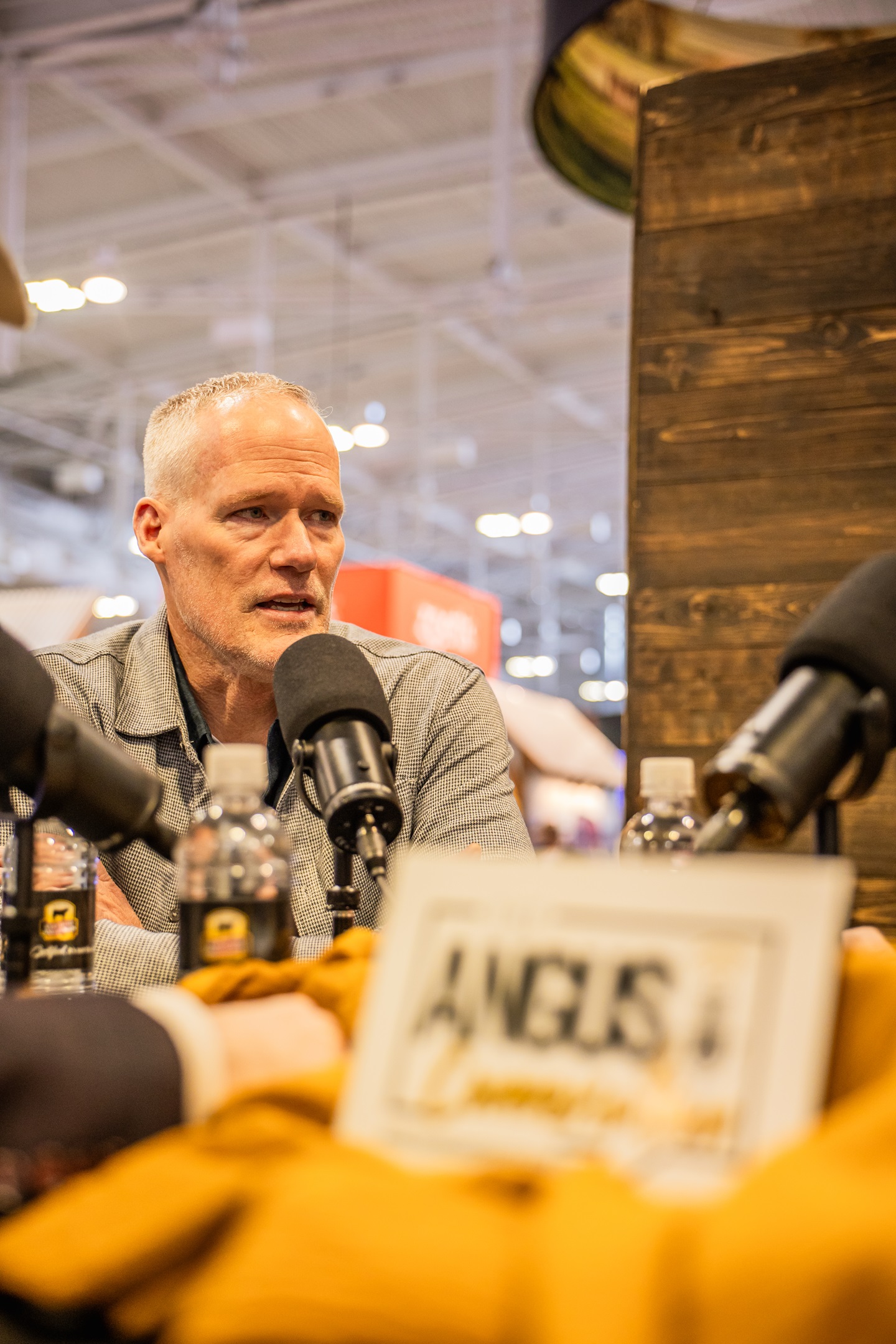

Information, quality of a calf, and God — that was our three principles of how we try to build our deal.” — Randall Grimmius
“I got started from there,” said Grimmius who now operates Grimmius Cattle Company, a large-scale calf raising business in California and Texas.
In the last decade, they’ve entered the Angus seedstock business.
By 2000 the industry had changed. Day-old dairy calves were marketed right off the farm, and Grimmius saw an opportunity to do it differently.
“Information, quality of a calf, and God — that was our three principles of how we try to build our deal,” he said.
Today they take in nearly 2,000 head each day, employing 1,000 people and returning premiums to those who supply quality calves to them. His team’s goal is to make that transition from home dairy to calf ranch as seamless as possible.
“One of our big things is ‘big-small,’” he explained. “We try to have a lot of animals but handle them in a small, individual way the best we can, because that individual care is pretty important to me.”
Quality calves in and quality animals out — that's always been important to Grimmius who was an early believer of the beef-on-dairy movement to create higher quality carcasses from the by-product of the dairy industry.
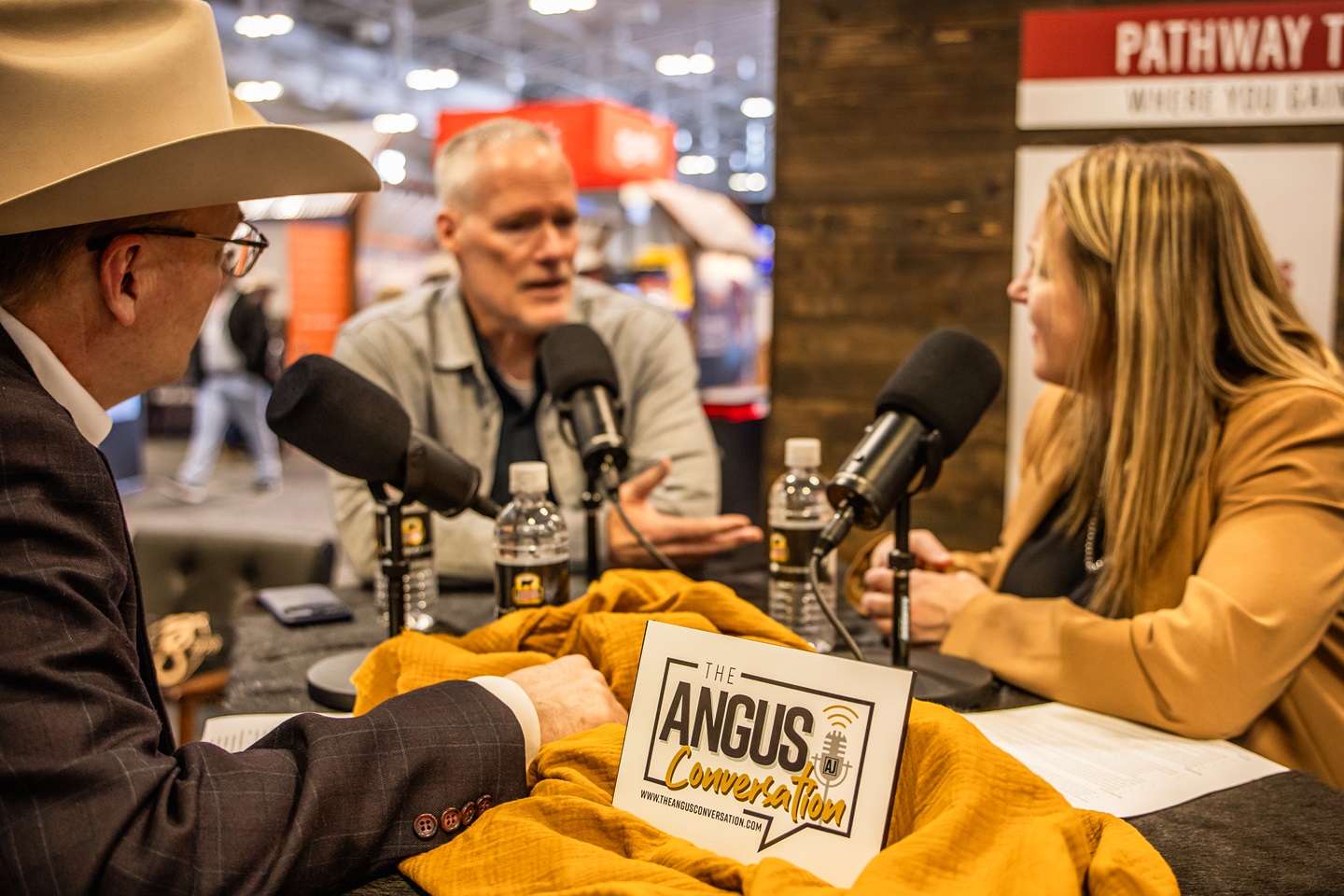

He had to build trust on both sides, paying his dairymen suppliers $225 over the market for the calves bred to Angus and then following the electronic identification (EID) data all the way through to be sure they were better for the packers, too.
“I knew Angus, I knew how they graded,” he said, but the next challenge was finding the right kind of genetics to artificially inseminate (AI) to.
That’s how his seedstock enterprise was born.
“At that time the dairymen would get the bottom of the bull type thing and just whatever bull nobody wanted anymore,” he said.
So, they started buying their own bulls. His first criteria was almost solely on ribeye size, then he added calving ease, and he’s refined that over time.
“I’m not buying the bottom end of Angus and going, ‘hopefully I can find a gem in the rough here." I'm trying to still buy the best and see how I can improve the best,” Grimmius said.
Today he’s selling more than 100,000 units of semen into dairies, helping to create more of the kind of cattle he wants to see in his calf feeding operation.
Listen to the full episode to learn how data, genetics and relationships have built his business. Hear about everything from his young entrepreneurial ambitions to learning to listen to God’s call.
Raising Calves, Mentoring Kids and Coordinating Logistics — Randall Grimmius on Raising Beef and Entering the Angus Business
What happens when the beef and dairy worlds intersect? Randall Grimimus, California cattle feeder and Angus breeder, joins the podcast to talk about the ever-evolving beef-on-dairy sector and how Angus fits into it. From raising day-old calves to scaling his family operation, Grimmius shares how data, genetics and relationships have built his business. He is grounded in faith and guided by a strong desire to do the right thing for his calves, his employees, his suppliers and his customers. In this episode you’ll learn about everything from his young entrepreneurial ambitions to how he listens to God’s call.
HOSTS: Mark McCully and Miranda Reiman
GUEST: Randall Grimmius
Randall Grimmius is the owner of Grimmius Cattle Company, a family-owned and operated livestock business he helped build from the ground up alongside his father, Tom Grimmius. What started as a cattle feeding and trading business has grown into a fully integrated operation spanning seedstock genetics, dairy, cow-calf production, calf raising and cattle feeding across California and Texas — with five ranches; capacity for 300,000 head; more than 1,000 employees; and additional cattle fed through some of the industry's most respected feedyards in Kansas, Texas, Nebraska and Colorado.
Away from the operation, Randall and his wife, Beth, have been married 34 years. Together they have four daughters, eight grandchildren and have provided guardianship to 12 additional children over the past 15 years. He remains deeply committed to faith, family and the values that continue to guide the company.
SPONSOR:
Angus Media: Are you ready to level up your herd’s genetics? With the Angus Bull Book Spring 2026 Angus Sire Directory, you can find your next great sire. The spring issue went live in March, but you're able to view the book online all breeding season. Live EPDs will help you pair the right bull with your breeding objectives. Search for the Angus Bull Book Spring 2026 Angus Sire Directory on the sale book search page on Angus.org.
Angus Media: A solid herd starts with the cows. Commercial cattlemen need to know that your foundation is built on maternal traits. Tell them in the Female Foundations special section published with the September Angus Beef Bulletin. Get an advertisement, feature and social post all in the same package. Contact your regional manager or our advertising team to learn more. Find them at www.angus.org/angus-media/about/contact-us.
Miranda Reiman (00:02):
Welcome to the Angus Conversation. I'm your host, Miranda Reiman, with my co-host CEO of the American Angus Association, Mark McCully. And Mark, we are to our very final episode in season eight. It's been a fun season.
Mark McCully (00:17):
It's been a very fun season and hard to believe we are eight seasons in actually. It feels like we just got started recording these just a short time ago, but here we are.
Miranda Reiman (00:30):
That's right. As we think about all of these episodes, it's fun for me to really realize in the variety of guests that we've had on and the different regions they represent and types of businesses and way they approach the Angus breed really, I guess one of those things we talk about all the time, Mark, is how diverse the Angus breed is and that shows up on this podcast.
Mark McCully (00:53):
It does. And I think it's been fun this season in particular. I think we've had some differences of ... And we talk about the differences of the Angus breed, but that's really crafted by the differences of philosophy and perspective of the Angus members and the Angus breeders. And we've really had just some very different perspectives on the business, some different markets, some different histories with the breed and all represented here in one season. So it has been, as you say, a lot of fun to do and a lot of fun to really highlight that diversity.
Miranda Reiman (01:24):
Today's guest definitely highlights that diversity as well. We're throwing it back to a conversation we had on the trade show floor at Cattle Industry Convention and Trade Show in February with Randall Grimmius.
Mark McCully (01:36):
Yeah. And I think it really reflects, here again, maybe the different segments of the beef industry. We're going to go to the beef on dairy space a little bit now and I think many have known that has been a very, segment of our industry that's grown significantly in the last handful of years. Randall's really been kind of at the forefront of that. And so we get a chance to sit down with him and get his ideas, get his perspectives and vantage point.
Miranda Reiman (02:07):
It's really fun. He talks about everything from how he got started in history to economics and breeding decisions. So I think you'll enjoy this one. Today on the podcast, we have a guest who has a really unique perspective on the Angus business, took a different route. So Randall Grimmius is joining us here from Hanford, California. I guess you would identify first as a cattle feeder.
Randall Grimmius (02:34):
Yeah, I'm a cattle feeder. I guess I'm someone that's creating ... Yeah, I'm creating beef basically. That's how I kind of look at it. But I'm a calf raiser and a cattle feeder and all the way through the line.
Mark McCully (02:47):
Yeah, a litle bit of the story of Grimmius cattle.
Miranda Reiman (02:49):
The background.
Randall Grimmius (02:50):
Yeah. So I guess if we go back far enough, I would go back to my grandfather who was a dairyman in Holland. After the war, he kind of looked at where's the best opportunity for our family or the family at the time. So he came to the US and he started in the dairy industry in Southern California. And then my father, he came off the boat when he was five with my grandfather and their whole family. And so he got in the dairy deal and then he started trading beef cattle, started trading cattle. So he kind of peeled out of the dairy business. And so we kind of always were kind of in the beef trading cattle auctions and things. And then as a young man, I came up as just as simple as buying cattle through the sale one at a time, like a blind animal that I can improve and make a locker beef out of and sell individually.
(03:43):
And it's kind of my roots as a kid. And then I think I was like in seventh, eighth grade, my dad was like, "You can go to an auction by yourself." And through that summer and I bought feeder calves. I think I bought like-
Mark McCully (03:58):
What kind of budget did he give you at the time?
Randall Grimmius (03:59):
It was pretty limited. I think I was paying like 40, 50 cents a pound for calves, but I think I bought like 200 head that summer. I worked with a spreadsheet, but I would buy like a 150 to 200 pound Holstein calf and then I would sell them weighing like 500 pounds. So I kind of got started that way. And then just as we evolved through high school, our biggest trade was working with ... We had two different trades. So I've always kind of worked in the dairy world and in the beef world. So it's unique. We're kind of unique that way. We're kind of cross travelers and even today in the seedstock world. But in the dairy world, at that time, most dairymen would raise their own calves themselves.
(04:47):
So I would buy the bull calf from the dairymen at like 90 to a hundred days right out of the calf hutch. And so I would go pick up those calves and buy them and trade them at that point. Buy them at 200 pounds sell them at 400 pounds, 500 pounds, sometimes finish. But that was kind of our main adopter there. Then the native cattle, I would buy cattle through the auctions and just in Central California, buy like a four to five weight, make them weigh seven, put them on feed in Kansas. I did a lot of stuff with Poky feeders and they ended up going to National. So I kind of had that whole routine that way. Then as things evolved, I'd say like I think it was around 2000 we decided that as dairies became more specialized and calf raising became more specialized also, we realized we had to kind of get in that market.
(05:40):
So we started in the calf raising world, started buying babies and started down that road. And I think what really differentiated us at that point was we had kind of like three principles that we kind of went by. It was information, quality of a calf and God, that was kind of our three principles of how we try to build our deal. We brought something unique to the market because at that time the dairies would have kind of an in between person. They had like a calf runner that would go to the dairy, pick up the calf and then sell it to a calf raiser. So I kind of like broke that bond and just went straight to the dairymen and kind of went to kind of a higher profile kind of dairy and try to work, pay a premium or create something that I can differentiate myself and then give him information back on how his cattle performed because nobody really did that.
(06:29):
They let the calf go and they never saw it again. So I really- It
Mark McCully (06:32):
Was a pure byproduct of the dairy industry.
Randall Grimmius (06:34):
Yeah. So I gave that information back and then-
Miranda Reiman (06:39):
Did they know what to do with that information when you first gave it to them or were they like, "Cool."
Randall Grimmius (06:43):
Yeah,
Mark McCully (06:44):
This is interesting.
Randall Grimmius (06:45):
Yeah. Yeah. It was kind of a surprise to them. It was different for them, but they appreciated it because people like accountability and knowing what's going on. So from there we started growing that department. I think I started with like I was bringing in 10 or 15 a day and we just kind of grew. I think I started where I had a yard that was like 15,000 head that we started and then I worked real hard to get a permit on a new facility that I ran that's in Hanford that I ran a 30,000 head permit and yeah, God opened a lot of doors to get that facility opened up and stuff. Getting a permit in California is very difficult, but that was a whole nother story that we got that yard going. I didn't really think, being small, kind of building up, I wasn't sure I could fill that up and I got that thing to 35, 40,000, so then I had to get another permit.
(07:41):
Then I got that to an 80,000 head permit and then another yard opened up. So another yard opened up in Central California that went to, that's now another 110,000 head yard and a grow yard that's 15,000. Yeah, just grow a yard. And then I have a calf ranch in Texas now today too, that's like 75. So we've just kind of grown really the last 25 years, especially like the last 10 years we've really taken off.
Mark McCully (08:10):
So talk a little bit about that early path. Was it always your goal that you saw what your dad was doing, what your family had done, you were going to ... Was this always the path to get back into the cattle business in some way, shape or form?
Randall Grimmius (08:24):
No, it was funny because I actually struggled with ... I'd say like, because my wife and I, we've been married for 30 plus years and I know at the beginning of that I looked at, because the cattle deal was tough and we had not got into the calf raising to where it's like when ... Yeah, today we have a thousand employees at the time that I met my wife, we had two. So we've really grown. So it was kind of a different dynamic and I was like, "Which way are you calling me, God?" So I remember really debating about if I should go into the ministry or not. So it was funny somebody, they had like a class that you could take to get into like Christian ministry type thing because I was kind of debating about that. So I took this class and then at the same time I was trying to get a permit for that Hanford calf ranch.
(09:10):
So I was kind of doing them simultaneously.
Mark McCully (09:13):
Which one come first?
Miranda Reiman (09:13):
You had to be the only person in that class with that dichotomy of decisions.
Randall Grimmius (09:17):
Yes. It was kind of an interesting. So by the time I got done with the class, I didn't get to preaching, which I'm not any good at anyway. I had the calf ranch permit. So I was like, "Hey, this is where God's obviously where he's leading me. " So that's where he kind of took me.
Miranda Reiman (09:32):
Yeah, that's pretty interesting. Do you feel like, and now that you've done it for this long, that you've had ways to minister by way of what you're doing at the calf ranch?
Randall Grimmius (09:45):
Oh yeah, that just opened up quite a few doors in that regard and you really, life is a ministry in different ways.
Miranda Reiman (09:56):
Absolutely.
Mark McCully (09:57):
You guys were comparing notes. I think a little both have big families.
Randall Grimmius (10:00):
Correct. Yeah. We have a pretty unique family. Our kind of family background is my wife and I, we have four biological daughters. Our oldest is, I know how old that girl is, Katherine. I'm sorry, but she's like 28. She has like three kids. Her and her husband have three kids. And I've got Jessica. She's a couple years younger and she just got married. My daughter Nicole, she's married to my son-in-law who's a dairyman. They're expecting their second child here any day or any second now. And then I've got one still in college. She's a senior and she's studying therapy. All my girls are kind of, a lot of them are kind of into therapy type things between house moms and therapists. Yeah, that's awesome. Very good. So it's good. Then the uniqueness of our family is that we've taken ... I was just talking to my wife on the way up here.
(10:48):
We figured that we've taken in 19 kids outside of our kids during kind of probably like a 10 to 12 year span that we took them in. So today we're-
Miranda Reiman (11:00):
While your kids were at home.
Randall Grimmius (11:01):
Yeah, while our kids were at home. And those kids were kind of from ages like 10 to, up to 30. So just a wide variety of people and kids.
Mark McCully (11:16):
It's incredible blessing.
Miranda Reiman (11:19):
We were just saying, probably like 10 at a time, like house was full.
Randall Grimmius (11:24):
Yeah, we maximized probably, this is another wife question, but I think we had 10, kind of at 10 to 11 at the same time. And then on weekends it would swell to 20, 24. I remember laying in bed going like, "How many people were in my house?" It's like counting... before I went to bed.
Miranda Reiman (11:39):
We do that every time before we leave a location to make sure that we bring all the kids we came with.
Randall Grimmius (11:44):
I've definitely lost, I left a few back.
Miranda Reiman (11:46):
That makes me feel good. We've only left Nora once at Pizza Hut, but she won't let us forget it.
Randall Grimmius (11:52):
Yes.
Mark McCully (11:53):
So taking care of a lot of individuals is not foreign to you then. And so running a calf raising operation, very natural.
Miranda Reiman (12:02):
I was just going to ask what's harder, keeping track of a house full of kids or 100,000 calves.
Randall Grimmius (12:08):
Yeah. It's a unique trail, but it's interesting because when we started taking kids in, that's kind of when our growth of our calf ranch was too. So it was almost like simultaneously the more kids we took in, the more calves we came to us and it was kind of a unique time that way.
Mark McCully (12:24):
Now you have a couple of kids back in the business or parts of the business if I remember?
Randall Grimmius (12:28):
Yes. I've got a son-in-law that's part of it and then his wife is a part of it. I've had a daughter that was part of it for a while until she got married off. Yeah, my kids are kind of in and out of interest. So having four daughters, I wasn't going to put pressure and I've been a pretty big believer in this. I'm not going to force something, I'm not going to force son-in-laws, I'm not going to do those kinds of things because you can't put someone on a horse that can't ride, right? Just because it's good doesn't mean it's good. So I want to make sure I have talent. Absolutely.
Mark McCully (13:05):
So maybe talk a little about ... I got the privilege of going out to your place, gosh, I don't know, maybe 10 years or so ago. And it was my first exposure to a large scale calf raising facility. And there's probably some listeners right now that are bottle feeding a calf of an orphan calf in their ... You bottle feed a lot. Talk about how that works. You literally, if I remember, I mean, you have goosenecks running out to these dairies, bringing these day olds back into your operation and on bottles and then you work them up. So maybe kind of just talk about that process and how that works.
Randall Grimmius (13:42):
Yeah. It's a pretty big process, but-
Mark McCully (13:44):
That's why it takes a thousand people.
Randall Grimmius (13:46):
Yeah, exactly. Yeah. We have about a thousand people between all of our ranches. We bring in between 1,500 and 2,000 babies a day depending on the seasonality of the year and stuff like that. So we have all those newborns coming in. Operationally, we have veterinarians, nutritionists, team members that work within different age groups and specialties. We have rows of calf hutches that you might have 500 head in a row, but there's a name on that row with who watches that. So it could be Julio this row and Dominic the next row. One of our big things is big, small, so we try to have a lot of animals but handle them in a small individual way the best we can because that individual care is pretty important to me.
(14:33):
So by doing that, the milk nutrition's really big. We do things that are a litle different. We feed three times a day the first part of their life. Then we go to twice to once and then we get them weaned. We usually get them out of our calf hutch or a calf apartment in the first 85 to 90 days that we get them out. And then from there they go to the running pens and then they'll be in groups of ... Texas, they're in groups of like 20, in California, they're in groups of 150 just because of the weather differential. Then they'll be fed. We'll take them to about 150 days and from there they'll either return back to the dairy if I'm custom feeding and then our Angus calves or the Holstein calves will go out to Kansas or Texas or wherever or to the Southern California.
(15:20):
So it's just a very high flow of ins and outs. A lot of what I do just shipping wise, I think next week I have a hundred loads that I've got scheduled to go out of our ranch. We got so many coming in, but they all got to go out too.
Mark McCully (15:33):
Just the logistics of all of that's mind boggling.
Miranda Reiman (15:36):
I was just going to ask a litle bit about those logistics because when you talk about bottle feeding, Mark, of course, I've got a daughter that has had some calves that she's improved. And one of the first things that she found out was when you put a drill bit mixer, made the mixing process faster for the milk. What kind of automations and things like that do you have to make that process?
Randall Grimmius (15:57):
Yeah, the milk temperature is super important. We have all the different milk mixing vats and yeah, all those things are really measured and sanitation is probably bigger than anything. So we're constantly taking milk samples and testing to make sure that the milk is clean. If I have operationally where the calves are pushing back in the hutches or you see some health issues and things, we usually go to the calf barn first to see how's our milk mixing going, what's going on there, just making sure everybody's on point. Yeah. And you have to be kind of ... Our deal's different too because we don't have just like milk powder. We do do milk powder, but we buy ingredients so it's different. We're not buying just one milk powder company. And then seasonally, you have different things that you run into where, well, you'll get hospital milk from dairy.
(16:41):
Sometimes that'll increase or decrease. You get extra milk from milk plants if you get a load of milk that is a little bit off grade temperature. I can buy that at a discount or if they have overflow, because a lot of times in California you have a spring flush, the plants can't take it all. So I'll be feeding Grade A milk. So you have to be able to pasteurize all your pasteurization systems, all those things have to be in place to be able to handle it to get your cattle consistent milk. And formulas and yeah, all that's really very much specific, otherwise those calves really speak to you, tell you it's not right.
Mark McCully (17:16):
And if I remember, you were doing some things on incentivizing the dairies in terms of making sure those calves are coming to you in good ... with their clostrum. You were maybe doing some blood proteins or some things with some maybe even bonuses or things if I remember all that back. I know it was really an impressive system
Randall Grimmius (17:32):
Yeah. So that's kind of the whole big small concept where we're trying to show that dairymen where his calves, how his calves are doing, how their blood scores and that blood protein score shows if the calf was fed colostrum properly and what kind of score it has and that it significantly helps the morbidity of the calf if the calf is fed correctly. And so there's different bonus things that those guys can achieve if they want to do that. And it gives us eyes to be able to go like, "Hey, something's going wrong here, so it helps us figure out how to shrink things down if there's a problem.
Miranda Reiman (18:02):
And with that, we're going to take a quick timeout for this word from Angus Media.
Speaker 1 (18:07):
Are you ready to level up your herd's genetics? With the Angus Bull Book Spring 2026 Angus Sire Directory, you can find your next great sire. The spring issue went live in March, but you're able to view the book online all breeding season. Live EPDs will help you pair the right bull with your breeding objectives. Search for the Angus Bull Book Spring 2026 Angus Sire Directory on the sale book search page on Angus.org.
Miranda Reiman (18:35):
So when you give them that data back today, are they able to do things and make ... Right away, you said they were surprised they got it back.
Mark McCully (18:42):
You think of the value of the calf difference in the last 20 years of what that calf was essentially maybe worth nothing, many times to worth a lot more than
Randall Grimmius (18:50):
... It's always a thing that you have to try to work on inspiring your dairymen to do what you want them to do since if they ... On the female side, they're pretty incentivized on the black calf. They can be incentivized, but it's a little different because they're going somebody else, I'm buying it at that point. But it's just that communication and having teams to have communication because people want accountability. If they don't, then they don't really work on my system very well and I don't roll with those kinds of people. Sure.
Miranda Reiman (19:20):
One thing that I think that our team, and I know when you went out there, Mark, was really impressed by was the level of cattle care and all of that. It sounds like to me that you are doing that because that's how you want to take care of the animal, not because of outside pressures or I mean that it was required of you by suppliers or things like that. I mean, that's been a day one thing for you.
Randall Grimmius (19:41):
It has. I think it's been a passion for us. I think what I feel is important for the industry or just in general, one of our approaches I think is effective is it's kind of an old way of thought process, a new way. So an old way is like, this is just the way we do it and this is how we do it and trust us. And then my thought process is, yeah, this is how we do it, but I'm going to have accountability and I'm going to get somebody to back up what I'm doing or prove that I'm doing it correctly. So that's why we went for the BQA and got that BQA award last year and things like that. So we're constantly trying to be on point where that's something we're real intentional about because again, having that many calves come in, having a thousand people living in California, you have to really be on point to be like, Hey, we're going to have to deal with these people.
(20:29):
So we just have to be ... So we have things in place so everybody has a cell phone, everybody can make something look one way or the other. So we have at least a paper trail behind it versus like, "Hey, I said this is how you're supposed to do it. " Versus if you have a paper trail, it makes a big difference. So that accountability is really important for the industry as a whole.
Mark McCully (20:50):
Yep. I remember when I was out, one thing you said, it really stuck with me, it says, "We're running a daycare for working mothers," I think was how you put it. And I'm like, "That is a fantastic way to bring down to put in terms what you guys are doing and the care you were doing it with." It was very impressive. So you've seen this shift in this industry and I think everyone probably listening to this is familiar with the growth in the beef on dairy space and how that has changed. I think, was listening to a cattle fax presentation this morning, their estimate was I think 18% of cattle on feed now come from a beef on dairy system. We're always reminded those aren't necessarily new calves. You were dealing with those straight dairy calves before, but there's been the change. You've watched that kind of from the beginning.
(21:39):
What are the things that have really driven the beef on dairy space? We have some of the gender sorted semen and to be able to get the replacement heifers. Was that kind of a game changer?
Randall Grimmius (21:48):
Yeah. So I guess the evolution of that industry has been ... I was talking to somebody about this before. I'll take it from the dairymen's perspective. A few years back when sexed semen came out, it was something that at that point where they could create more heifers and at that point a Holstein heifer was worth 500 bucks. Holstein bull was worth 20. So it really incentivized those guys to really use that sexed semen, even though that sexed semen was about 80% effective as conventional at that point. It wasn't as effective and the genetics were a little looser, but the dairy industry, they were just creating a lot of females and kind of turning cattle over. That got better and better. Then the prices differentiated less too so it got tighter so where we could have some opportunity in the Angus side of it. The dairy industry today, just jumping ahead for those guys, is they're doing a better job of tracking their cows and tracking their genetics as in... improving their herds so their cows are lasting longer.
(22:48):
So instead of a cow lasting two lactations or 2.1 lactations, they're lasting closer to three to four lactations. So that gives us more opportunity to put that beef animal in there. The conception rate today is more like 98, 99 or 100% sexed semen conception rate as conventional so they're kind of equal. So the game has kind of changed that way. It's kind of evolved where the market's indicated for the dairyman to do it, plus it's just an more effective product. As far as how the Angus on Holstein beef came about, we were primarily Holsteins and we always ... So I attribute this a little bit back to National and feeding at Poky feeders and getting grids back. And when I got that grid back and got that information and we've always been big into eIDs, that's probably another paragraph or whatever next segment, but where I can track each animal individually and then I would track different source farms.
(23:51):
So if I bought from say a Boston Ranch in Exeter, California, I bought those calves, I could track those cattle through the system, get that information back and know how they graded. So I knew Angus, I knew how they graded. I graded, I had SimoAngus, I had Charolais, I had everybody, so I knew which cattle performed the way they were supposed to. I had a few dairymen that were kind of meddling in the Angus on Holstein at that time. So I sent them through that system too and I saw how they did. So I had a baseline of where I was at. So it gave me a baseline to go like, okay, this is the value. So I started off with kind of a 25 to $50 over value of a Holstein just to try to incentivize some guys to do it. And so I had some guys kind of buying into a little bit, kind of doing a little bit.
(24:34):
But then when basically the major packers said, "Hey, we're going to really discount a Holstein or we don't want them." They went from like four back to 10 back to 20 back to we don't want them.
Miranda Reiman (24:46):
You didn't have to incentivize anymore.
Randall Grimmius (24:47):
No.
(24:48):
Well, I had to still incentivize because I had to have a job. So at that point we said in those days we would guarantee like during the pregnancy we will be, at that time it was 200, I think it was 225 was the number that I came up with. I was going to give $225. So at that time, Holstein was worth a hundred bucks. I guaranteed $225 over the Holstein based price no matter what the market was. So when the market went to 200, I'd pay 425 and through that nine month pregnancy, because a lot of guys have done that, but then they jump in and then they bail. So that's what I guaranteed with my clients. So I kind of ramped that up, got that going and then COVID hit and we were able to pull to our standards and the whole industry kind of got a little loose, but we were able to hang tough as far as like for my marketability, for my dairies and created some credibility too, I feel, and just kind of proved it.
(25:44):
And then it was kind of like working that program, I guess I can start from the genetic side a litle bit, but on the packer side, just convincing them, you let them see the product and that's been a process, but that's really grown too. Sure.
Miranda Reiman (25:59):
So you had to build trust kind of on both sides with your suppliers and your purchasers.
Randall Grimmius (26:04):
Yes. Yes, very much so.
Mark McCully (26:06):
So then you started purchasing Angus Bulls, registered Angus Bulls. Yes. And so talk about, and obviously that you
Miranda Reiman (26:14):
So that means that Angus performed the best, right?
Randall Grimmius (26:16):
Correct.
(26:17):
I'm in the right ...
Miranda Reiman (26:18):
Just wanted that on the record.
Mark McCully (26:22):
So maybe just talk about that business model. You started investing in those that read sale reports and I mean, you've been very aggressive at finding those genetics that work for you and so basically started building a battery of bulls to work with your dairymen on the genetics that you wanted, correct?
Randall Grimmius (26:38):
Correct. So it kind of all started with, I guess at the beginning of it, I think how long have we been in this thing like six, eight years or something? Yeah, probably something like that. But I was working with the semen companies and saying, I want these bulls. And at that time there was kind of a, the dairymen would kind of get the bottom of the bull type thing and just kind of whatever bull nobody wanted anymore. And they sold the-
Mark McCully (27:01):
Clean out the semen tanks.
Randall Grimmius (27:03):
Clean out the tank stuff. And I was like, "I want these higher end bulls, but I can never get them." So we said, "Well, we'll just buy some bulls." And our main concentration at that point was ribeye size because that was the complaint with the whole scene was how big was the ribeye and bring the frame down because they were too tall. So I think I went to Thomas Angus in Baker City, Phil Belko, my partner, he went out there and we bought kind of a lower profile, big ribeye EPD bull. And then we went to Vermilion and we went to Connealy that year and bought some bulls there and Gardiner and we got it going. And as it evolved, we just kind of built that demand and like today we're selling into the dairy industry, we're selling 100 to 150,000 units a month. We needed to buy more bulls is kind of what happened. And then I guess as I got more technical and calving ease was important to us too, but so today I look for bulls that have enough calving ease, but not too much calving ease because I don't want too small of a baby.
(28:09):
Something I've noticed is like birth weight is a big deal on carcass weight and yeah, you get paid on carcass weight and grade. And then I try to ... Dollar beef is what a lot of it comes down to, but I look at maternal very heavily. I try to buy bulls today where I can cross over so I can sell it to the seedsock guys or I can put them in my program.
Mark McCully (28:28):
Has your spec changed a little bit as you've got more data back? I mean, I guess you kind of talked about that early on. It was kind of ribeye area, hear probably a little bit of feedback on how much calving ease do we need. I know that was one of the things as our Angus on Holstein index was built, I mean some of the early work we heard was the first priority is getting the cow bred. I mean, that was for everyone, right? Yeah. But then we probably heard calving ease, but I think maybe over time we've heard, even to the beef on dairy space that maybe that's not as big of a ... We can go too far there for sure. So just finding that sweet spot probably for you. Yeah.
Randall Grimmius (29:05):
There's definitely a sweet spot both ways because you can't have too big of a calf otherwise you'll damage cows and everything else. But if they're too small, you don't want a 50 pound calf being born or 60 pound calf. And that 80, 85 to 100 pound calf is really ideal. That's kind of what we try to angle for. But today what we're doing different is we hired a geneticist, Jesse Hoff so we're going to start individually testing each calf and get the sire data from each calf coming in and then we have our own lab in Southern California. So we're going to test all those things. And I feel like I have connection all the way through the plant, but I know even that first 150 days at my calf ranch, I'm going to be able to get a lot of information for them just from the health side of things and performance that I feel like will pay for that test.
(29:55):
So it's going to be some really good info. And I think I'm curious to see how it kind of comes out and what it brings, but I think it'll help the Angus world and I think it's going to be unique as we kind of break some of this stuff out.
(30:08):
In the meantime, I go to an auction and say, I'm going to try to buy the best, try to buy that. If you have 500 bulls, I'm going to try to buy the best, two or three of that sale. Just try to buy the best, best if I can, phenotypically and number wise. And that's kind of what I've always angled for.
Miranda Reiman (30:27):
I mean, you've got a lot of data then that you're getting back. How do you make that usable to you so you can make decisions off of it? But you're not just looking at this litle piece of data and this litle piece of data together. Is that difficult?
Randall Grimmius (30:40):
Yeah, it is a little difficult. I would say that is a process. I think data is so, it can be just kind of repetitive. So you just try to continue to bend the curve. It's kind of where-
Miranda Reiman (30:53):
Looking for trends.
Randall Grimmius (30:54):
And I think our model of really raising calves, putting all the effort into that, not cheating any corners there, not cheating any corners on the bulls that I buy. I feel like that helps me bend the curve that way. And then as we test in between it, hopefully we can find some things, but I'm not buying the bottom end of Angus and going like, hopefully I can find a gym in the rough here. I'm trying to still buy the best and see how I can improve the best is kind of what we angle towards.
Mark McCully (31:28):
You talked a lot about Holstein. Are you primarily working with Holstein dairies? Do you get into any of the HoJos or the Jersey dairies? Yeah. Yep. And then how's that change things around sire selection?
Randall Grimmius (31:40):
Yeah. I work with the HoJos and the Charolais. Those guys probably make up 10 to 15% of my inventory. You do have to look at your bulls a little differently in that regard. I've used Charolais actually, sorry, on some of my Jersey side of things.
Mark McCully (31:58):
We'll edit that out. I think that's...
Miranda Reiman (32:02):
Kidding.
Mark McCully (32:02):
We see that on the Jersey and the LimFlex. I think we see a lot of LimFlex being used on those Jerseys, really trying to overcome that muscle of that Jersey, right?
Randall Grimmius (32:09):
And honestly, I feel like the uniqueness about Angus world is that you can have enough of those qualities to kind of get by. Sometimes that baby calf is born black and the other one's born black, so the differentiation is important. So that sometimes the Charolais helps change the color. So that makes a little bit easier too from the value because they are worth less than sometimes go straight to Holstein.
Miranda Reiman (32:36):
I was thinking that in the dairy world, like consistency seems to be really important that everything's homogenous. Has that been hard as you've gone to different bull suppliers across the US? How do you make sure your genetic selection, like that you're coming out with a product that's really consistent even though you've got ...
Randall Grimmius (32:55):
Yeah, I feel like the Angus will ... Yeah, again, since I'm trying to buy the top bulls from just different regions, and to have enough of my genetic specs correct, then they're pretty level. And we do a lot of sorting on our end to make sure by the time they get them at five months old when they go to the feedyard, have to be fed close to a year that they're pretty level, even though the cattle still differentiate from each other.
Mark McCully (33:22):
Sure. Yeah. Is the dairyman having much impact on much say or are they just saying, "Hey, I trust you, Randall.You're buying my calves, you tell me the genetics you want me to use and I know you'll be there to buy my calves."
Randall Grimmius (33:34):
Yeah. I think genetics are kind of important to those guys, but the main thing is conception rate. They want to get their cow. They want to get that cow bred. That's kind of what they're really looking at and they want to have a calf that's born that's not going to be too big. They don't care if it's too small in that regard if I pay them the same amount of money, but they don't want the calf that's too big coming back. And the thing that we do, that's really our main priority at the calf ranch. Everything I do is servicing that dairyman and that heifer. This heifer is really important to me, even though it makes up say 40% or 40% of my inventory. I do a lot of the feeding cattle side, but that dairyman side, servicing them correctly is really important because that helps me get that black calf also.
(34:21):
But if I really treat his cows correctly, grow them right, then when that cow births again, then I have a good performance all the way through.
Miranda Reiman (34:29):
And with that, we're going to take a quick timeout for this word from Angus Media.
Speaker 2 (34:34):
A solid herd starts with the cows. Commercial cattlemen need to know that your foundation is built on maternal traits. Tell them in the Female Foundation special section published with the September Angus Beef Bulletin, which will reach more than 137,000 readers. Get an advertisement, an article about your herd and a social post all in one. Reserve your spot by June 1st. Call your regional manager or call us in the office at 816-383-5200 to learn more.
Mark McCully (35:08):
We've seen the evolution of sorted semen to get the females that the dairyman went. Have you... using sorted semen to get the males? And then do you even see a time where, I know there's been some work done around even, are we just going to put beef embryos in these cows? How do you see that space all playing out?
Randall Grimmius (35:25):
Yeah, so we've kind of worked in all those spaces. So again, the sexed male, there's a couple things that limit that. That conventional conception rate is a little better. So then you get that conception rate side that's important to a dairyman. The amount of bulls that can do sexed semen, there's less. So this Angus bull deal, which hopefully we can continue to make those better in the ... as far as working in the collection side of things, because it seems like 15 to 20% of the bulls that I buy, I can't freeze semen out of, and it's using my best bulls. So that's important. I've got to be able to get that cow bred and have enough quality semen to create enough sexed semen. The cost is something that's there. And then also that heifer really performs very well. So she's very competitive so she doesn't feed as well, but she grades really well.
(36:25):
So as far as like in product, she's going to have more Choice and Prime. So those things I have ... So I do it.
Mark McCully (36:32):
So the incentive is, maybe not as great.
Randall Grimmius (36:33):
Yeah.
Mark McCully (36:34):
It can't overcome anything you're going to give up on conception, right?
Randall Grimmius (36:37):
Yeah.
(36:37):
Yeah. I'd say as like feed gets higher and things like that, as things evolve, then it could be more motivation. With how cheap feed is right now, it's not as big of a motivation, but yeah, that's something that's in the queue, but it does cut your population of bulls.
Mark McCully (36:54):
And the beef embryos?
Randall Grimmius (36:55):
The beef embryo and we're doing some of that too just within some of our registered heifers, but there is ... Yeah, it's tough to beat that Angus-Holstein cross as far as performance all the way to 15, 1,600 pounds for what it costs to do an embryo, it's not quite as effective at times. So it's doable and I could see where guys would use it some in the Jerseys, but on these kind of markets it's utilized-
Mark McCully (37:23):
With the crossbred calf ...
Randall Grimmius (37:23):
It works pretty well.
Miranda Reiman (37:26):
You mentioned at the beginning that when you started in the cattle business, it was like you were working a spreadsheet. Is that how you're still ... I mean, are you checking back on the economics of all of this all the time or are you watching that real time or how do you evaluate that?
Randall Grimmius (37:40):
Yeah. One of our foundations of having paperwork and information is just our tracking system and tracking all the cattle. And we even have an app that shows a picture of the baby when it comes in. It shows all the blood proteins. It shows this whole medical history, all of its movements and sire identification now. And so that's really important to us as far as how we track all that stuff.
Miranda Reiman (38:06):
The tracking, that's fabulous. So I could keep going on that one. But I was wondering when you're making a decision based on economics, like corn prices always changed, all the inputs are changing, the outputs are changing. How are you deciding when like, oh, it is more profitable. Like you said, maybe someday it will be profitable, put in a beef embryo.
Randall Grimmius (38:25):
Yeah. I guess I'm tracking. I'm following the markets and I'm finishing cattle so I can kind of see the economics of how things are, where things are pushing and kind of being open to which directions we want to go. So we're kind of always looking to innovate in those areas. So I think that's part of the reason why we started individually genetic testing the calves, just so we can gives us some more feedback to be able to innovate.
Mark McCully (38:45):
Sure. Well, the amount of data you have potentially at your fingertips could probably be a little overwhelming a lot of days, right?
Randall Grimmius (38:52):
Yeah. Yeah. Yeah.
Mark McCully (38:53):
Are you a data nerd? Do you consider yourself a data nerd?
Randall Grimmius (38:56):
Not so much. I have a passion for it. I was kind of an Excel spreadsheet guy and yeah, my brother is the one that's kind of behind all our data systems and management and stuff. He kind of took it to a whole nother level and then yeah.
Mark McCully (39:11):
Are you using the other AI in-
Randall Grimmius (39:13):
Yeah, we're using AI in that also, for sure. Yeah. So now I have people that know how to look at even more detailed, but
Mark McCully (39:20):
Yeah.
Miranda Reiman (39:21):
Do you ever feel like because you kind of play in both the worlds of beef and dairy, that you're somewhat of a translator between the two or that you're helping explain things to either side?
Randall Grimmius (39:33):
Yeah. I felt like even being in the Angus world, as far as that world, the seedstock world, I felt like going to different places and buying their top bulls and communicating with their operators and going to cattle conventions. I remember a time when I went to Montana and side of it, they had their little, what do you call that, their breakout session and then they had me come out and I explained what we're doing and just kind of keep ... Yeah, I felt like I was kind of a diplomat for the beef on dairy program, but I enjoyed that and I enjoy dairy people, I enjoy cattle people and I feel like what we're doing is good for everybody. And even when you guys came out and were wondering what's going on, it's like, "Hey, I could be a diplomat." It's like, "Are you going to be hostile...? Are you going to be good?
Mark McCully (40:23):
You were like, "Why are you coming? Why are you coming?"
Randall Grimmius (40:26):
We debated. We're like, "Are these guys good or bad? Are they going to shut us down or keep us going? " But no, it's been good.
Miranda Reiman (40:35):
I feel like that's a comment that a Californian can make, right? Is that how you evaluate every single person who comes on your place? A little bit.
Mark McCully (40:44):
So in being that bridge and that advocate of both ways, what are some of the misunderstandings that maybe beef people have about the dairy side or vice versa? I don't know, maybe it's
Randall Grimmius (40:56):
... Yeah, I think as these worlds collide a little bit more, I think the beef world has a little more appreciation for the technology and what those guys do in genetics on the dairy world and how they use so much of the AI and how they're able to improve their herds quickly. And the dairy herd really appreciates the beef world because of the value of what their take is on their ... It used to be a very small part of their profitability. Now it's a big part of how those guys can function with what they bring back.
Mark McCully (41:33):
And I've heard, I mean, just thinking about how it's changing the dairy, I'm not a dairy expert by any stretch, but if you look at the value of milk versus the value of a calf and then for some, I know the value of energy, that's another profit center of these dairies that it used to largely be only milk and these other pieces have, in some cases, I understand they're getting at times closer or maybe overtaken at times the value of the dairy products or that may have been exaggerated. Yeah.
Randall Grimmius (41:59):
It doesn't overtake the milk, but it's a lot-
Miranda Reiman (42:02):
Bigger percentage.
Randall Grimmius (42:03):
Yeah. It's real important. I think even at the beginnings of when we were doing it and really that was a big part of why I bought some of these high end bulls too, just to create value, to create demand from that packer so we don't get discounted because I think some of the early stages they were discounting those, not necessarily our product, but they were trying to discount the dairy beef cross. So I was trying to create that value so we get the premium on the back end so I can in turn give it back to my dairies, my clients. So we fought pretty hard for that.
Miranda Reiman (42:37):
So talk about as you look ahead to the future, what are the challenges you're trying to solve for the opportunities that you see ahead?
Randall Grimmius (42:47):
I feel like as far as these markets and opportunities, it's been a unique ride the last four years or so. I think demand to me is such a big deal. So I think to continue to create demand, give the consumer what they want, I'm kind of a pretty big believer in creating product for the end user, just like I try to create product for my dairymen that I return that heifer back to or the feedyards I work with or the packer. So I think that's going to be important. So quality is going to be important.
(43:23):
I think as long as our demand, if we can continue to work on our demand side of it, I think we're going to be in a pretty good place. Our numbers will probably increase or we'll do different things, but it's unique even in California when that 2015 up and down and then I think after that we had a drought and so like that cow-calf operator was very difficult for them to have to be incentivized to double up. It's kind of a joke that I talk about like my father's generation would have been like, "What are you guys doing?" You guys should have doubled down or tripled down by now, but nobody's so into that now it seems like. So it's a different kind of a situation.
Mark McCully (44:07):
Opportunities on the health side. I mean, health is huge for our entire industry period, right? But especially in the calf raising world, health is enormous. Are you optimistic you're going to be able ... I mean, obviously we think about it from a genetic standpoint, but all products and protocols and things that are out there, but is that an area you think we can make some good improvement on?
Randall Grimmius (44:29):
I hope so. That's something we're going to look at pretty hard. I know like the dairy side, they're looking at that. I know since they're not going to really come up with any new antibiotics or anything in the near future, so we have to kind of work with what we have. So I think genetics is a good way to look at it and we've had some pretty good results on some of the stuff that we've worked with on some of the bull lines that we've worked with that we feel like there's something to it. And some of our, it's hard to see it, but I know like a Holstein bull calf versus a Holstein Angus calf, that Holstein Angus calf is a lot thriftier and stronger, grows better, is more efficient, it's healthier. So why can't I just continue to improve that cross? It's just measuring it and figuring out what that is.
Miranda Reiman (45:12):
Sure, absolutely.
Randall Grimmius (45:13):
So it'd be interesting.
Miranda Reiman (45:14):
Yeah.
Mark McCully (45:14):
Awesome.
Miranda Reiman (45:15):
I kind of nerd out over that, the improvements in health just because that can make such a difference to everything to meat quality to profitability to animal welfare, all the things. Yeah.
Mark McCully (45:29):
And not that you don't have lots of variables in your system, right? But as I think about trying to discover this on the beef side and we think about the way we raise beef calves and how we commingle beef calves and we ship beef calves and trying to sort out the piece that's genetic versus the piece that's different-
Miranda Reiman (45:45):
Environment management.
Mark McCully (45:46):
Different vaccine protocols, all the things your work ... Again, I know you work with a lot of variables, but I would think there's probably a little better ability to control in some of your big, the data that you're going to have visibility to and access to, to be able to make some discovery out of there and control that management piece to really tease out the genetic piece. So I think that could be pretty exciting.
Randall Grimmius (46:09):
Yeah. There's still a lot of noise in it because of weather and all that. All those kinds of things make a difference in your dairies and yeah, we're really kind of working through that, but we have enough volume that I'm hoping that's where the statistics guys that know all that stuff, we can hopefully move through that noise and be able to really kind of discern some things to really move the needle forward. I'm looking forward to that in the next four or five years.
Miranda Reiman (46:32):
Very good.
Mark McCully (46:33):
What will be most different in your business in the next four to five years? ... You've started buying some registered females, is that ...
Randall Grimmius (46:41):
Yeah.
Mark McCully (46:42):
Or is that trade secret that you can't share at this point? That's fair.
Randall Grimmius (46:45):
I don't exactly know why I did that, but I think I just enjoyed buying cool animals so I kind of got into it and then I'm just like, "Oh man." And we have that dairy where we milk like 4,000 animals and we brought some people on that were pretty good at that kind of thing. So it's like, "Hey, let's just go for it and we'll try it. " And so now we're in deep. So I think we're going to continue to, I think over the next four or five years can narrow up some of these genetics, get better on our procedures and yeah, just continue to make better cattle. I think the end user will be more aware of what we're doing and we just kind of keep angling towards being able to kind of separate so you can discern what, less commodity, but yet know what our cattle are.
Mark McCully (47:37):
California, I assume, creates some challenges in terms of ability to operate. And do you see is expansion easier in other parts of the country or you've got to also remember where the dairies are.
Randall Grimmius (47:50):
I think California's tough to build and grow in at times, but there's still a big dairy structure there and the weather's pretty nice and there is a high volume of people, good and bad, but there is a lot of population so you can create a pretty good workforce. I think we're going to stay there, but a lot of the dairies are moving into the Nebraskas and the Iowas and the Wisconsins and the Floridas. And so we're positioned in Texas. That's where we kind of got there a couple years ago and so that's given us a position so we can bring calves into that and kind of service that part of the world. So I think that's where our growth is going to be. So that's kind of where we're going to continue to grow if we grow in that direction.
Miranda Reiman (48:35):
Good. So what do you hope if people say Grimmius Cattle Company, what do you hope people think when they hear your name?
Randall Grimmius (48:43):
I guess quality would probably be my first word, a company that is, that we're cutting edge and that we have integrity and that we service the people that we work with, that we give them what they need, give them what they want. Whichever group I'm working with, whether I'm working with you guys or whoever I'm working with, I want to have a synergy where we feel like we're on the same page.
Miranda Reiman (49:11):
I hear you say people. So people is the key. Well, we always end on a random question of the week and I may give you two random questions of the week because I can't decide.
Randall Grimmius (49:24):
Yes, I'll take two.
Miranda Reiman (49:25):
You take two? Good.
Randall Grimmius (49:27):
I didn't know I was done, so that's good.
Miranda Reiman (49:28):
Okay. The first random question of the week, I want you to tell me about your logo. Does that have significance?
Randall Grimmius (49:37):
Yeah, the logo, I think the initial logo of the boxes, that was at the very beginning of my calf ranch when I started and opened it and we were trying to figure out, well, it's like we got to get a logo. We're like, how do you work with Grimmius cattle and a logo? It's like an impossible name. And so I think my wife and I, we were with our four daughters and they were all just kids at that time and we were at a zoo and up north I was buying a cattle sale in Shasta buying feeder cattle and then we went to the zoo and it had that color scheme and kind of like in a little different order.
Miranda Reiman (50:09):
So you stole it is what you're saying.
Randall Grimmius (50:12):
I'm trying to be careful.
Mark McCully (50:13):
It inspired you.
Randall Grimmius (50:15):
I don't want him coming back and get me, but yeah, so that was the first logo. And then the pick is my dad developed that brand when he first got started and yeah, the pick logo is something that we've kind of deviated from there. I guess one tribute to my father, I lost my father 13 years ago and yeah, he was just a very good man and he really taught me a lot of things. I tell people a lot of times is what he taught me and how we grew, he grew with me, gave me a lot of opportunity to grow as a young man. What he taught me, he wasn't good with big groups of people or managing big groups, but he managed me and I took how he handled me to big groups of people and brought a lot of young people in and gave opportunity and I really appreciate that.
(51:04):
And I see just generationally if I'm talking to generational families that it's important for that the ... I'm 57, but the people to give that younger generation opportunity to struggle and to grow and to get involved and vice versa, the young person that has to take hold. It has to be a both way combination, but I've seen that in my life. I've experienced it, but I've also given it and it's quite a blessing. Oh,
Miranda Reiman (51:32):
I love that.
Mark McCully (51:33):
Fantastic.
Miranda Reiman (51:34):
Okay. Second random question Because of how you started out this conversation, I want to know if you have a favorite line of scripture or a favorite book of the Bible.
Randall Grimmius (51:46):
Well, I've always liked the book of Joshua because he was a scared man. So sometimes it's like do not fear and be strong and courageous. Moses, kept telling him, be strong and courageous. So that scripture meant a lot to me in my life in different times when I've been like, I'm a little scared to do this or I'm hesitant. So just be strong and courageous, have faith and trust God and things. And I feel like that's been very important. About three years ago, I battled cancer, two years ago, two or three years ago and that was a cool time, if you can say a cool time in my life and the fact that with the spiritual side of things, like when you get to a point where you have cancer and you're not sure which way you're going to go, to be in that place where you're really vulnerable to God and like everything on earth is kind of like, it is what it is.
(52:38):
It's pretty wild. But the book of Ecclesiastes really meant something to me, like everything is meaningless under the sun, that gave me a certain amount of security that was kind of weird in a way of like, but yeah, it just helped me experience God peace in that chaos of chaos of life.
Miranda Reiman (52:55):
That's fantastic.
Mark McCully (52:56):
Inspiring.
Miranda Reiman (52:57):
Yeah. Best motivational book ever written, and now you've given us some to go back and reflect on. So thank you so much for taking the time to visit with us today and sharing your journey.
Mark McCully (53:08):
I think this is going to be just a treat. I think it's just really been a privilege to get to know you here over the years and inspired by what you're doing on the business side, but inspired what you do with your faith and with your family and so I always enjoy just getting caught up. I know a lot of our listeners will recognize the name, maybe haven't had the chance to meet you and get to know more about your story. And I think that's what we're excited to provide here today and thanks for coming on and sharing.
Randall Grimmius (53:31):
Yeah, no problem. This is my first podcast, so you guys ...
Mark McCully (53:35):
Wow, we got the scoop.
Randall Grimmius (53:35):
Yeah, you got the scoop.
Mark McCully (53:37):
Awesome.
Randall Grimmius (53:37):
It's all good.
Mark McCully (53:38):
Thanks for doing it.
Randall Grimmius (53:39):
Thank you.
Miranda Reiman (53:40):
At Cattle Industry Convention, we get to connect with people from across the Angus business, which includes our Angus breeders. If you want to have a connection to Angus breeders with stories just like his, be sure to subscribe to the Angus Journal. Visit angusjournal.net to learn more. This has been The Angus Conversation, an Angus Journal podcast.


Publication: Angus Journal
Related Publications


Current Angus Journal
Keep up on the latest stories of the people and programs in the breed.

Latest Podcast Episode
Don’t miss conversations with breeders and industry experts.
