




Raising Grass and Cattle
Cattle producers from across the country share the importance of stewardship in their operations.
August 13, 2026
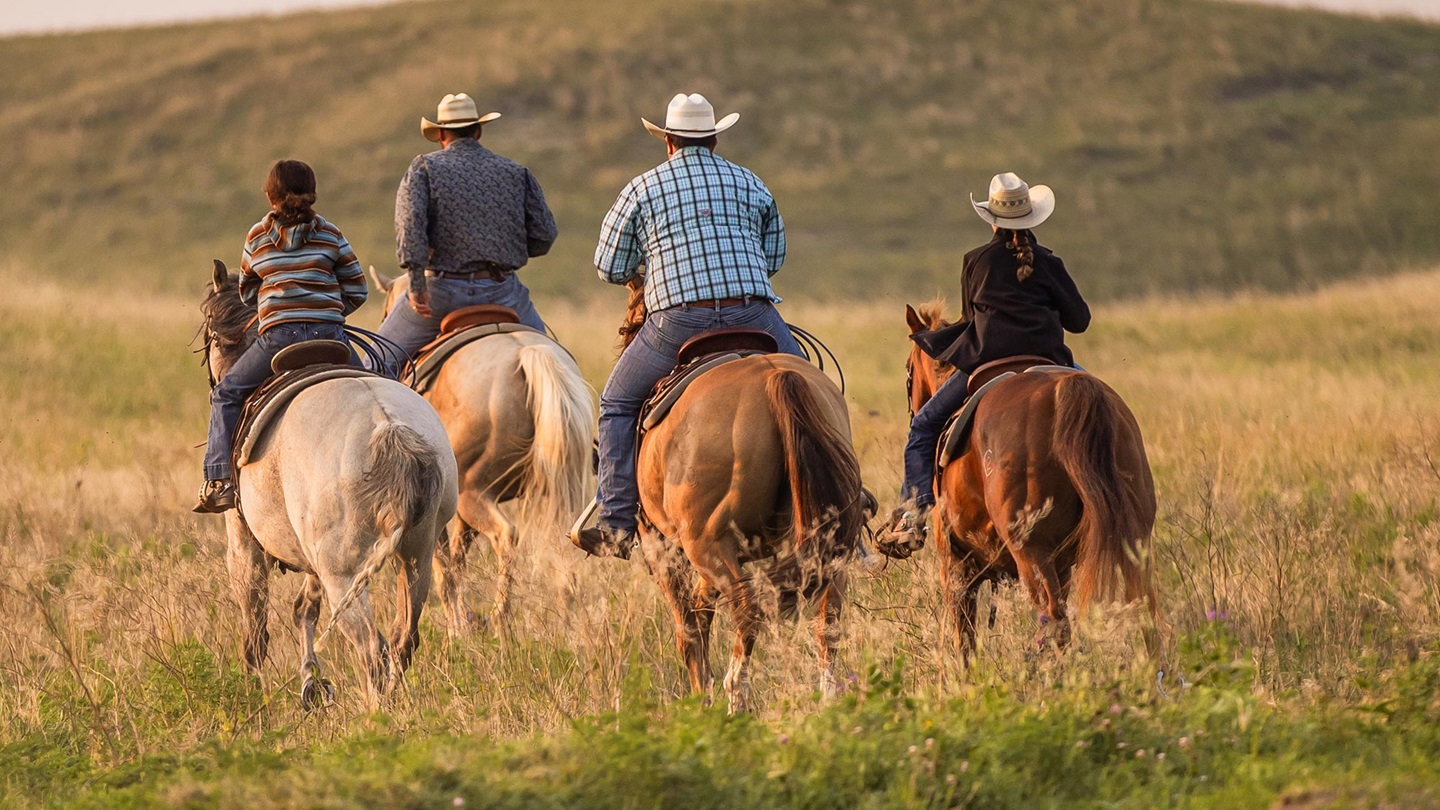

While every ranch is unique in its makeup, all ranchers need pastures for their cattle to graze. But not every pasture is created equally. Well-stewarded pastures lead to greater soil fertility and more nutrient-dense grass that provides cows with the ability to breed back, maintain a pregnancy and care for their calves.
At the 2026 National Cattlemen’s Beef Association (NCBA) Cattle Industry Convention in Nashville, Tenn., hosted early February, Corteva’s southwest region market development specialist Benny Martinez broke down the importance of grass and pasture management with four cattle producers from across the United States.
In the grass business
“I heard Mr. Kevin say years ago that we’re all cattle farmers, but we’re all grass farmers first,” Angus seedstock producer John Starnes said during the talk, referring to fellow panelist and South Carolina Angus breeder Kevin Yon.
While producing cattle is the end goal, the five panelists agreed successful ranchers are in the grass business first, especially in today’s cattle market.
“That pound is worth a lot more money today than it ever has been,” Martinez said. “So why not extract as much value as you can and grow that extra pound of grass to feed that cow and feed that calf, and get that extra pound delivered to market?”
To be in the grass business, producers are also land stewards; and while stewardship practices look different region to region, the underlying intent of caring for their pasture ground remains the same.
“When you have land, it’s no different than a vehicle; it has to be maintained in a certain way. If something’s not right, if it’s not functioning at its proper capacity ... you don’t take it to the mechanic and the mechanic says, ‘Well, you know what? I don’t know what’s wrong, but I’m just going to add some oil to it,’” Martinez explained. “That’s the same thing without doing fertility testing. When you don’t know that maybe there’s a pH imbalance there, or maybe your cation-exchange capacity doesn’t have the ability to hold the amount of nitrogen that you’re planning to apply, you’re really losing money. You’re losing an investment because you really don’t know what your soil needs, and it’s really critical.”
Soil sampling, especially grid sampling, can help producers to know what their soil needs to produce quality grass.
“We do a lot of grid sampling with our co-ops, and it is fascinating,” Starnes said. “It has actually saved us quite a bit of money because where we are with lime, that little shell rock, we assume 25 acres all needs the same nutrients. Whether we’ve cut it for baleage, cut it for hay or it’s the pasture ground. But it’s amazing how from here to that sign, we’ll need a ton of lime here an acre and that will need 500 pounds.”
Putting your eyes on the grass, soil and weeds in pastures also plays a vital role in the health of a pasture from year to year.
“We’re pretty intentional about getting out there, especially as we move from this time of year into early spring to see what is there and then have a good idea of keeping weed control as we move into May and June,” said Missouri stocker cattle operator, Andrew McCray.
Driving home the point, Yon noted the importance of being intentional.
“Get off that four-wheeler, get down off that horse, get out of that truck, and let your shadows grace those pastures every day if you can,” he advised.
Spraying is another important part of stewarding pastures well. From brush control to weed control, taking an extra second to look at what is growing can help ranchers know what to spray their pastures with and when to do it.
“We use a lot of high-tensile electric fencing, and we all know that they don’t work very well if we let those get covered in brush,” Yon said. “So, we spend a lot of time on the four-wheeler with a sprayer. The good thing about that, is any of us can do it. My 82-year-old mother-in-law spends all summer on her four-wheeler spot spraying weeds.”
For some areas, fertilizing grass at the right time can be an integral piece of producing good grass.
“Fertility is extremely important, and in Southern Oklahoma, of course, we can be dry. We can get dry at different times of the year,” said Roger Callison, a commercial cow-calf operator in South Central Oklahoma. “So, I think when you fertilize is very important to us. We fertilize a lot of times in March and April.”
Stewarding for the future
“I love cattle, but I love the land and I love conserving those God-given resources that we’ve been blessed with to be stewards of,” Yon said.
While soil, grass, water and cattle are an important piece of stewardship, it is critical to have someone to steward those inputs in the future.
For every operation, succession planning looks different. Some have kids coming home to the ranch, while others plan to sell to another producer.
“I only have one sister. I only have two kids. So, we don’t have a lot of folks. We don’t have a lot of extraneous cousins and so forth to work into this,” McCray said. “We’ve done a lot of planning, and I have a junior and senior in high school. Both of them say they want to come back to the farm, which is great ... But we’re pretty intentional about having those conversations, especially with my sister and put in place trusts and so forth to be able to do that.”
For others, they may be looking for someone outside their family to steward their pastures.
“My deal’s a little different to his, because I do have three children that are grown, and none of them have any interest in the ranch or work on the ranch. So, I’m working on a succession plan that is pretty unknown right now,” Callison said.
No matter the situation, it’s important to get started, Yon says.
“Oftentimes, we come to these meetings, and we hear really good sessions on succession planning and we say, ‘That’s a great idea,’ and then we go home and that’s about as far as it gets,” he said. “So, it’s not a fun subject, it’s laborious, it’s painful, it’s very, very uncomfortable. But even though Lydia and I are just first-generation farmers, with three grown children, we have started down that path, and it’s not a quick journey; it’s a marathon. And so, my hope would be, everyone at least get started, knowing it’s going to be hard, but please get started.”
Just as every ranch is unique in its people and cattle, stewardship looks different from one operation to the next. Yet when the people caring for the cattle and pastures are driven by passion, the work becomes more than a job. It becomes an opportunity to build healthy pastures and herds that can sustain future generations.
Topics: Equipment / Facilities , Management , Member Center Featured News , Pasture and Forage , Succession planning , Sustainability
Publication: Angus Journal
Related Publications


Current Angus Journal
Keep up on the latest stories of the people and programs in the breed.

Latest Podcast Episode
Don’t miss conversations with breeders and industry experts.