



Heritage Meets the Future
Lind and Vieselmeyer on the new look of the National Western Stock Show.
January 20, 2026
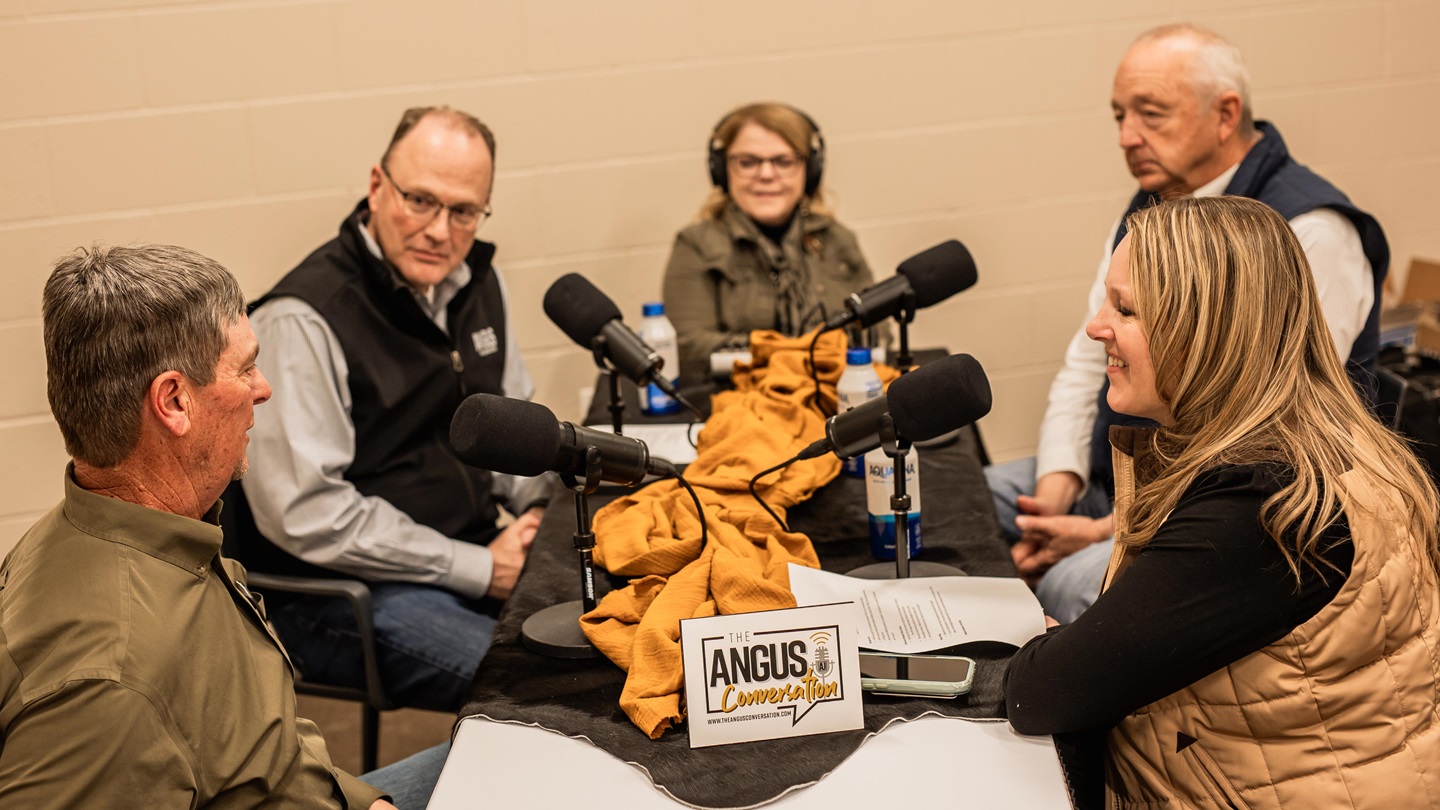

For Brent Vieselmeyer, of Amherst, Colo., the National Western Stock Show (NWSS) is more than just an ordinary show — the memories run deep.
His dad rode the train to Denver with his 4-H steers. Vieselmeyer participated in the catch a calf contest and collegiate livestock judging and everything in between. It’s where he met his wife, Tina, and as their family grew up and their own Vision Angus grew, they have been steady NWSS exhibitors, too.
He and Luke Lind, Five Rivers Cattle Feeding, kicked off Season 8 of The Angus Conversation with an episode that focused not only on where the NWSS has been, but where it’s headed.
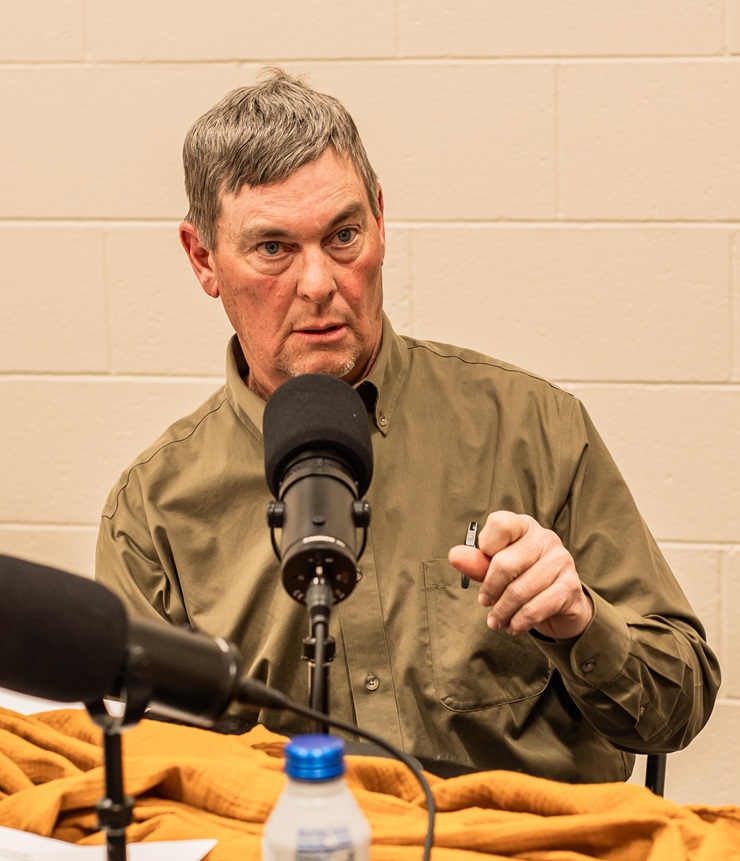
Brent Vieselmeyer
Vision Angus
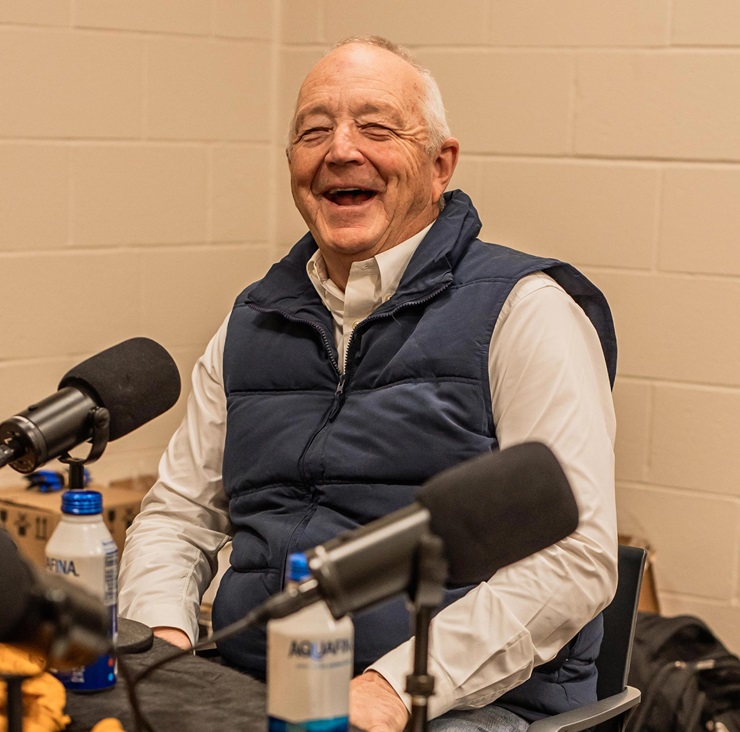
Luke Lind
Five Rivers Cattle Feeding
"We’re really trying to get families to come, because biggest challenge we have here in Denver is people don't know where their food comes from.” — Luke Lind
"The heart and soul of National Western is the yards,” Lind said. “You can talk about the hill and all the cool things that have happened on the hill, but the reality is ... the unique thing about Denver is the pens and the carloads and the interaction between registered guys, commercial guys."
Lind’s earliest memories revolve around that commerce that happened on the grounds — the feeder calf sales, exhibiting in the pens and earning a heifer wrangle project.
It’s from those shared histories that both men have invested in the future of the NWSS.
“As I tell people, I want Denver to be like Denver was when I was a kid. And I think that's kind of my passion project,” said Lind, who is currently serving on the NWSS Board of Directors.
They’ve overseen fundraising efforts and the building of new facilities “one piece at a time.”
“It’s sad that we lost a lot from the COVID and the transition and everything, but I think a lot of what Luke and even some of the things we’re doing that I’m a part of, we want to bring that back,” Vieselmeyer said.
He has been active in partnering with ABS to organize a commercial cattlemen’s day with education and a maternal sale, along with the Colorado Angus Association’s Foundation Angus Sale.
The new buildings erected in the last decade, including the sale facility near the yards and the just-opened Sue Anschutz-Rogers Livestock Center, not only give a completely modern setup with ample power, warm water and other comforts, but also put the cattle people in one spot.
“Everybody’s handy and convenient and you can network. You can find people, you can talk and enjoy it,” Vieselmeyer said.
Yet, for all the “new and improved” there’s been care placed on preserving the heritage. The new Legacy building features western art and historic artifacts in addition to gathering spaces. The Colorado Cattlemen’s Association is now headquartered in the renovated Exchange Building that was once a main hub in the stockyards. The Armor water tower stands as a nod to the meat packers that used to occupy much of the footprint in the yards.
Connecting cattlemen and consumers
Organizers have placed an emphasis on having space where cattlemen and consumers can both take in all there is to offer.
“We’ve got these buildings down here to really try to get a connection with this urban community. That's something that’s absolutely necessary,” Lind said.
He recognizes that it’s a step to helping the urban population learn more about where their food comes from.
“I could almost argue that that should be our number one mission,” Vieselmeyer said.
Both men agree that they want the next generations to continue to have “Denver” memories like they did, whether that be the first time a young showman steps into the ring or the feeling of walking the pens on a crisp morning.
They’re working to ensure the NWSS future because of the significance it played in their past.
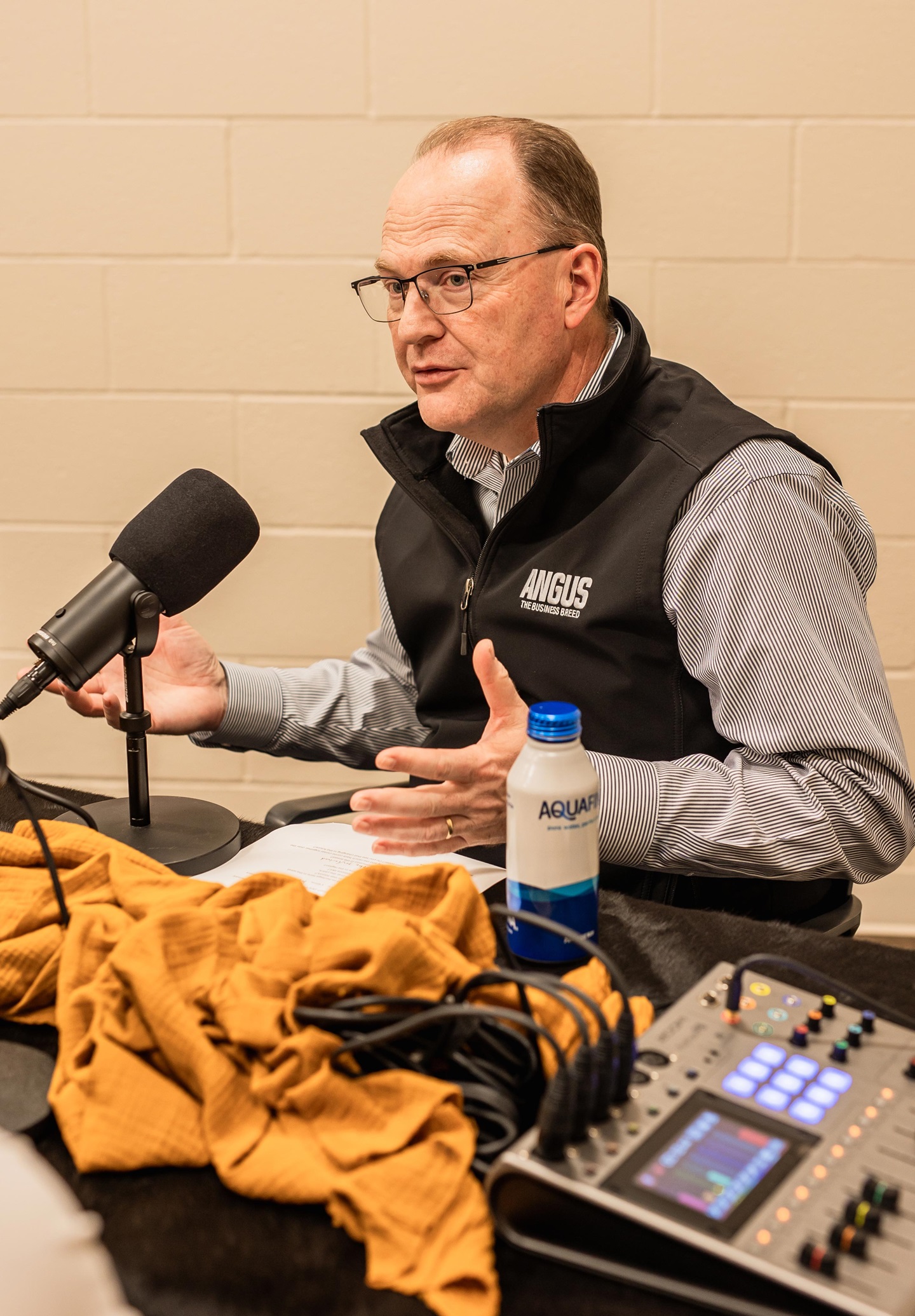
Mark McCully
American Angus Association CEO

EPISODE NAME: Heritage Meets the Future: Lind and Vieselmeyer on the New Look of the National Western Stock Show
Blending history with a completely reimagined footprint, the National Western Stock Show (NWSS) is steadily transforming into an updated space for commerce, connection and consumer outreach. Both guests have family roots that run deep at the Denver location.
Brent Vieselmeyer, Vision Angus, remembers stories of his dad riding the train along with his 4-H steers to show in the big city. From the Catch a Calf contest, to judging in college to meeting his wife there, each period holds memories.
Luke Lind, Five Rivers Cattle Feeding, has his own stories. From having breakfast with his dad in the Yards during the feeder calf sale to his family showing pens bulls and earning a heifer wrangle project.
Both men have a deep appreciation for the history of the NWSS, and that’s why they’re so invested in ensuring the future of it. From Lind’s current service on the board of directors to the special sales and Angus events that Vieselmeyer has helped organize, there’s a lot to get excited about. Hear them talk about everything from the new layout to the ways they’re trying to engage every audience from the commercial cow man to their urban consumers.
HOSTS: Miranda Reiman and Mark McCully
GUESTS: Brent Vieselmeyer and Luke Lind
Brent Vieselmeyer, along with his wife, Tina, started Vision Angus more than 25 years ago. They now operate Brent’s home farm near Amherst, Colo. They raised their sons Austin and Alex on the ranch, and Alex is back on the operation full-time. They focus on delivering balanced, predictable and quality cattle to their customers. Brent has been instrumental in organizing a commercial cattlemen’s program and an Angus sale at the National Western Stock Show for several years, and they are active exhibitors in the yards.
Luke Lind, is senior vice president and chief risk officer of Five Rivers Cattle Feeding. He holds a degree in animal science from Colorado State University and later studied finance at the University of Denver. In addition, his family has a cow-calf operation and has been involved in showing cattle.
SPONSOR:
As you plan your spring production sale, Superior Purebred Auctions has cut broadcast rates in half with a new $3,000 flat rate fee, making it easier than ever to showcase your genetics nationwide. Backed by Superior Livestock Auction, your sale reaches the largest commercial cattle buyer and seller base in the country. Visit SuperiorLivestock.com to learn more.
You have confidently bred, raised and selected your cattle to sell. The Angus Media team wants you to have that same confidence when it comes to using social media to promote your sale day and advertise your cattle. We’re sending out a FREE social media planning guide full of our best marketing tips and tricks. Subscribe to our email list at www.angus.to/socialguide to start posting with confidence.
Miranda Reiman (00:00:02):
Welcome to the Angus Conversation. I'm your host, Miranda Reiman, with my co-host, CEO of the American Angus Association, Mark McCully. Mark, we're together in person, which is kind of fun. We haven't done this in a while.
Mark McCully (00:00:13):
That's awesome.
(00:00:14):
Yeah.
Miranda Reiman (00:00:14):
We're out here in Denver at the National Western Stock Show. It's beautiful weather so far.
Mark McCully (00:00:20):
50 degrees and sunny.
Miranda Reiman (00:00:21):
Absolutely. Beautiful weather and beautiful facilities and lots of people. It's going to be a great weekend. I know this will publish after the weekend is over, but we're looking forward to a great set of shows and we've had some Angus sales already and some more to come.
Mark McCully (00:00:37):
Yeah. No, it's going to be a great event. And boy, the weather's been just incredibly cooperative, but I think we've got ... And we're going to hear about it from Brent Vieselmeyer, our guest, to hear about the Foundation Female Sale or the Foundation Angus sale, as they call it now. I still call it Foundation Female from back in the day. But no, it's going to be a great event. We got really strong numbers out here. In particular, our pen entries are way up. So yeah, it's going to be a great event.
Miranda Reiman (00:01:04):
And of course, my favorite part about coming is getting to see breeders and cattlemen from across the United States, but you already got round one of that at Cattlemen's Congress last week.
Mark McCully (00:01:14):
Yeah. January when we hit January, we sprint for a few weeks, right? And we start down at Oklahoma City and had another fantastic event down there. And I think they too had a new arena, Coliseum for us to show in, beautiful facility, incredible lighting. I mean, it was just a great facility. And we had great numbers down there as well. Some fantastic and ultra competitive shows. And then a number of sales that go on during those few days.
Miranda Reiman (00:01:46):
Kind of the first ones to test the market of the new year.
Mark McCully (00:01:48):
Yeah. We always kind of say it's a little bit of a pacesetter, right? And the demand, the numbers, the averages were just incredible. And the National Angus Bull Sale that the association hosts there, we had just an outstanding set of bulls, some pretty diverse genetics from breeders from across the country, averaged a little over $22,000, which was a new record. And so the demand for those bulls were fantastic, both from some breeders from around the country and some commercial folks sitting right there in the seats in Oklahoma. So it was a good event. Also, the pen and carload show down there was super competitive and yeah, just another successful event in the books down there.
Miranda Reiman (00:02:29):
And of course we say lots of optimism. I feel like we've said that a lot in the past year or so Mark.
Mark McCully (00:02:34):
A lot. Yeah.
Miranda Reiman (00:02:34):
Lots of optimism in the breed. But when we head into this podcast that we were talking about, we had a cattle feeder on as well in Luke Lind. And there's been a lot of optimism in him having to buy and procure feeder cattle too. That price is good.
Mark McCully (00:02:50):
We were teasing him a little bit of how optimistic is he when the price they're paying on some of these feeder cattle. But no, there's a lot of just incredibly strong tailwinds in this market. And then there's kind of some things that I think as beef producers, we get excited about when we see the new food pyramid and some of the things going on in our nutritional requirements or recommendations. And we know those things influence the products going into our schools and some of our institutions and such. And so just some good news there. We know what our numbers are. We know we're tight on numbers and demand continues to be strong. We come out of the Christmas holidays and we tend to kind of do a little bit of a switch over from prime rib roast to more of the roasting items and some ground beef.
(00:03:36):
So we see that complex change a little bit, but demand's incredibly strong. And again, lots of optimism, a bit of a broken record.
Miranda Reiman (00:03:42):
Yeah. That's all right. We'll keep that broken record as long as we can have it. So this is the second event that we will see producers at, and then it kind of transitions right to, hopefully we'll see some of you at the Cattle Industry Convention and Trade Show. And then right following that, we'll have our February board meeting. So the business of the Association continues throughout all of this.
Mark McCully (00:04:02):
And we encourage members. Of course, as always, we post those agenda highlights the week before that board meeting, but I always encourage members to reach out to their board members. We have a series of committee meetings online and virtually, I should say, and then in person as well, and then in person meetings and all the entities. And so I encourage members to look for those agenda highlights of some of those big topics that are being discussed, but also just purely pick up the phone and reach out to a board member if you want to kind of talk to them or some things maybe of concern that you'd like to share that you want them to communicate on into the boardroom for you.
Miranda Reiman (00:04:39):
Absolutely. So we've covered a lot in this intro to season eight, the kickoff of season eight of the Angus conversation, but I think you'll really enjoy this podcast as we kind of talk about some history and some unique things about National Western Stock Show all the way up to present day.
Mark McCully (00:04:56):
And some new traditions getting started.
Miranda Reiman (00:05:03):
Today on the podcast, we've got two guests live here at National Western Stock Show, Brent Vieselmeyer of Vision Angus at Amherst, Colorado. And Brent, you've been a longtime National Western Stock Show exhibitor and involved in quite a bit of the planning.
Mark McCully (00:05:17):
You've done every aspect of the National Western Stock Show. Is that right?
Brent Vieselmeyer (00:05:20):
I believe so, other than maybe concessions or something like that, it seems like. But yeah, no, catch a calf, FFA Heifer Wrangle. What I showed as a 4-H FFA member and then judged college, junior, senior college, coached like Mark did, and then had sons involved where we showed pigs and cattle and now we show open and yeah, I'm not sure what's left.
Miranda Reiman (00:05:48):
Sure. We'll get into some more of that involvement, but give us just a little background on your Vision Angus, what you got going on there, kids back in the operation, that kind of thing.
Brent Vieselmeyer (00:05:56):
Okay. Yep. We're in the very northeast corner of Colorado. We have our bull sale in North Platte, Nebraska, and our customer base is mostly in Nebraska. A couple hundred cows and everybody asks, where's Tina? And she is not here. She will not come because her cows are calving. And so she is home and they're in great hands. But both boys are home part-time. Austin married Sarah. We have a beef store now in Holyoke, a couple hundred cows. We farm a fair amount there in farm country. And yeah, we're riding a great wave right now in the industry and with Angus.
Miranda Reiman (00:06:30):
Sure. Very good.
Mark McCully (00:06:31):
Very cool.
Miranda Reiman (00:06:31):
And on kind of the other side of the beef spectrum, I guess we would say we have Luke Lind with Five Rivers Cattle Feeding. And Luke, explain a little bit, first tell us about what you do there and then answer the question of why a cattle feeder would be involved in stock show.
Mark McCully (00:06:47):
You're a bit of a unicorn.
Miranda Reiman (00:06:48):
Yeah, that's right.
Luke Lind (00:06:50):
I'm also the night janitor at Five Rivers. I coordinate procurement for the 13 feed yards we have in Kansas, Texas, Oklahoma, or not Nebraska, but Idaho and Arizona. And then I also, along with a trading desk, manage the risk in that inventory. As you can imagine, the inventory swings quite a bit in the last year.
Miranda Reiman (00:07:17):
It's a low stress job.
Luke Lind (00:07:19):
Well, I'm actually 32. Those of you on the podcast, I look like I'm 80. So I've been with Five Rivers in some form or another for almost 35 years. Mark and I have known each other since.
Mark McCully (00:07:34):
Back when it was ContiBeef.
Luke Lind (00:07:35):
ContiBeef. And we're trying to put Angus cattle in Texas feed yards.
Mark McCully (00:07:40):
And so that's your day job.
Luke Lind (00:07:43):
Yeah.
Mark McCully (00:07:43):
You're also on the board of directors here.
Luke Lind (00:07:45):
So it's kind of funny, much like Brett. My deal is that showed here, had a heifer wrangle project, showed here with my family exhibited pens, sale bulls and specifically Maine Anjous. So spent a lot of time down here. It's kind of a side hobby. My kids now are actively involved in show ring. I'm fairly passionate about National Western Stock Show. I was bitching loud enough about a lot of things that they said, all right, put your mouth where your time is. And so I'm on the National Western board now and working to ... As I tell people, I want Denver to be like Denver was when I was a kid. And I think that's kind of my passion project.
Mark McCully (00:08:37):
Maybe talk about some of ... You guys talked about catch a calf and some of those earliest memories. I mean, so what Denver was, what is Denver to you, Luke, when you think back and talk about Denver?
Luke Lind (00:08:48):
So I'll start with the new. So upstairs in the club, we've got that window that looks down onto the showring. To me, that's when kids walk up there, they'll remember that forever. That'll be a memory from Denver. And it took two months of legal wrangling because the two buildings, National Western Stock Show owns the legacy building. The City of Denver authority owns this building that we're sitting in, the livestock arena, Sue Anschutz-Rodgers Livestock arena. And it was an act of Congress to get that window in place. When the Denver City Council was here, I pointed to that window and told the lawyer that was ... I said, "People will remember this." And so to me, that starts it. So to me, that's a memory for me. I remember coming to the yards with my dad and having breakfast in the yards when the heifer sale, the market, a feeder cattle sale was going on.
(00:09:47):
And so that's my first memory of National Western. My next memory would have been wrestling a heifer down in the rodeo arena with the clown yelling at me saying, "Let her go, let her go." But those would be those kind of big event kind of things at Denver that you forget a lot of things, but you remember those things, like I'm sure you do. I mean, you do. I mean, it's just-
Mark McCully (00:10:13):
The catwalk was always for me. The catwalk was- Early on, that was such a ... As an Illinois kid, walking the catwalk in the yard was just cool.
Luke Lind (00:10:23):
There weren't many fats here anymore because most of the fats were being traded like our place. We had an order buyer that was trading for cattle for us, but we bought a lot of feeder cattle out of here, a lot of feeder cattle. As my family, I guess I shouldn't say Five Rivers, but when I was a kid.
Brent Vieselmeyer (00:10:41):
So I'll start the other end with my father's 4-H club loaded steers on a train car in Amherst, Colorado, and then those boys rode the train car to the stock show. And I don't know how many years they did that, but that's the first story I hear. And we talk about the catwalk. We farm for a family that used to bring fed cattle to the stockyards here and those two girls rode with her dad and they talk about running along ... I mean, literally running on the catwalk and that. Yeah. And I think that's so important. A lot of us that have been here all these years is we remember those things in the past, our family. I mean, I remember bringing the boys into places and you'll get a kick out of this, but in the exchange building now where Colorado Cattlemen's has their office, I'm so glad we got to preserve that building and the history and things and the board.
(00:11:38):
And the chalkboard. The chalkboard. I love the chalkboard. Okay. Now the other part that's really cool is the urinals.
Mark McCully (00:11:43):
Yes. They're huge. They look like a 1953 Cadillac with big old wings on them. The ladies are looking at us right now going, seriously?
Miranda Reiman (00:11:51):
You're going to have to provide some photographic evidence or something.
Luke Lind (00:11:54):
You
Mark McCully (00:11:55):
You need to just go see it.
Luke Lind (00:11:55):
See it. I think that's the other ... And honestly, the yard bar, because there was more wisdom extoled when I was a kid in the yard bar than any place else in National Western Stock Show.
Miranda Reiman (00:12:06):
I've got to say, we went to the yard bar yesterday though and I was like, did they clean in here? It's like a lot brighter.
Luke Lind (00:12:11):
It's under different management. The two gentlemen that are developing that building brought in a guy that's very successful, has a ... And I'm not saying it's replacing it, but I think it's a different version. Different approach
Miranda Reiman (00:12:25):
I'm grateful that it still stands and that it's still there. And I mean no disrespect to that. I was just like, whoa.
Luke Lind (00:12:33):
Respectful of the history.
Miranda Reiman (00:12:34):
Yes
Luke Lind (00:12:34):
I mean, because I can remember as a kid having to stand out in the hall and wait for my uncle to get back- To get
Miranda Reiman (00:12:40):
Done at the archive.
Luke Lind (00:12:43):
He knows that's a stone.
Mark McCully (00:12:45):
We're not going to tell yards bar stories here.
Miranda Reiman (00:12:47):
Well, we're going to start with urinals.
(00:12:50):
So I mean, it can only go up from here.
Brent Vieselmeyer (00:12:52):
We need to end with this yard bar story, but that was really Tina's and my first date was here at the yard bar. Oh, is that right? Her sister set us up here at Stock Show and yeah, here we are.
Luke Lind (00:13:05):
My best yard bar story was I was working-
Speaker 3 (00:13:06):
One you can tell on the public podcast.
Luke Lind (00:13:09):
So I was working for Continental Grain Cattle Feeding at that time, which is about the third iteration of this. And we had a lawyer that was one of the corporate councils. He was university of Notre Dame grad, had never been to a cattle show, and I took him to the yard bar one night.
Mark McCully (00:13:30):
He hadn't been the same since.
Luke Lind (00:13:33):
I mean, it changed his perspective of the world.
Miranda Reiman (00:13:40):
So life changing. I'm hearing weddings and new perspectives.
Mark McCully (00:13:43):
Last year they were letting us buy some signs and things from the yards bar. So I was able to buy some things that are now up on my walls at home. Not the same, but neat memories, neat memories.
Miranda Reiman (00:13:55):
So you talked a lot about easy, quick memories, but talk about maybe doing business down ... I mean, you mentioned you guys bought a lot of cattle, but like ...
Mark McCully (00:14:05):
The impact of the stock show.
Luke Lind (00:14:07):
So the thing is, to me, the heart and soul of National Western is the yards. You can talk about the hill and all the cool things that have happened on the hill, but the reality is that, and that's kind of what I think is the unique thing about Denver is, is the pens and the carloads and the interaction between registered guys, commercial guys. And you do find unicorns like me wandering around down there. I've seen a couple of them here this year already, that it's the place where it's kind of that ... You look at like the Missouri River or Mississippi River going into the Gulf that's kind of like that. And it's really an interesting spot because it's not all seedstock guys, it's not all commercial guys, it's that interaction. And I think that's ... And it all bleeds back to like the yard bar and just a social, I mean, an exchange of ideas.
(00:15:06):
It's not a formal exchange, but it's an informal. And I think that to me is Denver. That's the heart and soul of Denver is down here. And we've tried hard to maintain that.
(00:15:19):
I mean, it's just, to me, it's really, really important.
Brent Vieselmeyer (00:15:23):
I mean, it's sad that we lost a lot from the COVID and the transition and everything, but I think a lot of what Luke and even some of the things we're doing that I'm a part of, we want to bring that back. And so yesterday, Wednesday, we had the Maternal Merit commercial heifer sale, and then Colorado Angus, we had that program before. And lo and behold, I had two ... It's just two, but it was yesterday and our pen, we had two couples that are commercial cattlemen, one from Nebraska and one from Colorado that came to the stock show just to come. And that's what we, I think we're all trying to get back to, is to cultivate that more.
Miranda Reiman (00:16:03):
I was just bragging on that program that you guys had the commercial cattlemen's program ahead of that sale and just lots of good information, good practical information.
Brent Vieselmeyer (00:16:12):
Oh, it's incredible. It's the best educational event other than Angus Convention going. But no, Bobby Strecker with ABS and I have really worked on that. I think the impetus behind that is we had a time slot and we wanted to help. We wanted to build. We wanted to bring people back. We wanted to create things. And Colorado Angus, we jumped in on ... We just kind of started going and I think we're going to have a hard time topping what we did this year, so I'll need your all's help or other ideas. But yeah, it's part of something that we're trying to do to just continue and grow and whatever those other words are to let's build and let's go-
Mark McCully (00:16:54):
Well, and give that commercial producer one more reason, one more reason to come and visit and get around and talk to people and see some genetics.
Luke Lind (00:17:02):
And that's part of the reason legacy. I don't know if you've been in legacy yet, but we've got a museum there, National Western Stock Show. We've got the Coors Art and we're trying to make that more to where people, that's part of the destination here.
Miranda Reiman (00:17:19):
A destination.
Luke Lind (00:17:20):
And meeting facilities plus the club. I mean, that was Mr. Coor's vision, a legacy, was trying to get people back. And I think that building, as we progress and people figure out ways to use that facility, because it is amazing. It's beautiful. I just got to walk through briefly. It's just absolutely ... I mean-
Mark McCully (00:17:42):
I remember seeing the renderings and I was thinking, I mean, that's gorgeous, but they can't really build something that pretty. And it is that nice.
Luke Lind (00:17:48):
And the eye for detail, I'm not a deep ... I mean, on that kind of stuff, the way they built it and the things ... In the board room, there's a Charolais hide that's dyed different colors for ... It's a view of cattle grazing. It's just the attention to detail and things that ... And just through that building, like the history building or area, it's just all those things. I mean, you don't have to be a seedstock guy or something, you could be a commercial guy and come and just spend an afternoon down there and go through the art and everything. It's just really cool.
Brent Vieselmeyer (00:18:26):
Yeah. Yeah. Or even the beef festival, I drove our kids to it. I said, "Hey, we're going to go make contacts for our store and everything." And Austin kind of was like, "Whatever." But we got in there and meeting people and Justin Cummings is a former neighbor on the board and yeah, it's just a great thing. And so that's a very urban crowd and it's great, I think. I think it's great.
Mark McCully (00:18:52):
To be that connector from production agriculture to our consumer.
Miranda Reiman (00:18:58):
We're going to pause for a quick moment to hear from today's podcast sponsor.
Superior Purebred Auctions (00:19:03):
As you plan your spring production sale, Superior Purebred Auctions has cut broadcast rates in half with a new $3,000 flat rate fee, making it easier than ever to showcase your genetics nationwide. Backed by Superior Livestock Auction, your sale reaches the largest commercial cattle buyer and seller base in the country. Producers ask for affordability, superior listen. Book today at 1-800-422-2117 or visit superiorlivestock.com to find a superior purebred representative for your auction. Additional fees may apply.
Mark McCully (00:19:39):
Talk about the stock show just from a commerce standpoint. I mean, I think about the trade that happens in the ... And I know it's a little different today. It used to be probably breeders came with their pen and carloads with the goal of not taking any of them home. Today a lot have ... It's more of a promotion for their sales. So they maybe take those bulls home. It's some of their bulls that are going to sell. But maybe just talk about how you guys see commerce today and maybe changing and the importance of the stock show for facilitating that.
Brent Vieselmeyer (00:20:08):
Well, the perspective, we never ... Years ago when a lot of cattle were sold privately, we weren't involved in that when I was a youth. I look at it as a networking situation now and being a part of the foundation sale and we bring some custom cattle that are in that sale and then just the sale managers, the other breeders, I think that's how we look at it. When Tina and I visit about it ahead of time, that's our primary goal.
Miranda Reiman (00:20:39):
More exposure.
Brent Vieselmeyer (00:20:40):
Yes, that too. Yeah. And getting our cattle out and our ...
Luke Lind (00:20:45):
We're a little different. We look at it as on the board, I mean, this is an incredible facility, but what I'm the most excited about is up on the old hill and where the cattle used to stall, we have the world's largest petting zoo. We're really focusing on trying to connect with the consumer in here. Obviously we have the trade shows still in the old space there, but trying-
Miranda Reiman (00:21:10):
May have done some shopping today.
Luke Lind (00:21:11):
Maybe. But downstairs really trying to get families to come, because biggest challenge we have here in Denver is people don't know where their food comes from. And I think it's absolutely essential that ... I mean, we're working with CSU and the Colorado Beef Board and those kinds of people to really ... And then also, we've got these buildings down here to really try to get a connection with this urban community. And I think that to me is just ... These are all really cool things. That's something that's absolutely necessary, especially in Colorado.
Mark McCully (00:21:53):
Incredibly unique.
Luke Lind (00:21:54):
Because when people really understand where their food comes from, it's a different conversation than what Whole Foods says.
Brent Vieselmeyer (00:22:02):
I could almost argue that that should be our number one mission, is that, and let the networking and the breed associate and all that. And I think that the COVID and then the negativity and some of that, it just was so degrading and people ... What I get so frustrated, people want to just be negative and they don't want to do anything and they don't go to Denver, that message was out there, "Don't take your money, don't go there." No, we have to. We need to, we need to engage, we need to come back and ...
Luke Lind (00:22:39):
It's funny because Mark knows my speech that I gave that one year to a big group was you're either with us or against us, because at the end of the day, we need your help.
(00:22:49):
Doesn't matter if you're in Oklahoma or Texas, what's happening here in Colorado will happen in Oklahoma, will happen in Texas, and we all got to work together because if they pick us off one at a time, we've got a real problem. And
Mark McCully (00:23:02):
Realistic here, you're probably a more vulnerable state here, right? Yeah, very much so. In terms of setting some precedent and things like that, right?
Luke Lind (00:23:08):
Well, what's funny though, we see it in ... We see it in Texas, we see it in Oklahoma, we see it ... The same states that everybody talks, "Well, it'll never happen." That creep happens.
Mark McCully (00:23:19):
Never say never.
Luke Lind (00:23:19):
Yeah.
Mark McCully (00:23:21):
Maybe talk about just maybe the facilities that are here. We keep referencing the facilities.
Miranda Reiman (00:23:25):
You got to give us a visual.
Mark McCully (00:23:27):
And it's going to be hard to do on a podcast here. And I'm sure if folks are on social media, they're seeing ... I know my feed is full of lots of pictures and the carpet had ring out there and the beautiful facility. Talk a little bit about for you guys, the facility and how the vision came together.
Luke Lind (00:23:41):
So this was a long, painful process. It started almost 15 years ago. There was talk about moving stock show out towards the airport. The mayor at that time, Mayor Hancock said over my dead body, and so there were a lot of working task force and that type of thing. Obviously, this community had to be involved in it because it impacts them.
(00:24:12):
And you had people like Doug Jones, Pete Cooers, Bruce Wagner, Mark Gustafson on the executive committee that put a lot of days and a lot of nights in here and Paul Andrews, who was the CEO at that time, to get this thing built. It's kind of got Johnny Cash because it's one piece at a time. We got the stockyards and now we've got the livestock and we're getting an equine facility and we're not really sure when the Coliseum will be built, but the city came and allowed us ... I mean, this facility is incredible. I mean, the size and the amount of power ... So the electrical engineer told me that this building has more power in it than Invesco Field. It's the largest buildings the city of Denver owns. And so I think the coolest thing about this is that-
Mark McCully (00:25:09):
Which was built because the exhibitors said power, water, and wash racks and
Miranda Reiman (00:25:15):
The basics
Luke Lind (00:25:16):
And so legacy was built with donations. 2,000 people, over $130 million. The city of Denver, when you say the bad things about Denver, the reality is that this city has stepped up. You look at the donors, a lot of the big names are Colorado ones that have proximity to Denver. You look at the junior sale and our ... I mean, and I'll give this ... Here's the other thing is, is that with the money that the scholarship foundation has raised from the sale, from the Coors Art Exhibit, from the citizens of the West, we now have the drive. And The Drive, I don't know if you guys ... The Drive is a Supreme Heifer show. So we're going to have at the rodeo last Saturday at 8:30, we'll select a Supreme Heifer and right now that we're going to have about 35,000. Every breed champion gets $1,000 to come back and then we'll have pro rates of money.
(00:26:17):
I think it's $15,000 for champion and it works back down to the top five. I have a modest goal of bringing that to about $100,000 in premium money for the Supreme Heifer because as I've told our board, we're really supporting the junior market youth, but we're not doing much for the kids, the youth that are exhibiting breeding heifers. And so how do we ...
(00:26:41):
So that's where we're headed.
(00:26:46):
What do you think of the facilities?
Brent Vieselmeyer (00:26:47):
Well, it's incredible. And so today is windy, and I just said, I helped Austin bring some stuff over for some junior heifers that he had sold. And I said," I'm just going to go walk. "Now I didn't go over to legacy yet, but I just went in the arena and just sat there and soaked it up and then walked around a little bit and we got to tour it last year in construction, but it's just amazing. And I think looking forward, we embrace the history, but yet looking forward, we have such a neat thing here. And one thing, and I don't remember the numbers, but we go back to the exhibitor request, the ventilation system, how we all-
Luke Lind (00:27:28):
Turns over once every hour.
Brent Vieselmeyer (00:27:29):
Yeah, the stock show crud is done. No more Denver crab or whatever.
Mark McCully (00:27:32):
No more Denver crud or whaterver
Miranda Reiman (00:27:33):
Nobody's going home sick, right?
Luke Lind (00:27:34):
I didn't want to ... She's over there going, Oh my god my ears.
Brent Vieselmeyer (00:27:42):
Oh, it's so amazing. Our yards pen and the herd sire and in the sale ring over to here, it's all so close. Everybody's handy and convenient and you can network, you can find people, you can talk and enjoy it. Just absolutely enjoy it.
Luke Lind (00:27:58):
We spent 10 years and the board was constructed. National Western Board was constructed to build this facility. The board has kind of evolved and leadership is especially involved. Wes Ellison is the new CEO. Wes comes from heart of Texas and Waco. I mean, he came from central casting. I mean, he's as competent in livestock as he is in horses. I think you look at the carpet, it's the same carpet as San Antonio. The same people put it in. It's managed that way. The alley carpet is from Houston. I was
Miranda Reiman (00:28:36):
I was going to say, I think we need to clarify that that's carpet in the out there in the stalls. It's for anybody who doesn't know what we're talking about. It's not the carpet we're
Luke Lind (00:28:47):
Yeah. And so, and the reason why we settled on the turf, I guess better words, a better word is because we hold Citizen of the West, which is a very significant fundraising for the scholarship foundation here at National Western one night in there. There's also numerous other events that are going on too that are focused on fundraising for educational things. And so there was a lot of discussion about dirt versus the turf and the turf won because in addition to showing the livestock, and we talked to a lot of people that have shown it to San Antonio and everybody was very good with it and felt comfortable with the carpet and the turf and the padding and everything else.
Mark McCully (00:29:33):
You got this like street sweeper vacuum cleaner thing.
Miranda Reiman (00:29:36):
Yes. We've been calling it a Zamboni, but I suppose that's not ...
Mark McCully (00:29:41):
I'm anxious to see Angus cattle in there tomorrow. Whole bunch of them. Yeah. Well, you went real quick because you said we could talk and it reminded me the first year of the new yards, it was like one of the first days we were standing around talking going, "There's no generators." That was just kind of the old yard. You just got used to all of the generators running and it's so quiet and peaceful.
Brent Vieselmeyer (00:30:02):
Stepping over things . The cans blowing up from the- Oh yeah. Hitting the hot water. I know. Warm water on the wash racks outside and it's amazing.
Miranda Reiman (00:30:13):
And you ordered up the best weather this week too. I don't know what-
Luke Lind (00:30:17):
It's at the expense of the snow pack in the mountains. Yeah, that's right.
Mark McCully (00:30:21):
We'll let you get after that snow thing when we leave.
Luke Lind (00:30:23):
We're really going to have to get after it. Yeah, it's bad. It's bad. I think the thing I would say is that kind of a little bit back on the building and that is that when the city passed the bond for this, we thought we could build X. But as you know, as COVID went through- All
Miranda Reiman (00:30:48):
The prices went. Yeah.
Luke Lind (00:30:50):
Yeah. So all of a sudden things that you thought were 10
Miranda Reiman (00:30:54):
Or
Luke Lind (00:30:54):
Seven now. And so we've got, as far as stock shows goes, we're going to be this year in particular, tomorrow and today, we're full. The barn is full and we had to move the lambs up to the hill to make sure we had enough room for the cattle here. So that's things that as the board, it's a really good problem to have, but it's something that we're going to have to talk about too.
Miranda Reiman (00:31:21):
For folks who haven't been here in the last, I don't know, 10 years, describe a little bit the lay of the land as we're talking about things. So I mean, the yards came first and if you haven't been here since that, start from the beginning. Your first building, you said one piece at a time.
Luke Lind (00:31:39):
So the first thing was the yards. And
Miranda Reiman (00:31:42):
That's built right where the ... I wasn't here before that.
Luke Lind (00:31:45):
So it's built kind of back behind where the yards were. To the north. Like beyond where the Pepsi arena was. Yes. The Pepsi arena is kind of what I would say would be the mark of where-
Miranda Reiman (00:31:55):
The landmark. Okay.
Luke Lind (00:31:57):
And of course the water tower.
Miranda Reiman (00:31:59):
Yeah.
Luke Lind (00:31:59):
Of course the water tower was at the end of the yards. So that gives you kind of a spot. And then where this, the Sue Anschutz livestock facility is, is it's kind of the yards between the yards and then where the old livestock exchange is. And then legacy is directly adjacent to the livestock center. And we're down, basically everything down here is where the old yards used to be. Plus we went to the north and bought some ground there and added ... We're going to ... The equine facility will be directly north of here where that parking lot is. We're going to have a parking garage there next year when you guys come. And then with the equine facility, we'll have a 1,200 vehicle parking garage there with the capacity to handle dually pickups.
Miranda Reiman (00:32:49):
I was just going to note that. That's the important one here.
Luke Lind (00:32:52):
And the funny part about it is, is that our CEO Wes is very much on that. He understands that that is ... I mean, especially with the equine facility as well. It's a big, big thing.
Miranda Reiman (00:33:02):
Sure. Absolutely.
Mark McCully (00:33:03):
Yeah. And what used to be the hill. I mean, it's still up there. Still up there. And as you said, the lambs are up there now, the trade shows up there now.
Luke Lind (00:33:11):
The world's largest petting zoo. And we're trying to really make that a very interactive ... Not now, obviously with this weather, but when the weather's really bad, families can say, Hey, let's go to Denver and just buy a day .pass, come in there.
Miranda Reiman (00:33:26):
Just be inside
Luke Lind (00:33:27):
And kind of interact.
Miranda Reiman (00:33:29):
Absolutely.
Mark McCully (00:33:30):
And I've not been up there to see it, but I can imagine it. It allows for probably a little better ... What we have is a lot of folks come to see ... They just want to see ... They just want to see some cattle. They
Luke Lind (00:33:41):
Want to experience it.
Mark McCully (00:33:41):
And going maybe down through the aisles on show morning when there are chutes and people are fitting and grooming, A, it's probably not the safest. And it's maybe just not the perfect ... That is a better way to display. That is an awesome place. And in a very comfortable way and a very safe way for everybody.
Luke Lind (00:33:58):
And the people up there are very focused on education, whereas they're not focused on their cattle.
Mark McCully (00:34:03):
No, I don't want to pet her.
Luke Lind (00:34:05):
And so we don't really ... There are not any signs that say this way to the livestock show. If you walk up there, it's done to say, let's figure things out. I mean, this is the first year, and to be honest with you, the opening couple of days, I kind of layed awake at night wondering what's going to blow up. And so far, nothing, but we've had a few things here and there, but I really expected I was going to get yelled at a couple of times, which as Mark knows- It's
Miranda Reiman (00:34:36):
Part of the job.
Luke Lind (00:34:39):
But the response has been very good. And I think the other thing that if you come to Denver today versus Denver five years ago, the volunteers, the staff were really working hard. When I was a kid, Denver was kind of ... It's Denver and if you don't like it, go home. There's a lot of options people have to spend their money today, and I think we are becoming more and more every year customer friendly. And I think that is absolutely something that in the history of Denver, I wouldn't say ... I mean, as an exhibitor, I would say there were challenges.
Miranda Reiman (00:35:21):
Brent's shaking his head over here.
Luke Lind (00:35:23):
And the reality is that I think that as we go forward, we're going to be better at that.
Mark McCully (00:35:29):
Yeah good deal. Maybe talk a little bit about the commercial heifer sale and then the upcoming ...
Miranda Reiman (00:35:35):
We were going to ask the same question.
Mark McCully (00:35:37):
Oh, see, we're just ... we're locked in.
(00:35:39):
I don't even know if we're following that outline anymore.
Miranda Reiman (00:35:41):
We're not at all, but what I was going to say is you can say that Denver's back and we're ... But really when you put the ... It's the numbers that tell the story. So you got to share how the commercial heifer sale went yesterday.
Brent Vieselmeyer (00:35:52):
Oh, and I can't remember the average, but it's online. But yeah, I had a lot of people ask me did we set new records that I'm aware of.
Miranda Reiman (00:36:02):
It felt like it.
Brent Vieselmeyer (00:36:03):
Because there were some heifers that sold at Torrington bred heifers this fall that were 50 something or other-
Luke Lind (00:36:10):
52, 53. I think there was a set of story ... I call it story cattle.
Brent Vieselmeyer (00:36:16):
Yes. And this averaged 57? 57 was the number I thought I remember seeing. Yeah.
Miranda Reiman (00:36:23):
I'm just going to Angus media sale reports right now to look it up.
Brent Vieselmeyer (00:36:27):
Yeah, on the commercial heifers. And then there were some open heifers that averaged about 4,000.
(00:36:32):
Largest crowd we've had, and I think that's the fourth year that ABS has had that sale. We had the largest crowd for the educational event that we've had in person. And so yeah, the momentum is just going along. Go back to the facility thing to be more customer friendly, so to speak, is that we bring less stuff, and there's less ... No generators and no hot water heaters, and I mean, it's simpler. So when we bring a pen of cattle, I think it's actually simpler and nicer than it used to be. So you don't have to-
Miranda Reiman (00:37:03):
And as you're weighing the option, do we display cattle there or not that's got to swing in your favor.
Brent Vieselmeyer (00:37:09):
Yeah, it does. And I mean, it's a great thing that Bobby and ABS, and so Don McLennan and Anton Hermes are part of that. And it's a neat deal and I can't see it, but just ... And now back to the space thing, there may not be a lot of space for other cattle in the future, and that's a little bit of the discussion in talking with Jen and Jana, there may be some scheduling changes next year, and we may end up more in that two weeks time with some breeds. Hopefully they leave Angus alone so we can-
Luke Lind (00:37:42):
Quit looking at me like that.
Brent Vieselmeyer (00:37:43):
So there's going to be ... And this is part of growing pains and so there will be some changes coming ahead, but that's-
Luke Lind (00:37:53):
As a board member, it's a damn shame that it's only one weekend. I mean, I think we've got this facility, if we can kind of figure out a good way to do this, where it's supportive of the exhibitors because ... And it used to be at Denver that last weekend during the prospect show, I mean, there was nothing here besides the prospects. And I think it's to give people enough time to display their cattle, to give people enough ... You're spending a lot of money coming here. We need to give you the full opportunity to make the cattle how you want them to be, rather than saying, "Well, here's three days." Good
Mark McCully (00:38:37):
Good luck getting filled up.
Luke Lind (00:38:40):
And by the way, as soon as you're done showing, you need to be out of here because the next thing's coming through. And so we are in April, going to sit down with all of the breeds and a lot of the exhibitors and say, "How do we do this?" And I want to be really clear on this, is that with Cattleman's Congress, we believe it serves a very important purpose. We recognize as the board that they filled a gap that was desperately needed, and we appreciate that. And I mean, we wish them the best because it's a lot of the different cattle that are there than come here, and if someone wants to show up both, we want to help that.
(00:39:27):
But we don't want to do it at the detriment of someone or at any of the ... Or at the show or even Fort Worth, backing into Fort Worth. And so it's really important to us that we get this right.
Miranda Reiman (00:39:39):
And with that, we're going to take a quick timeout for this word from Angus Media.
Angus Media (00:39:44):
You have confidently bred, raised, and selected your cattle to sell. Our team at Angus Media wants you to have that same confidence when it comes to using social media to promote your sale day and advertise your cattle. We're sending out a free social media planning guide full of our best marketing tips and tricks. Subscribe to our email list at www.angus.to/socialguide or see the link in the show notes to start posting with confidence.
Mark McCully (00:40:16):
Well, I was just going to reference some numbers. I don't know how many pens we actually checked in, but just off entries to give some idea, we went from 43 pen entries last year to 57 pen entries this year.
Luke Lind (00:40:28):
I mean, how many cattle in
Mark McCully (00:40:30):
The ... Well, we went from 283 entered to 410 entered. Now, we know we have a pretty heavy attrition always on all our shows, so we won't check that many in.
Luke Lind (00:40:41):
Well, up until yesterday, we were using 26% attrition. We threw that out. It's 17 to 20 is somewhere is what the attrition is right now. Incredible. Yeah. Yeah,
Miranda Reiman (00:40:55):
That's cool too.
Mark McCully (00:40:57):
Well, and some of that's ... And for non-show people listening- The weather has to know. What are you talking about? But there's also, I think folks enter more than they need intentionally. One, they're not sure quite what they're going to bring, things happen, ringworm, whatever, and then they also want to make sure they get enough space, right? So that tends to be the big reason that folks over enter just to ensure that they get enough space, right? So we'll just have to figure out not a unique problem to hear, but-
Luke Lind (00:41:22):
It's a good problem.
Mark McCully (00:41:23):
But when we're limited on space, it's going to be a puzzle we're going to have to continue to work on.
Luke Lind (00:41:27):
And that's the biggest thing is that we'll figure it out
Mark McCully (00:41:30):
Yeah
Luke Lind (00:41:31):
We'll go on.
Mark McCully (00:41:31):
Yeah.
Brent Vieselmeyer (00:41:32):
Well, I think that ... And Jane had told me that too, and you said it, Luke, is that you're going to ... It's not like it's just going to come from the board. It's going to be a group with all the breed associations and exhibitors or whatever. You guys are ... I mean, that's ...
Luke Lind (00:41:50):
I mean, Angus has been part of a lot of the discussions and I mean, we value all of the breeds. I mean, I think the biggest challenge I've had is that I'm kind of a feedlot guy, and so some of the smaller breeds that I don't know much about, I kind of look at and go, "Well, they're important too, and we've got to make sure that they get their fair shake too as well." And so I think that's important that when everybody comes to Denver, they feel like they were given the best opportunity.
Mark McCully (00:42:24):
You say you're kind of a feedlot guy.
Luke Lind (00:42:26):
Well, there's days where I'm kind of both. The kids run cows and so I've a lot of cows this fall and so yeah.
Mark McCully (00:42:35):
Brett, maybe talk a little about the sale coming up, the Foundation Angus sale. You got live lots, you've got frozen genetics, you got lots of exciting things going on.
Brent Vieselmeyer (00:42:46):
So let's go back to ... Go ahead.
Miranda Reiman (00:42:47):
Yeah. I was going to say, of course the sale will have been over with by the time this podcast goes out next week.
Brent Vieselmeyer (00:42:52):
Yeah, but it's fun. So let's go back to COVID when we didn't have stock show and it ... Oh, so let's back up. The Foundation, it used to be the Foundation Female Sale and then we've ... So now it's the Foundation Angus Sale and Dwayne Yuris came up with the name change because we will let bulls in and that, but we were basically to ground zero where sale manager had no stock show. And so Levi Landers was really the one that helped me the most. And I'm like, Levi, what do we do here? Who do we talk to? And I had not met Dave Mullins or Matt McFarland at that point. And so he basically set me up with those two goobers and they- We won't edit that.
Miranda Reiman (00:43:38):
Term of endearment, really.
Brent Vieselmeyer (00:43:40):
And it has just become ... I mean, I've seen their friendship blossom, I've seen relationships blossom. One of them's ours. I mean, and I was poking them, I sent them a text. I said, "Hey, Ryan Cotton's here scoping stuff out. " And they thought that was funny. And Ryan's here for other reasons too, but it's just really grown. And those two are so excited for this sale because of the offering and I think a lot of what they like is that it's the same kind of breeders and it's the same kind of cattle and I'm not going to label it one way or the other, but they really like the homogenous appeal of that. So yeah, it's growing every year, more frozen things. They have the frozen sale off ground Saturday night that's just online, but the sale- Yes, picks, picks of bulls, picks of heifers, live lots, flushes, picks of the whole herd,
(00:44:39):
Just amazing. And the other part too is if you go back to the Conover days or before, we were always on that Friday and it was popular. I mean, big crowds and then- And it was long. Yes. And we're not going to do that. We've already talked about that. Keep going to the wee hours of the night. Yeah. But for the last few years, we were on Thursday and so we're really excited to be on Friday because people were just kind of getting here on Thursday. And so even today, big crowds, a lot of traction or traffic. And so I think having this sale tomorrow is going to even be even better. Yeah.
Mark McCully (00:45:17):
So consignors. So how many ... I was actually pulling up the catalog thinking I could count consignors quickly.
Brent Vieselmeyer (00:45:23):
Yeah. And I don't have the numbers. I think everybody ... But it's growing.
Mark McCully (00:45:29):
But not just Colorado breeders.
Brent Vieselmeyer (00:45:31):
Correct.
Speaker 3 (00:45:32):
I guess maybe that was maybe my point to highlight.
Brent Vieselmeyer (00:45:34):
And those guys are not opposed. I mean, it was either Dave or Matt told me this, that, "Hey, we've got some new people in and we're excited about having them." And yeah, once you get into a consignment sale, you got to kind of find your way and- Pay your dues a little. But they were like, "We're not going to tell anybody no because we want to involve everybody." And yeah, it's just, I mean, the attitude that they have in terms of we're going to do our best and we're going to present what we think is a really good product that is really common theme through that catalog and the type of cattle, the breeders, they're excited about that.
Miranda Reiman (00:46:18):
I think it's just another illustration of how good this event is for promotion of the Angus breed in general too.
Brent Vieselmeyer (00:46:23):
Oh yeah. Yeah. It's just those guys are ... Yeah, I don't know what else to say, but they are excited and I would say most of the consignors are excited. And the other thing too, some of these guys that have picks, they're coming and they don't have cattle here, but they're going to be here. And I saw quite a few of them today and that's a great thing.
Mark McCully (00:46:45):
Absolutely, absolutely. You mentioned maybe it's a like- minded group of breeders and consignors. So would you describe pretty, probably heavy on an appreciation for phenotype for sure, as I would probably describe the offering, not ignoring numbers by any means, but definitely maybe, would you agree with that?
Brent Vieselmeyer (00:47:06):
Well, you brought it up. So I'll say a little bit more.
Mark McCully (00:47:09):
He wasn't going to go there.
(00:47:10):
I know you weren't, that's why I wanted to go there.
Brent Vieselmeyer (00:47:11):
Well, I'm going to call it a little more maternal, but I'm going to call it real world. And I really have a lot of confidence that I could call any of those breeders in that book and our family is on how we pick genetics, how we mate genetics, any of these people I could call and get advice, I could call and get input, I could call and learn. I feel really good about that and I'm not degrading to other sales or other things, but-
Mark McCully (00:47:48):
I think that's the beauty of the Angus breed right now, in my opinion, obviously in the role I sit in.
Luke Lind (00:47:53):
Jumping in just as a consumer is that the biggest thing I think, one of the biggest things that the industry is going to start looking at is soundness, foot size. I mean, we're making these cattle 16, 17, 100 pounds and you can't put 1700 pounds on little feet. I mean, you just can't and sound, you got to make them sound because the amount of time that we're putting into them and the amount of dollars in them, I mean, I applaud you for that because I think it's really, really important.
Brent Vieselmeyer (00:48:30):
Yeah. And that's one topic, but we, at the educational program that we had the other day, I encourage people, so go to Colorado Angus Association Facebook page and that whole program's on there live and it's got some length to it, but the best part is the end of that panel. And so we had, you guys help me here, we had Troy Marshall, we had Rick Machado and- Ryan
Miranda Reiman (00:48:56):
Rathburn?
Brent Vieselmeyer (00:48:57):
Ryan. Well, Ryan presented, but he wasn't on the panel. Jason Hoffman and then Magnum Feeders-
Luke Lind (00:49:03):
Case Gable or Steve Gables?
Brent Vieselmeyer (00:49:05):
Steve. Steve was on there. And that's an amazing group of minds. Ryan presented or Dr. Rathman and Troy presented. We had a ZinPro presentation as well. It's great. And so we're going to try to work with American Angus more in the future to get that out and have that for other things. And so, yeah.
Miranda Reiman (00:49:25):
Because they talked about some of that.
Brent Vieselmeyer (00:49:27):
Yes. We're talking about those things that are important to ...
Luke Lind (00:49:30):
Well, especially as you start looking at these yards, some of these yards here in the US going to rolled concrete,
(00:49:38):
Makes a really big difference, really big difference.
Mark McCully (00:49:40):
Yeah. So you guys both went there, so we're going to go there a little more. You talked about the importance of keeping your Angus cows maternal and that focus on maternal. Luke, you said you need them to go to 1700 pounds. How do we do that?
Luke Lind (00:49:52):
Easy. Because honestly, it's a funny thing. I am a big hybrid vigor guy. I want to say that up front. Hybrid vigor is important to me because in a feedlot, it cures a lot of ills. But that said, you can take a commercial set of cows and breed a set of cows Angus and because of the size of the Angus database and the genetics of the Angus base, you can have a set of Angus cows that are very maternal and you can have bulls with as much growth, as much muscle, as much frame in the Angus breed as anything you want to go find. And so if you want to stay in Angus, you can do both.
Brent Vieselmeyer (00:50:37):
And the other side of that is that once they leave the ranch, you guys have a lot of tools and opportunity to grow those cattle differently, use different things. And so you can manage those depending on their frame and their type and their body condition.
Luke Lind (00:50:58):
The same cattle that we, maybe not the same, but cattle that I would say would be similar in the past, what we would think 1,400 pounds was really big. They're the 1,700 pound cattle now. I mean-
Mark McCully (00:51:09):
And you're not seeing their intakes drop off a cliff like we used to in those cattle.
Luke Lind (00:51:13):
Oh, it does, but eventually. Here's the thing is, is that when you have corn at sub $4, cost of gains at a dollar or less, and you're selling it for $2 and 30 some cents today a pound.
Miranda Reiman (00:51:27):
And you've invested what you have in the calves.
Luke Lind (00:51:29):
And you're buying a really high feeder cattle, you're breaking up. And the point is that I don't begrudge the cow calf guy because they've got to have that, but the only way you can cover fixed cost is you've got to make those cattle a lot bigger. And so that's just the economics of the business now. And we don't produce ... I mean, you look at the pounds we produce today, we produce more Choice product than we ever have last year.
Mark McCully (00:51:54):
More Prime than Select
Luke Lind (00:51:56):
At the highest price of prime. I mean, you look ... I mean, right now Choice-Select spreads par, but it's more because we don't have enough grind. It's not because there's demand for Select, it's because the ends are driving it.
Miranda Reiman (00:52:11):
Or that's not even the gold standard anymore, right? We've moved that.
Luke Lind (00:52:15):
Well, what's so crazy is that where the growth is, is in the ... I mean, the beef market is bifurcated just like anything else. You have the fast and cheap and you have the high end and the high end, the demand is almost ... You just can't satiate it. And whereas on the bottom end, that middle ground, people are either moving one way or the other. They're not staying in the middle.
Mark McCully (00:52:44):
So when you hear that, as you think about your operation, but as your commercial cow calf customers that you're selling bulls to, what's your philosophy with helping them produce a calf that-
Miranda Reiman (00:52:58):
People like Luke are going to buy.
Mark McCully (00:52:59):
That Luke wants to buy the steer calf and the heifer calf is going to work for them
Brent Vieselmeyer (00:53:03):
I think it's our biggest challenge. I do right now because in something that worries me, and I don't want to get too futuristic, Luke, is water.
(00:53:12):
And especially how 10 years, 15 years from now, what are the challenges that will arise that will change the dynamics that we're in now? I don't know, but I do. I think that's the hardest because you have so many shiny objects around you and so many different ways that are pulling. And I don't have the answer for it, Mark, because that's why I'm here and talking with people and learning to do that. But I think the biggest thing, a takeaway from Wednesday and a big focus on our deal is relationships and information. And I encouraged our customers, our Christmas letter, I'm like, "Okay guys, you need to follow up and whether you want to or not, and whether that feedlot wants to share it with you or not, let's try to get over those roadblocks." And so develop those relationships. If you need us to help learn things, then we go from there and then we find out and see.
(00:54:13):
Sure, the theme is some of the closeout data I've gotten on cattle is, yeah, we wish they could have been bigger, but then you look at the cow side and you balance everything from that perspective, then you make those decisions relative to that. So sure, I mean the feed yard would want A and the cow deal might need D, but there's things we can do in the middle.
Luke Lind (00:54:36):
And honestly, to me, the most important thing is health.
Brent Vieselmeyer (00:54:39):
Yes.
Luke Lind (00:54:40):
Oh yeah. It trumps all. Trump's all. And you look at what you have to realize out of a feed lot today at what you paid, that becomes a really big leak. And so health to me, somebody can have a conversation with me about EPDs and it's interesting, but I'm more interested in the health of the cattle than anything because I think that sets the stage for everything else you do in a feed lot.
Miranda Reiman (00:55:09):
And goes back to that, you got to keep them alive to recoup that investment.
Luke Lind (00:55:14):
Well, regardless of their genetic merit. When I was at CattleFax, I started at CattleFax and I wrote an article about what breeds would survive and I don't know if you remember that one. And then with Baxter Blackey, Baxter-
Miranda Reiman (00:55:29):
And see how right you were. The internet's forever.
Luke Lind (00:55:32):
Well yeah, I'm sure. But what I basically said was is that the cow needed to fit the environment and you could put a bull on to make it work and to get so tied up in a breed because at the time you think about it, and that was a long time ago, that would have been in the 80s or middle 80s, and that was before really Angus bulls were in Florida. 1407 was really the first Angus bull that made an impact in Florida in my mind. Was that fair, Mark?
Mark McCully (00:56:02):
Yeah.
Luke Lind (00:56:03):
I mean, he was
Mark McCully (00:56:04):
I remember leaving your office and you and Mike Thorne were talking about 1407. And I remember Larry Corah and I, and we walked to the car and go, "These guys are paying attention to ... " They know Bulls names, right? I mean, you guys, and I knew you come from the seedstock background, but you were thinking about genetics and that was probably, I remember that. That was just an impressionable time. 1407 was the bull.
Luke Lind (00:56:26):
And the thing was is that you were able to take that bull and put him in Florida because he really wasn't a very hairy bull. He wasn't the best looking bull, but he had ribeye and he had growth. And what was funny was we put a lot of those cattle on a program, a natural program. Well, as things happen at feedlot, we had to extend the natural program or feeding program for them for about 30 days and we thought, "Oh my God, this is going to be a disaster." And those cattle held up really well because they had enough muscle. And that's really what was the impetus of us talking to you and saying, "How do we get more of these cattle in the Texas Panhandle?" And now-
Miranda Reiman (00:57:07):
And now they're there.
Luke Lind (00:57:08):
Well, what's interesting, and we've had this conversation too, is that 15 years, 20 years ago, we spent a lot of time in Montana buying cattle for grade. Today, I can buy cattle that are similar grading in Kansas, Oklahoma, Texas. I can buy them-
Miranda Reiman (00:57:25):
Kurt Kangas isn't going to want to hear that, Mark.
Mark McCully (00:57:29):
Well, I think those cattle were as Angus as you could buy them, right? Yeah, that's exactly right. And when you were buying more Southern cattle, you weren't buying as much Angus influence.
Luke Lind (00:57:38):
Well, they looked like Angus. They talked like Angus, but they weren't Angus. Yeah.
Mark McCully (00:57:42):
Yeah. And that has definitely changed over time.
Luke Lind (00:57:44):
Well, and you look at our grading, I mean, there's weeks and it's dairy influence obviously, but in Kansas, Kansas is outgrading Nebraska.
Mark McCully (00:57:53):
Well, it's a conversation. I'm sure we could spend a lot of time going down a lot of places. I think, and I've said it before. I mean, Luke, what you said, and Brent as a breeder, you may not agree, I think that the beauty of the Angus breed right now is this diversity we have and the data we have to identify that diversity. And I think if we embrace that a little bit more than maybe fight the sides, I think we can probably fit this job description.
Luke Lind (00:58:23):
That's the power. I mean, you think about it and the dairy breed, I mean, in Holstein, there's 14 bulls that everything goes back to and that's not good. That is not good. I don't care what anybody says, that is not good
(00:58:36):
Because you're starting to look at this genetic concentration getting down and they've standardized environment, which is okay, but you've got to have this diversity and people that have different ideas on how the cattle should be. I mean, one of my favorite things when I was doing kind of the trade show deals is, how many of you think you raised the best cattle in the area and every guy raises his hand. Well, you know what? Our job is to take all of that and to put it through processes, systems, to reduce the variability, because that's really what a packer wants. He wants to reduce the variability.That's his big focus.
Miranda Reiman (00:59:15):
This has been super interesting and we've went from-
Luke Lind (00:59:19):
Stock show to
Miranda Reiman (00:59:21):
No, that's perfect. We could probably keep going for another hour, but you guys are probably needed elsewhere here. So I won't put you through another hour, but is there, Mark, anything we wanted to ask before I go to the random question of the week?
Mark McCully (00:59:32):
You always say that and then you say, "Don't ask another question."
Miranda Reiman (00:59:35):
No, I'm saying that, but my eyes are saying, "Don't ask another question." That's right. Okay.
Mark McCully (00:59:41):
Better go to our random question.
Miranda Reiman (00:59:42):
Yeah, random question of the week. You guys have talked about a lot of nostalgia and things that you remember fondly and things you're glad that they were able to keep. I want to know the things that you said good riddance to, that you said, "Boy, I'm glad it's not like X, Y, Z."
Luke Lind (00:59:57):
COVID.
Miranda Reiman (00:59:58):
That's good.
Luke Lind (01:00:00):
I'm glad we're done with COVID. As a board member at the National Western Stock Show, I am glad that that's- We don't ever need to talk about that. Talk about it again.
Miranda Reiman (01:00:10):
Yeah. I'm actually impressed you stayed on the board after that. That seems like- Well,
Luke Lind (01:00:13):
I got brought on afterwards.
Miranda Reiman (01:00:14):
Oh, you were? Okay. That was good.
Luke Lind (01:00:16):
I was a rock thrower up until that point. That's what they call me.
Miranda Reiman (01:00:22):
You're thinking hard over here.
Brent Vieselmeyer (01:00:25):
I knew I was going to get hit with this random question, but that is not what I-
Miranda Reiman (01:00:28):
You've been stressing about it, huh?
Brent Vieselmeyer (01:00:29):
Well, yeah. And I try to be a positive guy and look forward and Tina will disagree.
Miranda Reiman (01:00:36):
I'm sorry. No,
Brent Vieselmeyer (01:00:37):
It's good.
Miranda Reiman (01:00:37):
Paul Dykstra said when he listens to these, he gets nervous for the guests as to what we're going to spring on him.
(01:00:44):
Bought you another 30 seconds.
Brent Vieselmeyer (01:00:47):
As I adjust my knee brace and mess with my shoes, probably the walking up and down the hill is probably what I don't miss. Yeah.
Mark McCully (01:00:54):
As much as I don't know what to call this, I'll still call it the hill. I've been wondering.
Miranda Reiman (01:01:00):
We want to know, have you branded it. This is important.
Luke Lind (01:01:04):
It's the Sue Anschutz-Rodgers Livestock Center. And the reason it's really important is because she stepped up and put a lot of money into this facility. And so I would appreciate it as a board member if it was a- Oh boy, that's a mouthful. It is. Can
Miranda Reiman (01:01:20):
You shorten it to the Sue?
Luke Lind (01:01:23):
Yeah. Livestock Center, but it's important. I think it's incredibly important that the people that donated significant amounts of money here that we ... I mean, I'm going to say it that way and I don't expect anybody, but I think we need to- We need to recognize it now. Because this incredible facility would not be possible without those generous people. And so being courteous enough to include them in the name, I think is really important.
Mark McCully (01:01:54):
Yeah. Good stuff. Good
(01:01:57):
So I will not also miss walking up the hill. Between the altitude and me being just out of shape, it was ... Yeah, I won't miss that. Yeah, I know. I know.
Miranda Reiman (01:02:08):
I will say as I was carrying camera equipment and the gear, I wasn't too proud to ride on one of the golf carts up the hill yesterday. So you're not the only one. Very good. Well, thank you guys so much for taking the time to visit with us today and share a little bit of your excitement and hopefully listeners who have not made the trip out to National Western Stock Show will hear this and think they screwed up and they better come next year.
Brent Vieselmeyer (01:02:34):
Yeah. I would agree. Thank you.
Mark McCully (01:02:35):
We appreciate you guys leadership on many, many fronts here. So thank you.
Miranda Reiman (01:02:40):
That was sure a fun episode to listen to you. And for more information and coverage on the National Western Stock Show, be sure to pick up our March edition of the Angus Journal. And to learn more about that commercial cattleman's day that we talked about during this podcast, be sure to follow our sister publication, the Angus Beef Bulletin, and tune in to the Angus at Work podcast, where we'll have a recap from one of the presentations from that day. This has been the Angus Conversation, an Angus Journal podcast.
Catch up on the latest episodes
Stay connected to the latest conversations in the Angus breed. Subscribe anywhere you listen to podcasts.
Topics: Association News , Events , Industry News , Member Center Featured News , Seedstock Marketing , Equipment / Facilities
Publication: Angus Journal
Related Publications


Current Angus Journal
Keep up on the latest stories of the people and programs in the breed.
Daily Angus e-News
For the latest news as it happens, delivered straight to your inbox.