


A Sibling Success
New rule change in the NJAA supports families with multiple junior exhibitors.
July 16, 2026
The competition between siblings can always run high, but when show cattle get involved, things can get complicated. Thankfully, as of Jan. 1, 2026, National Junior Angus Association (NJAA) members no longer have to arm wrestle their brothers and sisters for who gets first pick of the show calves.
With a recent update, the NJAA now acknowledges multi-ownership of owned animals between siblings, so long as all juniors meet the organization’s age requirements and are listed as owners by the ownership deadline.
At the Harrison household in Montague, Calif., Hannah, 17, and Hadley, 15, see it as positive for their family.
“It’s a huge help,” Hadley says. “It’s something that’s going to help us in the long run.”
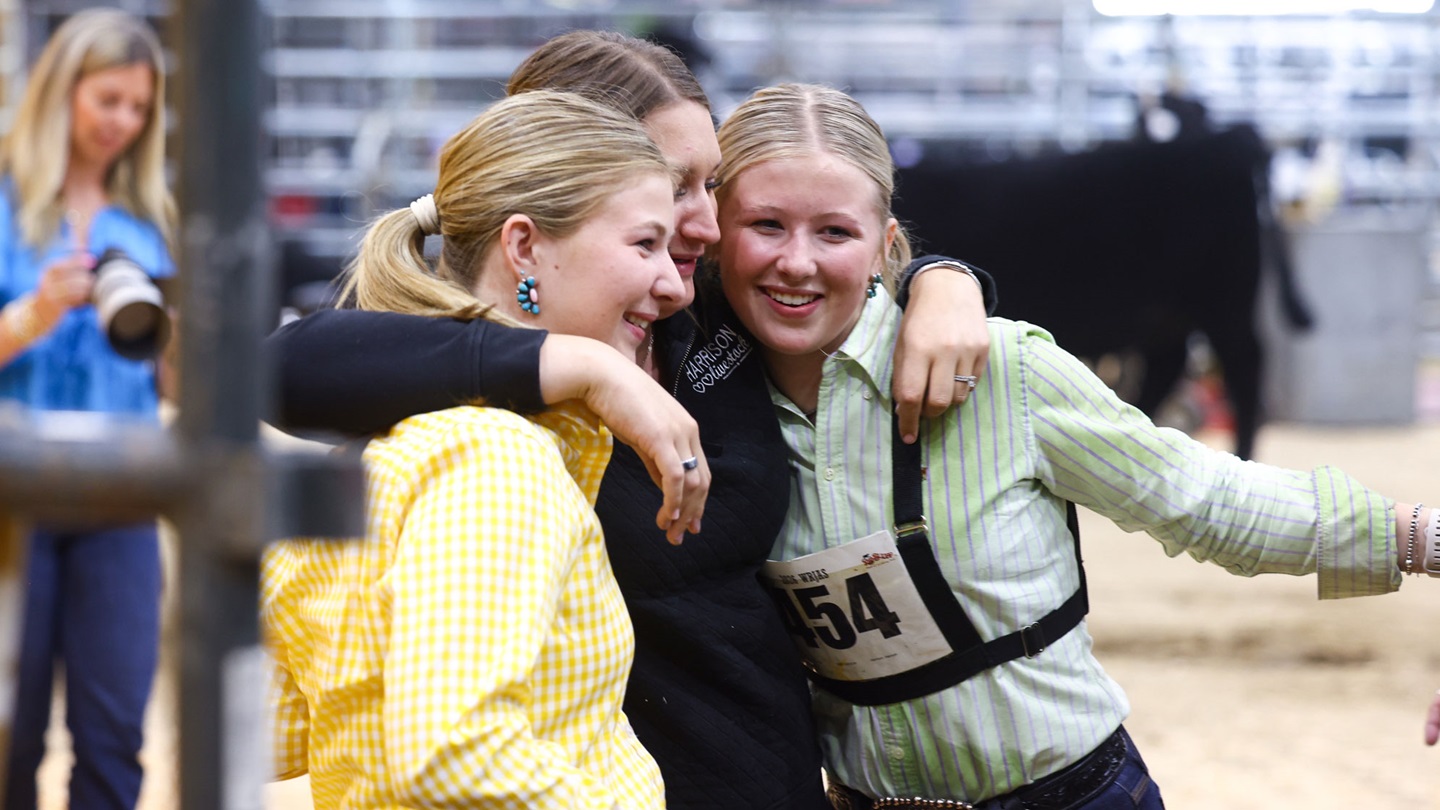

At the start of each show season, Hannah says they would choose what animals fell under which sibling’s ownership. But depending on schedules and travel plans, that ownership would shift at times.
“We would transfer between shows depending on how many we had or how we had done at the last show,” Hannah explains. “Last year, I bet we transferred one female probably almost 10 times just to split up show rights.”
While she calls Harrison Livestock a smaller operation, Hannah is proud of the success they’ve had raising show heifers. This rule update is going to open more doors for her and her sister in show rings across the country, she adds.
“The new joint-ownership sibling rule has really positively affected my sister’s and [my] career with the NJAA,” Hannah says.
Hadley says she was active in sports last year, and a rule like this would’ve made their lives a bit easier.
“When I was gone playing softball … we’d make it to where [Hannah] could show the heifer at that time,” Hadley says.
A shared win
The Western Regional Junior Angus Show in Reno, Nev., was the first time the girls were able to test out the shared ownership of their females, and Hadley proudly declares it a great first outing.
“I showed a heifer that was my bred and owned, and then my sister showed her the next day in the open show, and she won both the bred and owned show and the open show,” Hadley recalls. “Then with our other heifer that we had shown at Denver and Kansas City, I had showed her in the junior show, and she won the junior show. Then we switched, and my sister showed her in the open show, so we tried to split it up a little between each other.”
While they’ve seen the benefit of the rule firsthand, Hannah says she can see so many NJAA siblings reap the benefits of it, too.
“I think that this new sibling rule really benefits younger generations,” she explains. “I know that some parents are always so willing to put animals in the older sibling’s name, but when [there’s shared ownership] it brings [the younger siblings] into the game a lot earlier. With busy families, it’s also really useful to have this so you don’t have to rely on one kid all the time.”
While being the older sister means Hannah has had a slightly longer show career, knowing this rule is in place eases her mind as she prepares for a new chapter of life.
“I leave to go to college this summer, and knowing that we’re not going to have to transfer them every time I can’t make it home to show a heifer, that my sister can show ... is such a relief,” Hannah says.
As her older sister heads off to Northeastern Oklahoma A&M, Hadley says she’ll miss the extra help in the barn. But for now, they’ll enjoy the ability to support each other at the fall and winter majors they’re planning on attending.
It’s a truth they see as a positive for other families facing similar circumstances, too.
“The older siblings are starting to move away, and there’s always shows while they’re gone that your siblings are going to want to be going to,” Hadley says. “It’ll be easier not having to transfer back and forth, or say when your sibling from college comes home, then [they] can just show it at the time.”
Overall, the Harrison sisters see this as just another way the NJAA is helping them succeed as junior members while preparing them for the future.
“Every time you enter the show ring, your work is shown,” Hannah says. “It’s honestly a representation of how much work you put in at home. [The NJAA] has shown us so much of responsibility and care, care for an animal that can’t always give it back. It’s fulfillment that’s not always tangible.”
For Hadley, the Angus breed lives up to the family and culture we all love to talk about.
“You make connections with all kinds of people that’ll help you out in the real world one day,” she notes.
Though their future careers are on the horizon, for now, Hadley says they’ll continue to enjoy their time in the barn together.
While she admits working with siblings comes with it’s fair share of healthy disagreements, at the end of the day, Hadley and Hannah are a team.
“We have to rely on each other,” Hadley said.
Ownership Rule Update
As shared in December 2025:
A new rule will allow multi-ownership of owned animals between siblings, provided all siblings meet NJAA age requirements and are listed as owners by the ownership deadline. The rule will read: Owned animals can be multi-owned between siblings as long as all siblings own the animal by the ownership date and are within NJAA show rule ages (as of January 1). The bred-and-owned animals can be multi-owned, but the exhibitor showman must be the breeder, first and continuous owner. Multi-owned bred and owned animals CANNOT be shown as a bred-and-owned animal and an owned animal at the same NJAA-sponsored show. Meaning one sibling CANNOT show the animal as a bred-and owned animal and the another sibling show the animal as an owned animal in the same show. The animal can only show once in the heifer show and once in the Phenotype Genotype Show.
Topics: Association News , Member Center Featured News
Publication: Angus Journal
Related Publications


Current Angus Journal
Keep up on the latest stories of the people and programs in the breed.

Latest Podcast Episode
Don’t miss conversations with breeders and industry experts.