




DATA DIVE
Structured Sire Evaluation
Over the last decade, more than 220 sires have had carcass data added on progeny through the Structured Sire Evaluation.
June 17, 2026
Carcass quality is a major economic driver in the beef industry. Commercial producers can leverage genetic selection tools to make improvements in carcass traits, which can increase profits for their herd.
The expected progeny differences (EPDs) for carcass include carcass weight (CW), marbling (Marb), ribeye area (RE) and fat thickness (FAT). The phenotypes included in the calculation of these EPDs are carcass data collected at harvest and carcass ultrasound data. The genetic correlations between actual carcass data and carcass ultrasound measurements range from 0.65 to 0.71. This relationship allows carcass ultrasound data on live animals to be used as an indicator for carcass traits; however, actual carcass records are still needed for accurate predictions.
Structured sire program
The Structured Sire Evaluation is an Angus Herd Improvement Records (AHIR®) program that focuses on carcass data collection. While most carcass data is submitted by individual breeders, the purpose of this program is to collect carcass data on widely used sires in the Angus population that have little to no actual carcass data in the weekly evaluation.
To be eligible for the program, a sire would have been included in the top 300 registration sires the previous fiscal year, proven for growth traits, and have carcass ultrasound progeny records reported. In the fall of 2021, the option for members to nominate test sires was added to the program.
Commercial cooperator herds will select test sires to use in their herd from the list of potential bulls provided by the Association. They also select from a list of proven reference sires. Reference sires are bulls who have progeny with carcass records in the database resulting in high-accuracy carcass EPDs. Comparing unproven sires to reference sires strengthens the link between the new records and those that already exist in the database.
Once calves are born, the commercial herd will retain ownership of the calves through harvest and provide the records back to the Association. Once parentage is verified, the records can be added to the weekly evaluation. With the sires in the program being widely used across the breed, the addition of the data benefits the membership by adding accuracy to their carcass EPDs.
Since 2015, when the Association reestablished the Structured Sire Evaluation program, carcass progeny records have been added to more than 220 sires. The data collected in the program enters the weekly evaluation and is subject to the same guidelines as all other carcass data records entering the database. Adding phenotypic records to the database increases the EPD accuracies of the sires, which helps validate the selection tools and improve prediction accuracies of genomic evaluations.
The increase in accuracy for carcass traits will depend on the level of accuracy prior to adding records from the Structured Sire Evaluation and how many records were added. Table 1 shows the accuracies of carcass EPDs for artificial insemination (AI) sires used in the Structured Sire Evaluation before and after carcass data collected for calves born in 2024 was added to the weekly evaluation.
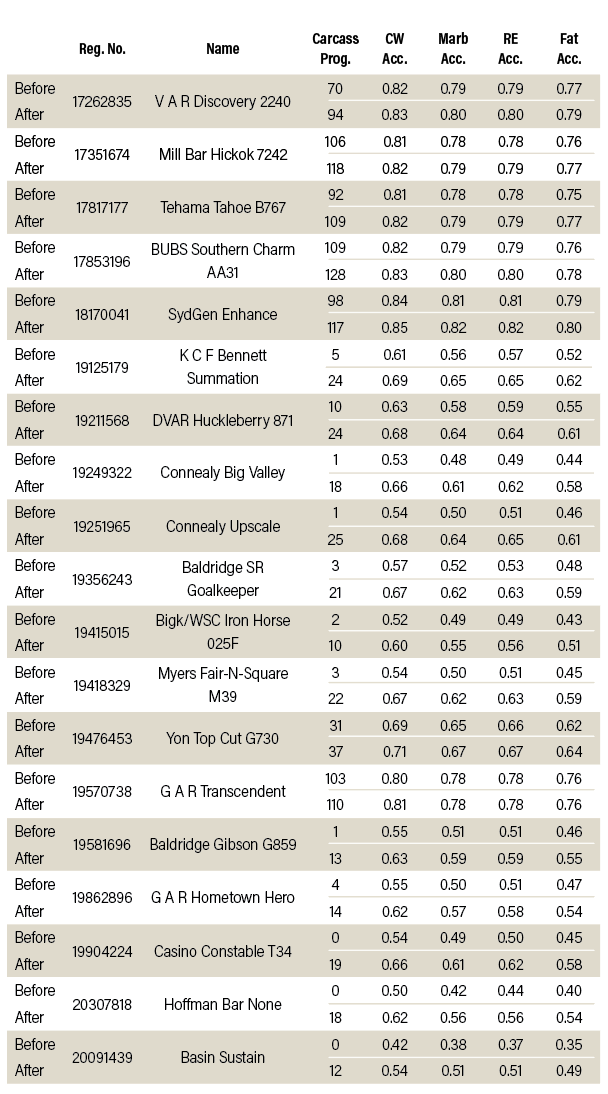
Table 1: Sire accuracies before and after carcass data submission.


Devin Jacobs, Performance Programs Specialist

Topics: Member Center Featured News , Association News , Genetics , Sire Evaluation
Publication: Angus Journal
Related Publication Articles



Current Angus Journal
Keep up on the latest stories of the people and programs in the breed.

Latest Podcast Episode
Don’t miss conversations with breeders and industry experts.