




VETERINARY CALL
The Center of the Ranching Universe
People are the backbone of our industry.
March 16, 2026
It’s been said, with only a little bit of tongue-in-cheek, that behind every successful rancher there’s a wife who works in town. While the family arrangements and organizational chart will vary from operation to operation, when I think about what it means to be the heart of the herd, my mind invariably goes to the special relationships that exist between ranchers and their spouses.
Throughout my career I have been blessed to work with many different cattle operations. Most of the interactions I have had with my cattle clients occurred outside of what one might call “standard office hours.” More often than not, I was standing next to a squeeze chute or in a calving barn.
Sometimes though, I got to sit at the kitchen table. It was in this setting that I felt like I was most near to the center of the ranching universe, for therein was almost always a hardworking husband-and-wife team who kept all of the different elements of that universe spinning.
Like all great celestial bodies, the center of the ranching universe is not without its share of opposing forces. One of the great professional experiences of my life occurred when I was able to travel to Kingsville, Texas, to participate in a Systems Thinking in Ranching seminar. While I was there, I learned about archetypes, or patterns of systems behavior that are common, recurring and often problematic. One particular archetype that captured my attention was the “Accidental Adversaries” model. The Accidental Adversaries archetype illustrates the dynamics that exist between two separate entities that work together within the same enterprise. Each of these entities have separate, individual goals; though both benefit from the overall success of the operation. Sometimes though, the actions of one entity to meet their own needs has unintended, adverse effects on the needs of the other.
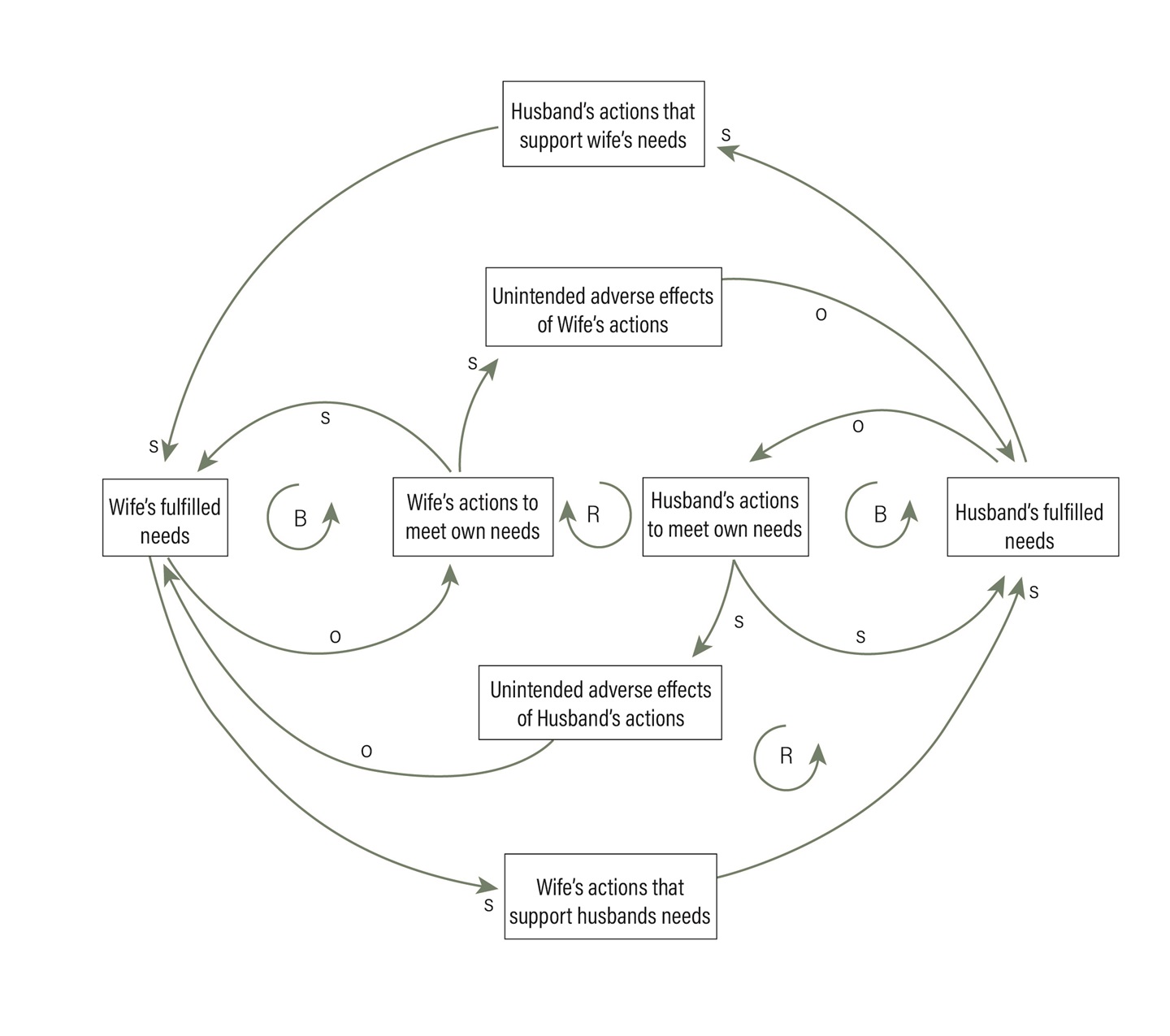
Fig 1: The Accidental Adversaries Archetype in Marriage

Accidental adversaries
An example would be a ranch with both a grazing operation and a hunting operation. The grazing operation benefits from clearing brush to open up more pasture, while the hunting operation benefits from allowing brush to accumulate. Efforts by each individual entity to meet their own needs have an adverse effect on the needs of the other. If one or both of these entities is unaware of, or unwilling to, consider the needs of the other, their self-centered actions (i.e., living in the inner cycles) create a vicious cycle that ultimately affects the ability of the organization to prosper, and both end up losing. If both entities work to support each other’s needs (i.e., living in the outer cycle), then we observe a virtuous, synergistic effect that enables both to be more successful.
It struck me as we discussed this archetype, and other situations where we might observe it, that this was a fairly accurate representation of marriage and other ranching partnerships. Women and men both come to marriage with unique sets of needs, as well as abilities to meet the needs of each other. Invariably, when those needs aren’t met, it is the tendency of both parties to try and fulfill those needs themselves; often to their mutual detriment. However, if both parties can learn to recognize and meet the needs of the other, it is a beautiful thing — and there is no limit to what they can accomplish together.
In the Accidental Adversaries archetype in marriage model, arrows with an “O” indicate an inverse, or “Opposite,” relationship (e.g., as the quantity of husband’s fulfilled needs goes down, the husband’s actions to meet his own needs go up). Arrows with an “S” indicate a direct, or “Same” relationship (e.g., as the quantity of wife’s fulfilled needs goes up, the wife’s actions to support husband’s needs also go up). The notation of a “B” inside a circular arrow within a loop indicates a balancing loop (i.e., negative feedback or self-correcting loop). The notation of an “R” inside a circular arrow within a loop indicates a reinforcing loop (i.e., positive feedback or amplifying loop). Variables within balancing loops tend to bounce back and forth between minimums and maximums, whereas variables within reinforcing loops tend to increase or decrease, exponentially. When we observe exponential growth or diminishing in ways that we want, reinforcing loops are also called “virtuous” cycles. However, if the exponential growth or diminishing occurs in ways we don’t like, we refer to these loops as “vicious” cycles.
Working together
I am grateful for the examples I’ve had in my life of men and women who care for each other and work to make each other successful. My own parents, my in-laws and my grandparents have all demonstrated shining examples to me of how a man and a woman can work together to build a legacy of growth, love and learning, both in agriculture and beyond. I am also grateful for my own wife, who has been my steadfast partner in learning how to care for each other and build together.
These partnerships don’t always follow the traditional mold, and nobody gets it perfect. Notwithstanding, the dynamics remain the same. When all those at the center of the ranching universe strive to support each other in their goals, amazing things happen. Bulls and cows will come and go, but it’s partnerships like this that form the heart of the herd.
So even though Valentine’s Day is past us, and Mother’s Day and Father’s Day are still a little way off, if you are one of the fortunate many with a ranching partnership at the heart of your herd, be sure to take a moment to express your appreciation to your partner.
Do it unexpectedly; surprise them. Take them somewhere nice and spoil them a little bit; think beyond upgrading your value meals at the local hamburger joint. Better yet, if you really want to meet their needs, give them some of your undivided attention and find out what their needs are and how you can help fulfill them. Take the time to make them feel heard and seen. There’s no better investment for the future of your herd.
Editor’s note: Todd Gunderson is a clinical assistant professor, beef production medicine, at Kansas State University in Manhattan, Kan.
Topics: Health , Management , Association News , Human Health , Labor , Member Center Featured News
Publication: Angus Journal
Related Publication Articles


Current Angus Journal
Keep up on the latest stories of the people and programs in the breed.

Latest Podcast Episode
Don’t miss conversations with breeders and industry experts.