




Beyond the Barbed Wire
In Omak, Wash., virtual fencing was a good fit for an Angus couple.
February 4, 2026
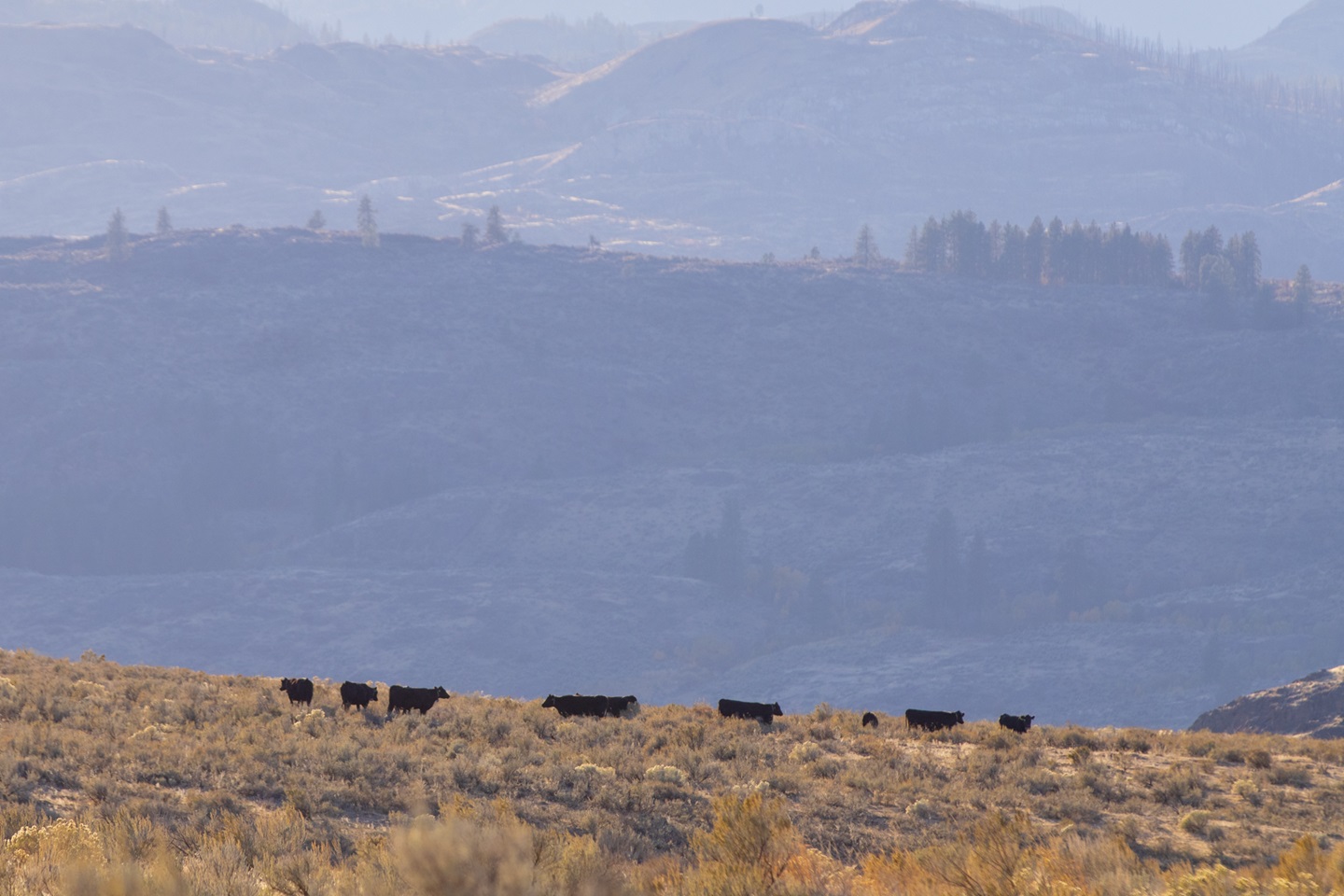

Five years ago, Mike and Joy Wilson were faced with an impossible problem: fencing a 9,000-acre lease in just a few months.
Their solution? Don’t.
“We had the opportunity to pick up this lease in January, and we had to have cows out by May 1,” Mike says. “There’s no way you could build all that fence.”
So, they went in search of a new solution.
The Wilsons lease 15,000 acres from three different landlords in northeastern Washington State. Two of the landlords are private, but the third is 9,000 acres of ground that was purchased by an organization called Conservation Northwest and given to the Colville Confederated Tribes. Conservation Northwest purchased the land as part of its vision for a wildlife corridor, connecting habitat from the Rockies to the Cascades.
Mike hadn’t heard of the wildlife corridor, but he was surprised to learn about the number of animals who use that route.
“The amount of wildlife that goes through there is amazing,” he says.
When the tribe decided to lease those 9,000 acres, one of the Wilsons’ other landlords — a friend of Conservation Northwest — recommended them. Securing the lease was a win; but the ground was unfenced, which led the couple to consider unconventional options.
“I mean, we’re 35 acres to the cow up here,” Mike explains. “If they gave you the ground, you couldn’t afford the fence and to run the cows on it.”
Mike had recently heard about a technology called virtual fencing — sometimes called invisible fencing — on a podcast. With that, the idea was born.
The Wilsons worked with some team members at Conservation Northwest to develop a plan, and everyone was immediately on board. For Conservation Northwest, virtual fencing was more than a solution to a problem, it was a conservation tool. The lack of a physical fence would allow cattle to graze without blocking wildlife movement, aligning ranching and conservation goals.
But getting started with the process wasn’t exactly easy. In 2021, virtual fencing wasn’t just relatively new technology, it was cutting edge. There weren’t many options for where to source the technology from. In fact, the only company offering virtual fencing in the United States at the time was Vence — a small startup company now owned by Merck.
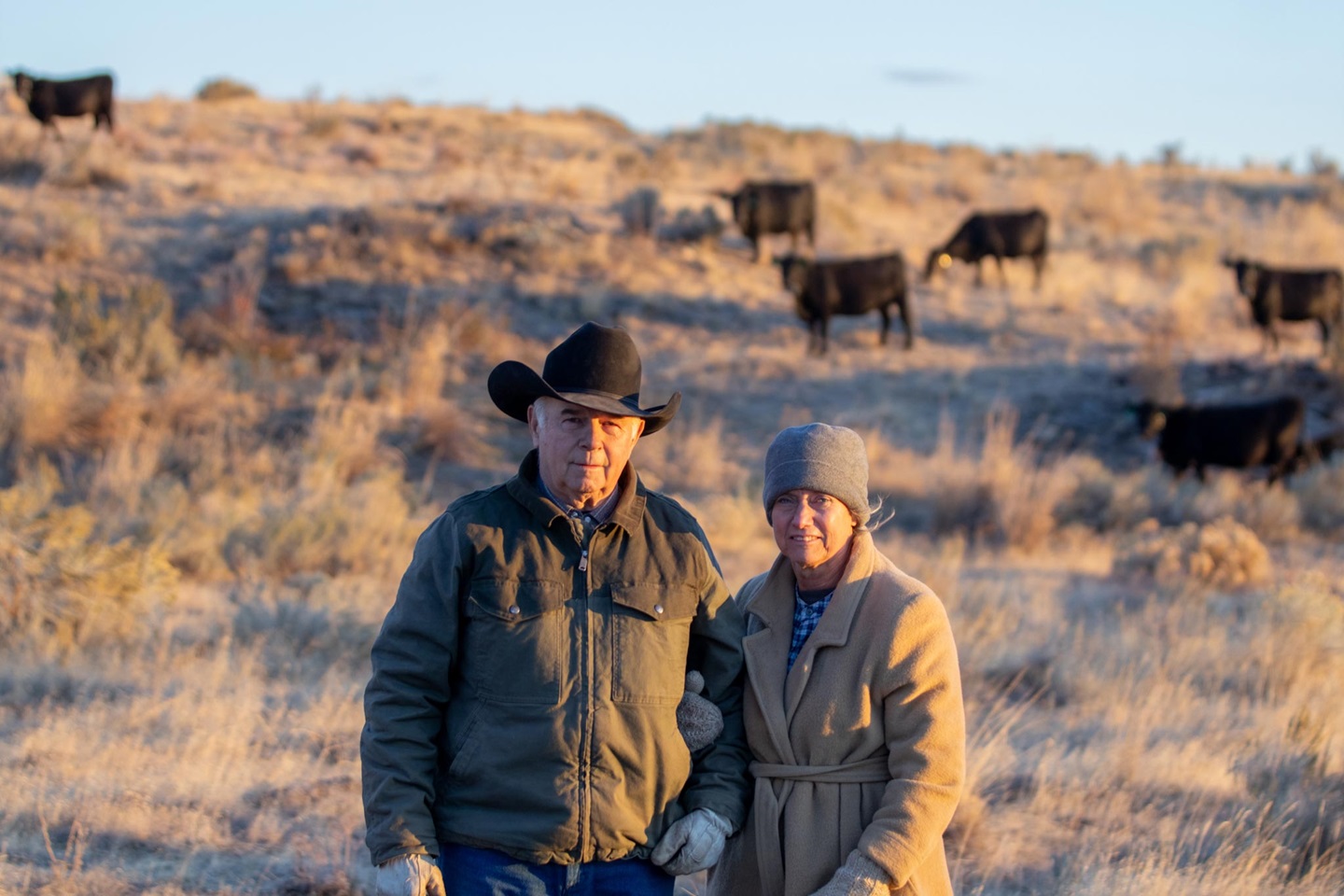

After connecting with representatives at Vence, the Wilsons started talking through the costs of implementing this technology. While much cheaper than fencing 9,000 acres, virtual fencing isn’t free. The technology requires at least one solar-powered tower and the yearly rental of a collar and battery for each cow.
“We have two towers that were $12,500 apiece,” Joy explains. “The collars are rented for $35 a year, and it’s $10 per battery.”
Conservation Northwest made an investment and agreed to pay for both of the towers the Wilsons would need, on the condition that they participate in educational promotion of the technology.
“Part of our payment for getting those towers for free was that we would sponsor some groups or we would speak when they wanted us to,” Mike says. “Probably a hundred people or more have come through our house that we’ve given a presentation to.”
How it works
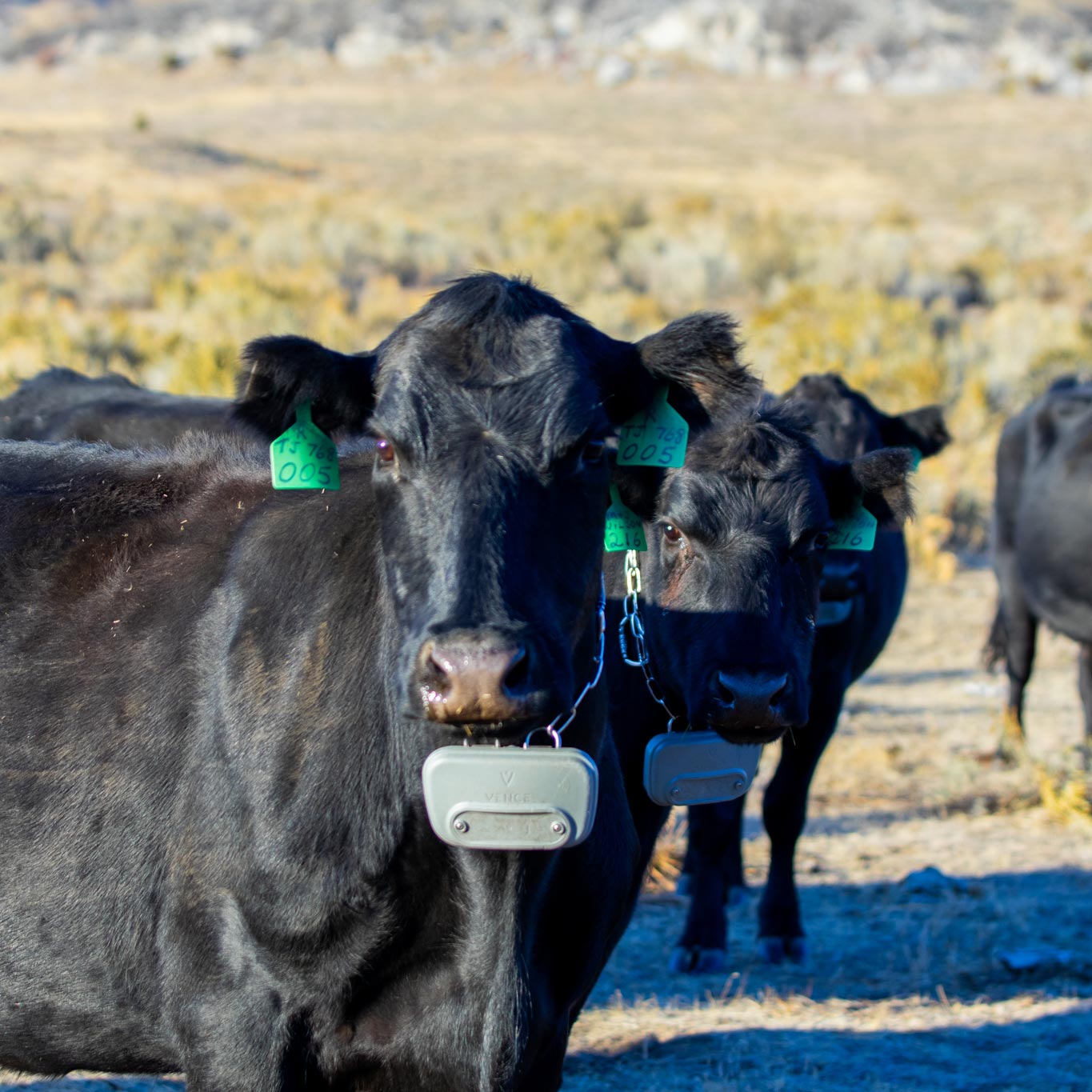
The system itself is simple. Cattle wear GPS-enabled collars that communicate with the digital fences drawn on the Wilsons’ computer system, located in their home 40 miles away.
Joy explains the signal pathway like this: “It starts with the computer, goes to Wi-Fi then cell tower, then to the solar-powered tower to the collar. Then it comes back through with information about the location of the cow and other information.”
The Wilsons run a sizable herd across their leases — more than 500 head in total, including about 300 mature cows and pregnant heifers. But only a portion of those are managed with virtual fencing.
“We only run 145 [head] with the collars,” Mike explains.
For those cows, the Wilsons draw the boundaries for where they want the fence to be, sometimes adding a backup boundary in areas they’ve encountered issues with. When a cow nears the boundary, the collar emits a sound cue. If they continue towards the fence, the collar will send a mild electrical shock, usually prompting the cow to turn around.
Eventually, most cows learn to respond to just the sound, but it takes some training. The Wilsons put the system to the test to see whether technology could really hold cattle across thousands of acres of rugged country.

Surprising results
At first, Mike didn’t have much faith in the system. He was convinced he’d have to spend every day moving cattle back into the virtual fence area.
“We hired a gal to day-work, and I told her we’d probably be up there every day putting cows back in. That’s how much faith I had in it,” he admits.
But they tried it anyway, turning 20 cows out at a time into a 600-acre training pasture. Then something unexpected happened.
The cows walked down to water, found grass and stayed put.
“We never had to bump them back in one time. They stayed in one-hundred percent,” Mike says.
Joy says she would watch the cows from the computer at the house and was amazed at how well the fence worked.
“You’ll see the cows come down to the corner, and then they’ll turn around and go back just like there was a barbed-wire fence,” she says.
And she’s right.
Joy can also track grazing patterns, which she demonstrates by pulling up a time lapse of all cattle movement for the last week. It’s amazing to watch the little black dots, each symbolizing an active collar, approach different areas of the digital boundary before turning back into the allotted pasture.
Joy shows how to navigate the computer software with ease, but she says there was a long learning curve to figure out the particulars.
“My first year I spent hours and hours on the computer, learning it and trying to figure things out,” she says.
She goes through a demonstration of all the information the software shares, like battery life, location, number of shocks given and more. Joy also shows how she can filter the information from the collars by herd, by individual and by last check in.
“The cows check in to the tower every fifteen minutes. You can look at this and see what the cows are doing,” she says, showing a map that displays several black dots, each one indicative of an active collar.
The technology isn’t perfect. This year, Mike says, has been harder than any before, largely because of the severe drought in the area.
“We had no grass to start with,” Mike admits. “Calves are 20-30 pounds lighter than normal.”
When there’s a lack of grass, cattle are more willing to push the boundaries. Each time they approach a boundary, it requires battery life to emit a sound or shock.
“That’s been a frustration this year. We have a lot of critically low batteries,” Joy explains.
Batteries can be switched into basic tracking mode when they run low, but that disables the sound and shock cues. If a battery dies, it’s not an easy process to go replace one.
“We try to just live with it,” Joy says. “The cows are herd animals, so they normally stick together.”
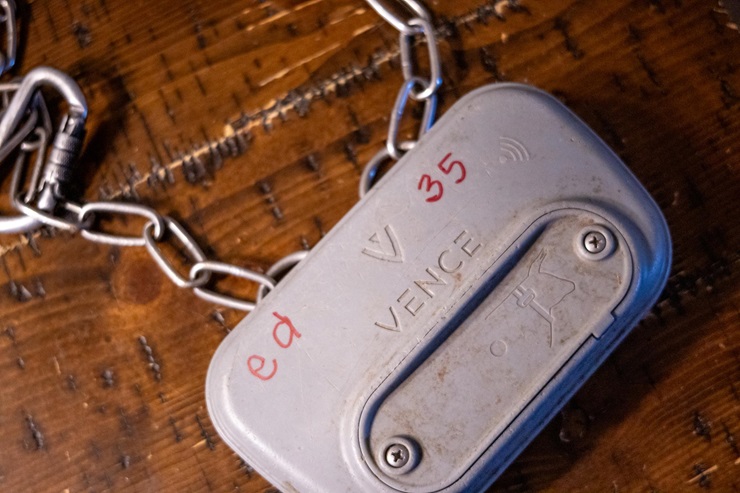
Cattle GPS-enabled collars that communicate with the digital fences.
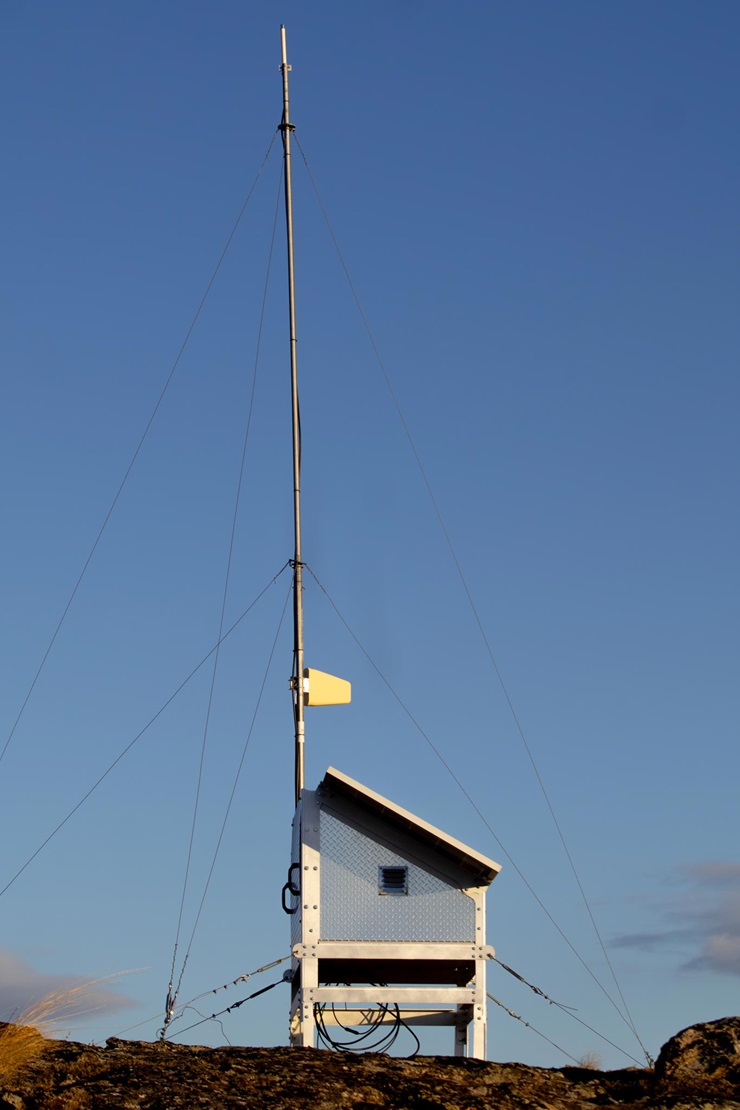
One of two solar-powered towers that cover the Wilson’s property, connecting the collars to the computer.
Burning up
Drought and batteries were this year’s challenge, but for a state known to many as the Evergreen State, parts of eastern Washington have many summers decidedly orange, covered in the heat of wildfires. For the Wilsons, virtual fencing offered one unexpected advantage: it doesn’t burn.
The Wilsons share a lot about one fire in particular; the 2015 Okanogan Complex Fire that ravaged over 300,000 acres in just four weeks.
Mike says, “In the aftermath of that fire, we spent $600,000 on fence. Thankfully we got cost-share payments, otherwise we couldn’t have done it.”
Mike had to sacrifice a lot of time and money to rebuild the 30 miles of fence, which was especially devastating on top of losing nearly 50 head of cattle.
“This is a real fire-prone area,” he says. “Luckily, the virtual fence doesn’t burn.”
The Wilsons also get a lot of questions about being able to remove virtual fences remotely in case of a coming fire, theoretically allowing cattle to get out safely. But Joy warns that virtual fence isn’t a perfect solution. Unfortunately, the technology isn’t as instant as some might think.
“If a fire is coming, you can’t just drop the fences,” she explains. “It takes time for the collars to get the signal. Some will get it right away, but some might take up to 24 hours.”
Mike continues, adding that no matter the fencing system, wildfires often burn quicker than cows can run.
“In the ’15 fire, our two most expensive bulls went through a ravine, crossed a fence, went through another ravine and the fire caught them on the next ridge. We had 8,000 acres burn off in 45 minutes. You can’t outrun that.”
From drought to wildfire, the Wilsons know fences can fail in countless ways. They’ve spent hundreds of thousands of dollars rebuilding after fire, and they’ve watched cattle test virtual boundaries when grass is short. But both Mike and Joy admit their virtual fence is saving time, money and labor. What began as an experiment has become a key piece of their operation.
Mike still prefers the feel of a barbed-wire fence, the kind you can see with your eyes and fix with a pair of pliers. But after five years of virtual fencing, he admits the invisible boundaries work.
“I’ll tell you know thing,” he says with a grin. “We’ve never had a gate left open.”
Topics: Association News , Business , Equipment / Facilities , Industry News , Labor , Management , Member Center Featured News , News , Success Stories , Ranch profile
Publication: Angus Journal
Related Publications


Current Angus Journal
Keep up on the latest stories of the people and programs in the breed.

Latest Podcast Episode
Don’t miss conversations with breeders and industry experts.