






Building the Toolbox
More data, smarter tools and a focus on real-world validation.
January 9, 2026
If there’s one thing we can count on, it’s nothing stays the same. Families grow, herds evolve and communities progress.
The last few generations of Angus breeders have witnessed new tools and technologies hit the market and continue to develop.
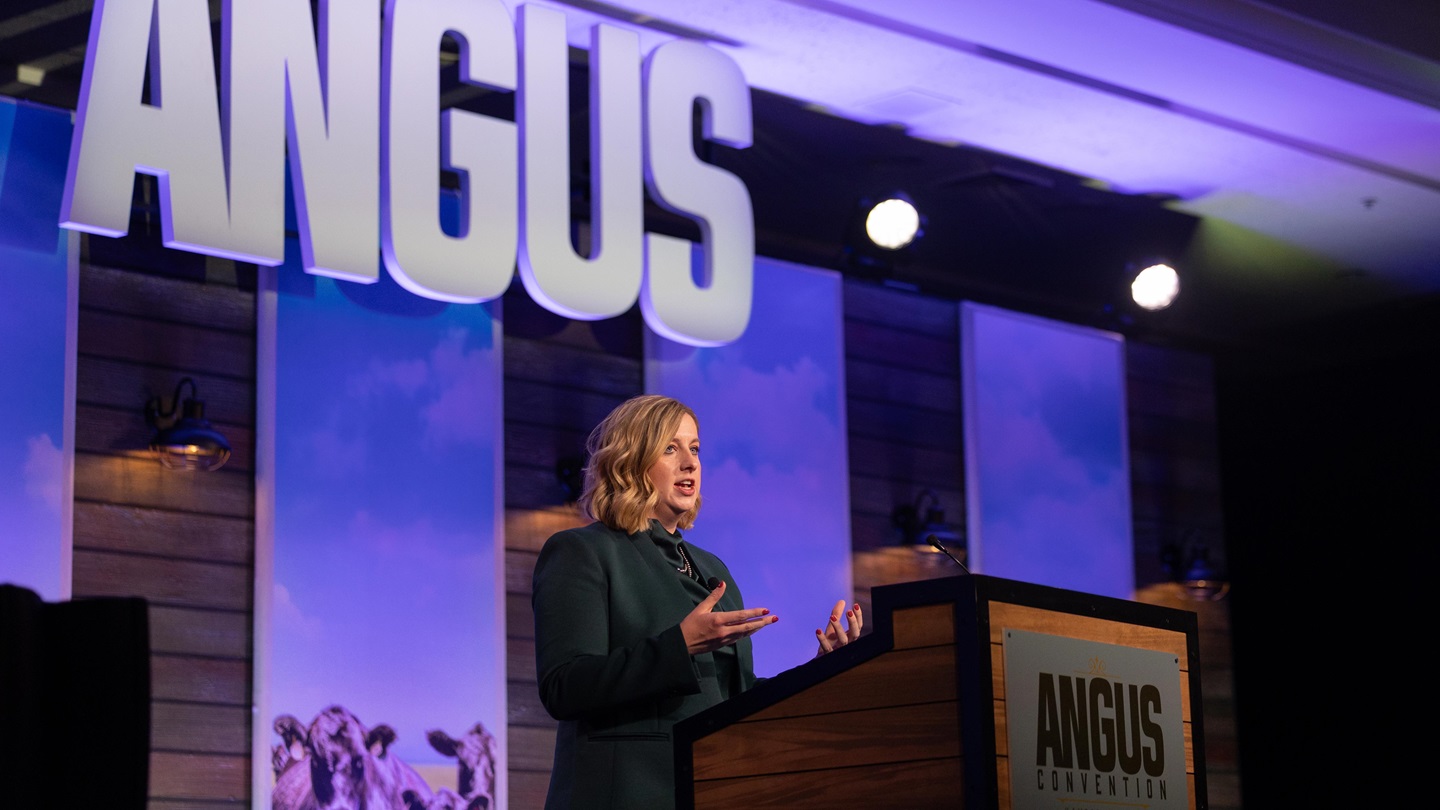
Kelli Retallick-Riley
Angus Genetics Inc.

“As someone who lives in the genetic evaluation space, there’s one thing that I see, and it’s that the genetic evaluation landscape is changing,” said Kelli Retallick-Riley, Angus Genetics Inc. (AGI) president, during the Genetic Advantage Symposium hosted at Angus Convention Nov. 1 in Kansas City, Mo. “There’s more data being collected outside of breed associations than ever before. There’s independent companies that are starting to evolve this landscape and rapidly changing the environment that we’ve always worked in historically.”
To stay in the forefront, Retallick-Riley said it all starts with the amount and quality of data and records submitted by breeders to the American Angus Association.
In fiscal year 2025, Angus seedstock producers submitted 237,000 genomic profiles.
“Thinking about it from a seedstock perspective, when we give you guys opportunities to use new tools, it’s not the fact that we built them, it’s the fact that you guys will pick ’em up and you’ll put ’em into your breeding programs,” she said. “We don’t make the decisions about how you breed cattle or what tools you use. We’re just merely here to make sure that if you guys have a need, that we can fill that need and make sure that you guys continue to stay successful, independent breeders.”
Also in the past fiscal year, 75% of newly registered animals were genotyped, adding value to the registration paper and making the genetic evaluation stronger.
For the commercial producer’s toolbox, GeneMax Advantage has seen a nearly 20% increase in sales, speaking to the common currency AGI created for the industry.
“Historically, we’ve had a commercial heifer test that didn’t speak [directly] to the registered Angus bulls that they were purchasing at your annual sales,” Retallick-Riley said. “Today, our commercial producers have a common language [or currency] where they can go on and successfully select their herd sire candidates in order to make sure they can make the best selection decisions for themselves.”
Looking to the future, Retallick-Riley said AGI will focus on validating the success of tools to ensure they are working in real-world commercial settings. Information needs to flow back to the Angus database, but how will AGI target commercial data and other phenotypes? There may be more questions than answers, but that’s what the 2024 ImAGIne: AGI’s Beef Genetics Forum sought to do — start the conversation.
The currency of genetic progress
Troy Rowan, assistant professor, University of Tennessee’s Department of Animal Science, shared some of his takeaways from the white paper he authored on the future of phenotyping and commercial data.
“I call ’em the currency of genetic progress,” he said. “Without phenotypes, our EPDs (expected progeny differences), our selection tools, they break down. If we all band together at a convention and said, ‘We’re done collecting phenotypes, genomics is going to drive the bus for the rest of the existence of the breed association,’ it wouldn’t last very long within a generation. Those selection tools lose their power if we’re not training them on new phenotypes.”
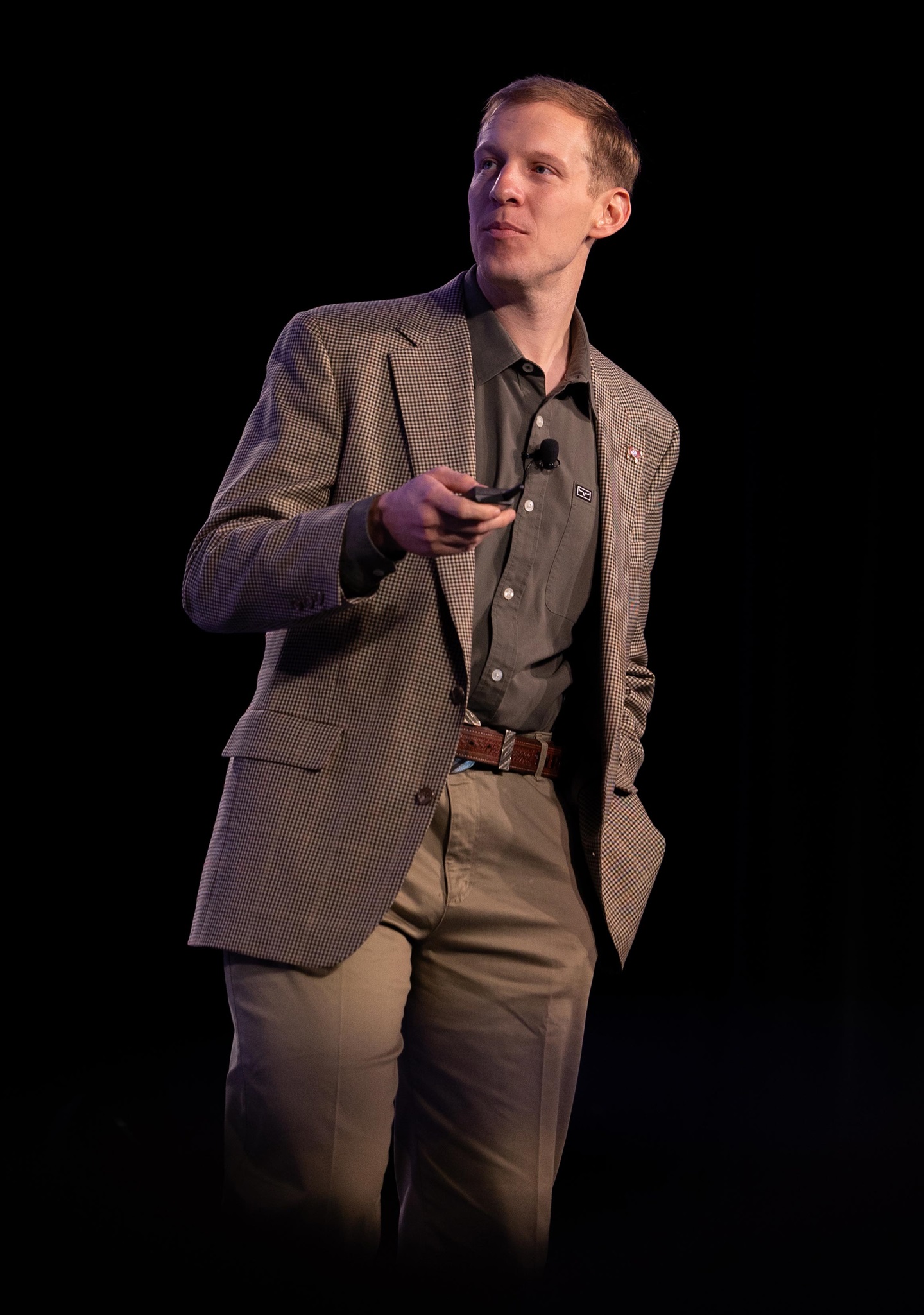
Troy Rowan
University of Illinois at Urbana

Rowan said the industry has done a good job on recording easy-to-capture traits with high economic relevance in the registered cattle business. But what about low-hanging fruit in the commercial sector, or those traits that are more difficult to measure, but still affect a cattleman’s profit book? That’s where strategy and implementing technology could help.
“I think that’s where we need to maybe do a little bit of innovating across the industry, finding creative ways to help finance phenotypes or phenotypic collection at the seedstock level,” he said. “…More phenotypes make more accurate tools, and more accurate phenotypes make more accurate tools.”
Rowan emphasized understanding how registered genetics are performing in a commercial setting is important for genetic improvement as a whole.
“This is also a pathway towards capturing more data from the context that it actually matters where those economically relevant traits, the rubber sort of hits the road,” he said.
Machine learning, artificial intelligence, passive data collection, wearable sensors — these may play a role in the future of measuring traits, but a strategy for sharing information still has to come into play.
What can we learn from pigs?
The cattle industry isn’t alone in this effort and can look to other livestock industries for guidance and caution.
Mike Ellis, professor emeritus, University of Illinois at Urbana–Champaign’s Department of Animal Sciences, provided some perspective from the swine industry in the highly successful work in improving carcass characteristics, feed efficiency and litter size.
These came, however, with some unexpected changes. There are a few reasons why, he noted, and one is genotype-by-environment interaction, highlighting the importance of validating real-world uses of genetic tools.
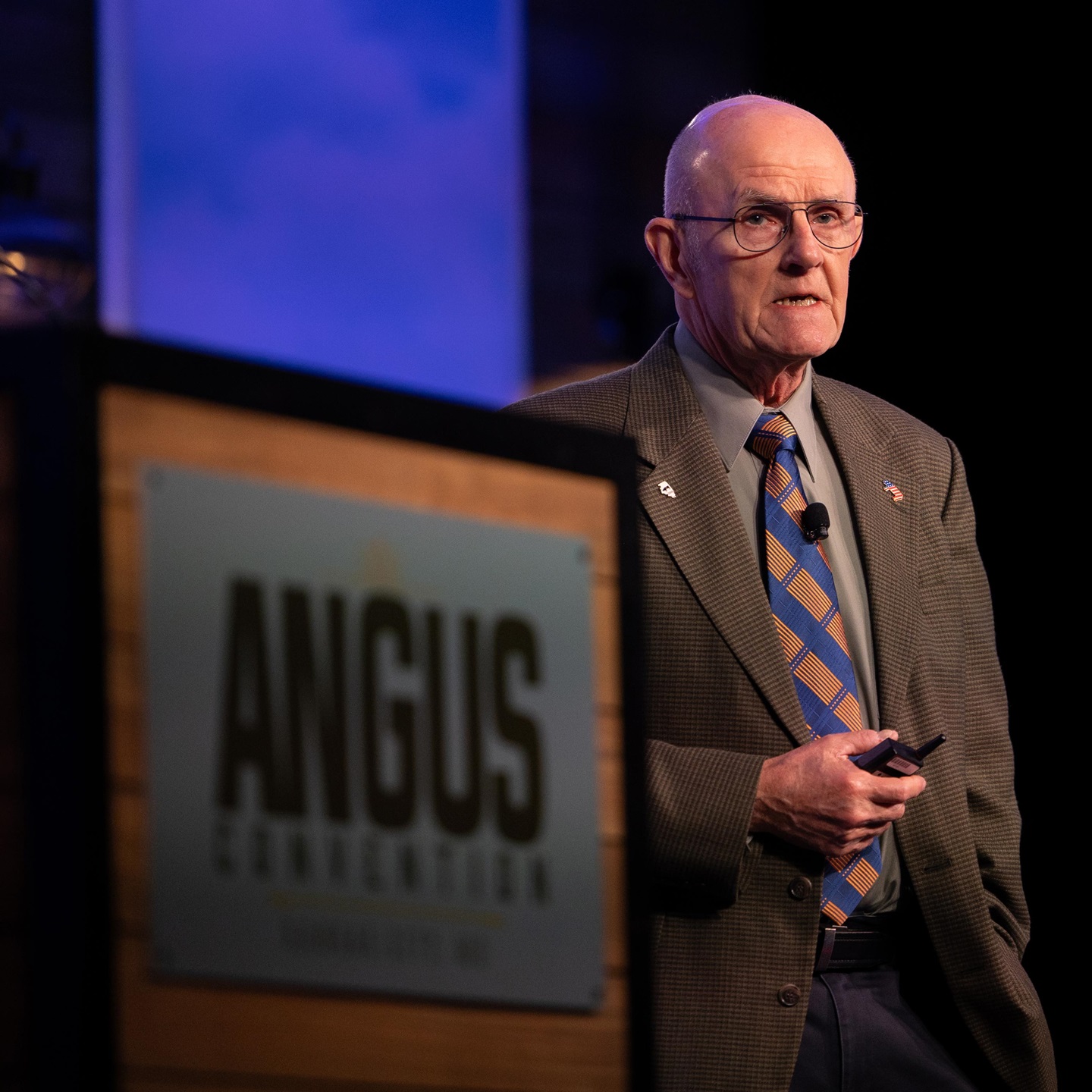
Mike Ellis
University of Tennessee

Back in the ’60s-’80s, swine breeders would submit boars to a central test station for performance testing. The testing station environment was dramatically different than in commercial production.
“The relationship was extremely weak,” Ellis said. “In other words, the best sires at central testing station, their progeny weren’t the best in the commercial environment. And so a lot of selection effort, a lot of expense, would be incurred to make genetic progress. At the commercial level, it was not as great as one would’ve expected.”
He described a time when selection pressure was put on litter size, and the industry experienced an increase in preweaning mortality and sow mortality. He added some reasons may be nongenetic, but still a significant portion was related to genetics.
“Genetic selection is a slow process, slow in cattle and in pigs. So it takes time for these things to emerge,” Ellis said. “There’s no doubt it had considerable economic impact.”
In this scenario he advised phenotypic information could help pinpoint areas of concern earlier in the process and better refine tools in the real-world environment.
Times in the genetic evaluation space are changing, “But the one thing that I know,” Retallick-Riley said, “is that through the dedication of your Board of Directors, through the dedication of the staff at the American Angus Association, [and your continued commitment to collaboration], AGI intends to keep you as that industry leader.”
Topics: Member Center Featured News , Association News , Genetics , Events
Publication: Angus Journal
Related Publications


Current Angus Journal
Keep up on the latest stories of the people and programs in the breed.

Latest Podcast Episode
Don’t miss conversations with breeders and industry experts.