




Breeding for Resilience
What dairy researchers can teach beef producers.
November 26, 2025
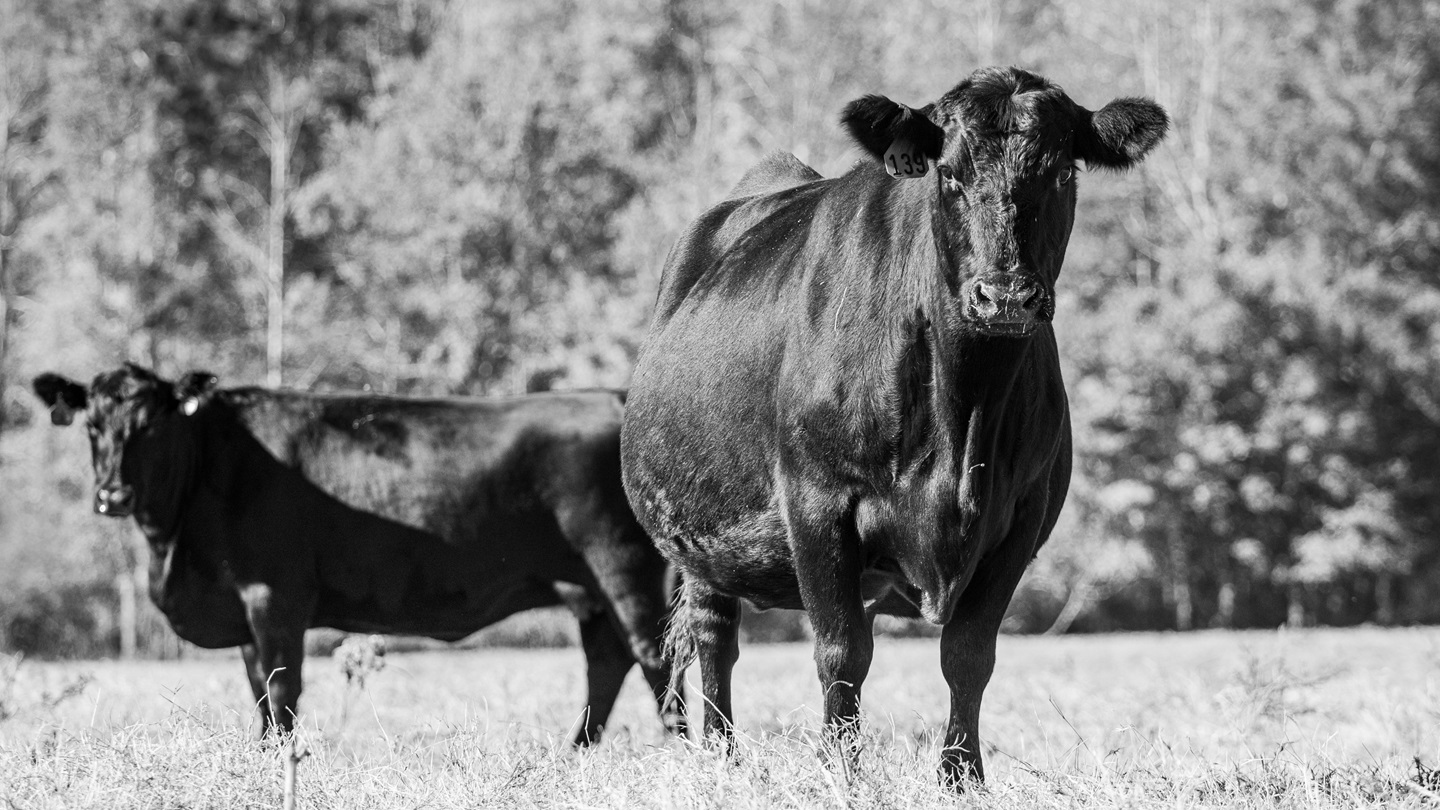

Every cattleman wants a cow that works as hard as the environment demands. One that rebreeds, weans a good calf, fights off sickness and doesn’t waste feed doing it. Add in consumer expectations around sustainability, and the picture of the “ideal cow” feels almost out of reach.
But what if genetics could move us closer?
Christine Baes, a University of Guelph researcher in dairy cattle genetics, explored this puzzle during her talk at the 2024 Beef Improvement Federation Symposium. Baes highlighted how genomic research can improve both efficiency and sustainability in beef cattle. Innovative selection tools can reduce methane emissions, improve fertility and boost overall productivity.
“A resilient animal,” Baes says, “is one able to adapt rapidly to changing conditions without compromising productivity, health or fertility, while becoming more resource-efficient and reducing its environmental impact.”
That definition is one any Angus breeder can recognize as worth chasing.
Efficiency and profitability
Baes began with a topic most ranchers hear more about from policy groups than in the pasture: methane. It may seem distant from calving and feeding, but her team’s work shows it ties directly to efficiency and profitability.
“There is some ability to select animals that produce less methane,” Baes says, “which is pretty good news for us, because we can tell a really good story if we are able to handle this problem.”
On average, a lactating dairy cow produces 492 grams of methane per day, she says.
“What’s important,” Baes explains, “is that we see there’s about 30% variation between individual animals.”
Producers can take heart in that variation, as it provides an opportunity to lower methane through selection alone.
“Now that we’ve seen there’s genetic variation, and we can measure it, the next step is figuring out how to scale it, how to measure enough cows so we can actually tackle this problem,” she says.
The backbone of Baes’s research is data, specifically mid-infrared spectroscopy (MIR).
MIR works by shining light through milk samples and reading the chemical spectrum. In dairy cows, these readings estimate traits such as methane emissions, feed efficiency and overall resilience.
“Using MIR data, which is routinely collected from animals on milk recording, we can predict how much methane those cows produce with high accuracy,” she said. “We’ve got data on almost 90% of our animals, so collecting and storing that information was a really important decision.”
While beef herds won’t collect milk spectra, the principle holds. Sensors and new technologies can track activity, feeding behavior and even gas emissions in cow-calf or feedlot settings. Traits that once felt impossible to measure in large numbers are becoming measurable and usable in selection programs.
Baes emphasized that methane efficiency is a genetic trait designed to be independent of production traits. Selecting for it does not negatively affect milk yield, protein, fat or fertility, and it may even have small positive effects on health and reproductive performance.
“Selection for efficiency has not automatically reduced methane,” she admits. “Both of these traits have been designed to be independent of production traits.”
Her research shows that a five-point increase in a cow’s breeding value for methane efficiency can reduce about three kilograms of methane per year, roughly 1.5% of the long-term Canadian goal for greenhouse gas reduction.
This approach targets environmental sustainability while maintaining productivity and herd health, giving producers a practical tool to improve both profitability and the industry’s environmental footprint.
Focus on fertility
Fertility remains one of the most expensive problem areas in both dairy and beef. Missed heats, failed pregnancies, and open cows cost producers money and time. Baes’s team has worked to define measurable indicators of fertility also showing strong heritability.
One example is estrous activity.
“We see that cows with higher activity during estrus have reduced pregnancy loss, higher conception rates, and more viable embryos,” Baes says.
That behavior can be tracked with simple activity monitors.
Another example is ano-genital distance, a phenotypical measure which turned out to be 39% heritable and strongly related to reproductive performance.
For beef cattle breeders, the lesson is clear: fertility traits may seem hard to capture, but genetic differences exist. If the dairy industry can find practical measurements with heritable links, the beef industry can too, especially as technology becomes cheaper and easier to use on ranches.
Disease resistance
Beyond fertility, Baes’s group explored health traits with an eye toward enhancing disease resistance. Calfhood illnesses such as diarrhea and respiratory disease have long been treated as management challenges, but her team found heritability for metabolizable energy intake in calves can reach 32%.
Suggesting selecting for disease resistance may be more achievable than previously thought, helping herds become more resilient over time without constant reliance on treatment.
Baes also touched on public perceptions of these advancements.
She referred to a Canadian survey in which “almost 50% of people said yes” when asked if they would be happy if selective breeding was used to solve the environmental impacts of the dairy industry.
According to Baes, this is a positive indicator of the potential support of these advancements if implemented in the beef industry.
Her presentation gave an overview of how genomic research and advanced data could transform the beef industry, reducing its environmental footprint while enhancing productivity and animal health.
“We can send out a very positive message. Let’s roll up our sleeves and figure it out,” Baes summarizes.
Her team is expanding methane monitoring to more herds and integrating data across breeds.
They are exploring epigenetics to understand how a cow’s environment and management affect her calf’s genetic expression.
Baes highlighted the importance of international collaboration and high-quality phenotypes to make these advances effective, noting partnerships across Canada, the United States, Australia and Europe.
For beef cattle breeders, the broader message is universal: genetics should target resilience. That means cattle that rebreed, stay healthy, use feed efficiently and align with consumer expectations for sustainability.
Beef may lag dairy in terms of data collection, but the gap is closing. As technologies become more accessible and genomic tools more affordable, breeders have the chance to apply the same principles.
“We can work together to figure out how to benefit both groups of producers,” Baes says. “We’ve got a fantastic infrastructure, and there is a ton of benefit I think that can be applied to the beef industry.”
The ideal cow may sound impossible, but advances in genetics and phenotyping are making it more realistic every year. The work is far from done.
Editor’s note: Elizabeth Rosson is a freelance writer from Louisa, Va.
Topics: Association News , Member Center Featured News , Reproduction
Publication: Angus Journal
Related Publications


Current Angus Journal
Keep up on the latest stories of the people and programs in the breed.

Latest Podcast Episode
Don’t miss conversations with breeders and industry experts.