




An Ambassador for All
Maplecrest Farms recognized with the CAB Ambassador Award for promoting each industry segment.
October 15, 2025


The beef business is built on partnerships, some sealed by pen, some with a handshake.
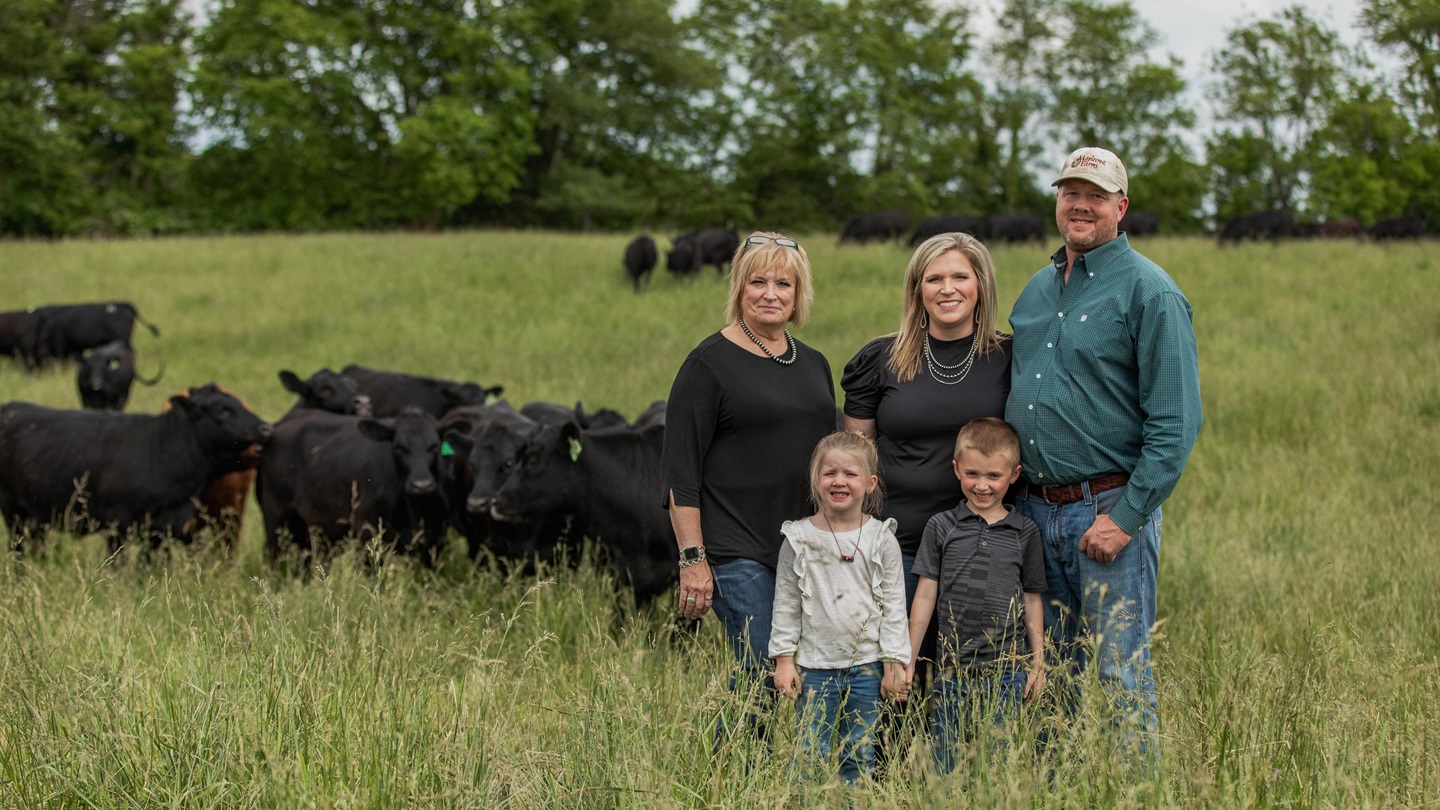
“We look for those we can belly up with and go through thick and thin,” says Joanie Grimes, owner of Maplecrest Farms, Hillsboro, Ohio. “That’s how we approach Certified Angus Beef (CAB) as a partner.”
It’s a mindset that makes Maplecrest Farms a strong ambassador, not just for the brand but for the entire breed.
Joanie, with daughter, Lindsey, and her husband, Adam Hall, raise registered Angus cattle with two primary goals: producing high-quality seedstock that perform well in a wide variety of environments, and ensuring end-user satisfaction. Those goals tie everything together, from promoting Angus to sharing their story with CAB partners and beef consumers.
Their deep understanding of the cattle industry and demand drivers, along with exemplary support for CAB’s mission earned the 2025 CAB Ambassador Award. They were recognized at the brand’s Annual Conference in September.
Champions for the breed
Joanie’s late husband, John, had a teacher’s heart. The topic he loved most was Angus cattle.
Whether cattlemen he met had 10 head or thousands, he understood everyone’s part and shared those insights with his family.
“The one thing he was never willing to sacrifice was quality,” Lindsey says. “We weren’t ever going to cut corners. We have to take care of our customers, treat them with respect and always teach.”
The Grimes’ hobby of raising show heifers went awry after one road trip across Kansas in 1998 changed their direction, Joanie says. What started as 40 cows has grown and expanded to an Angus seedstock business with more than 300 cows.
Since that road trip, they’ve also broadened their customer base.
“Folks in our region want their cows to look good, but we also understand and respect the bigger picture and our role as registered Angus breeders in the beef production chain,” Lindsey says. “It’s a delicate balance and you have to be very disciplined.”
They like their cows moderate-framed, easy-fleshing and sound-structured, Adam adds. She should check the box for maternal and functional traits, but also carry strong carcass traits, for their commercial customers.
Approximately half of their Angus bulls are shipped to Kansas and developed for Gardiner Angus spring and fall sales. Their Ohio customers pay more attention to phenotype than genotype, so they hold back some Angus and Sim-Angus bulls to sell closer to home. They also host a female sale every September.
Patient study of pedigrees, examining how cattle are built and then choosing careful mating combinations, has paid off.
“There’s some thought in the industry that you can’t have both,” Joanie says. “John was very successful in breeding cattle that not only produce Prime carcasses, but also are very fine individuals that you are proud to look at in the front pasture.”
Watching John teach cattlemen for years and his leadership on the American Angus Association Board of Directors turned the entire family into champions for the beef industry.
“There was nothing Dad loved more or was more passionate about than raising a high-quality steak for someone’s plate,” Lindsey says.
“There was nothing Dad loved more or was more passionate about than raising a high-quality steak for someone’s plate.” — Lindsey Hall
A growing connection
As Ohio natives, Joanie says watching CAB take off was like watching a hometown kid make it to the big leagues for John.
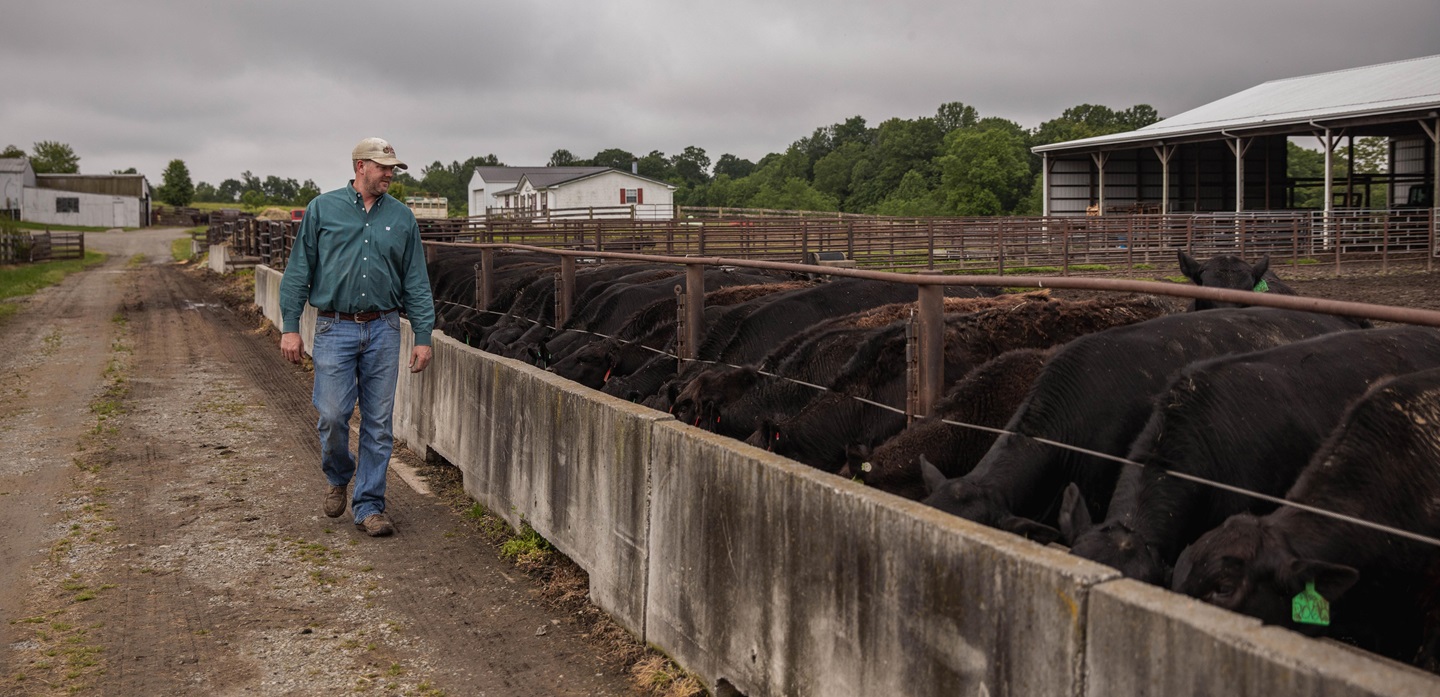
Hillsboro is only three hours from the CAB office and in closer proximity to many brand partners. The family is always willing to attend food shows to represent Angus producers and share how cattle are cared for on the farm. They also host CAB ranch days throughout the year.
Guests flood the yard, filing into an open-sided tent, eager to learn what it takes to raise the CAB brand that fills shelves in Sysco distribution centers. They make it interactive, bringing cows to the pens by the yard.
After hosting dozens of tours, Lindsey says the biggest surprise is when guests realize the science and technology ranchers use. They walk through the barn and see the semen tanks and where embryos are kept. They show them where cows are flushed and then bred using in vitro fertilization.
“Those are things they can relate to because they understand from a human perspective,” Lindsey says. “It’s so fun to see their faces light up because they had no idea we use the same technology.”
Being ambassadors for CAB has shown them that everyone has a role in the beef supply chain. From the suburban mom buying and cooking meals for her family to the dad who’s grilling steaks for a holiday weekend, Lindsey says her family is passionate about raising premium beef for all kinds of families. But she’s also thinking a step ahead.
“Even though we’re at the beginning of the production chain, we’re always thinking about the restaurateur and foodservice distributors and how the decisions we make at breeding affect the eating experience they deliver to their customers,” Lindsey says.
And ultimately, the success of both their businesses.

From farm to fork
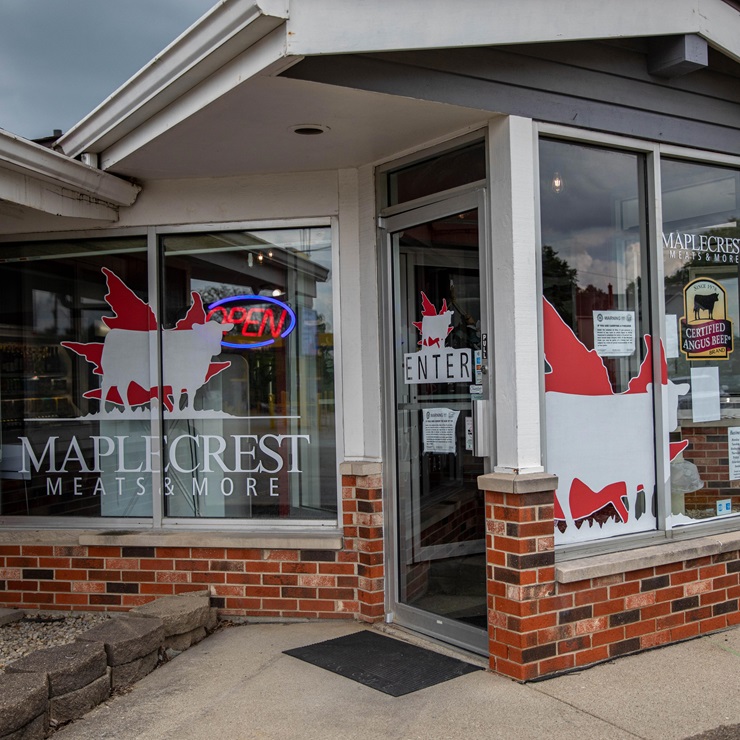
They’re early adopters of science and technology that help make genetic progress. But being far from feedyards made it hard to see the full effects of their work. They wanted to know just how their cattle were performing on the plate. In the spring of 2021, they went all in on a direct-to-consumer meat business: Maplecrest Meats.
The new store not only gave Lindsey a larger role with the family business, but it also gave them another way to work with their customers to source beef. They tap into a supply of calves, still using Maplecrest genetics, to source a wider variety of ages for the store year-round.
This also gives their local bull customers another market for their feeder calves, Joanie says.
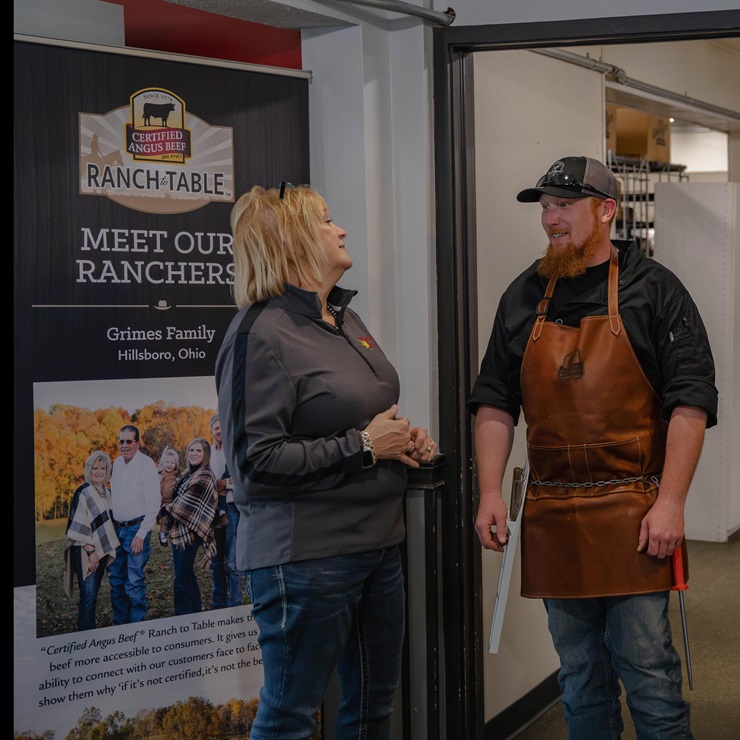
To be successful, they needed the right partner. That’s how they became one of the first CAB Ranch to Table™ licensees.
Maplecrest Meats also gives them a direct avenue to engage and talk with consumers.
“When we tell people our story at the store, one of the things we tell them is that everything that is in that freezer and every mama cow and every bull we own has had a 23andMe® test,” Joanie says. “They kind of look at you [puzzled], and we tell them how we know genetically what makes them up.”
They test DNA for each animal and submit phenotype and performance data to the American Angus Association.
For years, this improved their cattle; now it’s helping their store succeed and grow.
“We make all these decisions as far as pushing the envelope where ribeye and marbling are concerned, and it’s nice to be able to see the actual fruits of those labors,” Lindsey explains. “Realizing, ‘Oh yeah, there’s definitely a method to the madness,’ and if you believe in the science and embrace the science, it does work.”
All that work done today will be enjoyed on someone’s dinner table years down the road. Realizing that, they’ll always be strong ambassadors for every step of the beef supply chain.
Topics: Consumer , Award winner , Association News , Ranch profile
Publication: Angus Journal
Related Publications


Current Angus Journal
Keep up on the latest stories of the people and programs in the breed.

Latest Podcast Episode
Don’t miss conversations with breeders and industry experts.