




REPRO TRACKS
The Importance of Early Pregnancy Establishment in Beef Heifers
Effects on herd longevity and strategies for success.
February 19, 2026
Why does the first 21 days of the breeding season for heifers matter? In beef cattle operations, the reproductive performance of heifers is a critical factor affecting both short-term productivity and long-term herd sustainability. One of the most influential benchmarks in herd management is the ability to establish pregnancy in beef heifers within the first 21 days of the breeding season.
This early pregnancy window isn’t just a matter of convenience; it has profound and measurable effects on the longevity and overall productivity of the herd, as well as on the producer’s bottom line.
Establishing pregnancy in the first 21 days of the breeding season sets the foundation for a more productive and profitable herd. Heifers that conceive early are more likely to calve early in their first calving season, which offers several advantages. First and foremost, early-calving heifers have more time to recover and resume their estrous cycles before the next breeding season, increasing their chances of becoming pregnant in their second breeding season and remaining in the herd as productive cows year after year.
Research consistently demonstrates heifers that bred and calved earlier remain in the herd longer and have greater lifetime productivity. They produce more calves with greater weaning weights over their lifetime and are less likely to be culled for reproductive failure. In contrast, late-bred heifers often struggle to maintain the optimal calving interval, resulting in fewer total calves, lower weaning weights and a greater likelihood of being removed from the herd prematurely. Calves born earlier in the calving season benefit from more favorable calving conditions, more feed days to weaning and less exposure to disease. These advantages translate into higher weaning weights and improved overall herd performance.
Effect on longevity and long-term sustainability
Longevity in the cow herd is a key driver of profitability. Every year a heifer remains productive reduces the cost of replacement heifers and maximizes the return on investment for the producer.
When a heifer fails to conceive early, she faces a cascading series of disadvantages. Late calving means less time to recover before the next breeding season, which increases the risk of failing to become pregnant, resulting in culling. Over time, this pattern leads to a herd with fewer high-producing, long-lived cows and more frequent turnover of replacement heifers.
A study (Cushman et al., 2013) determined the longevity data collected on 16,549 individual heifers at the U.S. Meat Animal Research Center (USMARC). Data were limited to heifers that conceived during their first breeding season. Heifers were grouped into 21-day calving periods and were determined to have left the herd when they were diagnosed not pregnant at the end of the breeding season. Heifers that calved with their first calf during the first 21-day period of the calving season had increased longevity compared with heifers that calved in the second 21-day period or later (Figure 1).
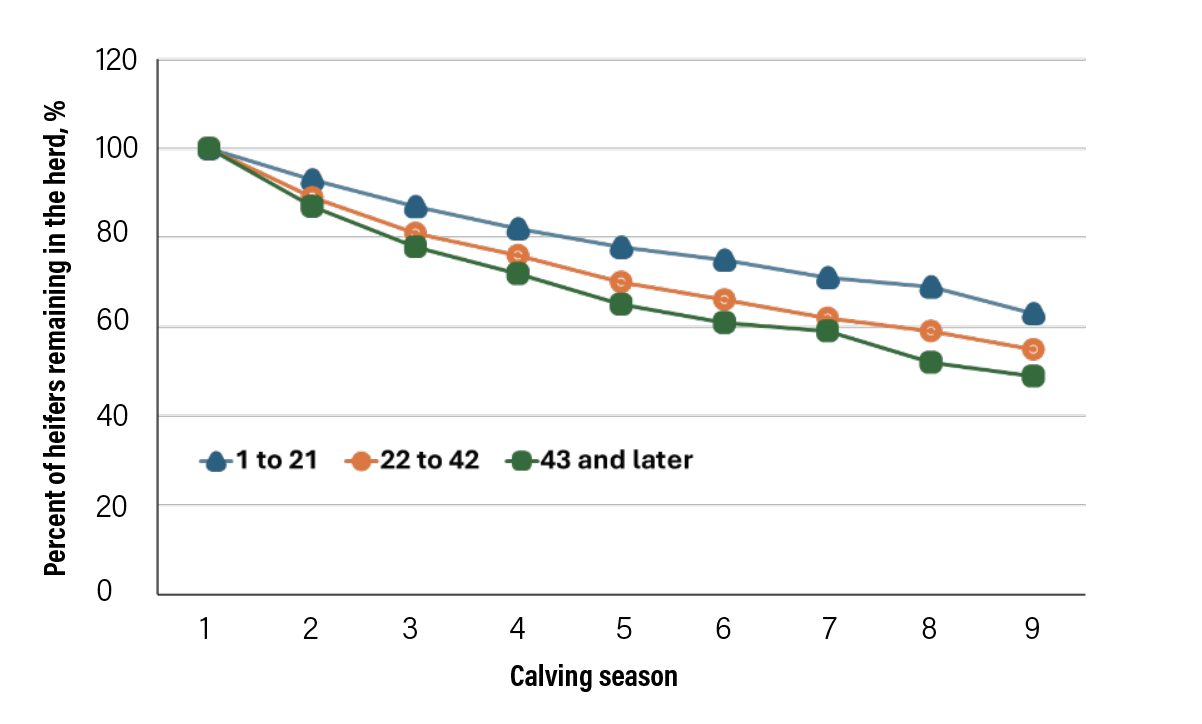
Fig 1: Results from heifers (n = 16,549) adapted from Cushman et al., 2013. More heifers from the first calving period remained in the herd after 5 years of age than from the later calving periods.

The genetic progress within a herd depends on retaining the best-performing animals. Early-conceiving heifers demonstrate superior fertility and adaptability, traits that are desirable to propagate in future generations. By prioritizing early pregnancy establishment, producers can accelerate genetic improvement and build a more resilient herd.
Economic implications
The economic benefits of establishing pregnancy in the first 21 days are substantial. Early-conceiving heifers contribute more calves over their lifespan, leading to greater revenue from calf sales. They also require fewer interventions and less management input, reducing labor and veterinary costs associated with late-bred or open heifers. A uniform calving season, achieved by early conception, streamlines management practices.
Producers can plan for labor, more efficient feed and health interventions, minimizing disruptions and maximizing resource use. In contrast, extended calving seasons complicate management and increase the risk of disease outbreaks, nutritional deficiencies, and calf mortality.
How to get more heifers pregnant early
Achieving high rates of earlier pregnancy requires a multifaceted approach that combines nutrition, management, genetics, and reproductive technologies. Below are key strategies proven to improve early pregnancy rates in beef heifers.
Prebreeding nutrition and body condition: Optimal nutrition is the cornerstone of reproductive success. Heifers should enter the breeding season at a target body condition score (BCS) of 5-6 (on a 9-point scale). Underconditioned heifers may not cycle regularly, while overly conditioned animals can also face reproductive challenges. Providing a balanced diet with adequate energy, protein, minerals and vitamins ensures heifers reach puberty and maintain regular estrous cycles. Monitor weight and BCS regularly leading up to the breeding season, supplement with minerals that may be deficient in your region and those that are critical for reproductive health, and adjust feed rations based on pasture quality and forage availability.
Reproductive management and estrous synchronization: Estrous synchronization programs can dramatically increase the number of heifers cycling at the start of the breeding season. By aligning estrous cycles, producers can ensure more heifers are ready to conceive during the first 21 days. Use protocols that may induce puberty in prepubertal heifers, combine estrous synchronization with artificial insemination (AI) to introduce superior genetics and maximize conception rates, and closely monitor heifers for signs of estrus and inseminate them at the optimal time.
Genetic selection: Selection of heifers from dams with a history of early conception and calving can improve herd fertility over time. Focus on traits such as reproductive efficiency, calving ease, and maternal instincts when choosing replacement heifers. Use expected progeny differences (EPDs) for fertility and calving interval to guide selection decisions; and retain heifers born early in the calving season, as they are more likely to conceive early themselves.
Health management: Healthy heifers are more likely to conceive and maintain pregnancies. Implement a comprehensive health program that includes vaccination, parasite control and routine veterinary checks. Vaccinate for reproductive diseases such as bovine viral diarrhea (BVD), infectious bovine rhinotracheitis (IBR) and leptospirosis; control internal and external parasites to prevent nutrient loss and disease transmission; and address lameness, injuries or other health issues promptly to maintain optimal reproductive performance.
Establishing pregnancy in beef heifers within the first 21 days of the breeding season is a pivotal management goal with far-reaching implications for herd longevity, productivity, and profitability. Early-conceiving heifers become the backbone of successful cow-calf operations, contributing more calves and remaining productive for years.
By focusing on nutrition, reproductive management, genetics, health and breeding practices, producers can maximize early pregnancy rates and ensure a sustainable, high-performing herd for years to come. Investing in strategies to get more heifers pregnant early is not just good practice, it’s essential for the long-term success of any beef cattle operation. Through careful planning and proactive management, producers can reap the rewards of a herd characterized by longevity, fertility and profitability.
Topics: Reproduction , Association News , Animal Handling , Member Center Featured News , Management
Publication: Angus Journal
Related Publications


Current Angus Journal
Keep up on the latest stories of the people and programs in the breed.

Latest Podcast Episode
Don’t miss conversations with breeders and industry experts.