




Forging a Future
Two first-generation ranchers show that grit, creativity and a willingness to defy convention can build a legacy in the cattle business.
August 26, 2025
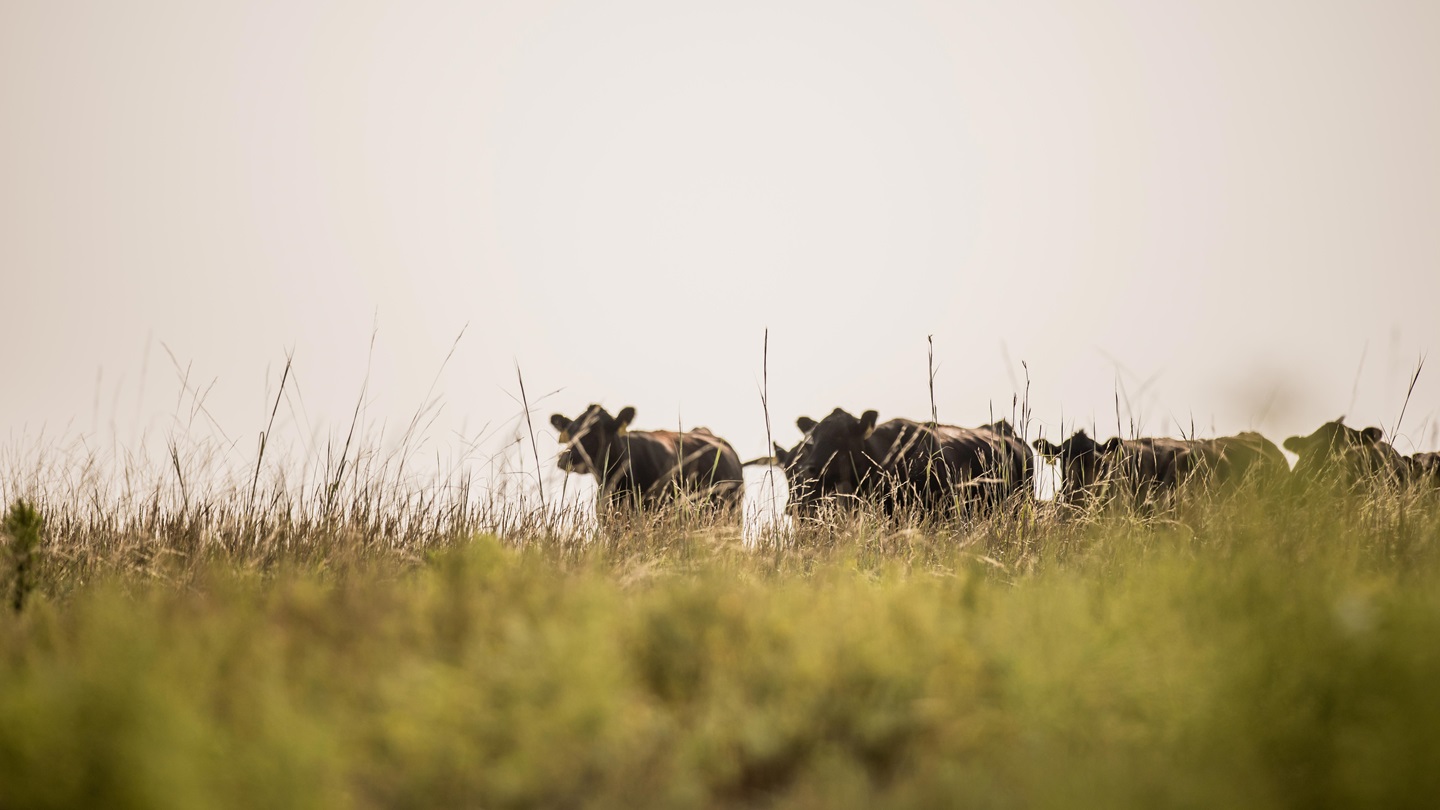

“Being willing to do what other people aren’t will get you what other people don’t have.”
If there’s one tip Seth Christensen would give to young people wanting to enter the cattle business, it’s that.
As the founder of Christensen Genetics, he started his cattle operation from the ground up, proving there are still ways to get into ranching even if it’s not something you were born into.
Christensen grew up on a family farm, but as wheat and alfalfa growers, there were no cows in sight.
“I remember being a kid at a family dinner once, and I told my aunt that when I was done with college, I just wanted to come back and then go to the ranch. She said, ‘What ranch?’” Christensen says with a laugh. “Because there wasn’t one. I remember thinking, ‘Exactly, there isn’t a ranch, meaning I’m going to have to go build it.’”
He bought his first two calves at just 11 years old — two bull calves from a neighboring dairy where he worked milking cows. By the time he was 15, Christensen was making money doing custom artificial insemination (AI) work and selling cull cows as family milk cows.
“I was just able to make a lot more per hour than … if I just sold my time,” he says.
From then on every penny he made went into cows, building what would eventually become the 400-head herd Christensen runs today in Weston, Idaho. He started utilizing embryo transfer (ET) when he was 17, selling the registered embryo calves at a premium and using the commercial cow herd as recipients.
In those early years, he grew by thinking creatively about ways to use land no one else wanted. Starting small, he grazed his herd of less than 20 cows along ditch banks.
"I didn't even have to pay them, because it was just ditch banks that needed to be burned," Christensen says. "The cows would graze them off instead."
That mindset scaled up as the herd grew. Now, Christensen has invested in temporary electric fencing and a water truck, which allows him to take advantage of unfenced, dry pieces of ground other ranchers don’t want.
“It is cheaper to haul water than it is to haul hay,” he explains.
He only owns 96 acres, but is still able to run 400 cows while keeping a low land payment.
That, Christensen says, is the real secret to starting out.
“Be willing to try some things that are atypical,” he explains. “The game has changed…you have to be willing to go at it a different way and find things that work.”
Different start, same spirit
Drew Lewis also knows a thing or two about starting from scratch.
Lewis grew up on a dairy farm, an experience he describes as “intriguing, but it wasn’t something that I wanted to do.” Instead, it was the Angus cows his grandfather raised just across the road that sparked his interest.
In 2014, he and his wife, Kaci, decided they wanted to return to their roots and raise their kids in the agricultural lifestyle. That led them to buy the first 80 acres of Skyline Angus in Stevensville, Mont.
Initially focused primarily on the commercial side of the cattle business, Lewis started small with just a handful of cattle — all his time and wallet could afford. The operation took a significant leap in 2020, when they had the opportunity to purchase a larger herd from Trexler Angus, whose owners were looking to retire.
That allowed them to take a step into the registered side of the business, but they had a lot of help.
“I’ll give Larry Trexler a lot of kudos,” Lewis says. “When we purchased Larry’s herd, they gave us three years to purchase them. He probably calls me once a week to see if we need help with anything. He just wants to see his program continue and succeed, and he wants to see us succeed.”
In 2025 Skyline Angus hosted its second annual bull sale, a testament to the continual growth of the program. But the success hasn’t come without sacrifices. Like Christensen, Lewis acknowledges the challenges of finding good ground to run cattle on.
He says, “You have to be willing to take some of the leases that are not as appealing as others, and you’re going to have to fix a lot of fence and work on irrigation systems.”
Today Lewis owns 492 acres, but leases close to 10,000 acres across 13 different properties.
His advice for others starting out?
“Keep your day job,” Lewis says with a laugh.
But really, he advises young producers to invest their time into learning from experienced ranchers and their money into better cattle.
“The upfront cost of buying cattle is steep … have cows that are going to build you a herd and a foundation. Try to work with these older generations that have a lot of knowledge … If they see that you’re willing to work hard and trying to build something, they’re usually willing to help you.”
Lewis admits that ranching is a tough industry to break into. With the prices of land and cattle continuing to rise, it can be daunting for those interested in starting a herd of their own. But as both Skyline Angus and Christensen Genetics have proven, ranching rewards those who are willing to do what others aren’t.
As Lewis puts it, “You’ve got to take a little bit of a leap of faith. If you don’t, you’re never going to get there.”
Publication: Angus Journal
Related Publications


Current Angus Journal
Keep up on the latest stories of the people and programs in the breed.

Latest Podcast Episode
Don’t miss conversations with breeders and industry experts.