The AGI Research recap
AGI'S FOCUS ON RESEARCH
Leading Genetic Change
Genetic improvement in the beef industry is made possible by cattle producers who collect and contribute performance data—and by the collaborative efforts of organizations like Angus Genetics Inc. (AGI®) that turn data into reliable, science-backed tools.
AGI remains committed to research, technology, and collaboration to help independent cattle producers stay competitive, profitable, and positioned for long-term success.
OUR RESEARCH PROCESS
This report from AGI® highlights key research initiatives from 2023 through 2025. These initiatives reflect our commitment and contributions to advancing genetic tools for the Angus breed and beef cattle industry at large.
At the core of our work is the research process itself. For those unfamiliar with how genetic research unfolds, we’ve outlined the standard steps we follow. Understanding the process is just as important as understanding the progress — it’s what makes innovation possible.
Celebrating the push to production
Research wins throughout the 2023-2025 fiscal years

Maternal Performance
The Angus cow plays a foundational role in the success of both the Angus breed and many commercial operations. To support maternal selection, AGI helped expand and improve the American Angus Association's suite of genetic selection tools by developing prediction models for three new EPDs - Functional Longevity (FL), Teat Size (Teat), and Udder Suspension (UDDR), alongside updates to existing maternal traits.
Jump to section
Health & Management

Optimizing Evaluations
As part of its ongoing commitment to genetic improvement, the AGI team continues to refine evaluation models for our clients and pursue greater accuracy across their suites of genetic tools. These updates support both internal research efforts and services provided to partners like the American Angus Association and other breed orgnaizations.
Jump to section
Maternal Performance
The Angus cow plays a foundational role in the success of both the Angus breed and many commercial operations. To support maternal selection, AGI helped expand and improve the American Angus Association's suite of genetic selection tools by developing prediction models for three new EPDs - Functional Longevity (FL), Teat Size (Teat), and Udder Suspension (UDDR), alongside updates to existing maternal traits.
Jump to section
Health & Management
Optimizing Evaluations
As part of its ongoing commitment to genetic improvement, the AGI team continues to refine evaluation models for our clients and pursue greater accuracy across their suites of genetic tools. These updates support both internal research efforts and services provided to partners like the American Angus Association and other breed orgnaizations.
Jump to sectionMATERNAL PERFORMANCE

 Functional Longevity (FL)
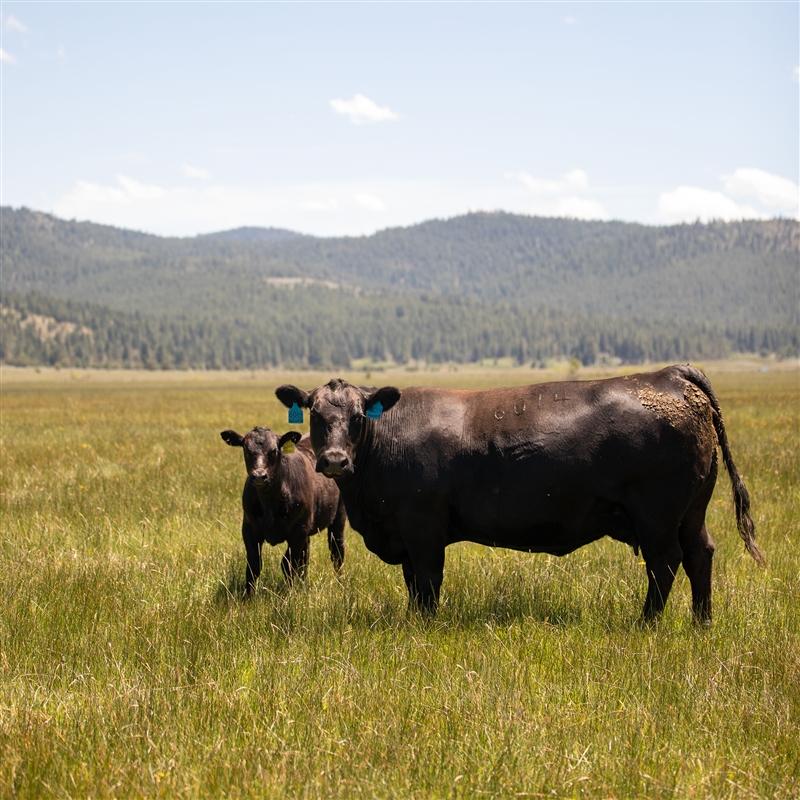
Early findings made it clear that a stable evaluation would require robust, whole-herd data. In response, the American Angus Association launched the MaternalPlus program in 2012—now known as the AHIR Inventory Reporting program—to support this long-term research effort. After years of data collection, the research gathered new momentum in 2018, focusing on trait definition and initial data discovery. Through continued refinement and analysis, the FL trait matured into a reliable genetic tool. In the summer of 2025, the Functional Longevity EPD officially transitioned from research status to a weekly production EPD.
Expressed as the number of calves, the FL EPD estimates how many calves a sire’s daughters are expected to produce by six years of age, compared to daughters of other sires. The random regression model allows for all individually reported calves to give credit to the evaluation over time, adding depth and precision to the prediction.
 Teat Size & Udder Suspension
Teat and UDDR EPDs –transitioned from a research to production EPDs in 2025 - are recommended for identifying potential genetic outliers in udder structure to help avoid the unintended consequences of a sire’s daughters whose udders may break down early in life. The traits are captured on a 1-9 scoring scale by individual producers within 24 hours of calving. The foundation for Teat and Udder EPDs began more than a decade ago with data captured through the Angus Information Management Software (AIMS) program. In 2021, the American Angus Association enhanced reporting capabilities by integrating teat size and udder suspension scoring into AAA Login, allowing producers to submit scores within 24 hours of calving using a standardized 1–9 scale.
Following this upgrade, records from across the country began pouring in. Early data collection enabled AGI to estimate heritability and explore the genetic relationship between the two traits. Over the next several years, the data population continued to grow, and the traits were refined for genetic evaluation. This work culminated in the release of research EPDs in 2024. In 2025, the Association transitioned Teat and Udder EPDs from research to weekly production status, marking their official inclusion in the Maternal Weaned Calf Value ($M) index and providing producers with a reliable, data-driven tool for maternal selection.
Continued Focus on Fertility
Over the last several years, AGI has teamed up with researchers at Kansas State University to tackle questions that matter most to cattlemen. The research has focused on the ability to improve male fertility an area that directly impacts breeding success and herd profitability. By analyzing breeding soundness exam records we are trying to understand if and how these types of records can be used for genetic selection. With that, the groups is analyzing selection patterns in the genomic data which could help identify more fertile and reliable bulls. The research works to give rancher betters tools to make selection decisions, reduce risk and build more productive tools.
 Heart Health
As part of AGI’s ongoing research to deliver tools to the American Angus Association to support health and adaptability, the PAP EPD was officially released for registered Angus seedstock in 2022. In 2025, this tool was added to the GeneMAX Advantage lineup-giving commercial producers who buy registered Angus bulls access to those insights for their individual females – especially for those living at high elevations (>5,000 feet).
Though the heart health story isn’t done. In 2018 cattle reportedly dying of congestive heart failure but at evaluation lower than 4,000 feet made its way into the headlines. With initial reports showing the potential of a genetic tie, the AGI team embarked on the Heart Health Initiative, that pulled together a coalition of industry supporters to tackle the topic. The group has been collecting heart remodeling scores from the plant floor to investigate its genetic nature and the potential relationships with already predicted traits like PAP, Carcass Weight, Backfat thickness, marbling, and others.
While the research is still in progress, early heart score data collected through 2025 suggests that heart score is heritable. AGI remains committed to studying bovine congestive heart failure (BCHF) and is working closely with collaborators to better understand the genetic factors behind the condition.

 Hair Shedding
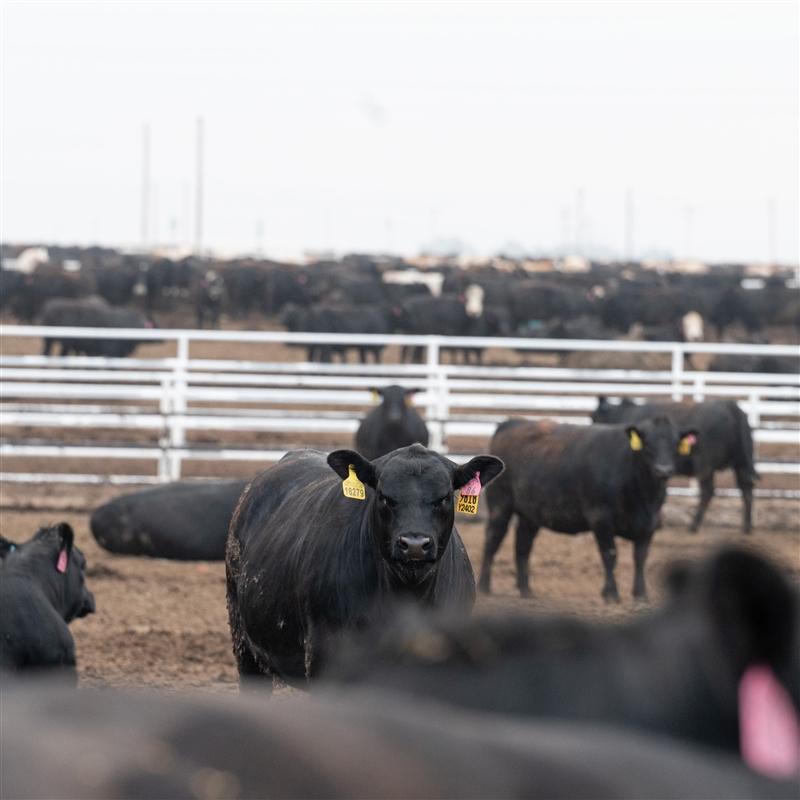
Hair shedding is a valuable indicator trait for heat tolerance and resistance to fescue toxicosis, making it a useful tool for genetic risk mitigation. Cattle that shed their winter coat earlier in the season tend to experience less heat stress, allowing them to redirect energy toward milk production and caring for a calf.
Our analysis of Angus data from the Association suggests a moderate genetic correlation between a dam’s hair shedding score and the weaning weight of her calf, reinforcing the trait’s relevance in maternal performance.


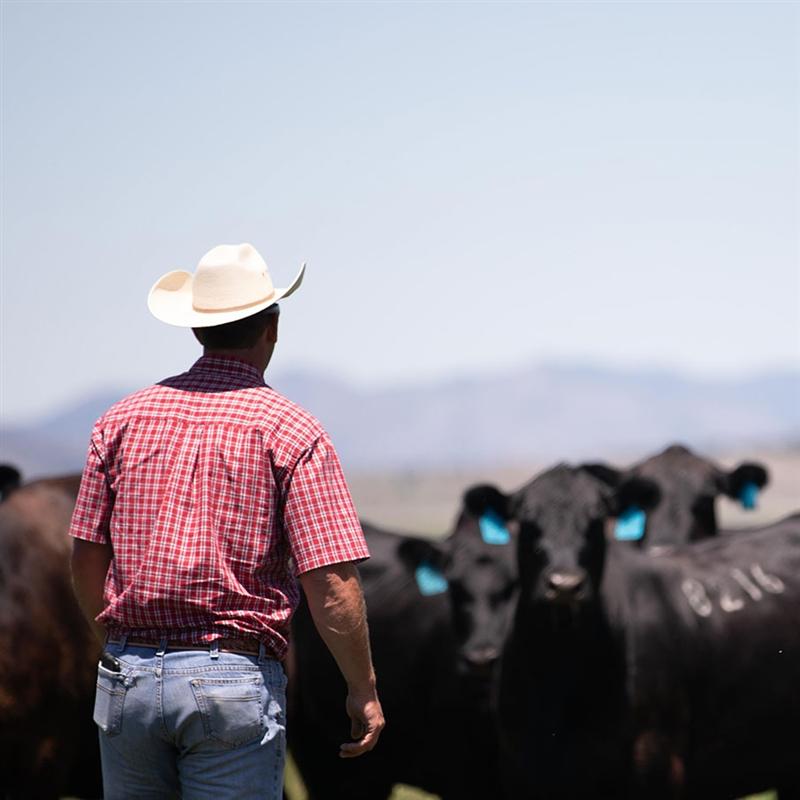
"I look at the data, the information; and I trust you guys with everything that I have."
- Colt Coffee, Montana commercial producer

GeneMax Advantage Upgrades
In 2024, AGI added Association $Value indexes — Beef Value ($B), Grid Value ($G), Feedlot Value ($F), Maternal Weaned Calf Value ($M) and Combined Value ($C) — to our GeneMax Advantage test results. A landmark move for genetic selection, $Values provided for commercial females tested with GeneMax are directly comparable to $Values of registered Angus bulls.
In addition to standard updates that further refined the product's prediction models (using new data received since the last recalibration), we also upgraded the product software, developed by the University of Georgia.
Why does this matter?
Adding $Values to GeneMax Advantage gives producers a tool to directly compare their commercial females to the $Values of registered Angus bulls. This also creates a common language for seedstock and commercial producers and, consequently, an easier path forward as both pursue genetic improvement.
Model Updates:
Each of our genetic evaluation clients receive hundreds of thousands of new data points — including pedigrees, phenotypes, and genotypes. In response and in service to them and our genetic evaluation clients and the tens of thousands of breeders and commercial producers that utilize our genetic selection tools, we analyze the new data and routinely update our prediction models.
With any genetic evaluation update, the AGI team considers what parallel measures can be taken to reduce computing time without sacrificing quality. This is important for uninterrupted delivery of genetic evaluations, whether they are run weekly or on a different cadence.
Angus $Values
Annually, to make sure tools are current with market conditions, the economic assumptions used within the Association's $Values are updated to reflect 7-year market trend rolling averages.
As new traits are added to an evaluation or remodeling occurs with individual traits, our team ensures updates become incorporated into to $Values. In 2025, $M updates were released to correspond with FL, TEAT, and UDDR additions and Heifer Pregnancy (HP) remodeling. See the plot below, describing changes to selection pressure on specific traits within $M before and after the update.

Response to Selection
EPDs offer a powerful selection tool you can use individually or together to balance selection according to your herd’s needs and future goals. These tools work best when you know where you’re going and where you’re at.
Selection indexes take things a step further. Unlike EPDs, they incorporate actual cost and revenue estimates from different sectors of the industry, offering a more comprehensive view of profitability.
The figure below illustrates the selection response for the Association's $M over a 10-year period, comparing the index before and after the 2025 updates conducted by AGI. It shows how even subtle changes in trait emphasis can influence long-term genetic direction. We take great care in refining these tools to empower positive genetic progress.
$M Response to Selection
The updated $M index, released in May 2025 by the Association, now includes Foot Score (FL), Teat, and Udder (UDDR) traits. While the overall structure of the index remains similar, the update shifts more focus toward functionality and productive longevity.
This means we consulted the data and with the Association as our client to ensure this was a balanced approach. There is less emphasis on traits like weaning and yearling weights, docility, and Dry Matter Intake (DMI), and more attention to type traits such as Claw, Teat, and UDDR. Both Heifer Pregnancy (HP) and Foot Score (FL) carry similar weight in the updated index.
Why does this research matter?
It highlights how a selection index like $M supports balanced selection, allowing producers to prioritize multiple traits at once in a way that’s both practical and profitable.
Data Driven Success
Types of Data Collection
Continued phenotypic data collection will be vitally important for genetic evaluations of the future. Even in the this era of genomics and genomic prediction, good phenotypic data is more important than ever. This may mean increased data collection on different traits, using technology for passive data collection, or collecting data further down stream in the commercial cow-calf segment and beyond.
Tangible Outcomes
As any researcher knows, good science takes time. The AGI team and its collaborators aim to stay ahead of the curve. Within our portfolio of ongoing research, two projects stand out as examples of how we're working with Angus producers to proactively study emerging topics.
- Abnormal calf death reports: The Fertility Haplotype Project aims to detect haplotypes with lethal potential that affect the fertility of cows in the Angus population. Haplotypes under investigation may have different effects based on their location including stillbirths or early calf death. Having a DNA sample on those calves allows us to be more precise on the identification and better understand the haplotype effect.
- Methane collection: Although significant progress has been made in developing selection tools for feed intake during the postweaning gain phase to describe efficiency, accurately measuring intake in grazing cattle remains a major challenge. Selection for methane and other emissions in combination with other important production traits may pose a potential solution.
research as a team sport
Genetic research takes a coordinated effort — from model development and data analysis to interpreting results and applying findings in meaningful ways. The team works closely with academic institutions, industry collaborators, and producers to ensure the research reflects real-world conditions and priorities.
While partners often lead data collection efforts, the AGI team’s strength lies in bringing those datasets to life by refining models, uncovering patterns, and translating insights into tools producers can use. It’s a shared pursuit of progress, built on collaboration, curiosity, and a commitment to improvement.
View research partners on key projects later in the report.

 Imagine Forum
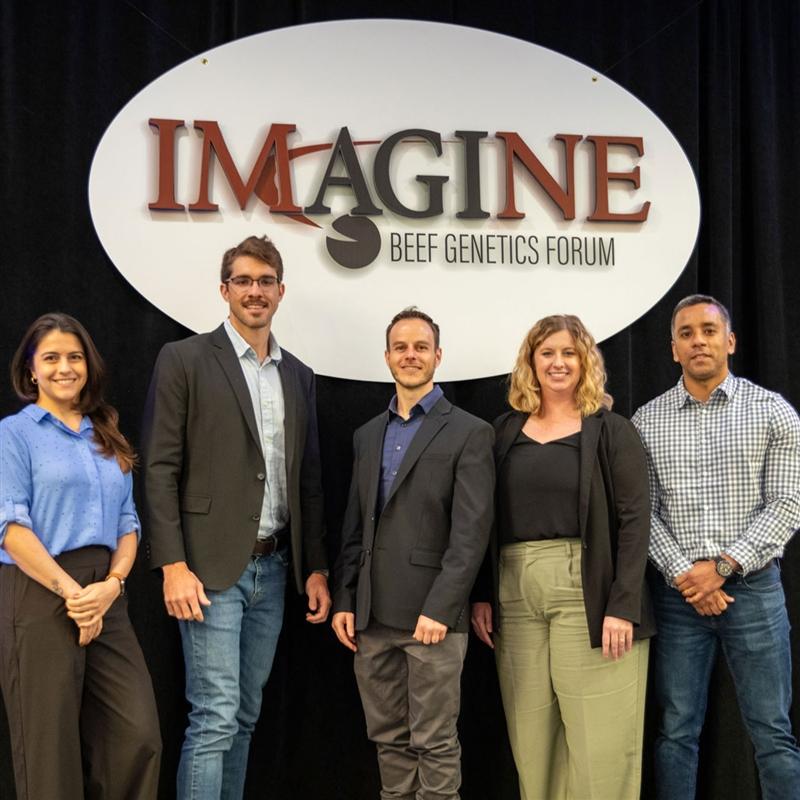
Imagine: AGI's Beef Genetics Forum hosted a cross-section of the beef industry to think about future phenotypes and data collection.
 White Paper
This white paper, released in January 2025, reveals that driving innovation in genetic evaluations will depend on radical collaboration across the value chain, where shared data unlocks deeper insights, fills critical gaps, and delivers better tools for producers.
 Heart Health
With nearly a dozen industry partners involved, the heart health initiative reflects how tackling complex challenges, like heart remodeling, requires teamwork from a variety of industry groups.
AGI® White Paper

"The title was right on. If you didn't leave that conference imagining, you weren't listening."
Charles Mogck, South Dakota Angus breeder
COLLABORATORS
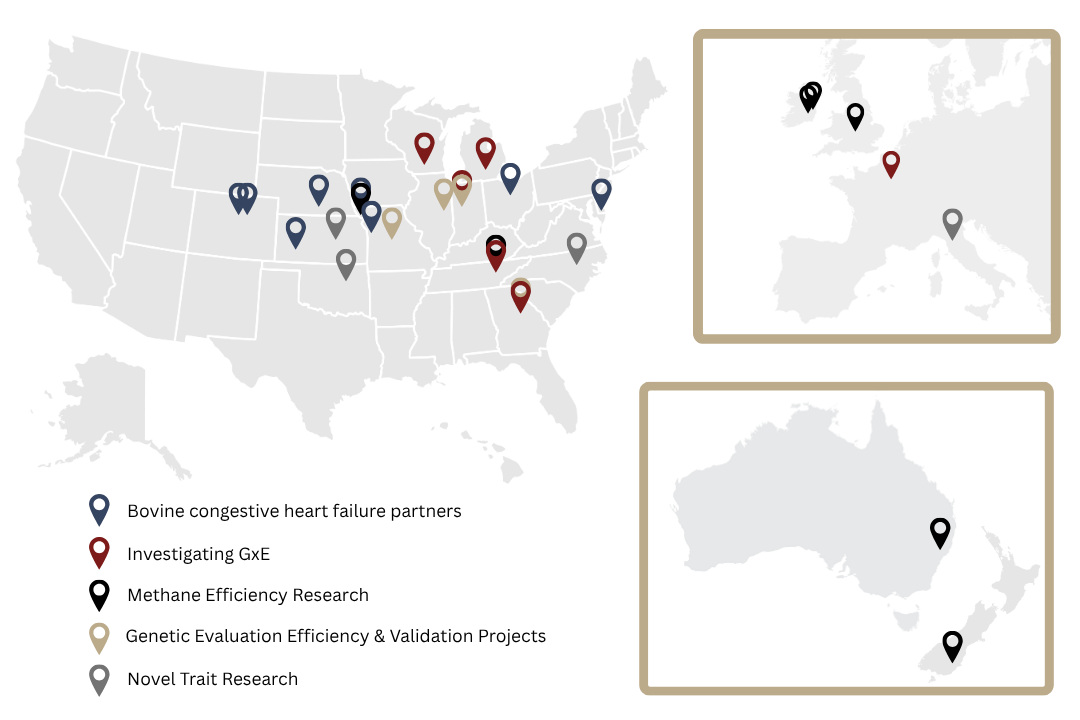

Bovine Congestive Heart Failure Partners





Genetic Evaluation Efficiency Projects & Validation




Methane Efficiency Research





Novel Trait Research




About AGI
The AGI team leads the development and delivery of genetic evaluation tools. Through rigorous research, model refinement, and collaboration with industry partners, AGI supports data-driven decisions that help improve herd performance and long-term industry profitability.
AGI provides genetic services to the American Angus Association and other clients, developing and improving tools like EPDs, selection indexes including $Values, and commercial products such as GeneMax® Advantage — all designed to help producers make informed selection decisions and achieve greater genetic progress.
Meet the team
Behind every genetic tool is a team of scientists, analysts, and industry experts committed to advancing Angus genetics. From data modeling to field research, the AGI team brings together diverse expertise to support producers and drive innovation in beef cattle genetics.

Additional resources
View all AGI news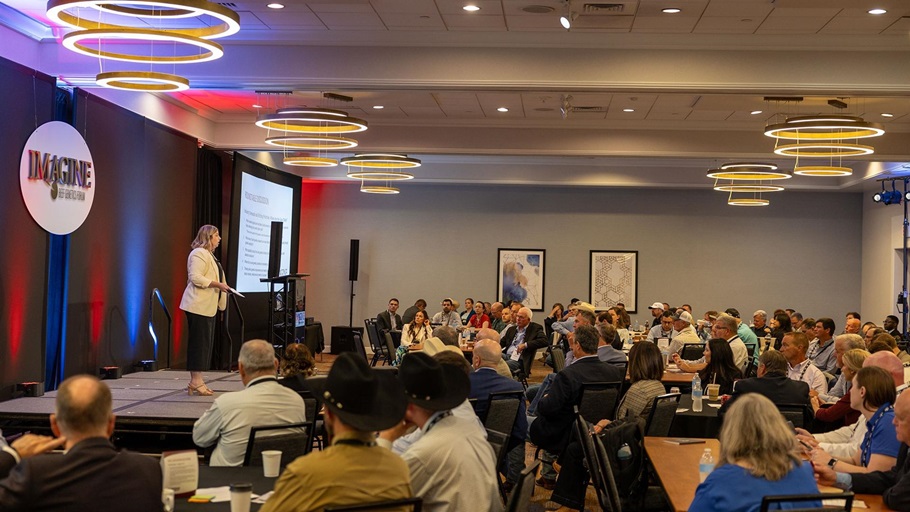
Article
Angus Genetics Inc. Gathers Breeders, Industry, Academia
Imagine: AGI’s Beef Genetics Forum hosted a cross-section of the beef industry to discuss optimizing genetics and management for full supply chain profitability.