



Ten Outstanding Young Leaders Earn Angus Foundation Commercial Cattlemen Scholarships
The Angus Foundation awarded 10 students a total of $15,000 through its 2026 Commercial Cattlemen Scholarship program, recognizing young leaders who utilize registered Angus genetics in their commercial cattle operations.
August 6, 2026
FOR IMMEDIATE RELEASE
For more information contact:
Holly Martin, director of communications
816-383-5143
The Commercial Cattlemen Scholarship program was created to support students who use registered Angus genetics in their commercial herds. The $1,500 scholarship reflects the Angus Foundation’s commitment to investing in the future of the beef industry by empowering young leaders to pursue educational opportunities. New this year, the Angus Foundation was able to double the number of Commercial Cattlemen Scholarship given.
“We are excited to expand the Commercial Cattlemen Scholarship program from five to ten recipients this year,” said Jaclyn Boester, Angus Foundation executive director. “Awarding $15,000 in scholarships allows us to invest in more students who are committed to the cattle industry and to the use of Angus genetics in their operations. Supporting these young leaders is an investment in the future success and sustainability of our industry.”
2026 Scholarship Recipients:
Carter Auten – Ayr, Nebraska
A junior at University of Nebraska-Lincoln, Carter Auten is majoring in Animal Science on a pre-veterinary track. After earning his degree in Veterinary Medicine, he hopes to return to rural Nebraska, open his own clinic and remain involved in his cow/calf operation.
“Using quality genetics like registered Angus will continue to be an important part of that plan, as I work to improve herd quality and help other producers do the same,” he said. “I truly believe in the Angus breed and I don’t foresee myself shifting away from it.”
Growing up in rural south-central Nebraska, Auten shared one the most important decisions made for the operation has been implementing registered Angus genetics into his commercial herd. The consistency and reliability provided by registered Angus cattle are traits that allow Auten to improve overall herd health and performance.
Makayla Doering – Wells, Kansas
Makayla Doering is earning her Animal Science degree at Kansas State University and plans to continue her education by attending veterinary school with hopes of becoming a large animal veterinarian. Raised on her families commercial Angus operation, Doering is involved in various agricultural organizations.
“With all of these lessons, I will enter the veterinary world not only as a doctor, but as a person who is grounded in the ways of the cattle industry,” she said.
Doering and her family chose to incorporate registered Angus bulls into their herd so they could select traits that best fit their cattle. Low birth weight, high calving ease and high maternal traits are just a few that are important for her family.
Kenidey Effling – Highmore, South Dakota
Kenidey Effling is studying Animal Science at Kansas State University with an emphasis on nutritional and reproductive health of various species. Growing up involved in her family’s multi-breed operation, she has learned the importance of using impactful genetics.
“As a family operation, we take pride in producing not just good cattle, but high quality beef. Angus genetics have played a big role in helping us reach that goal by improving both performance and carcass quality, while also making our operation more efficient overall,” Effling shared.
Effling hopes to stay involved in agriculture by combining her background in production agriculture and passion for communications and leadership. She shares that she is committed to being a strong advocate for the beef industry and contributing to its continued success.
Mckenna Gallaway – Springfield, Oregon
Beginning this fall, McKenna Gallaway plans to pursue an associate degree in Animal Science at Linn-Benton Community College, with the goal of transferring to Oklahoma State University to complete her bachelor’s degree before attending veterinary school at UC Davis. She hopes to bridge the gap between producers and consumers by sharing accurate, science-based information about beef production and sustainability.
“From the time I was two years old, standing beside my grandpa during calving on his small hobby farm, I knew cattle would shape my future,” Gallaway said. “Those early mornings watching new life take its first breath sparked a fascination that never faded.”
Since incorporating registered Angus genetics, Gallaway has seen a marked improvement in herd performance. More cattle are qualifying for grid premiums, the calf crop has become noticeably more uniform, and the operation continues to benefit from the breed’s strong maternal traits, contributing to overall efficiency and long-term herd quality.
Amber Gilbert – Albany, Kentucky
Amber Gilbert is currently attending Murray State University on the pre-veterinary medicine track, where she plans to specialize in animal health and reproduction, working with both large and small animals. After completing her education, she hopes to return to a rural community to serve local producers, with a particular focus on supporting those in the beef industry.
“Good cows make all the difference in a herd, and Angus cattle are known for being dependable mothers. That’s something I’ve seen firsthand, and it has had an impact on the overall quality of my herd,” she said.
Through her experience in the beef industry, Gilbert has developed strong leadership skills. She believes these skills will help her better understand producers and enable her to effectively support and advocate for them. Her involvement in agriculture has given her a solid foundation for success, a strong work ethic and a clear sense of purpose as she moves forward in her career.
Henry Hauser – Milan, Missouri
This fall, Henry Hauser will begin studying Diesel Mechanics at State Technical College of Missouri. He hopes to spend his time working on tractors and different pieces of machinery that farmers and ranchers depend on daily. Hauser knows the importance of reliable machinery when it comes to feeding, haying and transporting cattle.
Hauser shares that one of the many reasons he chose to use registered Angus in his commercial herd was the advantage of having tools like Expected Progeny Differences (EPDs). EPDs allow cattlemen, like Hauser, to select cattle based on traits like calving ease, growth, carcass quality, rather than relying of appearance alone.
“In addition, Angus genetics are widely accepted in the marketplace, making them a practical and reliable choice for producing calves that meet industry demand,” Hauser added.
Lance Jones – Stapleton, Nebraska
Lance Jones is a senior at University of Nebraska-Lincoln earning dual bachelors degrees in Animal Science and Agribusiness. Alongside his Agribusiness major, he is minoring in Animal Science, the Krutsinger Beef Scholars Program and the Engler Agribusiness Entrepreneurship Program.
“For us, the switch to registered Angus sires wasn’t about following a trend. It was about finding genetics that could hold their own in one of the most demanding ranching environments in the country while consistently producing calves that perform from the pasture all the way to the rail,” Jones shared.
Residing in the sandhills of Nebraska, Jones knows the importance of cattle who can raise healthy, high performing calves in harsh environments. Since incorporating Angus genetics, Jones and his family have gained females that are easy-fleshing, fertile and built to thrive with minimal inputs.
Grace Ones – Kenmare, North Dakota
Grace Ones is currently studying Animal Science at North Dakota State University and plans to graduate in the spring of 2028. Following graduation, she aims to build a career in sales management and marketing while also establishing her own Angus-based beef operation.
“I plan to work closely with Angus breeders to promote quality genetics through effective sale management, data-driven marketing and clear communication that builds buyer confidence,” Ones shared.
She also recognizes a major advantage of using registered Angus genetics - the strong industry connections that come with them. Ones noted the added value these relationships provide, along with expanded marketing opportunities and access to reliable performance records and ongoing genetic advancements.
Meredith Sturm - Breda, Iowa
Meredith Sturm is attending University of Iowa majoring in Radiation Sciences with plans to graduate spring 2030. After graduation, she intends to return to rural Iowa to treat cancer patients.
“The reason why agriculture continues to be a thriving and desirable community is that its members continue to exceed expectations as leaders. Leadership is important because it is the backbone of a successful life and community,” expressed Strum.
Farming in Iowa means Strum’s herd experiences a wide range of weather and rapid changes. For the past 45 years, the Strum family has relied on Angus genetics as the solution to this challenge. She shares that since implementing Angus genetics, cattle have been highly adaptive and able to withstand Iowa’s extreme weather patterns.
Teah Vennes – Wisall, Montana
A recent high school graduate, Teah Vennes hopes to major in Agricultural Business with the goal of attending law school and eventually establishing a seedstock operation. After obtaining a law degree, she hopes to return to agriculture equipped to advocate for the people who make it work.
Each summer, Vennes and her family trail their cattle about 40 miles into the Bridger Mountains for range. Therefore, implementing genetics that would stay sound, efficient and productive in the herd for a long time was a necessity.
“Registered Angus genetics have helped us build a more consistent, efficient and functional cow herd that fits our ranch and performs year after year,” Vennes expressed.
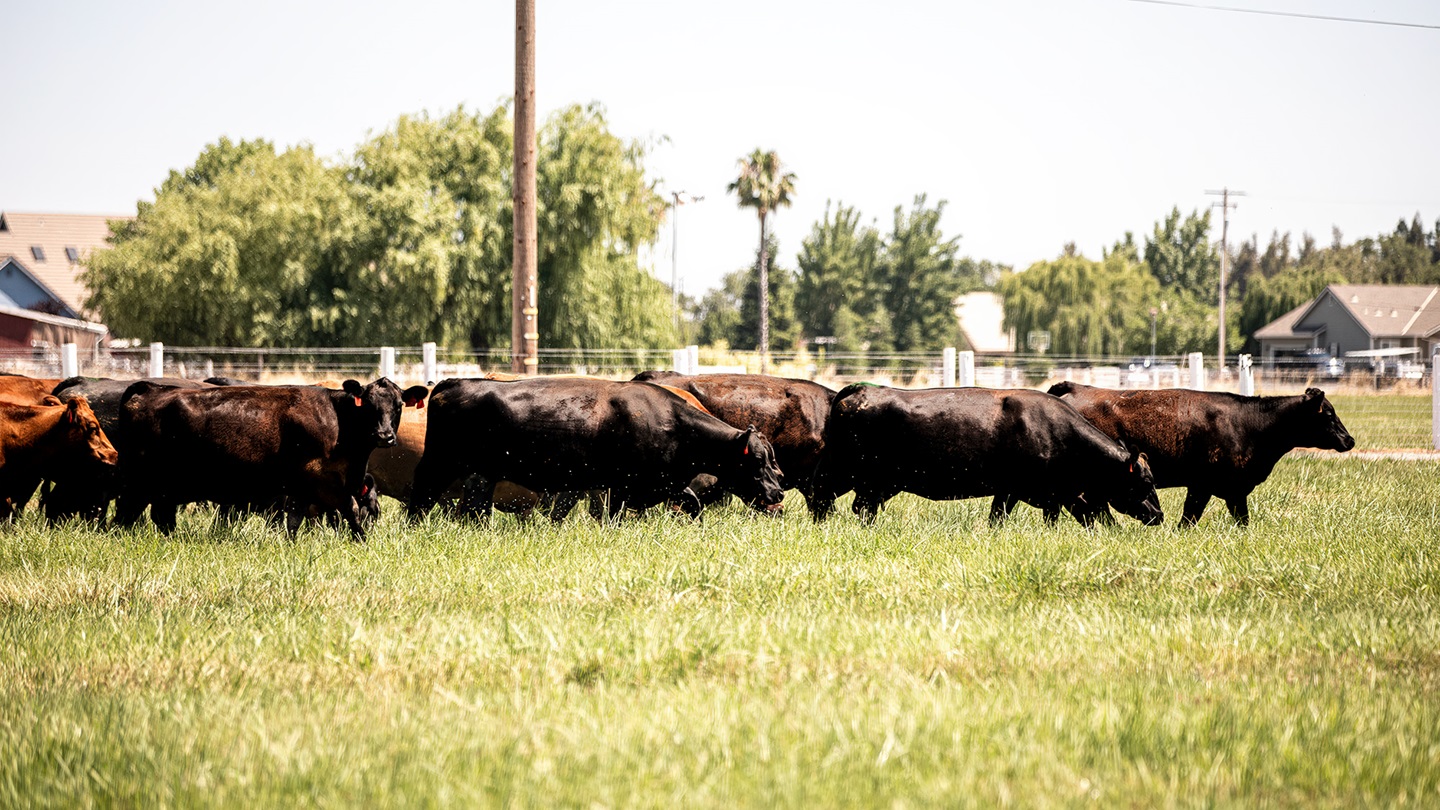

To download a photo, click here.
Cutline: Ten students received the 2026 Angus Foundation Commercial Cattlemen Scholarship, earning support for their educational goals and future contributions to the beef industry.
About the Angus Foundation
Established as a 501(c)(3) organization in 1980, the Angus Foundation remains focused on its mission to support Angus education, youth, and research. The organization has distributed more than $5.3 million in youth scholarships since 1998 and has also invested more than $1.5 million in beef cattle research in the past decade.
For more information, contact the Angus Foundation at 816-383-5100.
ANGUS MEANS BUSINESS
The American Angus Association® is the nation’s largest beef breed organization, serving more than 21,000 members across the United States, Canada and several other countries. It’s home to an extensive breed registry that grows by more than 300,000 animals each year. The Association also provides programs and services to farmers, ranchers and others who rely on Angus to produce quality genetics for the beef industry and quality beef for consumers. For more information about Angus cattle and the American Angus Association, visit www.angus.org.

View all press releases
Access all press releases from the American Angus Association in our Media Center.